I was recently a guest on Tony Pierce’s podcast, Hear in LA (Listen on Apple Podcasts, Spotify, or YouTube — or read on the Hear in LA website) . Toward the end of our discussion, Tony proposed Los Angeles becoming its own country. We didn’t discuss what sort of state it would be, I don’t think. I’ve thought of it as a kingdom but perhaps I’d rather have a parliamentarian democracy. That can be worked out after the revolution.

As far as I know, there is not yet a movement of Angelexiters but it’s fun to think about. To be honest, I think most Americans would be happy with Los Angeles seceding from the union. According to one poll that I saw, Los Angeles is the only large city of which the majority of Americans who’ve never visited it before have a negative opinion. I’m not saying that there’s nothing good in Phoenix even though I’ve looked and never found anything to write home about despite my efforts. So if you’ve never been there, what, possibly, is the basis of your positive view of it? And, of course, New Yorkers and San Franciscans are, from everything I’ve seen, consumed with hatred for the world’s most diverse city, most vertical city, and best food city.
If Los Angeles were to be come independent — we’d also have to work out what version of Los Angeles. I reckon Tony only wants the City of Los Angeles. On his show, Hear in LA, he interviews people from different Los Angeles neighborhoods. That said, I don’t think he’d want a bunch of US enclaves inside of the city. Beverly Hills, Culver City, Ladera Heights, Marina del Rey, Universal City, Santa Monica, View Park, and West Hollywood are all surrounded by, but not part of, the City of Los Angeles. Someone, too, is going to have to gently break it to residents of the “cities” of Eagle Rock, Hollywood, San Pedro and Watts that they’ve all been part of Los Angeles for a century or more.
I, on the other hand, want at least the County of Los Angeles — but really, all of Metro Los Angeles. I’ll happily take parts of the Inland Empire (Riverside, at least), North Orange County, all of the Channel Islands… and the Sequoias… and maybe Palomar Mountain, Mount San Jacinto, and San Gorgonio… and Joshua Tree. Hell, all of Southern California can join if I’m in charge. I’ll invite UN observers in to oversee elections there.
I imagine an independent would do alright for itself. Los Angeles has the third highest Gross Municipal Product of any city in the world — coming in behind number one New York City and number two Tokyo. In 2020 — the most recent year for which I could find a GMP — Los Angeles’s was 999.98 billion US dollars. If that was the Republic of Los Angeles’s nominal gross domestic product, it would rank around the 19th highest in the world — above that of the Netherlands, Saudi Arabia, Switzerland, and Taiwan. If it surprises you to read how wealthy Los Angeles — consider, perhaps, that despite only having the 32nd highest violent crime rate — and despite another 7% drop in crime so far this year — we continue to throw more and more money into our criminally bloated LAPD budget. And so, if you wonder why there’s so much trash everywhere, so many unhoused, such crumbling infrastructure, &c — well, consider that Building & Safety, Capital Improvements, Engineering, Library, Planning, Recreation & Parks, Sanitation, Street Services, Transportation — COMBINED — get less than half of what the police do.
ANYWAY. Once Los Angeles is independent, we’ll presumably need to divide it up into sub-national administrative regions. Los Angeles, unlike most large cities, doesn’t have official boroughs, gu, qū, wards, municipios, &c that would form the basis of counties, prefectures, provinces, states (or however we slice it). We have regions — although no one agrees what they are or what communities constitute them. People, therefore, turn to LAPD divisions, City Council districts, gang territories, and zip codes, to make their cases — all of which are absurd. It wasn’t until the Los Angeles Times launched its Mapping LA project, in 2009, that any real comprehensive effort was undertaken to figure out what, exactly, Los Angeles’s regions might be… and then they abandoned it. The website still exists but the crime reporting has been removed, the census data is 23 years out of date, obscure neighborhoods like Little Tokyo remain unmapped, and their own staff have utterly abandoned it.
When Los Angeles becomes its own country, these regions should become formalized — and if I have anything to say about it — we will go with my borders (which are informed by Mapping LA).The Los Angeles Times will then become the Republic of Los Angeles’s official state-controlled media — its Pravda, its Nhân Dân, its FOX. Their journalists will get in line — or else.
Now, as for the capitals of these principal administrative divisions — I have left that up to the public. Through the magic of the internet and social media, I asked people to vote on what should be the capitals of these regions. These are the results.
THE ANTELOPE VALLEY
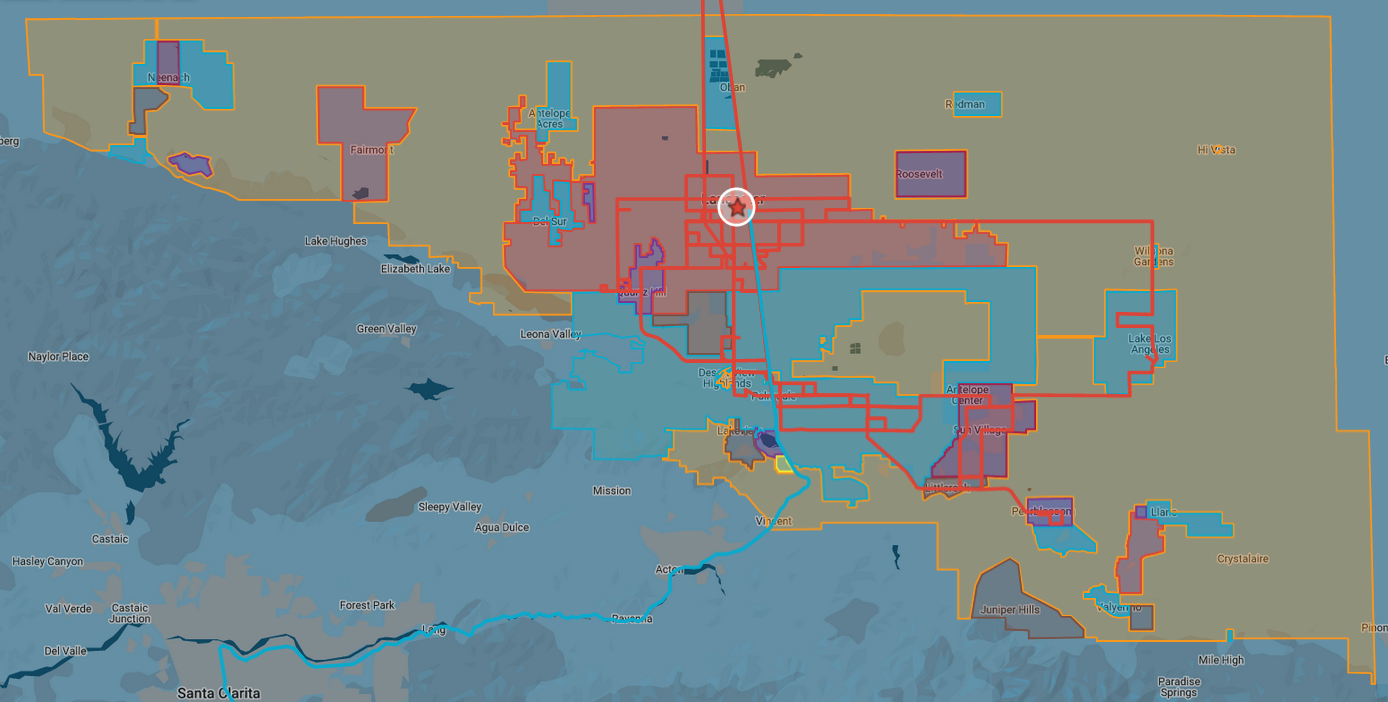
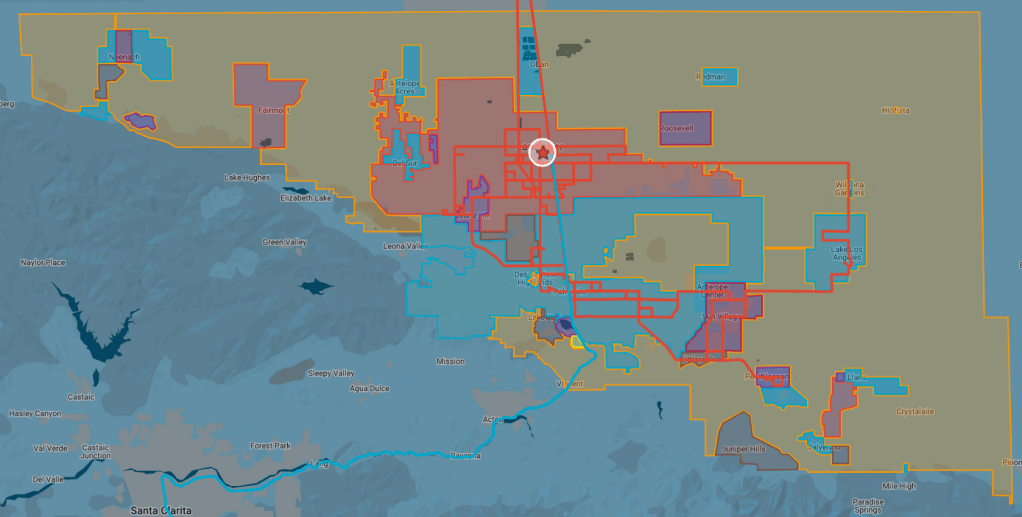
The vast Antelope Valley — separated from the rest of Los Angeles County by fairly high mountain ranges — is the region of Los Angeles perhaps least likely to be acknowledged as part of it. It’s a frontier region — akin to Los Angeles’s Xinjiang, North Asia, or Pakistan‘s Federally Administered Tribal Areas. Perhaps it will be granted status as an autonomous territory within Los Angeles. Maybe the name will change, someday, since there have never been antelopes there — although long ago it was supposedly home to pronghorns, which are superficially similar.
The Antelope Valley is sprinkled with towns so small that they can barely be thought of as towns — but also the fifth and sixth most populous cities in Los Angeles County — Lancaster and Palmdale. Tasked with coming up with four candidates for the Antelope Valley, I reserved one for write-in candidates and the other for Llano. Llano was home, in the early 20th century, to Job Harriman‘s utopian socialist commune. I thought about putting Quartz Hill on the ballot, because it’s a small community surrounded by Palmdale and Lancaster — and capitals are often chosen more for their location than the size of their population or vibrancy of their culture — but Mastodon, Threads, and X (Twitter) polls only allow for four options — and I wanted to always include a “write-in” option so that voters could cast their ballots any way they chose.
THE WINNER — LANCASTER
No one wrote in Quartz Hill/ The only write-in was for Rosamond, which is in Kern County and would presumably require an annexation — although Kern County, personally, would not be a Southern California County I’d be strongly pushing to annex. Besides, surely Buck Owens’ Crystal Palace would make the most sense as a capital from that county. Three socialist dreamers voted for Llano. Palmdale received seventeen votes. Lancaster was the clear winner with 29 votes — 58% or the total of 50 votes. It’s state anthem will be an out-of-tune rendition of “the William Tell Overture” performed by a legion of Honda Civics driving along its musical road.
THE CHANNEL ISLANDS
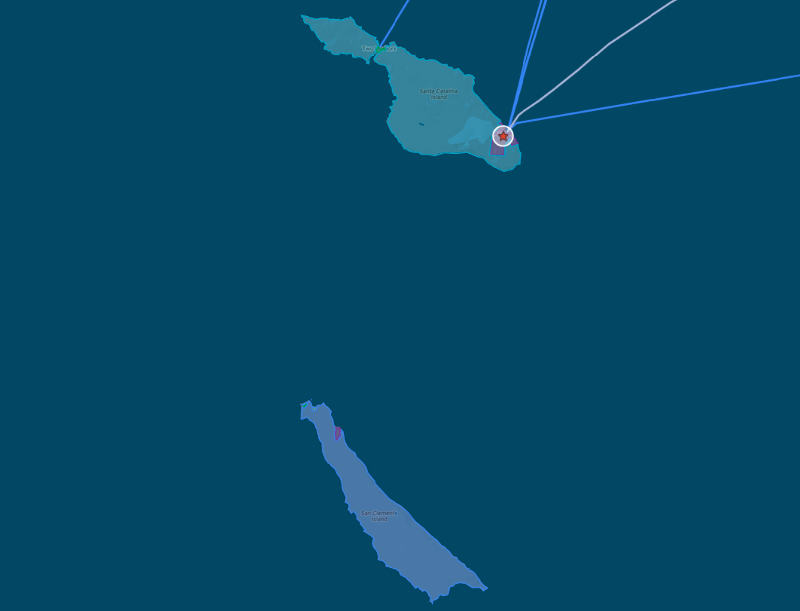
At the other end of Los Angeles County is the Channel Islands region — composed of two large islands that are both far larger in size than San Francisco but home to very small populations of humans. Santa Catalina is usually given the Alaska/Hawaii treatment on maps of Los Angeles — shrunken in size and moved into a box, in other words, that obliterates any sense of its size or location in relation to the rest of the county. San Clemente Island, even more ignobly, is usually left off altogether — despite having the distinction of being the southernmost part of Los Angeles. The Los Angeles Times map, for example, excludes it and the Channel Islands region, instead grouping Santa Catalina into the Harbor District — despite being separated from the harbor by about fifty kilometers of ocean (just a heads up — the Republic of Los Angeles — like 192 other countries — isn’t going to use British Imperial Units).
When I considered which communities to put on the ballot, I didn’t deliberate much. Avalon is the only incorporated city in the region and — although home to fewer than 4,000 humans — by far the most populous place. Two Harbors is the second most populous community on Santa Catalina Island, although it’s only about a tenth the size of Avalon. Wilson Cove is the southernmost community in Los Angeles County and is home to one eatery, the Salty Crab, and the Navy Gateway Inns and Suites. The US Navy, of course, will have no business in the Republic of Los Angeles, so Wilson Cove will likely emerge as a regional hotspot.
THE WINNER — AVALON
There was a write-in for Scorpion Anchorage, which is on Santa Cruz Island. Although Santa Cruz Island is a Channel Island, it’s in Santa Barbara County and so, again, would probably require an annexation. There were only three votes for Wilson Cove, ten for Two Harbors, and 64 for Avalon — or 82% of the 78 total votes cast.
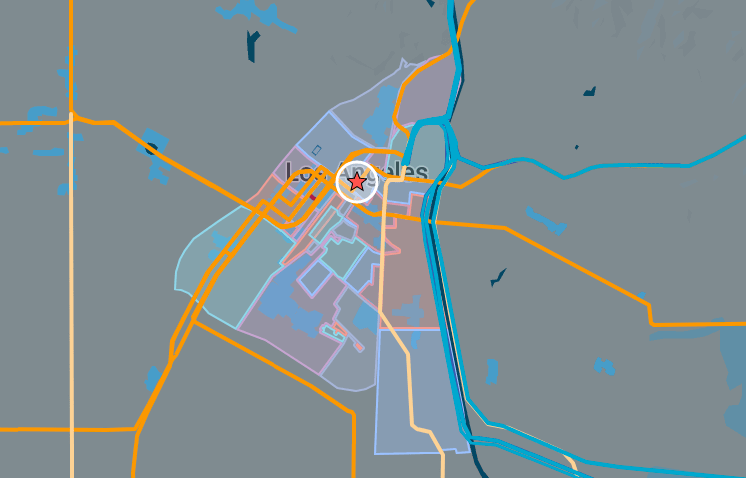
DOWNTOWN
Downtown is the birthplace of Los Angeles, where El Pueblo de Nuestra Señora la Reina de los Ángeles was established in 1781. Before that, it was the site of Yaangna, believed to have been the largest Tongva village. It is home, like all of Los Angeles’s regions, to numerous well-known neighborhoods and districts, including Dogtown, the Financial District, Little Tokyo, and others. Despite this, The Los Angeles Times’s Mapping L.A. project didn’t even grant Downtown recognition as a region — reducing it — and weirdly, Chinatown — to two neighborhoosd within Central Los Angeles and thus, of no more significance than, say, Beverly Grove, Carthay, Park La Brea, or Larchmont.
I, unlike the Times, recognize 26 districts and neighborhoods of Downtown — and I went back and forth over which to put on the ballot. Bunker Hill — with its history, skyscrapers, and cultural amenities — seemed like a good candidate. I also thought about the Arts District — one of the most vibrant neighborhoods of the region. In the end, though, I settled on El Pueblo, for its historical importance, the Historic Core, for its historical importance, and the Civic Center — because it’s already practically “the capital” of Los Angeles.
THE WINNER — THE CIVIC CENTER
There was one write-in for South Park — the park-less neighborhood that, in my mind, is Los Angeles’s “Little Orlando.” If you like professional sports and/or chain restaurants, though, its probably a place you love and it does feel like a vibrant hub — just of stuff I don’t personally car about. I thought someone wrote-in Skid Row but I can’t find that ballot and I hope that it doesn’t trigger a recount, because it was still just one vote and it wouldn’t have affected the outcome. The Historic Core received eighteen votes, El Pueblo received 31 votes, and just barely edging it out was the Civic Center, with 33 votes.
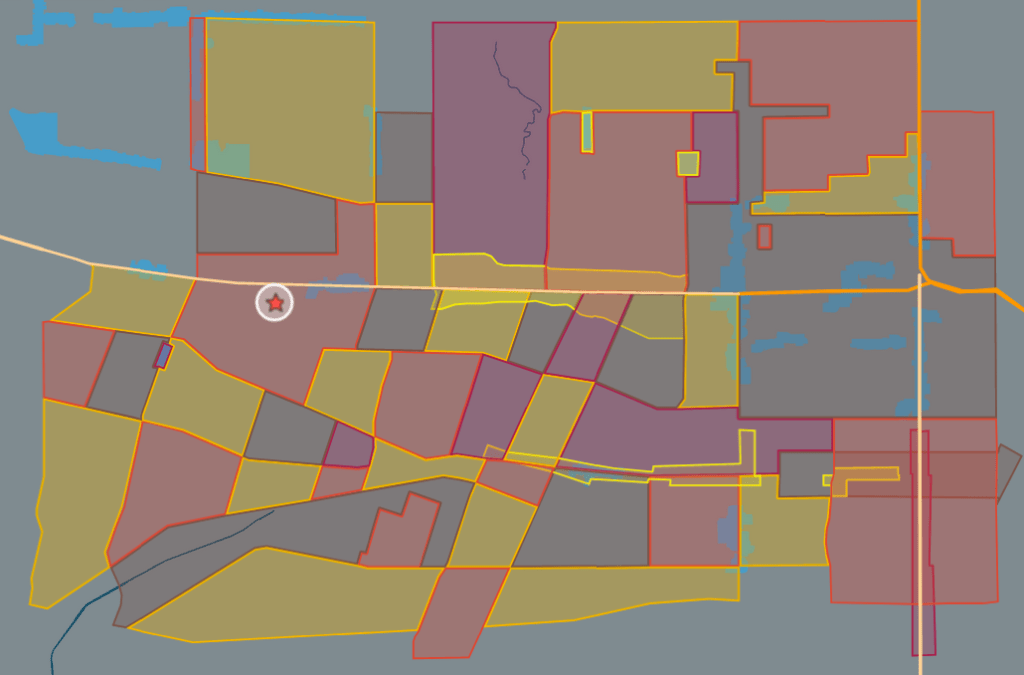
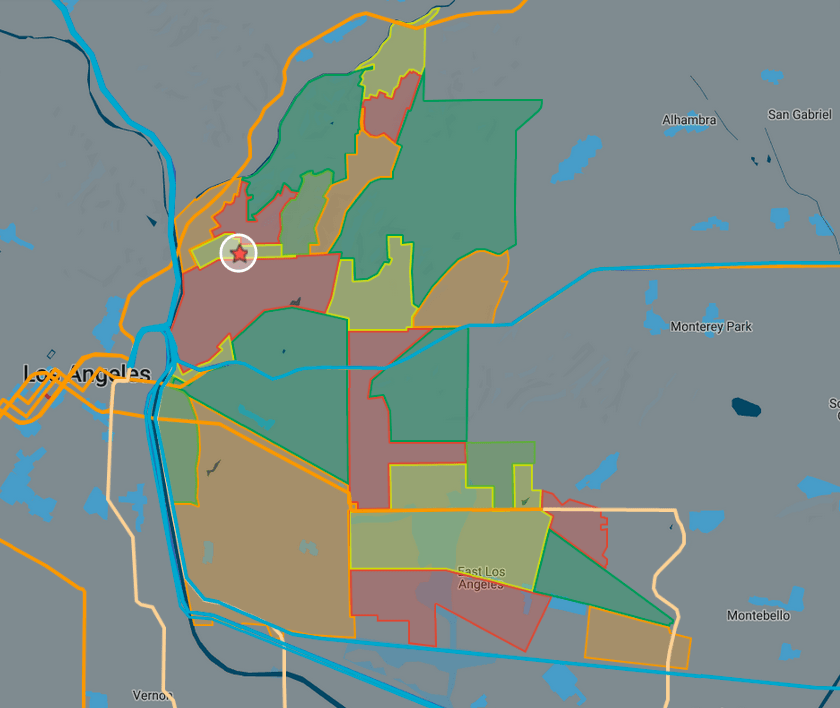
THE EASTSIDE
For the Eastside, I figured I’d go down to a micro-neighborhood detail. In my experience, people tend to do that in the Eastside a lot. In other words, a neighborhood can be part of another neighborhood. Maravilla, for example, is a neighborhood in East Los Angeles. Hillside Village is a neighborhood in El Sereno. People argue about what neighborhood Rose Hill is part of — or not part of — and I don’t know who claims the Auto Glass District — but it’s surely a thing. I wanted to include Boyle Heights — one of my favorite neighborhoods in all of the city — but for potential capitals I included on the ballot University Hills (home to California State University, Los Angeles, a Metrolink station, and the Luckman Fine Arts Complex), City Terrace (because it’s home to the headquarters of the county’s Fire, Internal Services, and Sheriffs departments), and the Lincoln Heights Business District — because it’s the vibrant, compact, and walkable heart of the historic Lincoln Heights neighborhood.
For the Eastside election, I had the most write-ins and, surprisingly, none were of communities on the Los Angeles River’s West Bank. There was one vote for Montebello, which lies at the nexus of the Eastside, San Gabriel Valley, and Southeast Los Angeles. There was a vote for Whittier, which in my mind is definitely in Southeast Los Angeles (although the Los Angeles Times’ Mapping L.A. project locates it, bizarrely, in the San Gabriel Valley despite being separated from that valley by a chain of hills that make that valley a valley. There was a vote for Pasadena, which in my mind is incontestably in the San Gabriel Valley (although the Los Angeles Times’ Mapping L.A. project, again, bizarrely locates it, in the Verdugos). There was one vote each for the East-of-the-Eastside/Far Eastside suburbs of Alhambra, Monterey Park, and Rosemead.
THE WINNER — LINCOLN HEIGHTS BUSINESS DISTRICT
In the end, though, it was only the communities on the ballot that got multiple votes. Boyle Heights only got one write-in vote, University Hills pulled in five, City Terrace received nine, and the Lincoln Heights Business District pulled in 23 — or 42% of the vote.
THE HARBOR
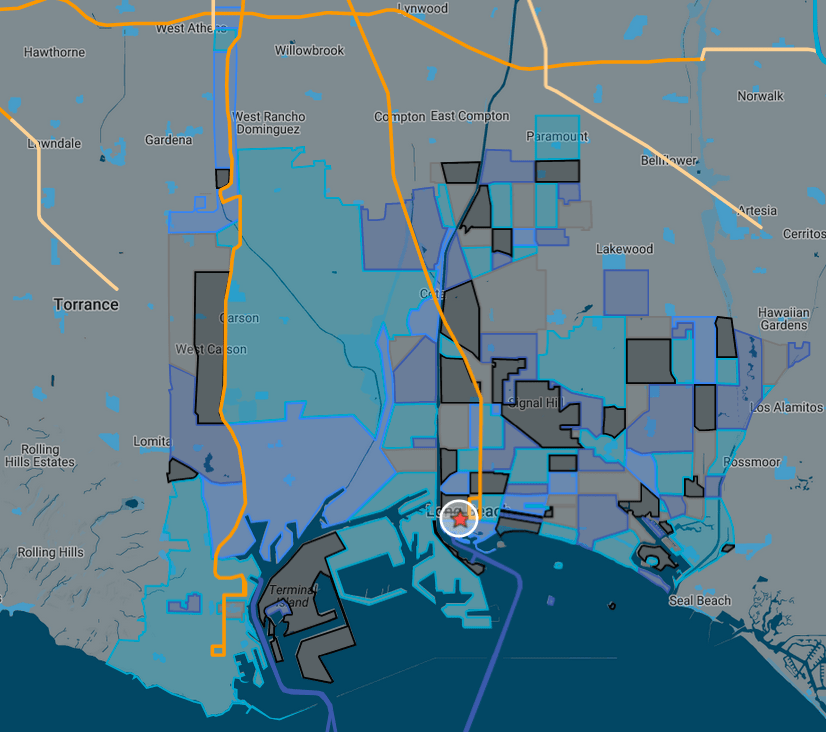
The Harbor — also known as the Harbor Area or Harbor District — is home to and named after the busiest port facility in the entire Western Hemisphere. Its most populous city, by far, is Long Beach. In fact, only the city of Los Angeles is more populous, in Los Angeles County, than Long Beach. Therefore, I attempted to even the playing field by mapping all of Long Beach’s neighborhoods and making them potential competitors with one another as well as the other communities of the Harbor. Downtown Long Beach seemed like the most obvious choice for the ballot.
Downtown San Pedro seemed like a strong choice, too. Its San Pedro Municipal Building is still known, to many, as San Pedro City Hall. I was less sure about what to include as the third option. Carson? Wilmington? I probably would’ve nominated West Carson were Alpine Village still open — because that would make for an awesome administrative capital. In the end, I chose Harbor City, because it has the guts to own its Harbor-ness (unlike San Pedro and Carson, which often try to jump onto the more fashionable South Bay designation despite being not-especially-near the southern end of the Santa Monica Bay and, in the case of San Pedro, named after and located directly on the San Pedro Bay — which is home to the Harbor in question). I also like Harbor City, on paper at least, because it has “city” in its name, despite not being one.
THE WINNER — DOWNTOWN LONG BEACH
Despite its bona fides, Harbor City only received two votes. Someone wrote-in Signal Hill, which, now that I think of it, does seem like it would make a fitting spot for a regional capital. Nineteen people voted for Downtown San Pedro. 41 voted for Downtown Long Beach — almost twice as many votes as every other community, combined.
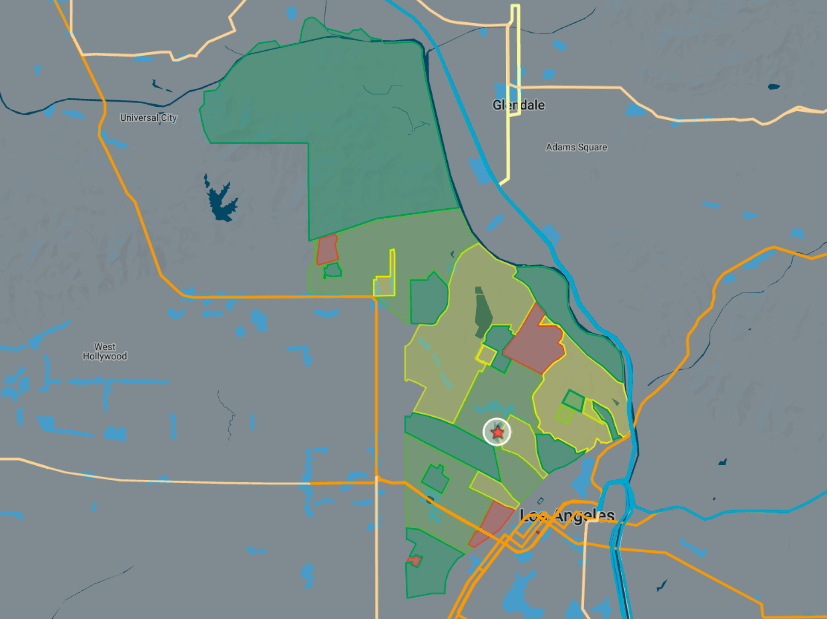
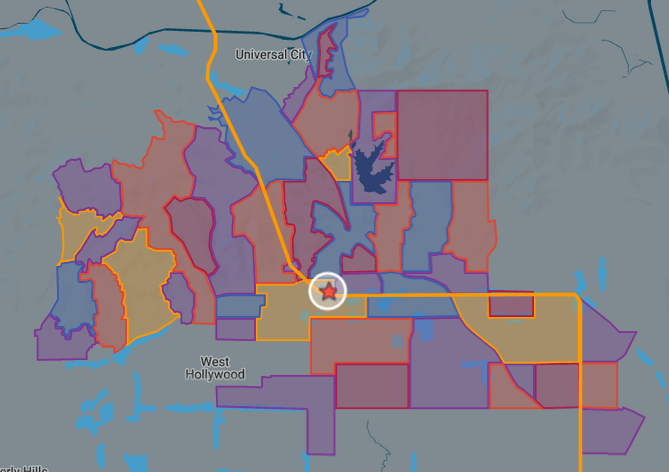
HOLLYWOOD
Hollywood is interesting because it was formerly its own city, incorporated as it was in 1903 — sixteen years after it was founded. It was annexed by Los Angeles, however, in 1910. Although Hollywood is still synonymous with the commercial American film industry, most of the studios had left it by the 1920s. In 1937, Culver City’s Chamber of Commerce even actually tried to change the name of their city to Hollywood, since it seemed a shame to let it go to waste. Besides, there’s a Hollywood, Florida, so why not? As a result, the city of Los Angeles officially designated the Hollywood region to solidify its status. Since then, the region’s borders have grown to include the Hollywood Hills and East Hollywood sub-regions. I suppose one could argue that the city of West Hollywood belongs in the Hollywood region… or at least its east-of-La Cienega eastside… but not North Hollywood. North Hollywood is no more Hollywood than the Hollywood Burbank Airport… or Universal Studios Hollywood — places which only have Hollywood in their names to confuse tourists.
When deciding which neighborhoods to include, I first thought of Thai Town — because I like Thai food. That seemed unfair to Hollywood’s other enclave, Little Armenia. I thought about Laurel Canyon — because of its storied history with actors, Nature Boys, and hippie rockers. Lookout Mountain was formerly the home of Lookout Mountain Air Force Station — but that’s now Jared Leto’s house — so it wouldn’t do as a capital unless Jared Leto is made the governor Hollywood or forcibly removed. I went with Hollywoodland because it was historically home of the sign that was replaced, in 1978, with the current Hollywood sign that is iconic, if absolutely nothing else. I also chose Downtown Hollywood because it’s the part of the region that has the most urban feel and is home to the Pantages, The Montalbán, Fonda Theatre, Palladium, Frolic Room, and Palms Thai. Somewhat reluctantly, I placed Hollywood-Highland on the ballot, because it is — for whatever reason — the capital of overtourism. And perhaps the governor of Hollywood should be a slightly deranged person dressed in a ratty superhero costume. Plus, Los Angeles’s tourist site promotes its mall, the Ovation, as “the perfect place for a Hollywood beginning” — because who wouldn’t want to travel across the world to visit a shopping center that boasts a Cabo Wabo Cantina, Dave & Buster’s, Footlocker, Hot Topic, Johnny Rockets, AND a Walgreens?
THE WINNER — HOLLYWOOD-HIGHLAND
Nine votes were cast for Hollywoodland, fourteen for Downtown Hollywood, and 32 — or 58% — went to Hollywood-Highland which, to be fair, is home to the Chinese and Egyptian theaters, as well as Miceli’s and the Catalina Jazz Club. The Hollywood Roosevelt would make a fine regional capital, too, I suppose.
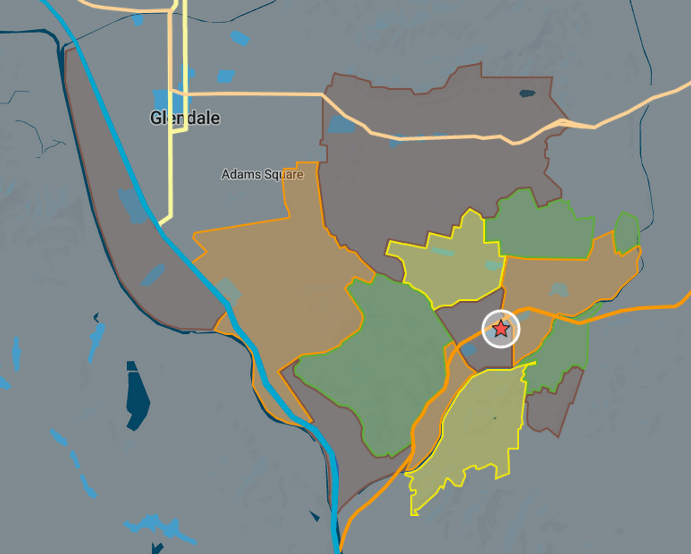
MIDEAST LOS ANGELES

As a resident of Mideast Los Angeles, it was especially difficult for me to consider which communities to put on the ballot. Westlake was a given — as the city’s second most populous, densely-populated, and vibrant neighborhood. To be subversive, I thought about nominating Pico-Union — but the other most obvious candidates, I figured, were Echo Park, Los Feliz, and Silver Lake. Since I could only chose two, I left out Los Feliz, primarily because when Hollywood considered seceding from Los Angeles, Los Feliz wanted to go with them. It also straddles Hoover Street — the original western border of the city and still the western border of most of Mideast Los Angeles. I do like Los Feliz Village, though, and if they removed cars from its main streets — Vermont and Hillhurst — it would get my vote.
THE WINNER — ECHO PARK
There was a write-in for Sunset Junction, specifically, named after the historic railway split/stop of Sanborn-Sunset Junction in Silver Lake that’s now home to a Jiffy-Lube. Los Feliz, sadly, only received one write-in vote. One person wrote-in Atwater (regarded by most, on account of being on the East Bank of the Los Angeles River, as either part of Northeast Los Angeles or the greater Eastside). Westlake received eighteen votes and Silver Lake 22. Echo Park narrowly squeezed out its neighbor, though, with 25 votes — or 38% of the vote.
MIDTOWN
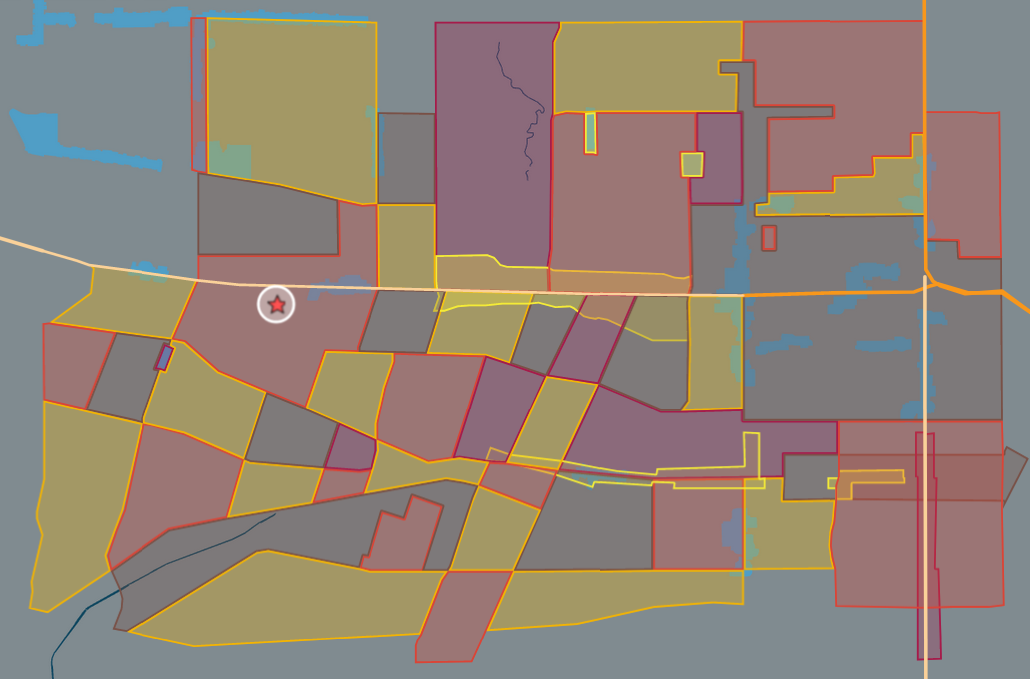
For the Midtown election, Koreatown was the obvious choice. It is the most populous neighborhood in Los Angeles. It is the most densely populated neighborhood in Los Angeles. It is, surely, one of (if not the) greatest neighborhoods in Los Angeles and, indeed, the US (for as long as Los Angeles remains part of it). I also included Windsor Square because it is home to the Getty House — which is the official residence of Los Angeles’s mayor and therefore, something like our White House. Windsor Square is also home to the walkable (but car-plagued) Larchmont Village. For the third spot, I bounced back and forth between Mid-City and Miracle Mile — but ultimately went with the latter because it’s home to Museum Row, El Rey, the Korean Cultural Center Los Angeles, and Yuko Kitchen.
THE WINNER — MIRACLE MILE
In the end, there was a write-in for both Mid-City and, specifically, its Midtown Shopping Center. Windsor Square only pulled in five votes. Koreatown got 28. Miracle Mile won with 34 votes — or half of all votes cast.
NORTHEAST LOS ANGELES
When it came to deciding which neighborhoods to include on the Northeast Los Angeles ballot, I chose Mount Washington, Eagle Rock, and Highland Park. Mount Washington was, formerly, home to Los Angeles County’s official witch and I figured that the Self-Realization Fellowship Headquarters would make a fine regional capitol — especially if funicular rail service was restored. Eagle Rock was once its own city, having incorporated in 1911. It was annexed by Los Angeles in 1923. It’s also home to Occidental College, which should count for something, I reckon. The “Filipino Mall“‘s vacant Macy’s could, perhaps, become Northeast Los Angeles’s administrative capital. And, lest we forget, it has a big rock that casts a shadow that resembles an eagle in flight.
Highland Park, though, incorporated as its own city in 1895 and was, along with Sycamore Grove, one of the first two towns to be annexed by Los Angeles — and Occidental was founded there in 1887. There’s also the fact that the communities of Annandale, Garvanza, Hermon, and York Valley all voted to become part of Greater Highland Park — aka “the five friendly valleys” — in 1922 — although Garvanza and Hermon, in recent decades, have re-acquired their distinct identities to a degree that Annandale, Sycamore Grove, and York Valley, thus far, have not.
THE WINNER — HIGHLAND PARK
In the end, one write-in vote each was cast for Atwater Village, Glassell Park, York Valley, and Burbank (which, is in the San Fernando Valley — although I suppose it could still be the capital of Northeast Los Angeles). Eight votes were cast for Mount Washington, 22 for Eagle Rock (which someone described as “kinda Sacramento”), and 54 — or 63% of the vote — went to Highland Park.
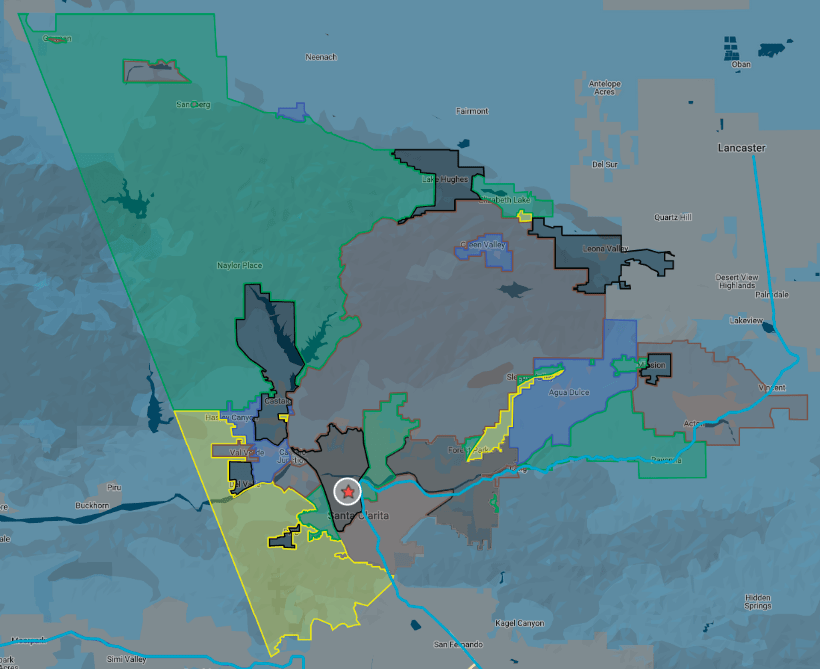
NORTHWEST LOS ANGELES
As unlikely as it sounds, sparsely populated Northwest Los Angeles is home to its third most populous city, Santa Clarita — a boomburb that only came into existence in 1987. But because Santa Clarita is so dominant, and because it was created by merging four communities, I decided to nominate the three most-populous individually — Newhall, Saugus, and Valencia. That meant that I couldn’t include on the ballot any of my other considerations, which included Gorman (last place on a road trip heading north to get McDonald’s fries in Los Angeles); beautiful Green Valley; Lake Hughes (the Rock Inn of which could be a cool capitol), Ridge Route (home to the ruins of National Forest Inn, Sandberg’s Summit Inn, and Tumble Inn), Val Verde (the “Black Palm Springs”), or Three Points — a town named after a three-way intersection..
THE WINNER — VALENCIA
In the end, there was one write-in each for Magic Mountain and Six Flags (the Six Flags chain took over operation of Magic Mountain in 1979). That amusement park is in Unincorporated Valencia. Saugus received six votes. Newhall received ten. Valencia — also notably home to California Institute of the Arts — received 23. When Valencia becomes capital of Northwest Los Angeles Province, Unincorporated Valencia — and Magic Mountain — will presumably become part of the new capital.
THE POMONA VALLEY
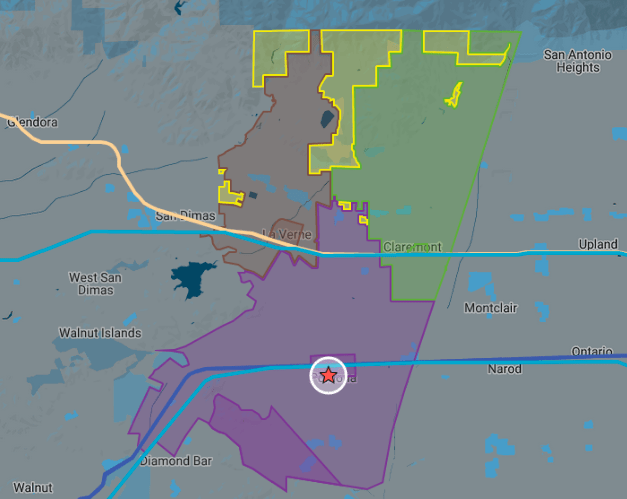
Los Angeles’s Pomona Valley region is home to just three cities: Claremont, La Verne, and Pomona. I suppose, if you were pedantically inclined, you could argue that part of San Dimas is located in the valley — but the identify of the Pomona Valley is so often erased by those who would regard it as either the San Gabriel Valley or Inland Empire that it’s probably better to not muddy the waters needlessley. On the other hand, the titular valley does, in fact, extend into both Riverside and San Bernardino counties, where it includes cities like Chino, Fontana, Ontario, Rancho Cucamonga, and Upland. Personally, I would be in favor of annexing all of them — as well as the cities of Riverside and San Bernardino (yes, even San Bernardino) into the Republic of Los Angeles. However, for now I only nominated the civic centers of the Los Angeles regions cities on the ballot: Claremont Village, Downtown Pomona, and Old Town La Verne.
THE WINNER — DOWNTOWN POMONA
There was one write-in for Upland, in San Bernardino County. Old Town La Verne, decidedly the underdog, got six votes. Charming, walkable Claremont Village — home to Claremont Station and very near the Claremont Colleges — got twelve votes. Downtown Pomona emerged the decisive victor, with 29 votes — or 60%.
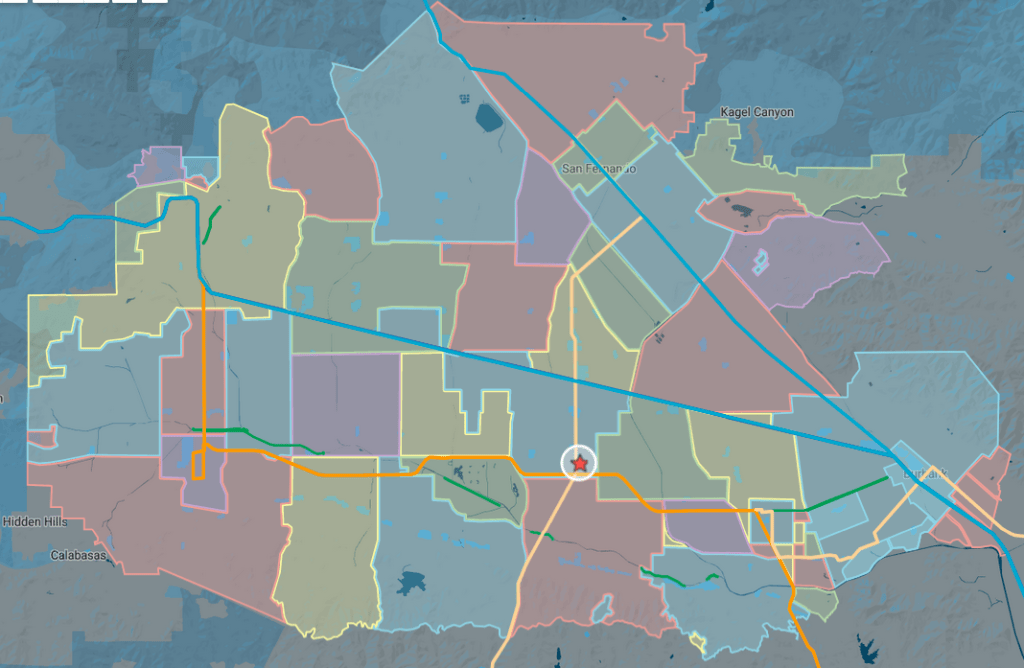
THE SAN FERNANDO VALLEY
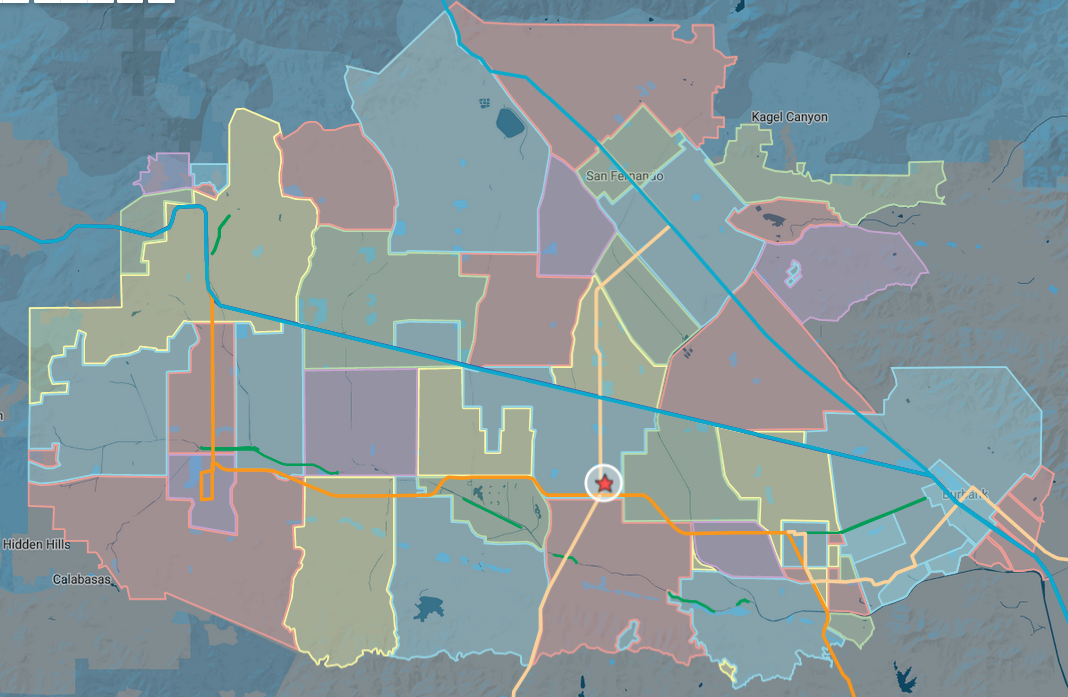
25 years ago, Los Angeles created the Neighborhood Council system in the wake of a Valley secession vote. The purpose of the Neighborhood Council system was, supposedly, to provide increased democratic engagement for Angelenos. 116 people voted for what should be the capital of the San Fernando Valley, which is more than voted in the most recent elections of a lot of neighborhood councils — so I’ll leave it to the reader to decide just how successful the city has been in getting people to engage through its Neighborhood Councils — or, if you’re cynical, to wonder if that’s even the real purpose of them — and not to misdirect civic energy into what are effectively bottomless complaint boxes mounted above garbage bins.
When it came time to choose the candidates Van Nuys had to be a candidate. It’s centrally located, the most populous community in the Valley, and already home to the Van Nuys Government Center — complete with its own Branch City Hall and field office for Los Angeles’s mayor. There’s also the West Valley Civic Center in Reseda. Warner Center was developed as part of the city’s Centers Plan, of 1970, to create multiple “downtowns” throughout the city — but, to my mind, it only looks like a city. It’s not, in my opinion, the Valley’s Downtown — it’s its Century City. North Hollywood is another natural candidate — ideally positioned and a hub of mass transit and home to the NoHo Arts District. Sherman Oaks, arguably, is the birthplace of the Valley’s most iconic figure — the Valley Girl. Panorama City, with its Plaza del Valle, has the closest thing the Valley has to a public square. Mission Hills is home to Misión San Fernando Rey de España, built in 1797, and probably as close to a “birthplace of the Valley” as we can get. Finally, there are the Valley cities that are already cities — tiny San Fernando — which has a great, walkable downtown, Jim’s Western Wear, and shares a name with the Valley. And then there’s Burbank, which is named after a dentist. In the end, I ended up going with Burbank, San Fernando, and Van Nuys.
THE WINNER — VAN NUYS
In the end, there were just two write-ins: Panorama City and La Mirada. The voter who wrote “La Mirada” commented, “I stand by my choice,” knowing, likely, that there would be those who question the nomination of an Orange County adjacent suburb in Southeast Los Angeles as the capital of the Valley. Thirteen voters went with San Fernando. 55 votes were cast for Burbank. Sixty votes — 52% of votes — were cast for Van Nuys.
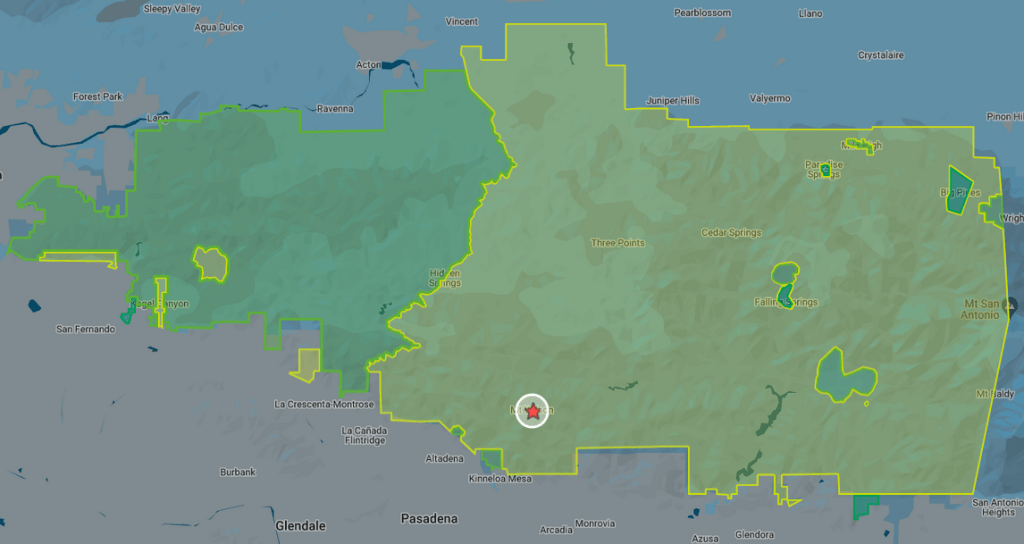
THE SAN GABRIEL MOUNTAINS

I provided no candidates for the sparsely populated San Gabriel Mountains region. There are very few communities and what communities there are all very small. Trying to choose three candidates from Big Pines, Kagel Canyon, Lopez Canyon, Mile High, and Wrightwood was giving me a headache — and perhaps, I thought, the capital of the San Gabriel Mountains shouldn’t be one of its tiny communities but rather a campground like Crystal Lake or other feature, like Mount Wilson — with its famed observatory, amazing views, antenna array, solar towers, concerts in the dome, and Cosmic Cafe.
THE WINNER — MOUNT WILSON
The winner was nominated with the ballot’s sole write-in, Mount Wilson.
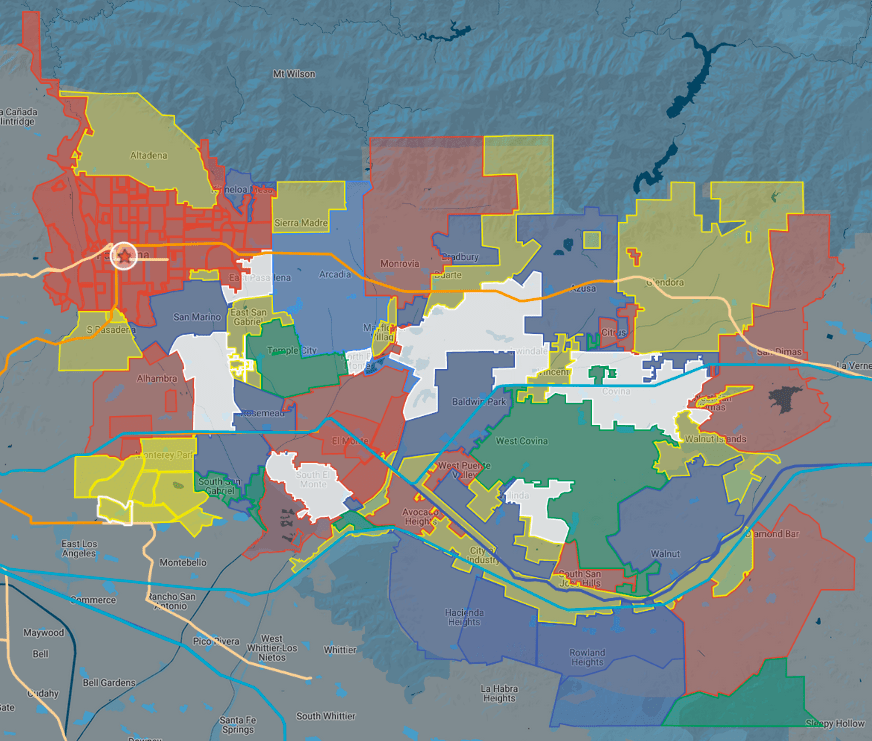
THE SAN GABRIEL VALLEY

When it came to choosing which communities to put on the ballot for potential candidates of the San Gabriel Valley, capital I decided upon El Monte, Pasadena, and San Gabriel. I chose El Monte because it’s centrally located and the second most populous city in the San Gabriel Valley. It’s also a crossroads in many ways — home to the San Gabriel Valley Airport and El Monte Station.
I chose Pasadena because it’s the most populous city in the San Gabriel Valley and, most would agree, probably the San Gabriel Valley’s primary cultural hub — with its walkable Downtown, museums, fine architecture, Rose Bowl, Jet Propulsion Laboratory, and institutions of higher learning — the California Institute of Technology and Pasadena City College. Of course, as I wrote earlier, the Los Angeles Times mistakenly believes that its in the Verdugos — despite the fact that not one of the Verdugo Mountains can be found anywhere within its borders — or those of Altadena, for that matter — which the Los Angeles Times also mistakenly believes is in that region.
Finally, I nominated San Gabriel because it’s namesake, the Misión de San Gabriel Arcángel, can be said to be the birthplace of the modern San Gabriel Valley.
THE WINNER — PASADENA
In the end, most voters agreed that Pasadena is not only in the San Gabriel Valley, but that it should be it should be the regional capital. 67 votes — or 68% — were cast for Pasadena. In second place was San Gabriel, with 20 votes. El Monte got nine votes. There was one write-in vote, each, for Vincent and West Covina (a city misidentified in the song, “West Covina” as being the “the pride of the inland Empire.”
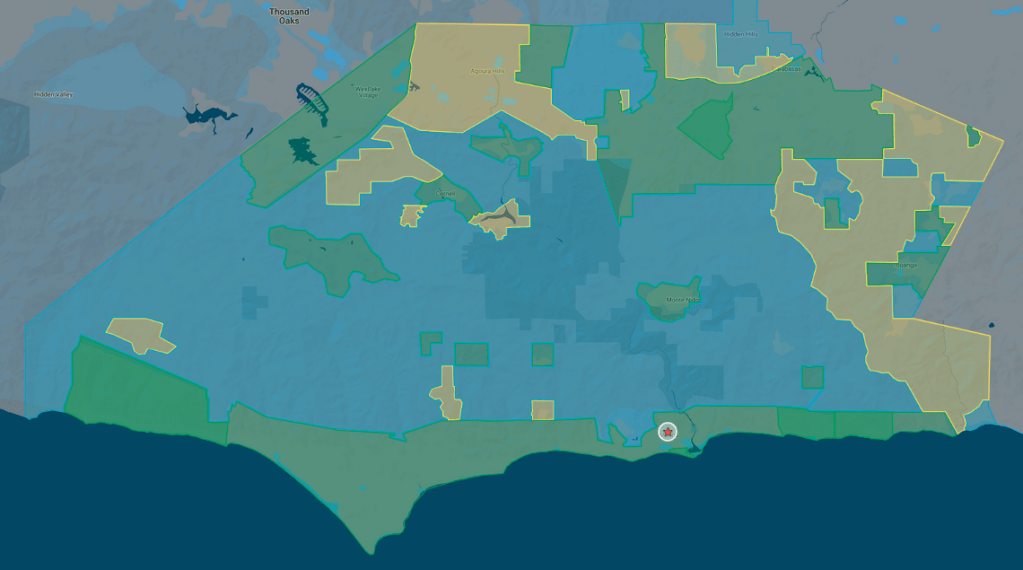
THE SANTA MONICA MOUNTAINS
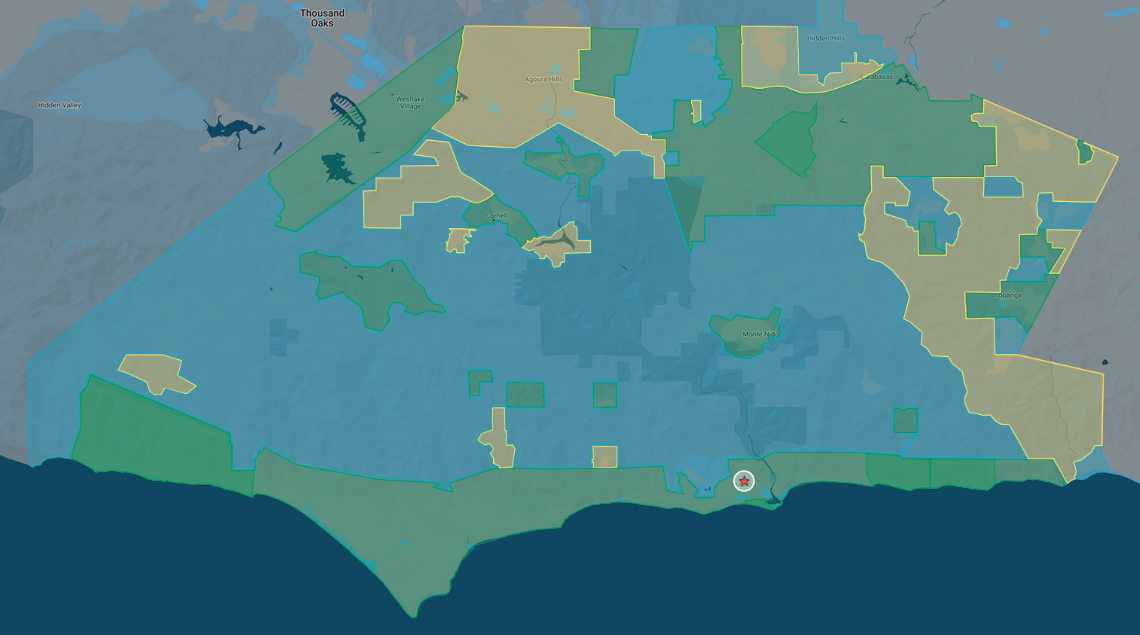
The Los Angeles Times’ Mapping L.A. project lumped the area west of the Westside — those communities historically identified with the Conejo Valley, Las Virgenes, and/or Malibu areas — together as the Santa Monica Mountains. Even though the Santa Monica Mountains technically extend east to the Los Angeles River and west to the submerged northern Channel Islands — I’m on board with this as a region. I haven’t heard any better alternatives, anyway. The Far Westside? The mountains to the east or more often, after all, thought of as the Hollywood Hills.. and the mountains to the west are, well, islands.
The Santa Monica Mountains region is dominated by new cities. Calabasas, Malibu, Agoura Hills, and Westlake Village are, respectively, the newest, second newest, sixth newest, and seventh newest of Los Angeles County’s 88 cities. Ironically, they are also those which have been inhabited by humans for longer than anywhere else on the mainland — with the Chumash having established villages in them at least as early as 5000 BCE.
My nominees were Cornell — a picturesque village with a central location in the mountains. I also nominated Malibu — which stretches across the region’s southern edge and which is undoubtedly the most iconic city in the region. Finally, I nominated Topanga — really a rustic region comprised of several small villages, historically favored by hippie rockers — the name of which comes from a Tongva adaptation of a Chumash name.
THE WINNER — MALIBU
In the end, Malibu barely squeaked out a victory, with 26 votes vs. Topanga’s 24. There was a single write-in vote for Newbury Park, a town that is in the Conejo Valley but that is currently part of Ventura County.
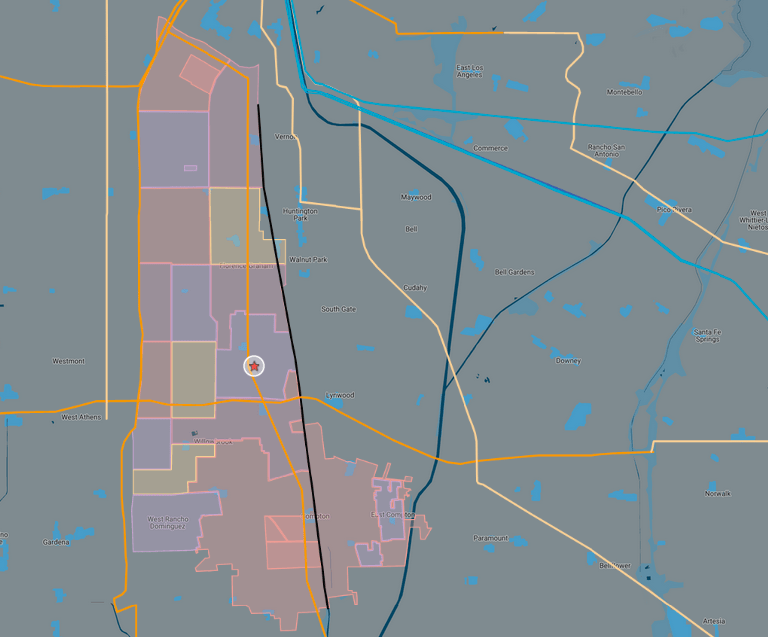
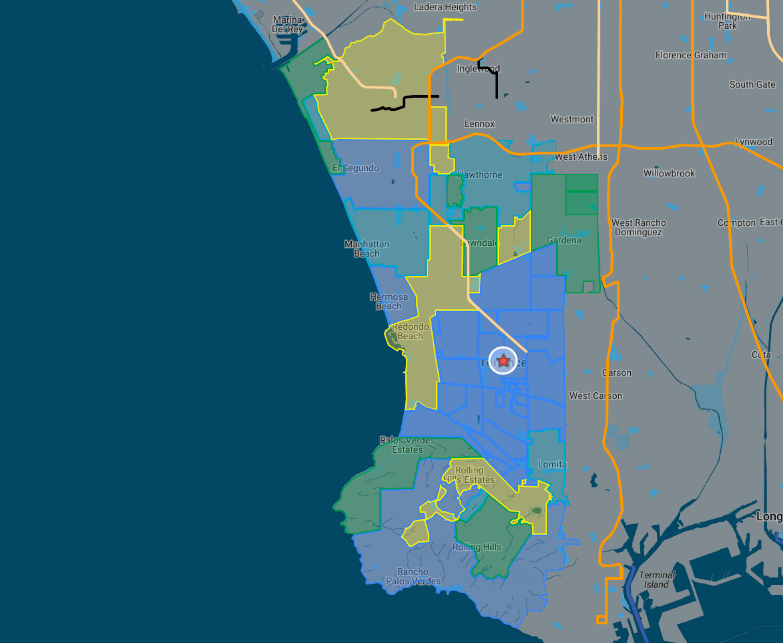
THE SOUTH BAY
The South Bay is one of the most nebulously defined regions in Los Angeles. The titular bay is the Santa Monica Bay — and “South Bay,” naturally, refers to the southern portion of it. The term was been in use since at least 1874, to refer to that specific area. However, in the 1960s and ’70s, affiliation with the South Bay was extended inland to the landlocked communities of Southeast Los Angeles and the Harbor communities, despite their being on the San Pedro —not Santa Monica — Bay — or no bay at all. Because Angelenos disagree so much over which communities are in the South Bay and which aren’t, I left it to voters to write-in their results.
THE WINNER — TORRANCE
In the end, Torrance won with just three write-ins. Redondo Beach and Lawndale each received one. I’m happy with that. Torrance is the most populous city in the South Bay (and the eighth most populous in Los Angeles). It’s notable for having — along with neighboring Gardena — one of the largest Japanese populations in the US mainland. It’s also notable — in a bad way — for being the largest city in Los Angeles County without passenger rail service. It’s a total coincidence that its a home to a massive oil refinery and that American Honda Motor Co Inc. is one of its largest employers.
SOUTH LOS ANGELES’S EASTSIDE
At least as early as 1909, Angelenos were referring to South Los Angeles east of Main Street as the Eastside. That was the year the Eastside Boys Club formed. It was also recognized as part of South Los Angeles at least as early as 1909. I’ve always felt, therefore, that references to this region are implicitly to the Eastside of South Los Angeles — or South Los Angeles’s Eastside — but that people who don’t even have time to say “Los Angeles” can’t possibly be expected to say all of that. I nominated South Central — the neighborhood originally named after South Central Avenue — but eventually expanded to any community south of the 10 Freeway. To paraphrase Alan Partridge — South Central Los Angeles — you’re either South or you’re Central — you can’t be both. South Central Avenue, on the other hand, makes perfect sense,
South Central Avenue extends south to Watts, another historic hub of the region. And the Watts Towers or the Watts Labor Community Action Committee would make a good regional capital. And then there’s the city of Compton, which, in another bizarre move, the Los Angeles Times decided isn’t in South Los Angeles at all — but rather in Southeast Los Angeles, you know, like Downey. It has a pretty iconic City Hall, though.
THE WINNER — WATTS
In the end, South Central vote thirteen votes, Compton got nineteen, and Watts was the winner with 21 votes.
SOUTH LOS ANGELES’S WESTSIDE
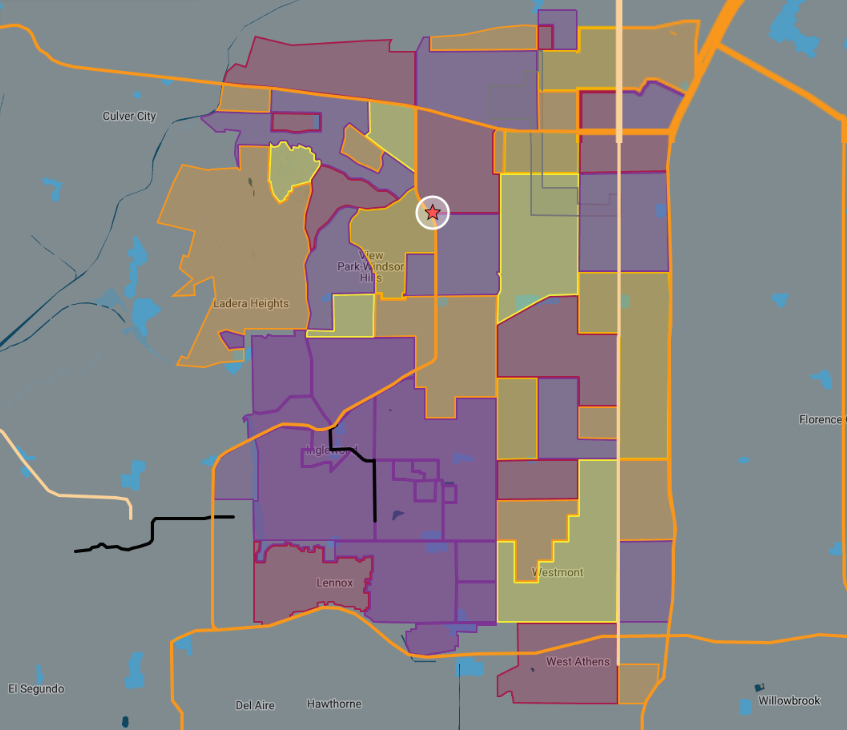
South Los Angeles’s Westside, historically, referred to those communities west of Main Street — and after the construction of the Harbor Freeway, that. A lot of it was historically also known as Southwest Los Angeles — especially those landlocked communities that would rather, perhaps understandably, be considered part of the South Bay.
Inglewood — which does have the motto of “the South Bay’s City of Opportunity” — but which is separated from the actual South Bay by entire communities and, more damningly, the 405 freeway — is still included with that coastal region. From a real estate standpoint, “South Bay” has always been a more desirable regional affiliation than South Los Angele… but that city’s most famous group, I’ve often pointed out, named themselves Westside Connection and not South Bay Connection. I think younger Inglewooders embrace being part of South Los Angeles. I’ve even heard Inglewood referred to as “South Central” — which… don’t even get me started. Final note: Inglewood has the most diverse African cuisine representation in Los Angeles, including Cameroonian, Eritrean, Ethiopian, Ghanaian, Nigerian, and Somali.
Leimert Park was another obvious candidate. Nicknamed “the Soul of Los Angeles,” Leimert Park is incredibly charming, walkable, transitable, and bustles with history and culture, Some people would try to have you believe that University Park — home to the University of Southern California — is part of Downtown rather than South Los Angeles. And yet, you can see Downtown in the distance if you’re there — which means that you’re not in it. I’ve always liked USC’s campus which, like all campuses, is full of amenities. It’s also next to Exposition Park, with all of its.
THE WINNER — LEIMERT PARK
In the end, though, University Park got a paltry four votes. Inglewood got a respectable nineteen votes. The clear winner, though, was Leimert Park.
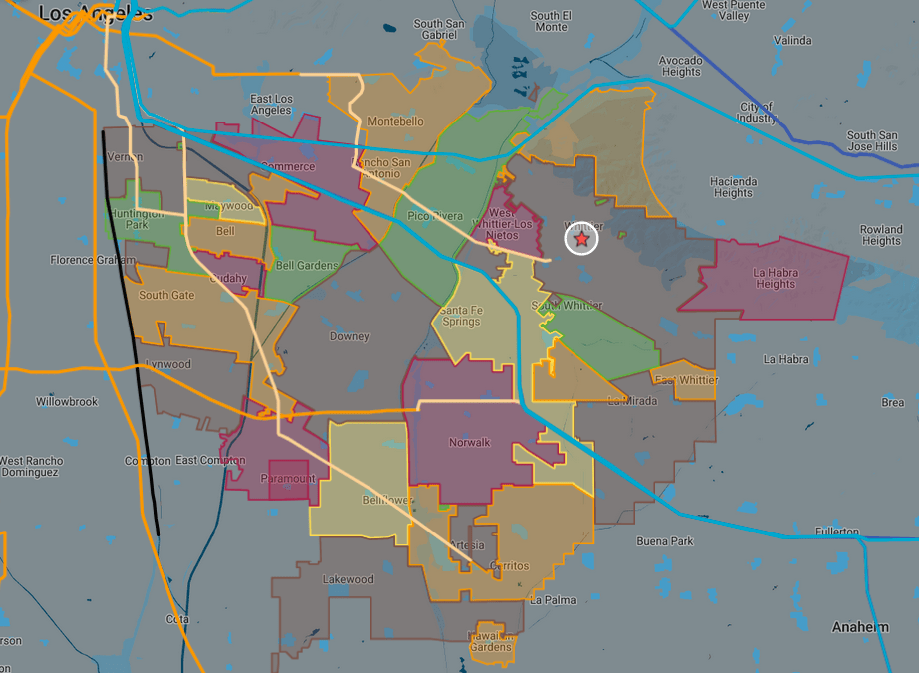
SOUTHEAST LOS ANGELES

Southeast Los Angeles is separated from the San Gabriel Valley by the Puente Hills, which is how I know that Whittier is in it and not, as I mentioned the Los Angeles Times mistakenly believes, the SGV. Having visited and explored it fairly thoroughly, it’s also one of the gems of Southeast Los Angeles — home to Whittier College, King Richard’s Antique Center, and the Greenleaf Promenade.
The rest of Southeast Los Angeles, sadly, remains fairly unfamiliar to me. I put Downey and Norwalk on the ballot, mainly because they’re the two most populous cities in Southeast Los Angeles. Downey, I have a bit of experience with. It’s got the Columbia Memorial Space Center, the Stardust Club, a Googie Bob’s Big Boy, the oldest McDonald’s, and was home to the Carpenters.
I’m honestly not sure what’s special about Norwalk — just that it has the second largest population in Southeast Los Angeles. After making the ballot, I immediately regretted not putting Cerritos on the ballot. It’s home to the supposedly New Orleans-themed Cerritos Auto Square. It’s home to the Cerritos Center for the Performing Arts. It’s an Asian majority city with a unique demographic mix dominates by Koreans, Chinese, and Filipinos. Lynnwood, too, could’ve been a candidate. Plaza Mexico would make for a good regional capital.
THE WINNER — WHITTIER
In the end, Whittier was elected the capital of Southeast Los Angeles with 17 votes. Downey came in second with fourteen votes. Norwalk was third, with thirteen votes. There was a single write-in vote for Huntington Park.
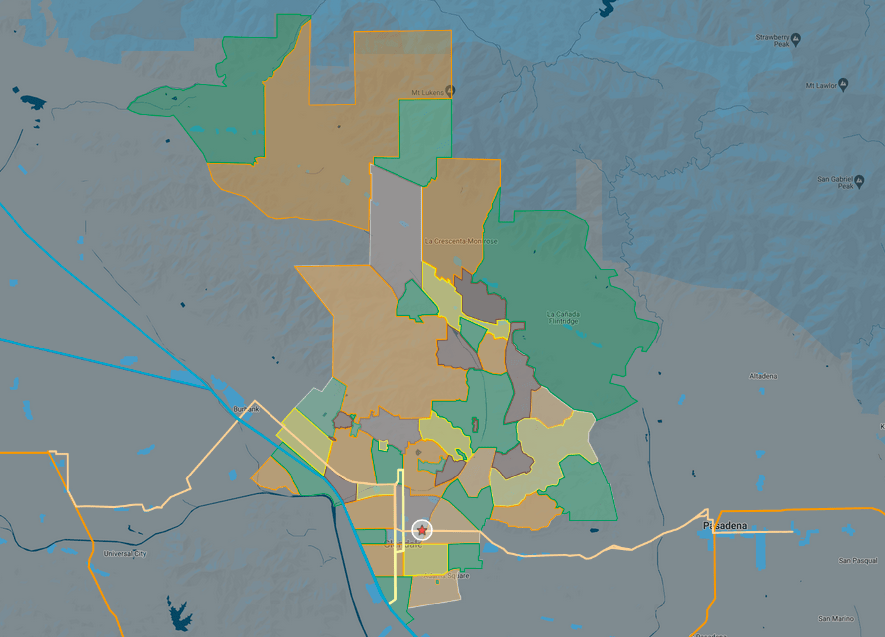
THE VERDUGOS
The Verdugos are the mountain range that separates the San Fernando Valley from the Crescenta Valley. It’s also a region of Los Angeles. Mount Lukens, in Tujunga, is the highest point in the city of Los Angeles — and the reason that Los Angeles is the most vertical city on Earth — dwarfing as it does even the tallest skyscrapers — and with more elevation range between its peak and the lowest point in Wlimington than is found in any other city. That said, I left Tujunga to the write-in voters.
Tunjunga is often combined, via hyphen, with Sunland — as in Sunland-Tujunga. Another Verdugos hyphenate is La Crescenta-Montrose. And then there’s La Cañada Flintridge, which is never hyphentated. I still confuse these places and can’t remember what is where — but nominated both because the power of two combined communities is surely greater than a solo community. On the other hand, the Verdugos are dominated by Glendale — the largest city in the region, by far, and the third most populous city in Los Angeles County. Therefore, to even the playing field, I broke it up into its constituent neighborhoods. Obviously the most natural candidate for the ballot is Glendale City Center. Although not terribly British — but it has s City Center instead of a Downtown. It’s Brutalist Civic Center is great, too.
THE WINNER — GLENDALE CITY CENTER
There was a write-in vote for Descanso Gardens — which I added to La Crescenta-Montrose or La Cañada Flintridge — whichever one its in. The former beat out the latter, with twelve to eleven votes. Someone also wrote in the KROQ Towers (which are atop Tongva Peak in Glendales Verdugo Mountains “neighborhood.” Glendale City Center one, handily though, with 32 votes.
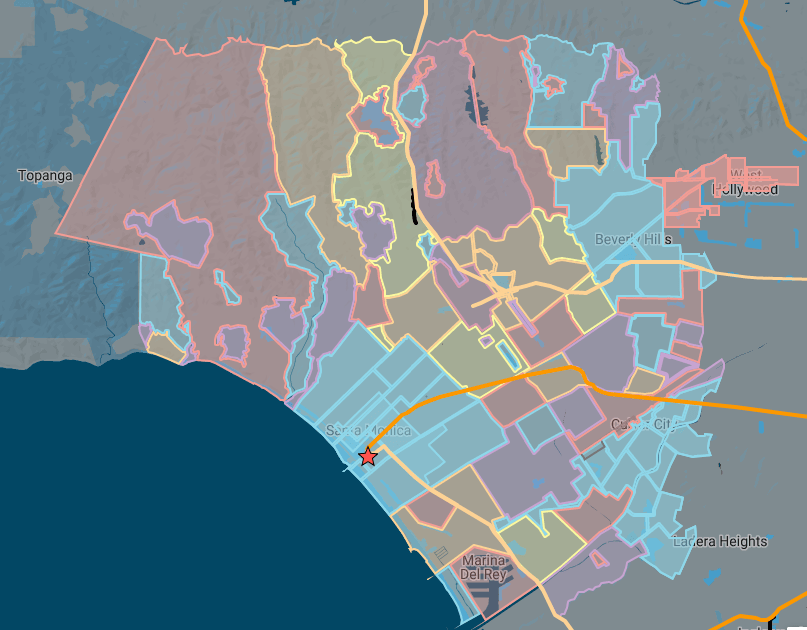
THE WESTSIDE

The Westside is such a large region, depending on how you define it. When the Los Angeles Times polled readers, the most commonly recognized divide between the Westside and the rest of the region was La Cienega Boulevard, which makes sense to me, because it’s west of that that my inner GPS and compass go screwy. Other people said Lincoln, the 405, Western Avenue, and the Los Angeles River.
It’s home to its several cities, including Beverly Hills, Culver City, and Santa Monica — and former cities like Venice and Sawtelle. The southern border, it seems to me, that divides the Westside from the South Bay, is Ballona Creek — and yet, every mention I’ve seen of Playa Vista’s affiliation locates it in the Westside and not the South Bay, even though the “playa” it has a “vista” of, Playa del Rey, is in the latter.
The attractions of the Westside are numerous but spread out across a frustratingly unwalkable region. I could’ve also gone with Culver City, I suppose, with its Arts District, Little Brazil, and Wende Museum. Palms has the Irish Times, Museum of Jurassic Technology, and Simpang Asia. Pacific Palisades has the Getty Villa and the Eames House — both of which are a nightmare to get to on foot. Better for walking are the enclaves of Little Osaka and Tehrangeles — although they’d be better, still, if cars were removed from them.
When it came time to choosing which communities would go on the ballot, I chose Santa Monica, West L.A. Civic Center, and Westwood. I chose Santa Monica because… I don’t know. It just felt like an ideal capital of the Westside with its English Pubs and enviable bicycle infrastructure. It has the Big Blue Bus… that Jim Morrison sang is calling us, before asking “driver where you taking us?” And they created the Third Street Promenade — buy removing car access and storage space — in 1965.
Westwood Village, everyone tells me, used to be a happening place. Now it’s mainly a bunch of attractive buildings with businesses like Metro PCS or T-Mobile. It could be re-activated, though, by making it more walkable and by adding bars. Plus, it has the Hammer Museum. And the campus of the University of California Los Angeles, with its Birthplace of the Internet, Meteorite Collection, Mildred E. Mathias Botanical Garden, Powell Library, and Royce Hall brings me west more than just about anything else.
The West L.A. Civic Center I chose, because it’s a civic center. That’s all.
THE WINNER — SANTA MONICA
In the end, there was one write-in vote each for Century City (which does look like a capital, at least), Culver City, and Venice. There were two votes for Palms. There was a vote for El Segundo — which is in the South Bay but which, if moved to that election, still wouldn’t trouble Torrance. There were 35 votes for West L.A. Civic Center, 47 votes for Westwood, and 79 votes for Santa Monica.
CONCLUSION
So there you have it — the new capitals of Los Angeles’s counties… or provinces…. or states… or prefectures… or whatever we end up calling them.
Support Eric Brightwell on Patreon

Eric Brightwell is an adventurer, essayist, rambler, explorer, cartographer, and guerrilla gardener who is always seeking paid writing, speaking, traveling, and art opportunities. He is not interested in generating advertorials, cranking out clickbait, or laboring away in a listicle mill “for exposure.”
Brightwell has written for Angels Walk LA, Amoeblog, Boom: A Journal of California, diaCRITICS, Hey Freelancer!, Hidden Los Angeles, and KCET Departures. His art has been featured by the American Institute of Architects, the Architecture & Design Museum, the Craft Contemporary, Form Follows Function, the Los Angeles County Store, Sidewalking: Coming to Terms With Los Angeles, Skid Row Housing Trust, the 1650 Gallery, and Abundant Housing LA.
Brightwell has been featured as subject and/or guest in The Los Angeles Times, VICE, Huffington Post, Los Angeles Magazine, LAist, CurbedLA, Office Hours Live, L.A. Untangled, Spectrum News, Eastsider LA, Boing Boing, Los Angeles, I’m Yours, Notebook on Cities and Culture, the Silver Lake History Collective, KCRW‘s Which Way, LA?, All Valley Everything, Hear in LA, at Emerson College, and at the University of Southern California.
Brightwell is currently writing a book about Los Angeles.
You can follow him on Ameba, Duolingo, Facebook, Goodreads, iNaturalist, Instagram, Letterboxd, Mastodon, Medium, Mubi, the StoryGraph, Threads, TikTok, and Twitter.


 Eric Brightwell
One thought on “Hear on LA, the Republic (or Kingdom), of Los Angeles, its Provinces (or Counties), and their Capitals”