If tasked with listing Los Angeles’s “Asian neighborhoods,” you’d probably first think of well-known immigrant enclaves like Chinatown, Koreatown, and Little Tokyo – or maybe less well-known ones like Cambodia Town, Little Bangladesh, or Little India. Perhaps you will think of one of the many suburbs of Los Angeles with an Asian American majority – places like Walnut, South San Gabriel, or Cerritos. You’d be forgiven, though, if Silver Lake never came to mind. Silver Lake, after all, has long been celebrated as Los Angeles’s gayborhood since at least the 1960s… or as a hipster enclave in the 1990s and ‘00s.
But make no mistake: Silver Lake has long been home to notable Asian American figures and has hosted many moments of important if hidden history. You will probably be surprised by the vastness of Silver Lake’s Asian American history since it is almost completely ignored by a legacy corporate media focused on Silver Lake’s white population. For this month’s “Ask Silver Lake,” in honor of Asian American, Native Hawaiian, and Pacific Islander Heritage Month, we are looking at the surprisingly deep history of Asian American Silver Lake.
COLOR AND SHADE IN “THE WHITE SPOT OF AMERICA”
Whilst Silver Lake has long enjoyed a reputation for embracing and celebrating people from all walks of life – it was not always so welcoming. Like approximately 47% of Los Angeles, most of what’s now Silver Lake was covered by racially restrictive housing covenants that made it off-limits to anyone who wasn’t white, Anglo-Saxon, and Protestant. There were exceptions. Dayton Heights, which today overlaps Silver Lake and East Hollywood, was historically so associated with its Japanese businesses and residents that it was better known as “J. Flats.” Today, it’s still home to the Hollywood Japanese Cultural Institute, Tenrikyo Hollywood Church, and historic Japanese boarding houses.
Not all groups were as welcome as the Japanese were, initially. In 1923, when William Marion Shelten advertised Shelten Heights in The California Eagle, the Dayton Heights Improvement Association sprang into action to oppose what The Los Angeles Times characterized as a “negro invasion.” Meanwhile, hostility toward the Japanese increased, too. When Rokuichi “Joy” Kusumoto relocated the Japanese Children’s Home of Southern California to Redcliff Street, she was protested by white Silver Lakers. So-called “alien land laws” codified restrictions meant to dismantle the foundations of Japanese Angelenos’ ability to make a living. Things only worsened after the Imperial Japanese Navy attacked American military installations in the Pacific.
Although there was no evidence that Japanese Americans were beholden to the emperor of their ancestral homeland, mayor Fletcher Bowron whipped up hysteria against them. He forced all Japanese Angeleno employees of the cities to take indefinite “leaves of absence”.” He canceled all leases held by Japanese Angeleno farmers on city-owned land. He used his radio addresses to rant against birthright citizenship. He also claimed that Japanese employees of the LADWP were planning on poisoning the city’s water supply and thus a fence was erected around the Silver Lake Reservoir and others to keep the people safe from an imaginary threat. The last Japanese Americans were freed from concentration camps in 1946. Ten years later, Bowron issued a rather passive apology “for the grave and terrible injustice perpetrated on the Japanese in our midst.” The Japanese were free to return to their lives – although the fence around the reservoir remains an unintentional monument racial paranoia and hostility.
THE “ASIAN INVASION”
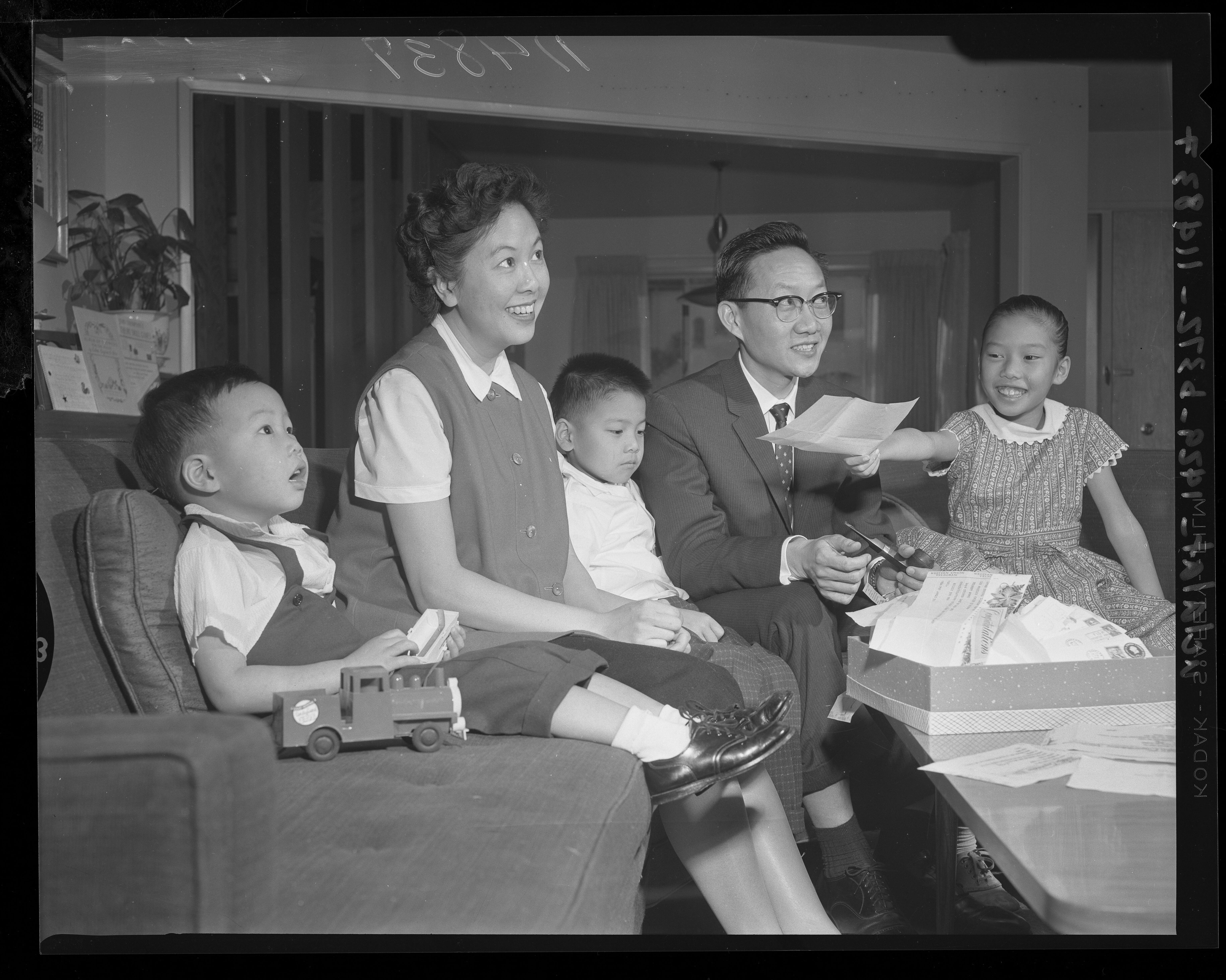
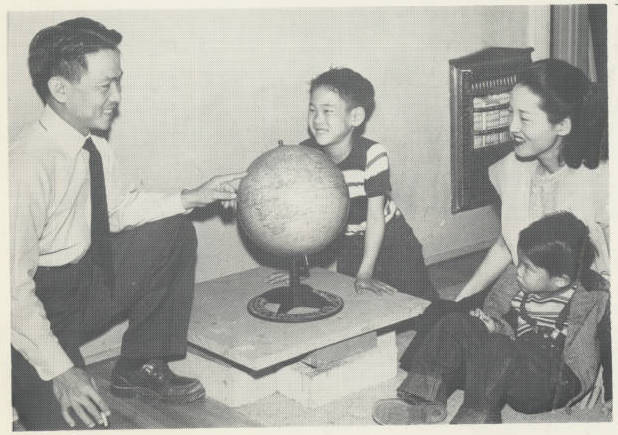
In 1948, black Silver Laker lawyer Loren Miller prevailed in the US Supreme Court case of Shelley v. Kraemer, which ruled that racial housing covenants were illegal. That, of course, didn’t mean that peoples’ opinions changed overnight. When Eugene Kinn Choy sought to build a home for his family in the Primrose Hill area, in 1949, he first went door-to-door to obtain permission from his white neighbors. It may’ve seemed necessary given the ruling against de facto racial segregation but four years later, when Delbert E. Wong – a Deputy State Attorney General – attempted to buy a home for himself and his wife, Dolores, and their three children – they were told by the real estate agent that it was not available to Chinese. The Wongs prevailed, though, and hired Gilbert Leong to design their family home.
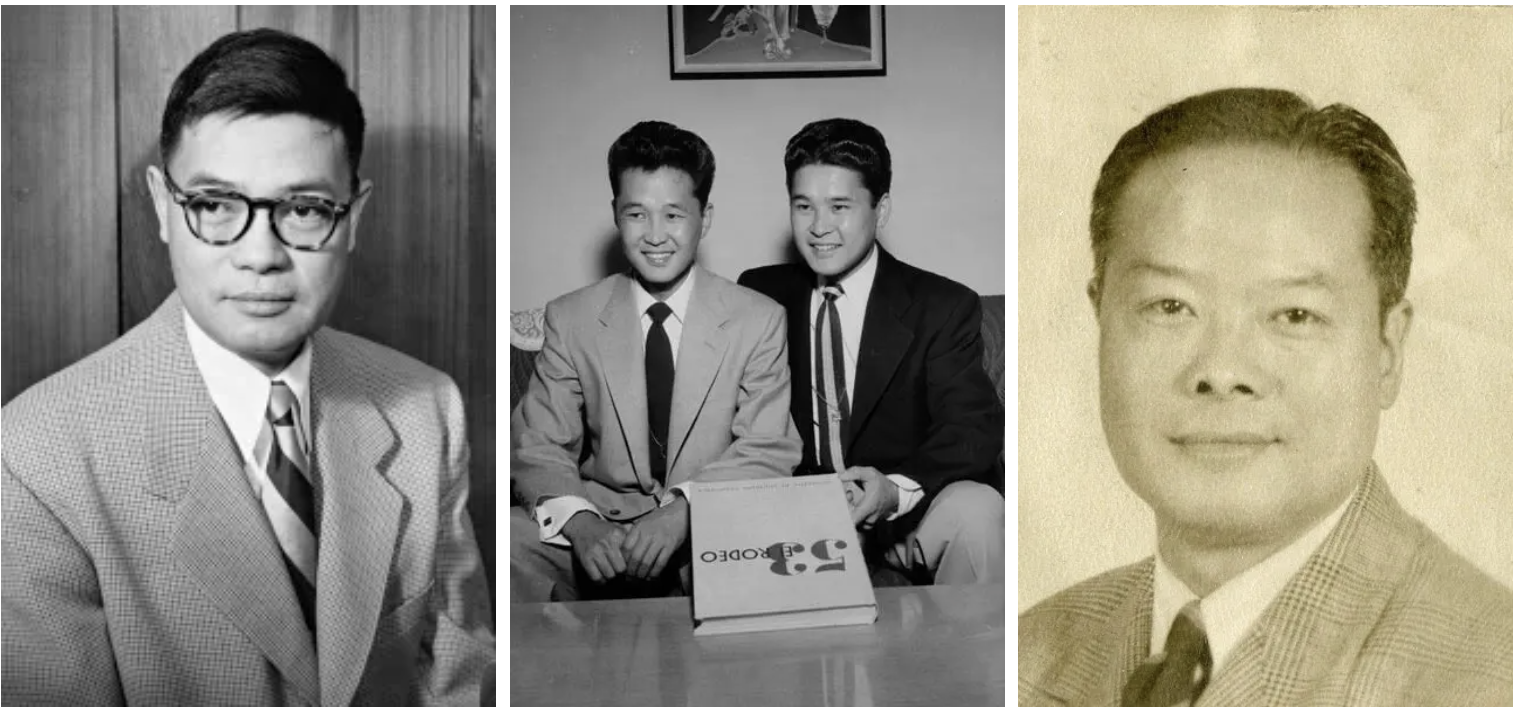
Before long, Silver Lake emerged as an epicenter of Asian American modernist architects. In the 1950s and ‘60s, architects Schwen Wei Ma, Joseph J. Takahashi, Thomas (Kiyoshi) Takahashi, Hai C. Tan, and Hideo Arthur Matsunaga designed apartment buildings and houses that, in most cases, integrated modernist principles with Japanese or Chinese elements. Many chose to build in the Primrose Hill area where many of the home buyers (e.g. Edwin Kwoh and Beulah Quo, Jack and Betty Lee, Lyle C.T. Low, Kiyoshi and Mizuye Kawaguchi, etc.) were also Asian American. They used to have an annual Primrose Hill neighborhood block party of sorts.
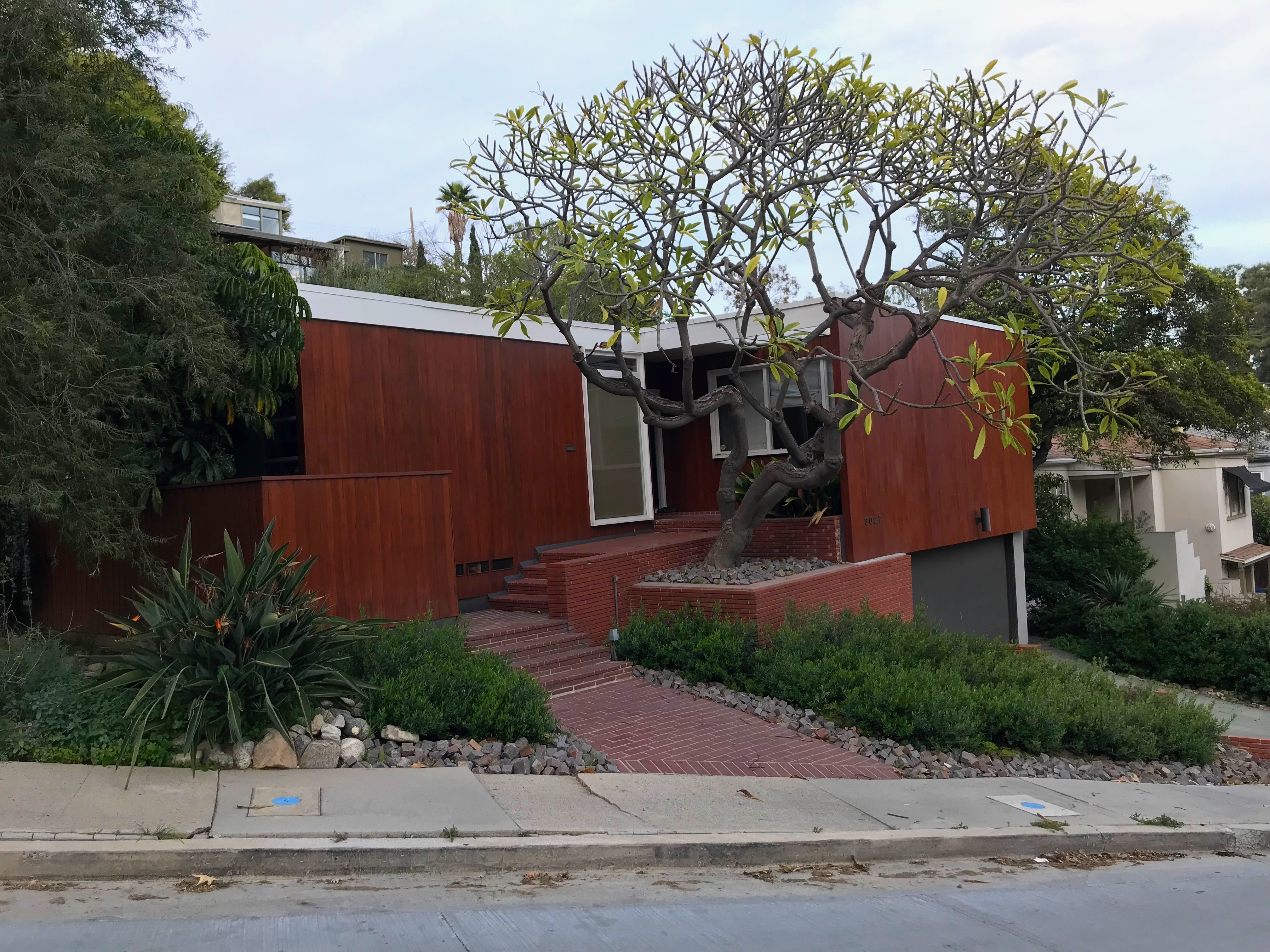
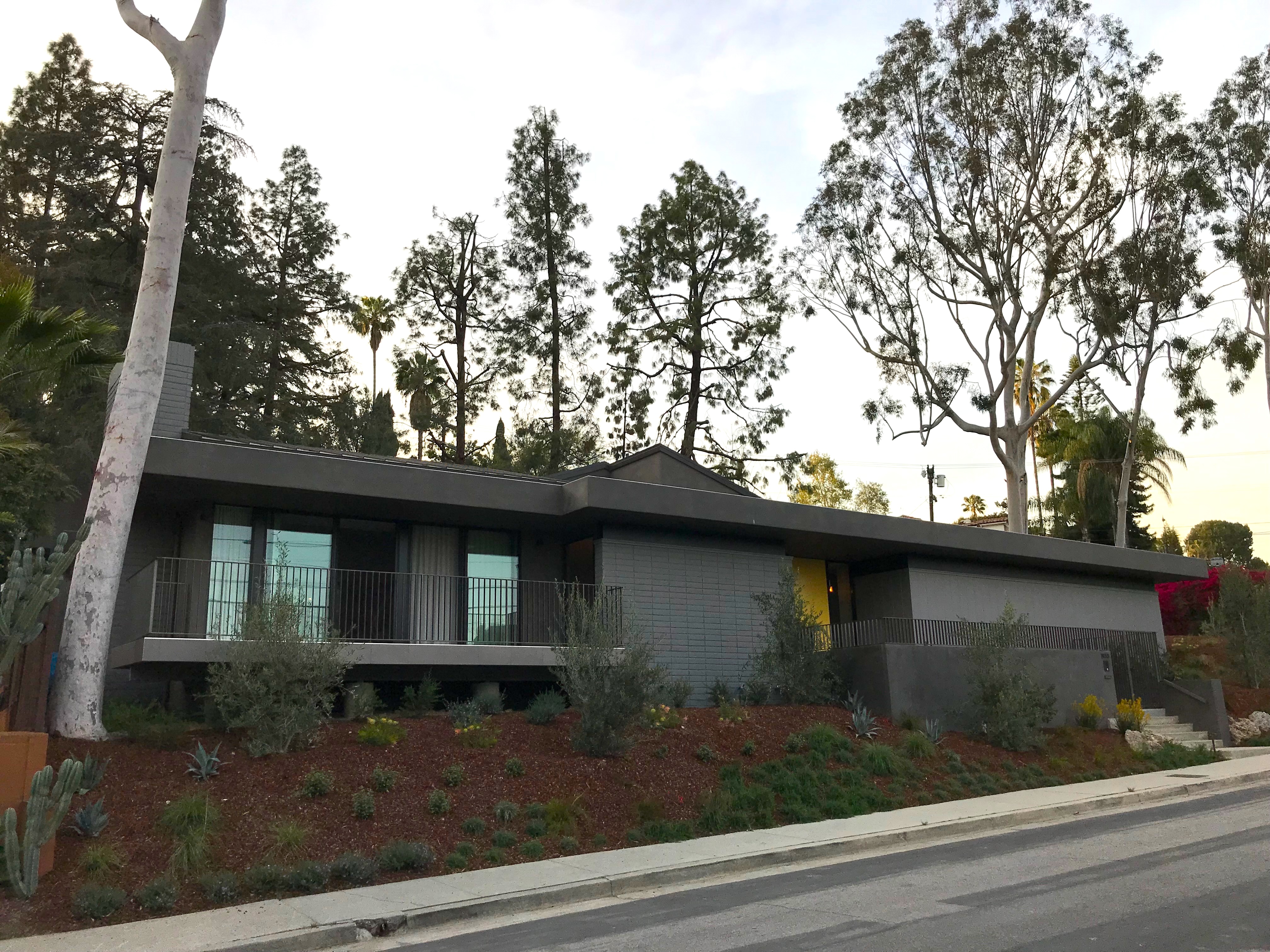
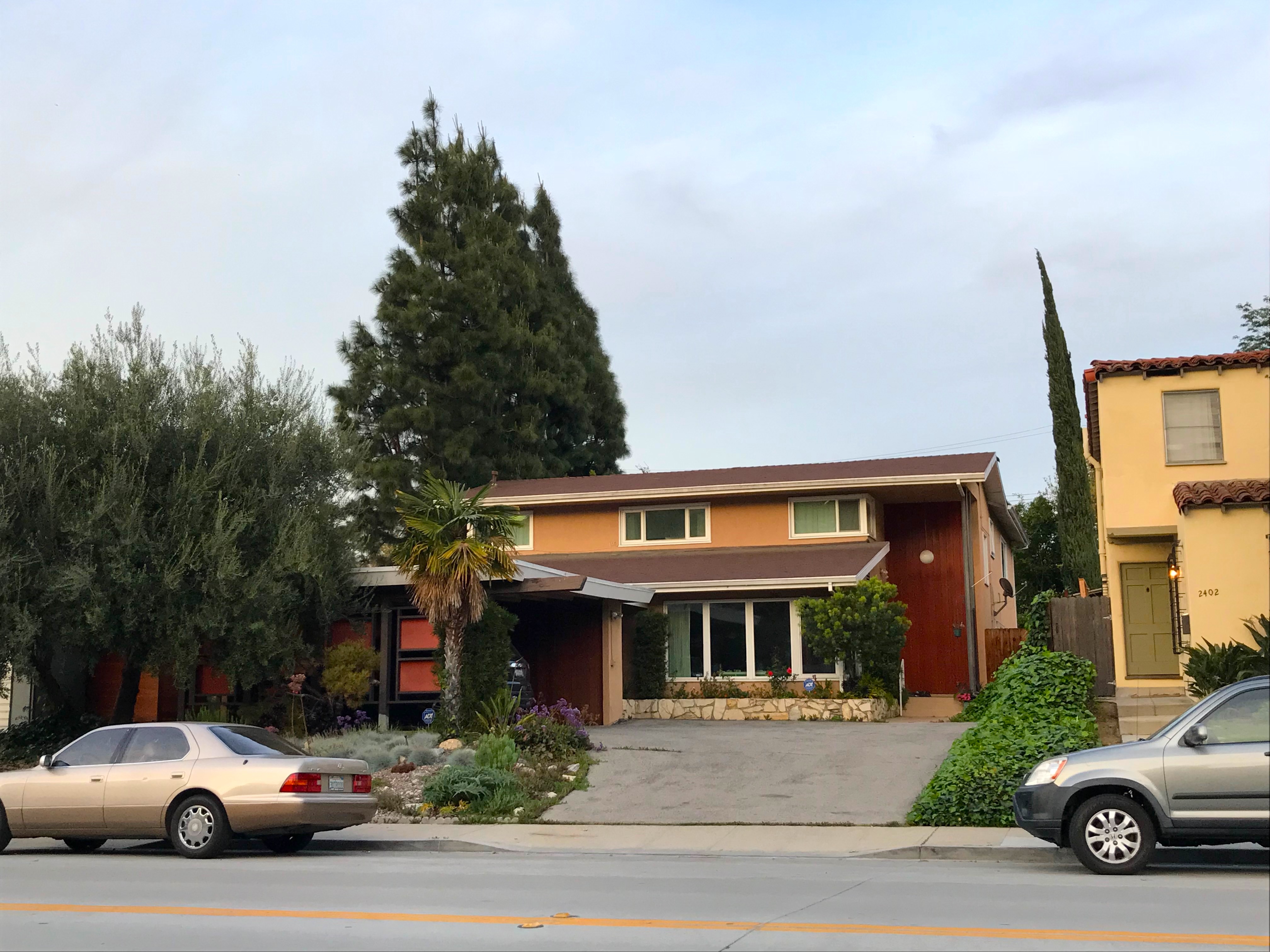
Left to right: The Choy Family Residence (Eugene Choy, 1949), the Lee Family Residence (Hai C. Tan, 1969), the Wong Family Residence (Gilbert Leong, 1953)
In 1972, Eugene Choy’s son, Barton, would follow in his father’s footsteps and design residences in the Primrose Hill area. Eugene Chow built his family residence in Primrose Hill in 1988. Not far away, and that same year, the Memphis Milano-inspired estate designed by Miller Fong and built in 1988, currently holds the record for the most expensive residential sale in the history of Silver Lake.
NEUTRA COLONY
Across the reservoir from Primrose Hill, Austrian Jewish architect and Silver Lake resident, Richard Neutra, constructed the David Treweek House in 1948. Ultimately, this “Neutra Colony” would expand to a cluster of nine houses. Neutra’s modernism, too, was deeply influenced by Japanese principles following his 1930 visit to Japan – especially the concept of katei (house-garden), where a building and its environment are treated as a single organic entity. Many of the Neutra Colony’s first residents – including Dr. George and May Kambara, Hitoshi and June Ohara, John Akai and Susie Akai (now Susie Akai Fukuhara), and Yoshi Inadomi – most of whom had only recently been released from internment in the Gila River and Tule Lake war relocation centers.
CIVIC BLUEPRINTS
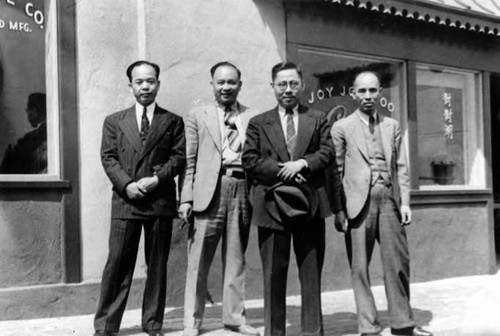
Silver Lake also attracted several prominent and historically important developers whose reach extends beyond the neighborhood and is exemplified elsewhere in the city. After Old Chinatown was demolished in the 1930s to allow for the construction of Union Station, an engineer and community leader, Peter Soo Hoo, co-founded the Los Angeles Chinatown Corporation to circumnavigate discriminatory property laws. His New Chinatown opened in what had until then been Little Italy in 1938. Soo Hoo died in 1945 but his widow, Lillie Leung Soo Hoo, and their son, Peter Soo Hoo Jr, moved into a Schwen Wei Ma-designed home in Primrose Hill in 1952.
Inspired by Los Angeles’s tourist-appealing New Chinatown – with its pagodas and Tyrus Wong-painted dragons – Hi Duk Lee was responsible for trying to create a Koreatown along the same lines. Old Koreatown arose along Jefferson Boulevard in the 1900s and physically looked like much of surrounding South Los Angeles. Lee redesigned an existing building on Olympic Boulevard to have a Korean appearance. Today home to Guelaguetza, it opened in 1975 as VIP Palace (영빈관). Across the street, VIP Plaza (영빈플라자) opened in 1979. Both stood out with their traditional blue-tiled roofs widely associated with Korean architecture. More Korean developers followed and in 1980, the stretch of Olympic Boulevard became the first official Koreatown. Although other Korean developers and residents flocked to the area, nearly all abandoned Lee’s vision of a Korean aesthetic and the Father of Koreatown became disillusioned and ultimately settled in Silver Lake, where he died in 2019.
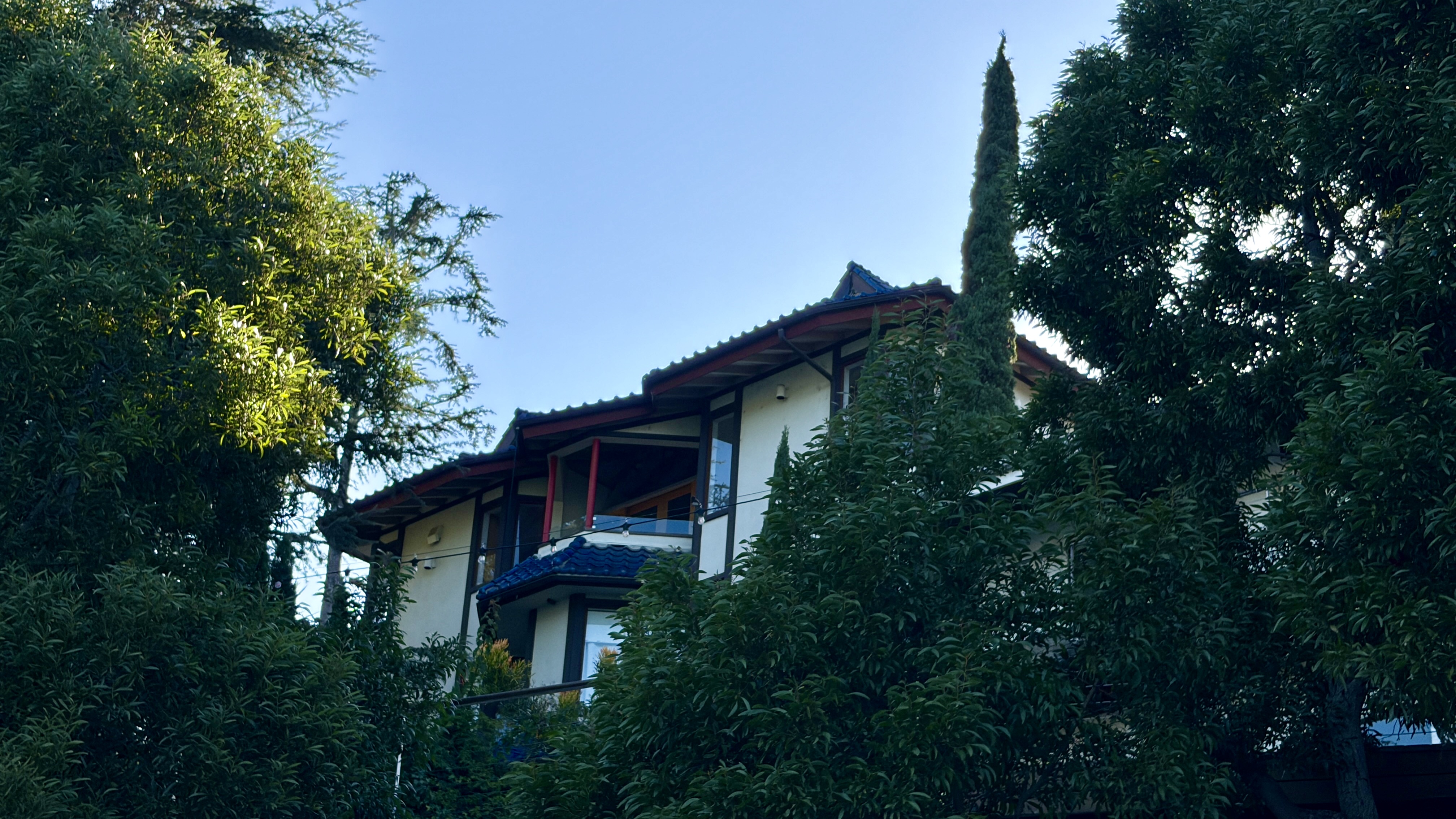
The most widely recognized features of Little Tokyo are doubtless its Japanese Village Plaza and iconic Yagura Fire Tower. Both were designed by David Hyun. Hyun was born in Japanese-occupied Seoul in 1917. He came to Los Angeles in 1947 where he became the first registered Korean architect in the US. His father, Reverend Soon Hyun, had settled in Old Koreatown in 1946. In 1957, he designed a house in Silver Lake – the Tapelband Residence – for a Belgian Holocaust survivor, Jules Tapelband, and his Danish wife, Esther Aagaard (for whom Esther’s Steps were named in 2015). In 1993, Hyun built his Korean architecture-influence family residence in Primrose Hill – using the same blue tiles he’d employed in Little Tokyo. Hyun died in 2012.
THE SECRET GARDENERS
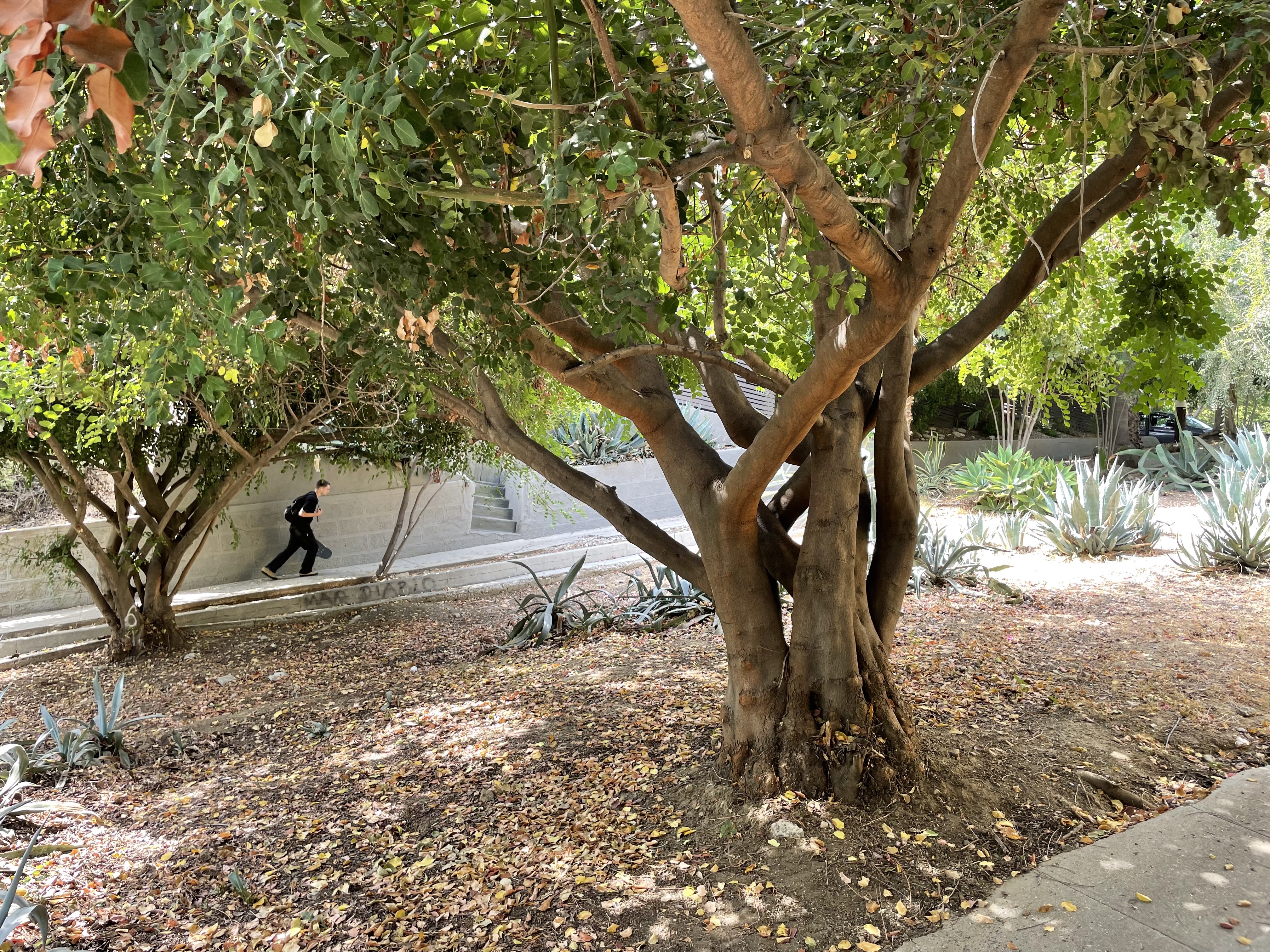
The importance of landscape and landscape architecture are often overlooked in the US. Here, the thirsty, high-maintenance, and fallow lawn is the ideal landscape of the typical suburbanist – and “gardening” is a euphemism for noisily blowing away soil-and-wildlife-nourishing leaves with spore-and-allergen-churning trash blowers. In East Asia it is a different story. It’s not just the Japanese katei in which the home and landscape are inseparable; the traditional Chinese Siheyuan and Korean Hanok both are centered around courtyards designed around their own distinct philosophies and purposes. In Los Angeles, gardening and landscaping trades were long dominated by Japanese Angelenos. One of the main reasons the Sawtelle emerged as the Westside’s Japantown was because the wealthy estate owners of nearby Bel-Air, Brentwood, and Westwood needed Japanese to tend to their lawns – but not live in their neighborhoods.
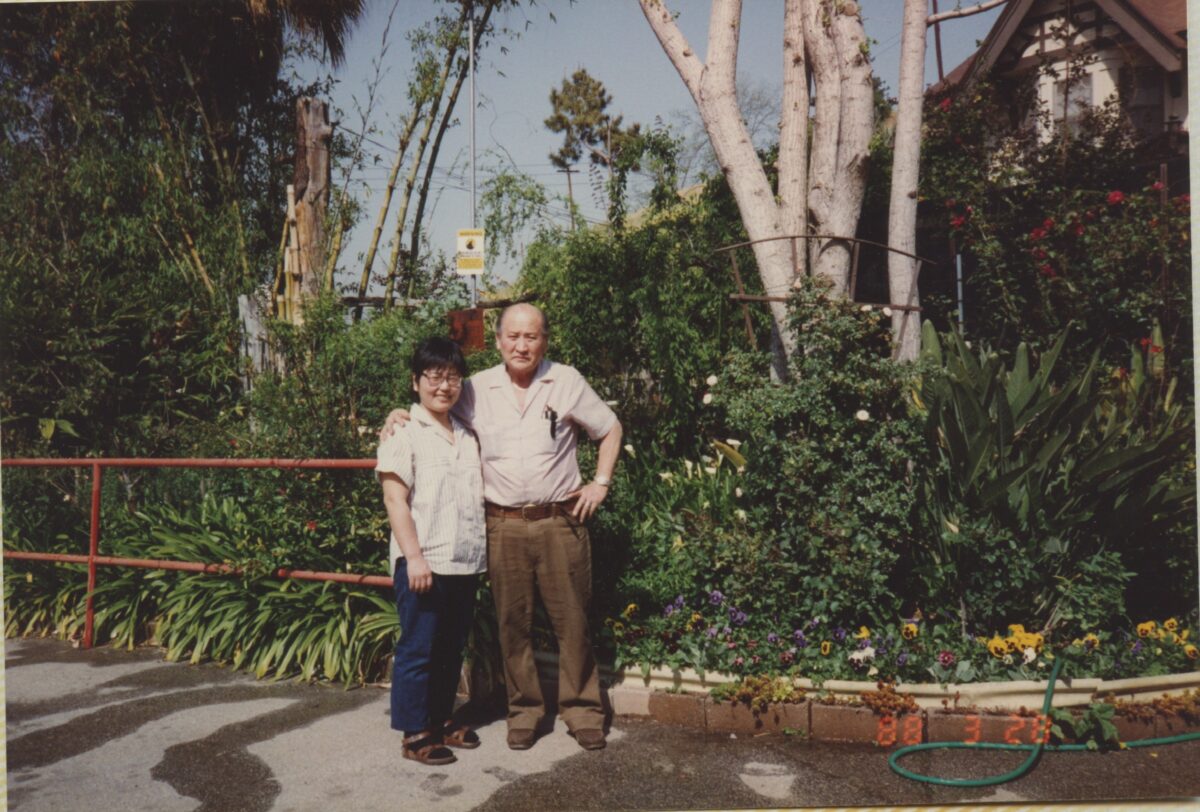
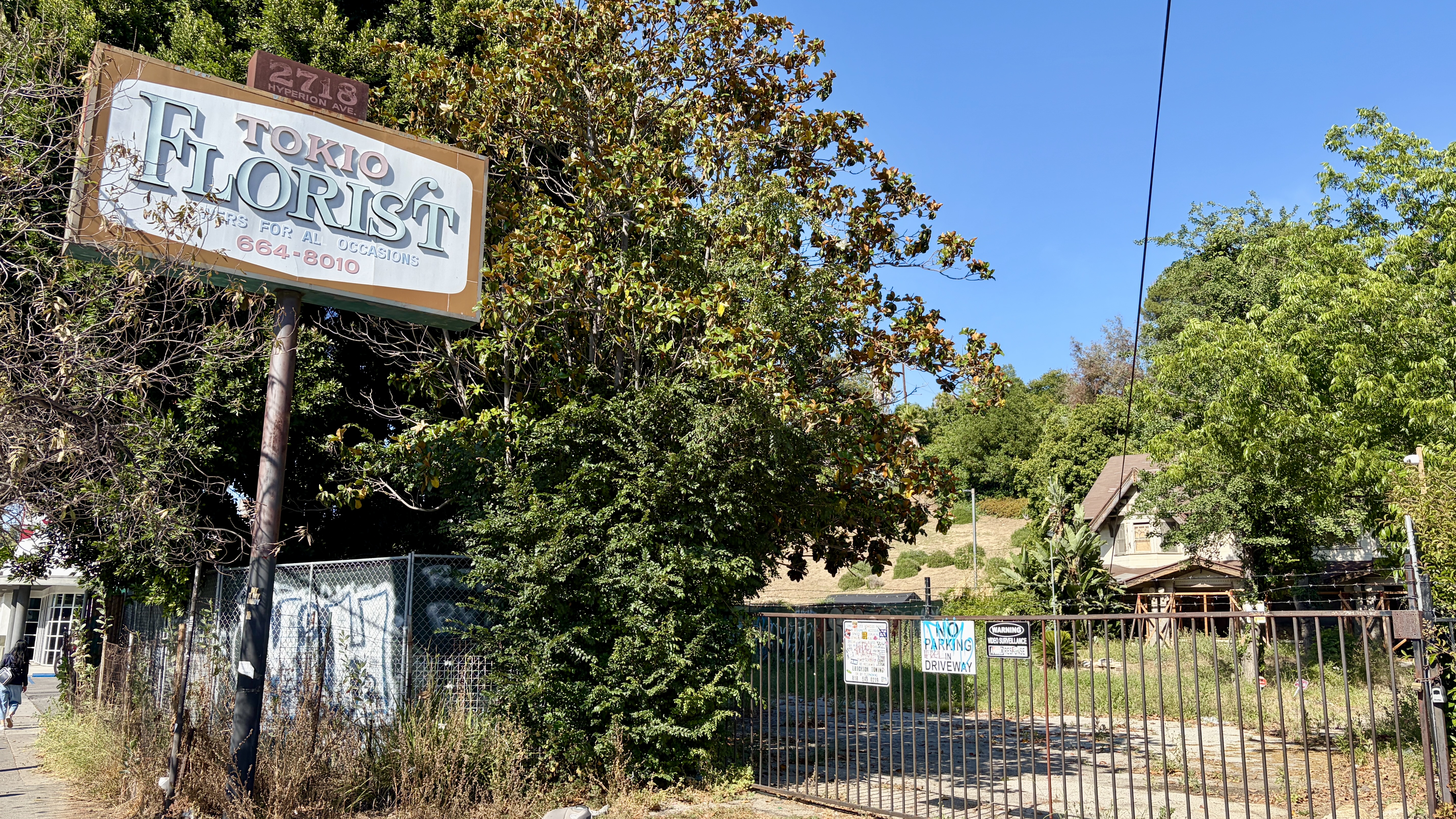
By 1934, a third of working Japanese were employed in landscaping. In 1959, one – James Noboru Ishitani – was elected to the Board of Governors of the Arboreta and Botanic Gardens. He lived in a home next to a block of Maltman Avenue that was never paved due to its steep grade. It’s widely believed that it was Ishitani who transformed the dirt block into an urban oasis. Yuki Sakai founded Tokio Florist in Los Feliz in 1929. In 1960, with help from her brother, Saichi Kawakami, moved the business to the stately Tudor Craftsman on Hyperion. Sakai’s daughter, Sumiko “Sumi” Sakai, and her husband, Frank Kozawa, continued to run Tokio Florist afterwards. It closed in 2019 and the Sakai-Kozawa Residence/Tokio Florist is currently undergoing adaptive reuse into a boutique hotel and restaurant.
FROM LITTLE MANILA TO FILIPINOTOWN
At the dawn of the 1960s, the largest Asian populations in Los Angeles were Japanese, Chinese, Filipinos, and Indians. It wasn’t until the 1968 enactment of the Immigration and Nationality Act of 1965 that the door was opened wider for immigrants and refugees from more of the world. Without the immigration act, Los Angeles wouldn’t likely have grown into the metropolis with the largest populations of Indonesians and Mongolians in the country – or the largest populations of Cambodians, Filipinos, Iranians, Koreans, Taiwanese, Thai, and Vietnamese outside of their respective homelands. That was also the year activists Emma Gee and Yuji Ichioka coined the term, “Asian American” as an umbrella term.
Los Angeles’s historic Filipino enclave, Little Manila, was located west of Little Tokyo. With the redevelopment of Bunker Hill and the Civic Center, many Filipinos moved into Mideast Los Angeles – specifically the southern ends of Echo Park and Silver Lake – and the northern end of Westlake. The area came to be known as Filipinotown at least as early as the 1970s. In 2002, when the city was obsessed with the adjective “historic,” it was officially named Historic Filipinotown (see also the Historic Core, Historic South Central, Historic West Adams, etc). Although the Hollywood Freeway carved a barrier between Filipinotown and Silver Lake, the population is such that Filipinos are the second-most-common ethnicity in Silver Lake (after Mexican).
SUNSET SUNRISE | EAST WEST
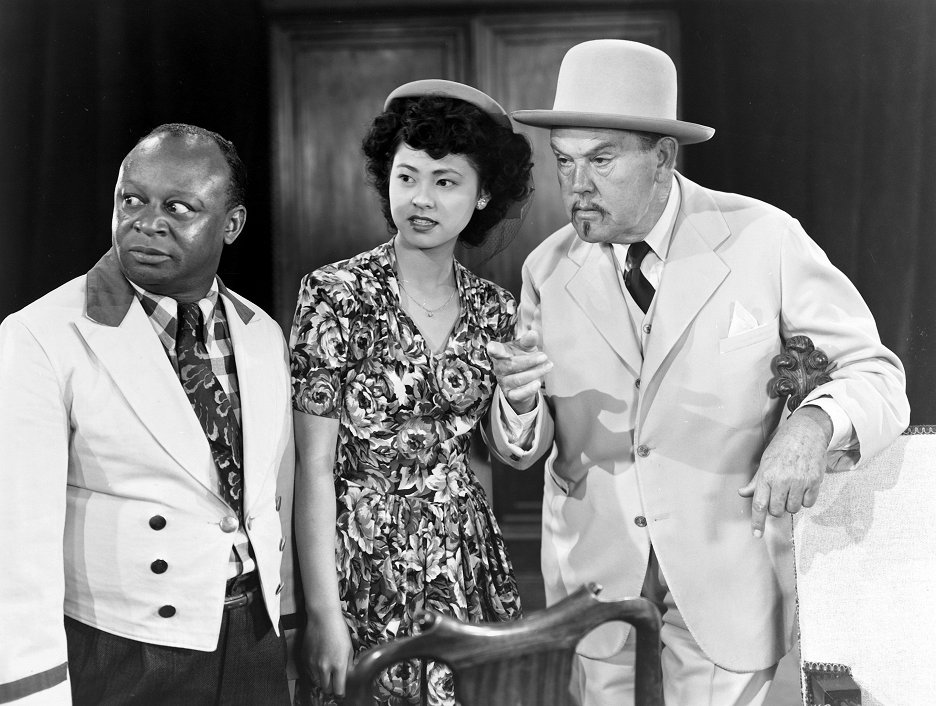
By the mid-1960s, many Silver Lake properties were associated with Chinese American landlords and developers. One of the most recognizable (and ultimately, notorious) properties was the Sunset Pacific Motel, which was founded in 1964 by Edward J. Eng and his wife, former Miss China City, Frances Chan. In 2015, after it was abandoned, Susannah Tantemsapya, and her non-profit Creative Migration, undertook (with other organizations) to transform it with lime wash into a giant art project called ProjectionLA. It was demolished in 2023.
Chan, who died in 2004, had worked in the 1930s and ‘40s as an actor in Hollywood. Her most notable film role – indeed, one of the few for which she was actually credited, was “number three daughter” of Charlie Chan, a series largely filmed at the nearby Monogram Studios. For half of her roles, Chan was uncredited – fairly typical for Asian American actors then pursuing a career in Hollywood. The star, Charlie Chan, was naturally played by the white Warner Oland in yellowface and offering fortune-cookie wisdom that usually began with the words “Confucius say…”
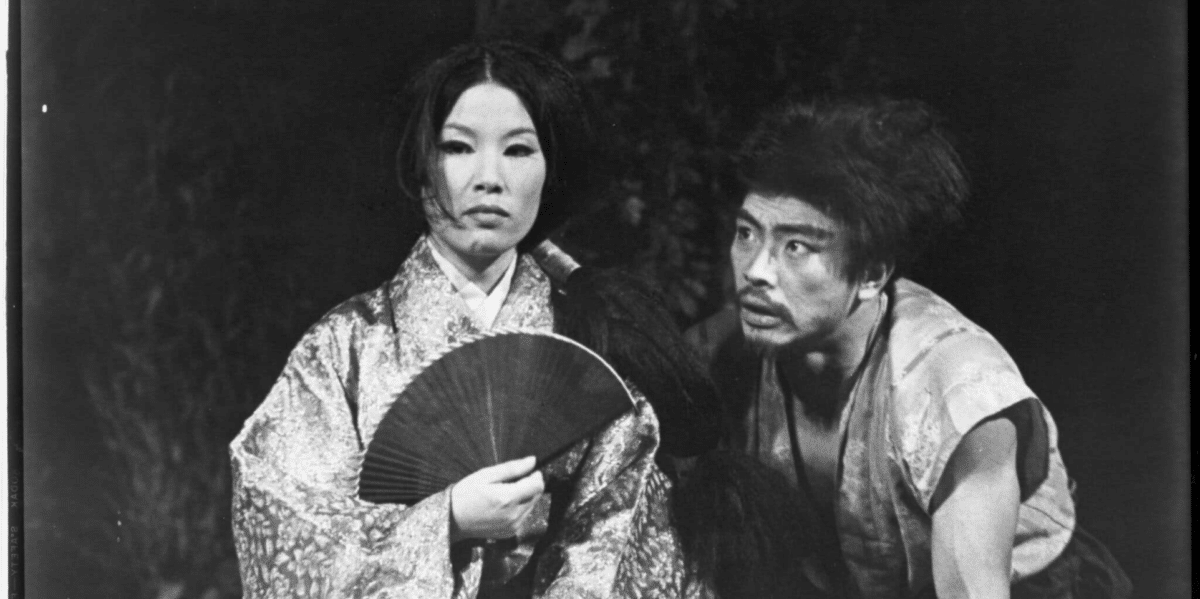
Wanting to escape the stereotypical and marginalizing roles to which most Asian Americans working in Hollywood found themselves confined, a group of actors got together to create a professional space where they sink their teeth into more rewarding roles. The group called themselves East West Players (EWP) and they were Kyoko Lu, Makoto “Mako” Iwamatsu, Pat Li, Rae Creevey (the token white), Soon-tek Oh, Yet Lock, and Beulah Quo (who lived in a Silver Lake home designed by Gilbert Leong). Their original home was Bethany Presbyterian Church on Griffith Park Boulevard – last used as 필그림 교회 (Pilgrim Church) which moved out in 2008. It’s currently scheduled to open in 2026 as Hotel Lucile.
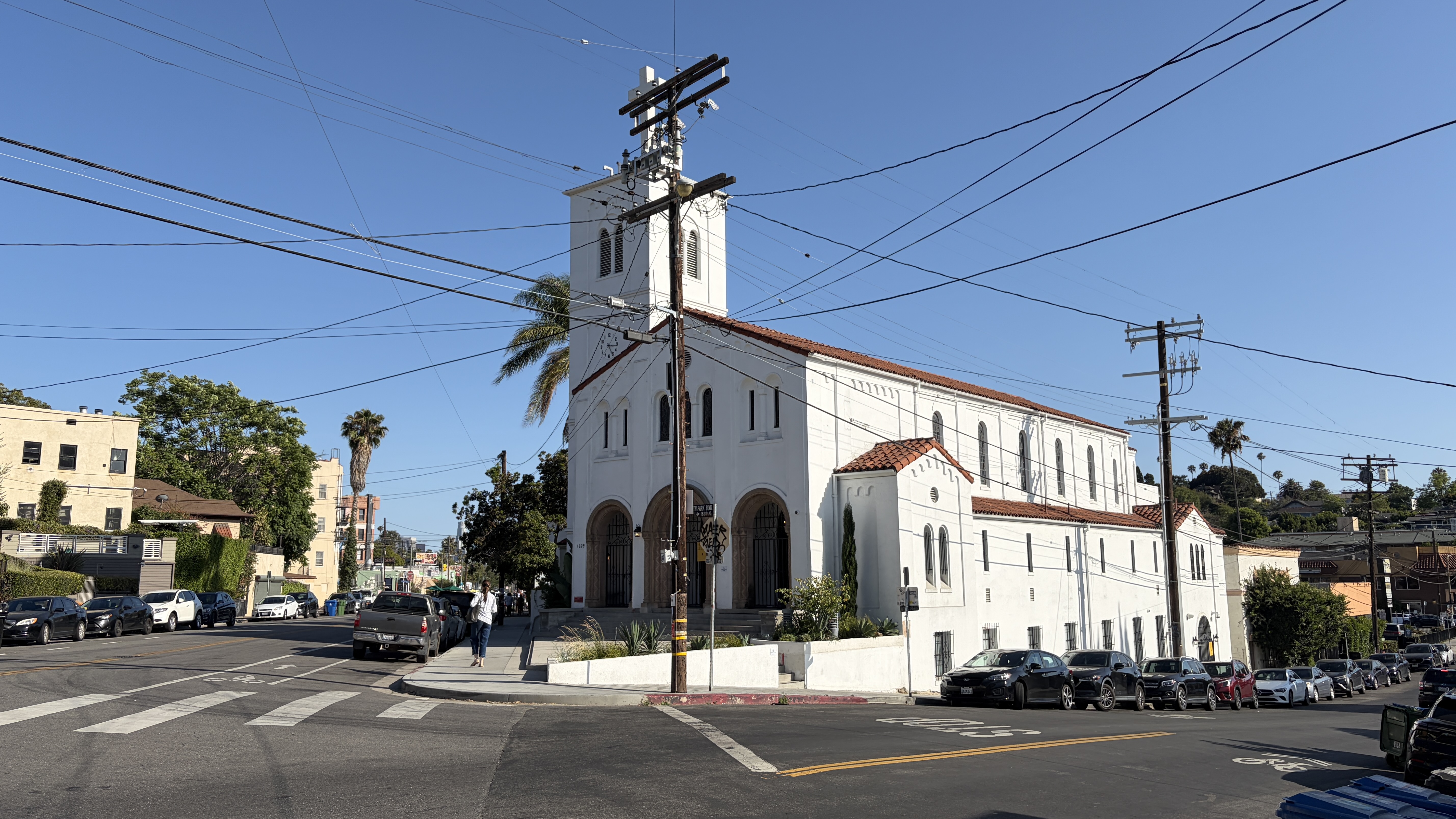
EWP left Silver Lake in 1972 and in 1998 found a new church-home in Little Tokyo. Of course, that didn’t mean all Asian American actors and playwrights moved with them. Spend any time around the neighborhood in recent years and you’re bound to have crossed paths with Atsuko Okatsuka, Constance Wu, Felix Racelis, Gedde Watanabe, James Sie, John Cho, Sab Shimono, Sandrine Holt (née Ho), and Freda Foh Shen (who co-chairs the Silver Lake Wildlife Sanctuary).
THE SIGHTS AND SOUNDS OF ASIAN SILVER LAKE
Silver Lake is still associated with its indie/alternative music scene and bands associated with the neighborhood don’t always translate to having had members who actually lived in the neighborhood. That said, Linda Tan (Maybe Vultures) and Sandra Vu (SISU, Midnight Movies, Dum Dum Girls) are or used to be Silver Lake residents. Perhaps the best known is Christopher Guanlao, the drummer of Silversun Pickups, a band that after all is a reference to Silver Lake’s Silversun Liquor and Silversun Plaza (a portmanteau of Silver Lake and Sunset) — across the street from Silverlake Lounge, where all three bands performed with varying degrees of regularity in the 2010s.
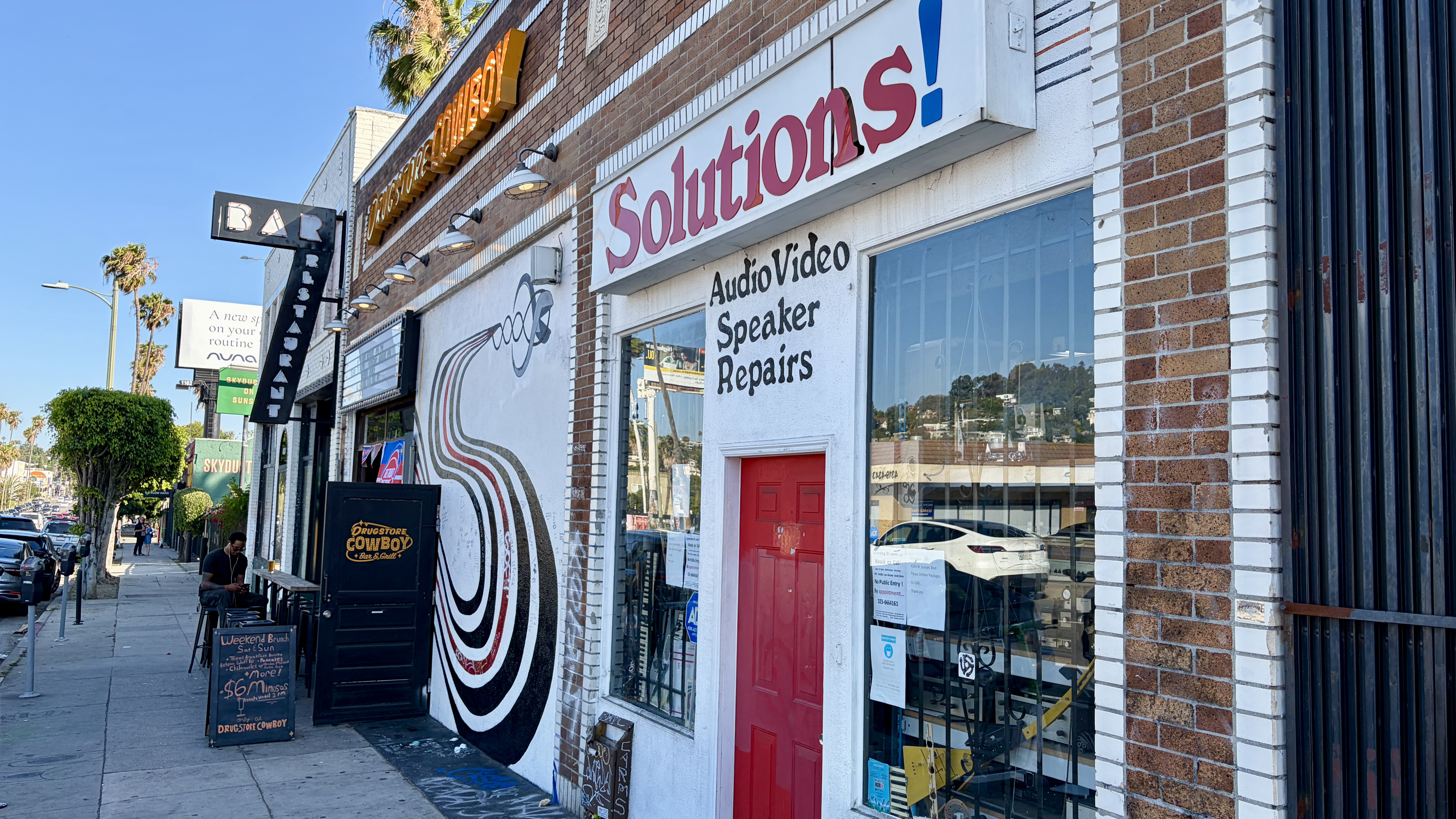
Sadly, we live in a world where visual artists aren’t generally as recognized (or financially rewarded) as their performing arts cousins. One probably crosses paths with artists all the time without recognizing them – although they may recognize their work. The portraits of Cambodian American refugees that use iconic pink donut boxes as their canvas are the world of Hathaway Estates resident, Phung Huynh. And that “Figure 8” mural scrawled upon by Elliott Smith fans? That’s actually a musical staff shaped like an “S” for Solutions! And was painted by Lung Pak Lew.
Silver Lake has also long been associated with authors – probably none more so than Anaïs Nin – although Raymond Chandler and James Leo Herlihy also lived in the neighborhood. Although Asian American literature can be traced back at least to the 1880s, it’s only in recent years that there has been a significantly raised profile for many Asian American authors. Few are better known than Viet Thanh Nguyen, whose 2016 novel, The Sympathizer, won him a Pulitzer Prize. He lived in Silver Lake until 2018. Silver Lake writer and resident, Helen Bui, founded the immensely popular Silver Lake Reading Club in 2024. Bui’s organization features a highly diverse line-up of guest speakers but there’s no assigned reading in the club. Its focus is on encouraging focused reading, supporting literacy, and building community. I would not be surprised in the slightest if some of the featured authors or members warrant inclusion in this piece.
GASTRO-DIPLOMACY AND SAVE ROOM FOR DESSERT
Cuisine is the entry point into other cultures for most people. Anyone who’s been asked where they’re from (or “really from”) has, no doubt, after naming their ancestral homeland (or birthplace) been told by the interrogator that they are a fan of a particular food item from that country. But food is fun – nearly everyone eats it – so I’ve saved it for last.
For many years, Silver Lake’s restaurant scene was – with notable exceptions – characterized by unpretentious local options that catered to neighborhood residents. There were burrito stands, old school pizzerias, remarkably affordable pupuserias, and, of course, taquerias. Before Taiwanese and Thai chefs threw a rope to vegetarians, we largely subsisted on been and cheese burritos or whole wheat alfalfa sprout sandwiches.
With the notable exceptions of Casita del Campo, Astro, and Millie’s — most of the neighborhood’s oldest restaurants opened in the 1980s. Although not really a restaurant – United Bread & Pastry was opened by Andrea and Romeo De Guzman in 1985. It’s not just a bakery, though, either. The shelves of United are stocked with a variety of Pinoy street foods and snacks. Wong’s Wok, meanwhile, has been quietly serving American Chinese cuisine at Silver Ridge Plaza since 1989.
THAI TOWN EAST
In the 1990s, even before the Thai government launched its gastro-diplomatic takeover, Thai food was exploding in popularity in Los Angeles – home to the largest Thai community outside of Thailand. When I moved into my building in 1999 – built by the Chinese American Lem Fong in 1965 – eight of the eleven units were inhabited by Thai families – some of whom worked at Thai American Express Cafe II – which was owned by Dhanakorn “Pete” Bunnag, who lived across the street in the home that is now Sophie Graham’s (née Esteban) Broome Street General Store. Silver Lake isn’t often noted for its Thai community, which is overshadowed by nearby Thai Town — but the Tilakamonkul family, who in 1972 opened Los Angeles’s first Thai grocery store, Bangkok Market, lived in the Silver Lake Heights area.
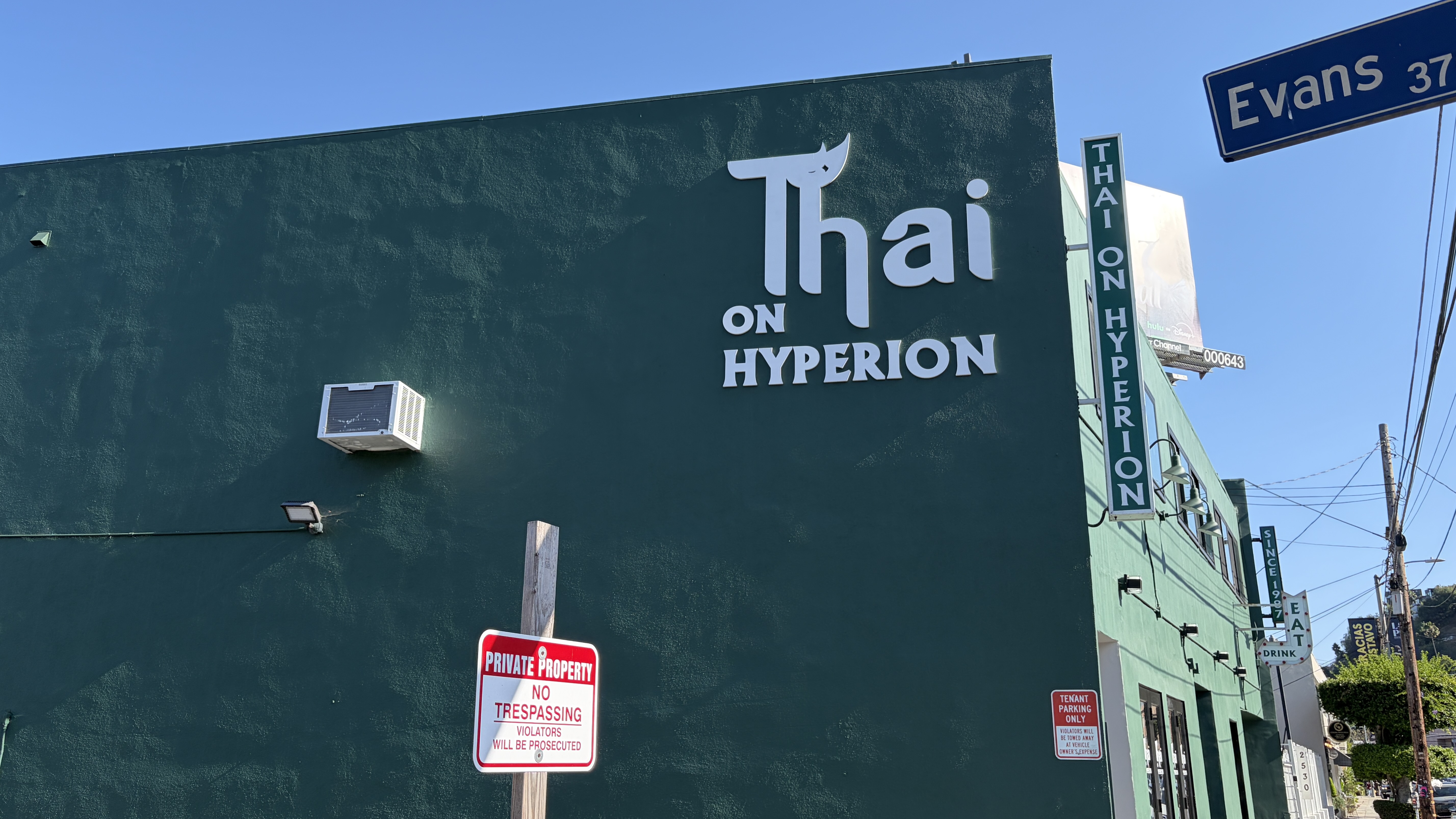
Today there are several long-running Thai staples. Leela Thai (which employed another of my neighbors and which was rebranded The Silver Lake House by Leela Thai in 2017) opened its doors in 1995. Ted Vattanawase opened Thai Taste in the Fletcher Square shopping center in 1996. Katy Noochlaor and Annie Daniel opened Rambutan Thai (now SameSame) in 2003. Pornphan Charoensit opened the vegetarian Bulan Thai in 2007. Kris Yenbamroong and Sarah St. Lifer opened Night Market + Song in 2014. Gone but not forgotten are Mae Ploy (1992-2018), Sompun (1994-2000), My Vegan Gold (2013-2024), and April90s Something (2019-2024). Chefs Linda and Aida are planning on opening Thai on Hyperion soon.
DIVERSIFICATION AND FOOD FADS
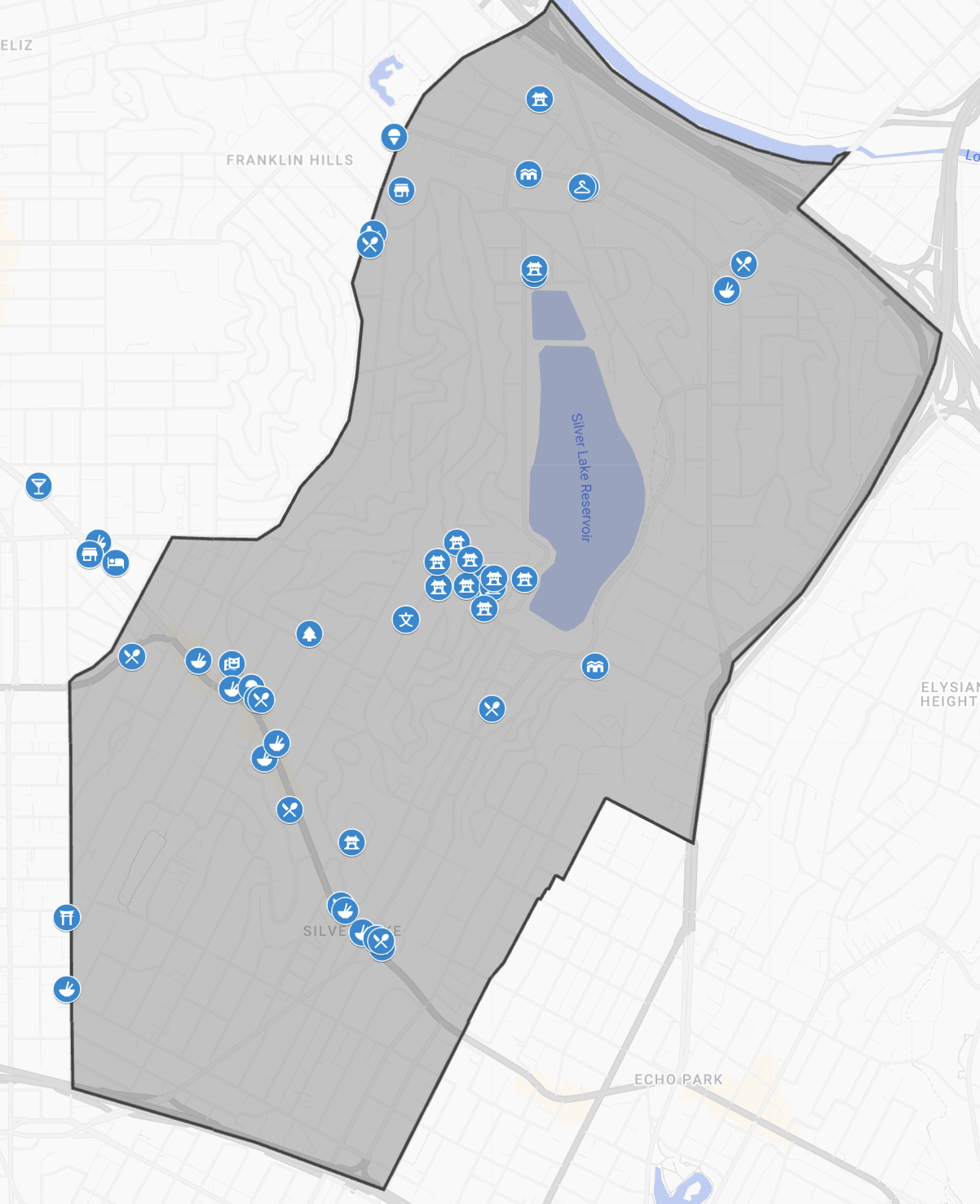
The 21st century restaurant scene in Silver Lake transitioned into something more diverse. When Derek Le opened Pho Café in 2002, it was Silver Lake’s first Vietnamese restaurant. When Masih Ahmed opened Agra Cafe in 2005, it was somehow the only Indian restaurant in the neighborhood. Its neighbor, Saito’s Sushi, was the neighborhood’s only Japanese restaurant. Both, technically, were in East Hollywood — not Silver Lake — but the triangle bounded by Myra Avenue, Fountain Avenue, and Hoover Street was “annexed” by the Silver Lake Neighborhood Council in 2009. Today Silver Lake boasts Chinese, Filipino, Indian, Iranian, Japanese, Korean, Mongolian, Taiwanese, Thai, and Vietnamese restaurants – as well as New American restaurants owned by Asian American restaurateurs such as Chrissy and Jason Kim, who opened Forage in 2010.
There were Asian-rooted food fads in the 20th century — chop suey, Tiki culture, and sushi among them. Filipino bartender Ray Buhen and his wife, Jerri, founded Tiki Ti nearby, in neighboring Los Feliz, in 1961. But most food fads back then were driven by new technologies (microwave ovens), convenience, or traced their roots back to Europe (Beef Stroganoff, Swedish meatballs, beef Bourguignon, pizza, fondu, quiche, pasta primavera, crêpes, sundried tomatoes, etc). The 21st century, on the other hand, has been utterly dominated by Asian descended crazes: Kombucha, Korean bbq, boba/bubble tea, Korean fried chicken, Korean tacos, ramen hamburgers, cheese tea, artisanal sandos, matcha lattes, ube desserts, hojicha desserts, using the word “umami” (instead of “savory”), and Chinamaxxing your diet.
Pinkberry came to Los Feliz (just outside Silver Lake) in 2007 and was home to MatchaBar from 2017-2019 — but holds a special place in the ramen mania of recent years as the birthplace of the chain, Silverlake Ramen. Chinese cooks introduced lamian to Japanese port cities back in the 19th century — but “shina soba” (Chinese noodles) only became a staple of that Japan after the Second World War, when the defeated Japan was drowning in a glut of surplus American wheat. In 1958, Taiwanese inventor Momofuku Ando (né Wu Baifu) founded Nissin Foods and instant ramen sustained decades of American college students but restaurant-style ramen remained relatively obscure in most of the US. That changed after Momofuku Noodle Bar opened in New York City in 2004. Thomas Aono and Jitaek Lim opened the first location of the Momofuku-inspired Silverlake Ramen in 2017. It now has 34 locations. Interestingly, actual Japanese ramen chains like Asahikawa-based Hokkaido-style shoyu ramen chain Ramen Bangaichi and Kurume City-based tonkotsu ramen chain, Ramen Tatsunoya both came and went.
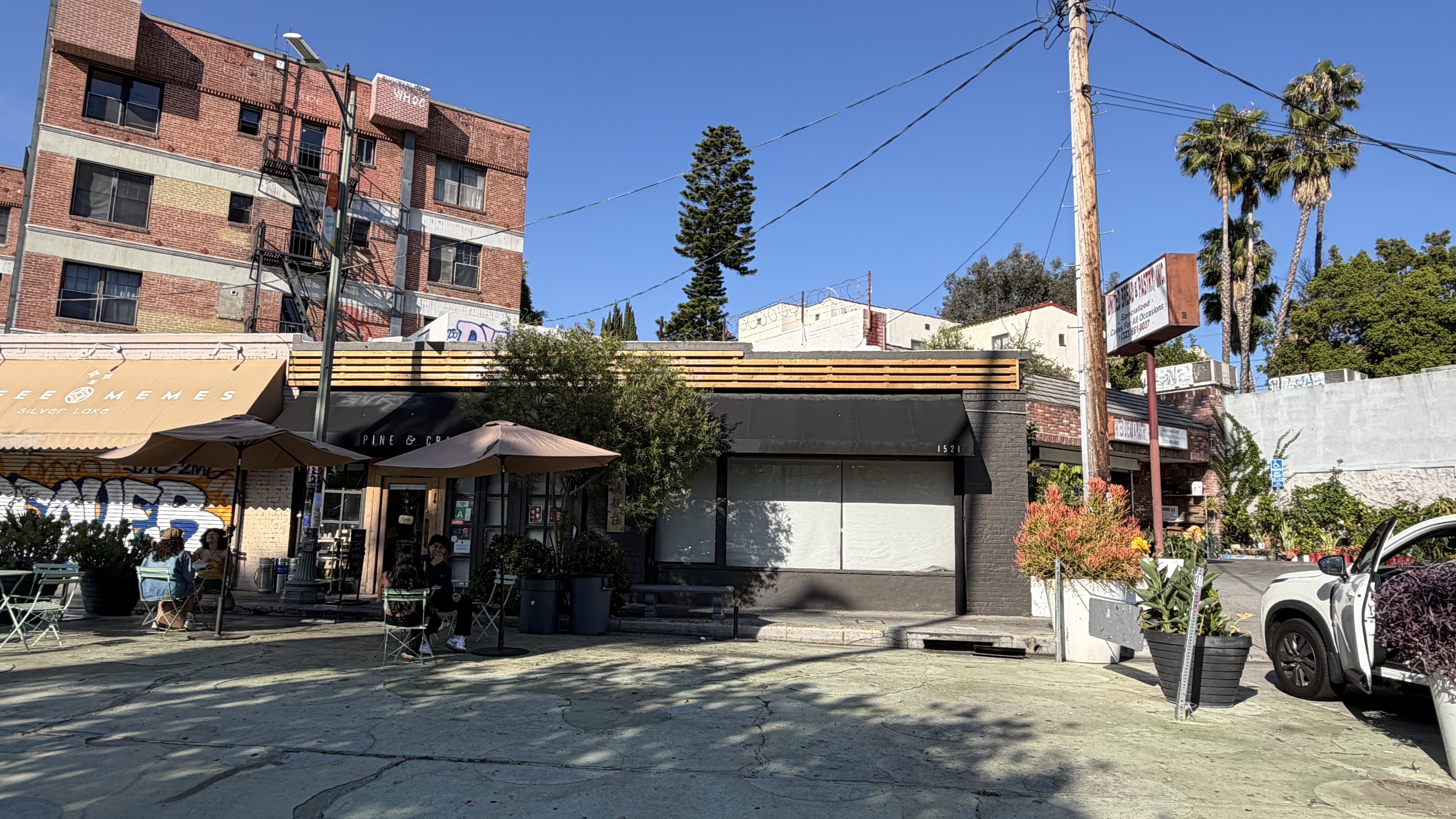
The Silver Lake restaurant scene of the 2010s wasn’t limited to ramen, obviously, and that decade saw the establishment of several restaurants that now feel like neighborhood staples, including Sunny Choi’s Kombu Sushi (founded in 2013); Eric and Miriam Park’s BBQ+RICE and Vivian Ku’s Pine & Crane (both founded in 2014); Allen Wong and Ivy Wei’s Fat Dragon (founded in 2016); and Damon Min Cho’s Izakaya Osen (founded in 2017). Izakaya Osen is currently in the process of relocating across the street to the location that from 1973-2013 was home to Tom’s Burgers – one of the at one time numerous burger/burrito/pastrami joints run by Greek immigrants across the region.
The 2020s got off to a shaky start with a global pandemic, lockdowns, rising rents, and wealth-extracting delivery apps adding tremendous challenges to businesses already impacted by everyday life events like breakups, childbirth, retirement, and death. Jewel (founded by Sharky McGee and Jasmine Shimoda), Spoon & Pork (founded by Ray Yaptinchay and Jay Tugas), All Day Baby (founded by Lien Ta and Jonathan Whitener), Needle (founded by Ryan Wong and Karen Dang) and Ma’am Sir (founded by Charles Olalia, Russell Malixi, and Wade McElroy) all had their fans but ultimately closed. Luckily, other Asian American restaurants have opened and continue to serve the community: Kenji Koyama’s Kenbey Uyen Le’s Bé Ù, Avish Naran’s Pijja Palace, and Cody Ma and Misha Sesar’s Azizam (all founded in 2021); Mashti and Mehdi Shirvani’s Mashti Malone’s Silver Lake (founded in 2022); Debbie Lee’s Joseon (founded in 2023); Anna Kim, BJ Kim, and June Kwan’s GONGGAN 공간 and Meng Defei’s 西贝XIBEI Dumplings (both founded in 2025); and Peter Moon and Eon Lew’s 손말이 / SonMari (founded in 2026).
While often bizarrely characterized as the latest and most Los Angeles or Los Angeles things — the grocery store chain, Erewhon, which came to Silver Lake in 2020, was founded in the Back Bay neighborhood of Boston by Michio and Aveline Kushi in 1966. They were born, respectively, in Kokawa and Yokota, Japan. The store was named after an English novel published 124 years before the birth of Hailey Bieber. Hardly anyone, it seems, acknowledges that it’s an Asian American founded chain born on the East Coast more than half a century ago.
DIVERSITY ON THE BALLOT
Political representation often bears little resemblance to the people politicians are elected to represent but it’s likely that no other Los Angeles neighborhood has had as much Asian American representation. The Silver Lake Neighborhood Council was certified in 2003 but it seems that Frances Tran’s election to the board in 2014 ended more than a decade without Asian representation. Since then, in a period of roughly the same duration, the diversified board has included Eric Cheng, Imran Syed, Jiyoung Park, Philip Kim, and, currently, Joy Taira.
Michael Woo – a Silver Laker since 1980 (having moved here from Alhambra) was elected in 1985 to represent Los Angeles’s 13th District – which at the time included most of Silver Lake. He was the first Asian American on Los Angeles’s City Council. He ran for mayor of Los Angeles in 1993, garnering 46% of the vote to Richard Riordan‘s 54%. In 2015, David Ryu was elected to represent the 4th District, which then included the other half of Silver Lake. He was succeeded by Silver Lake resident Nithya Raman, who was elected with more votes than any other candidate in the history of the Los Angeles City Council. Raman announced her run for mayor in February 2026, a move that made her the second Asian American DSA-LA member in the race (after Rae Chen Huang). And, in the State Assembly, Silver Lake has been represented by Jessica Caloza since 2024 – the first Filipina elected to California State Legislature.
CONCLUSION
At the end of the day – it’s not just the public figures who make a community – it’s the everyday people. Both the long-established and newly arrived; the renters and homeowners; the delivery guys and convenience store clerks; the nurses and nail techs; your friends, family, neighbors, co-workers, and you. All contribute to the complex and evolving tapestry of the neighborhood that can’t easily be reduced to just one or two identities. Silver Lake contains multitudes. Something to appreciate and reflect upon this Asian American, Native Hawaiian, and Pacific Islander Heritage Month.
If you have any corrections or additions, please let us know in the comments.
Support Eric Brightwell on Patreon

Eric Brightwell is an adventurer, essayist, rambler, explorer, cartographer, and guerrilla gardener who is always open to paid writing, speaking, traveling, and art opportunities. He is not interested in generating advertorials, cranking out clickbait, or laboring away in a listicle mill “for exposure.”
Brightwell has written for Angels Walk LA, Amoeblog, Boom: A Journal of California, diaCRITICS, Hey Freelancer!, Hidden Los Angeles, and KCET Departures. His art has been featured by the American Institute of Architects, the Architecture & Design Museum, the Craft Contemporary, Form Follows Function, the Los Angeles County Store, Sidewalking: Coming to Terms With Los Angeles, Skid Row Housing Trust, the 1650 Gallery, and Abundant Housing LA.
Brightwell has been featured as subject and/or guest in The Los Angeles Times, VICE, Huffington Post, Los Angeles Magazine, LAist, CurbedLA, LA Times 404, Marketplace, Office Hours Live, L.A. Untangled, Spectrum News, Eastsider LA, Boing Boing, Los Angeles, I’m Yours, Notebook on Cities and Culture, the Silver Lake History Collective, KCRW‘s Which Way, LA?, All Valley Everything, Hear in LA, KPCC‘s How to LA, at Emerson College, and at the University of Southern California. He is the co-host of the podcast, Nobody Drives in LA.
Brightwell has written a haiku-inspired guidebook, Los Angeles Neighborhoods — From Academy Hill to Zamperini Field and All Points Between; and a self-guided walking tour of Silver Lake covering architecture, history, and culture, titled Silver Lake Walks. If you’re an interested literary agent or publisher, please out. You may also follow on Bluesky, Duolingo, Facebook, Goodreads, iNaturalist, Instagram, Letterboxd, Medium, Mubi, Substack, Threads, and TikTok.


After graduating top in gold work from the USC Dental School in 1940, my brother, Carl C Lau, practiced dentistry in Los Angeles, but was drafted for 2 years in the 1950s, and as a Major, was in charge of the US Army Dental Clinic in Erlangen, Germany. He and his family of wife and 3 sons wished to settle in Silver Lake after his discharge, but being Chinese, he was not able to purchase 3 lots on Redcliff St. because of the Restricted Covenants. His advisor, Mr. North, had to do it for him.
LikeLiked by 1 person
“…and “gardening” is a euphemism for noisily blowing away soil-and-wildlife-nourishing leaves with noisy spore-and-allergen-churning noisemaker trash blowers.” Seriously they’re noisy as hell!
LikeLike