INTRODUCTION
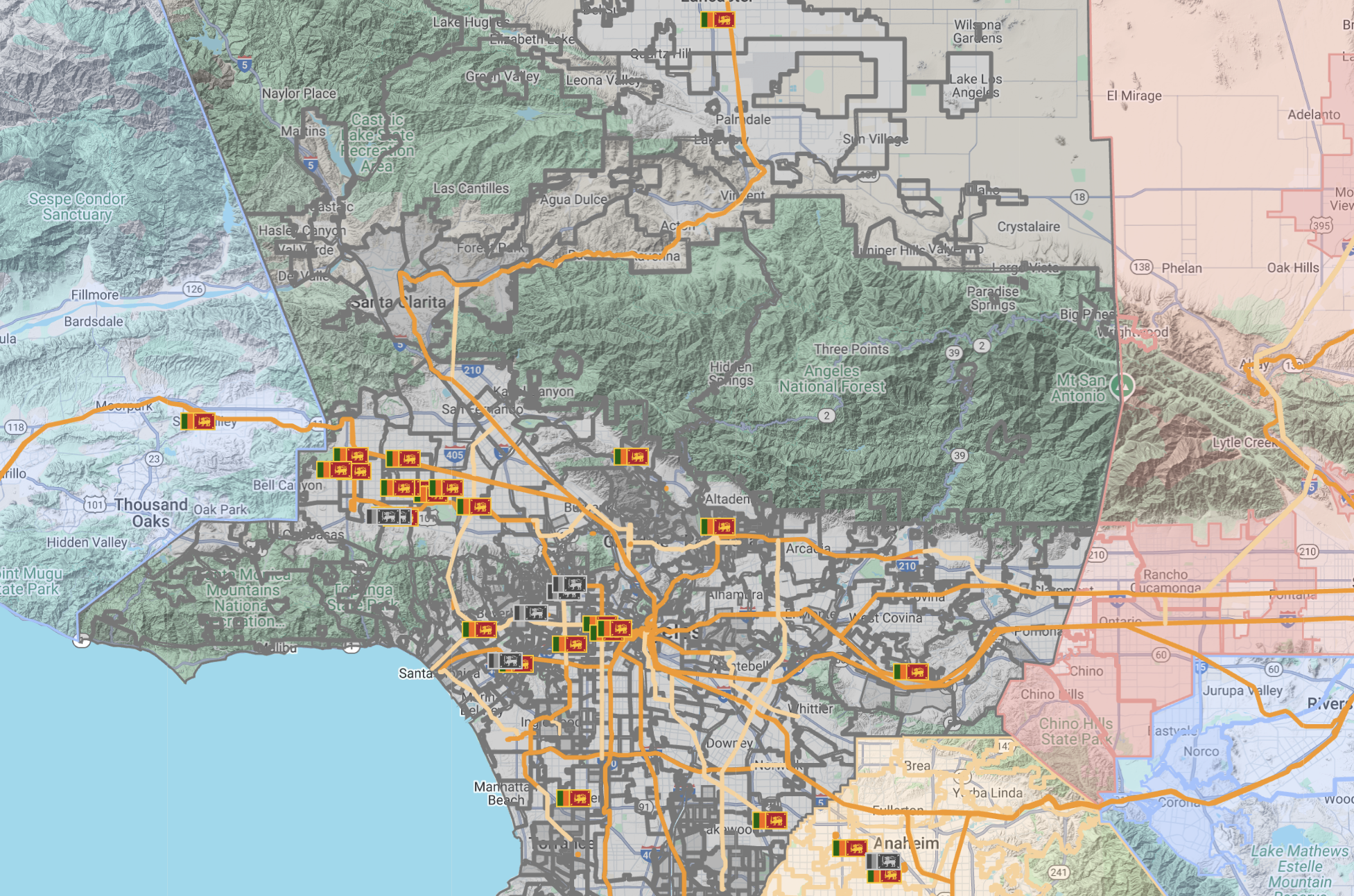
As of 2010, there were 45,159 Sri Lankans living in the US. Substantial immigration began in the 1990s when many fled the violence of the Sri Lankan Civil War. The majority of Sri Lankan-Americans live in the vicinity of either New York City (where there’s a Little Sri Lanka on Staten Island), central New Jersey, or Los Angeles — the latter of which is home to about 7,000 Sri Lankan Angelenos.
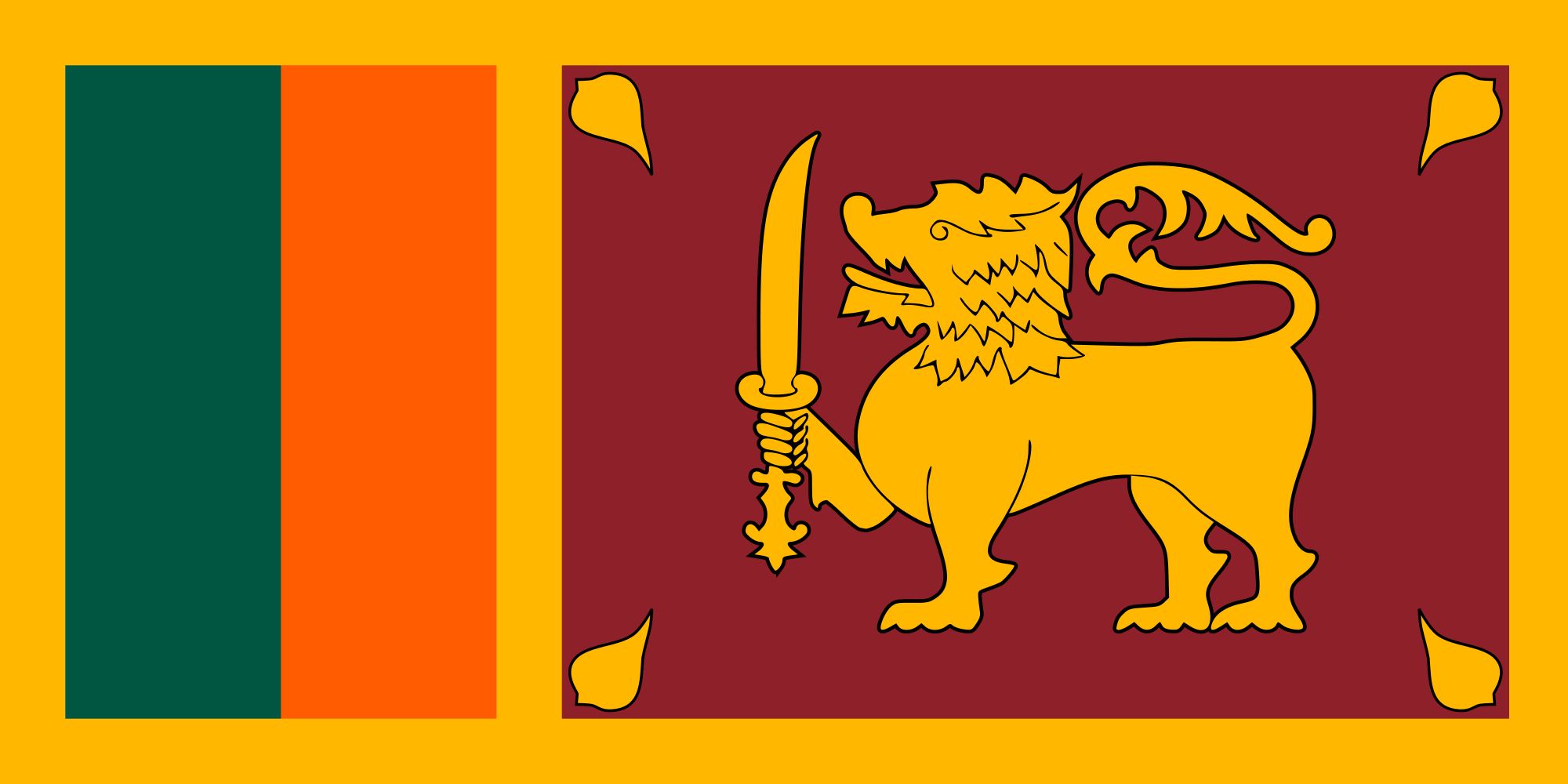
Roughly half of Sri Lankans in America are of the Sinhalese ethnicity although as inter-ethnic violence intensified in the 1980s, many Tamils fled, most of whom settled in the UK, India, or Canada. America’s Sri Lankan population is relatively small, accounting for only 6% of the diaspora.
In Los Angeles, there is no real concentration of Sri Lankan businesses, although most Sri Lankan businesses are located around the San Fernando Valley, a highly diverse region where it seems many ethnicities not represented by enclaves settle. Within the San Fernando Valley, that presence is particularly felt in the neighborhoods of Reseda and Tarzana.
BRIEF HISTORY OF SRI LANKA
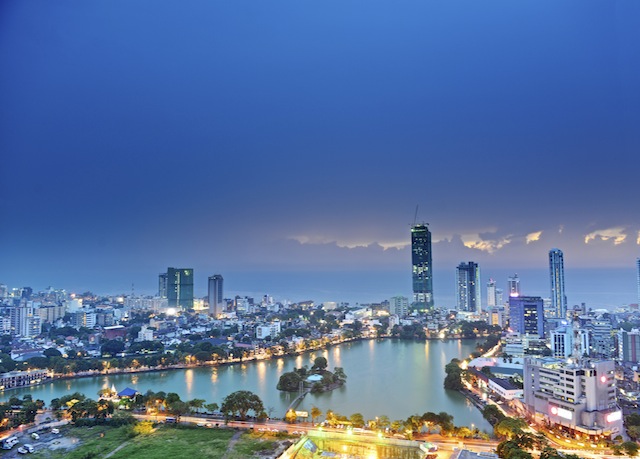
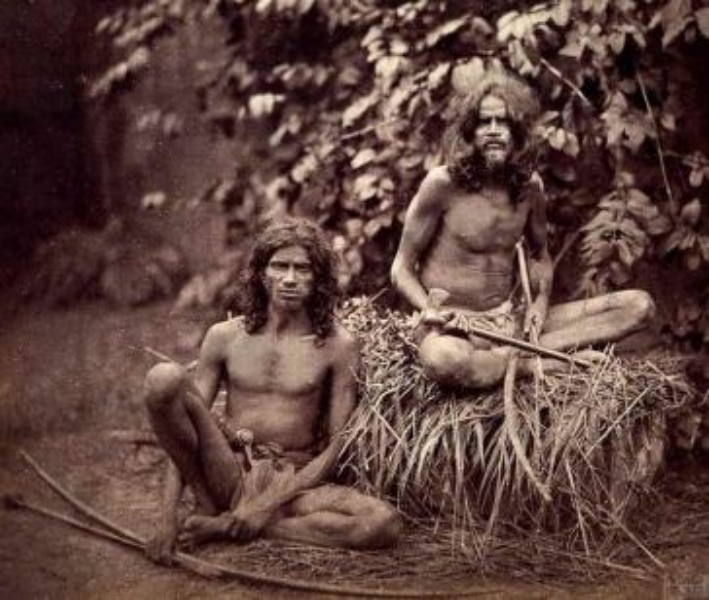
Sri Lanka (Sinhalese: ශ්රී ලංකා, Tamil: இலங்கை) is a diverse, island country in South Asia. The majority of Sri Lankans belong to the Sinhalese ethnic group and minorities include Tamils, Moors, Burghers, Malays, Kaffirs, and the indigenous Vedda. Its largest city is Colombo, the population of which is roughly 750,000. Colombo’s metropolitan area is home to roughly 6 million Sri Lankans.
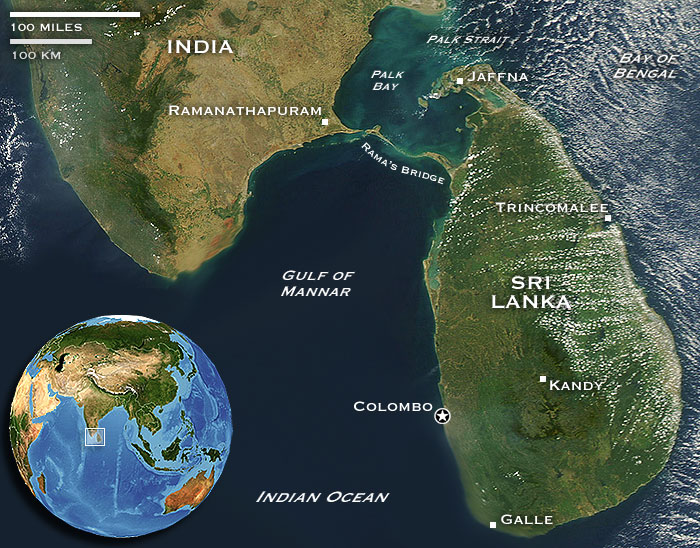
The first Homo sapiens are believed to have arrived in Sri Lanka as early as 38,000 years ago. According to Hindu mythology, a land bridge formerly connected Sri Lanka to the South Asian mainland, which seems plausible. In parts of the Palk Strait today, the ocean is sometimes only a meter deep.
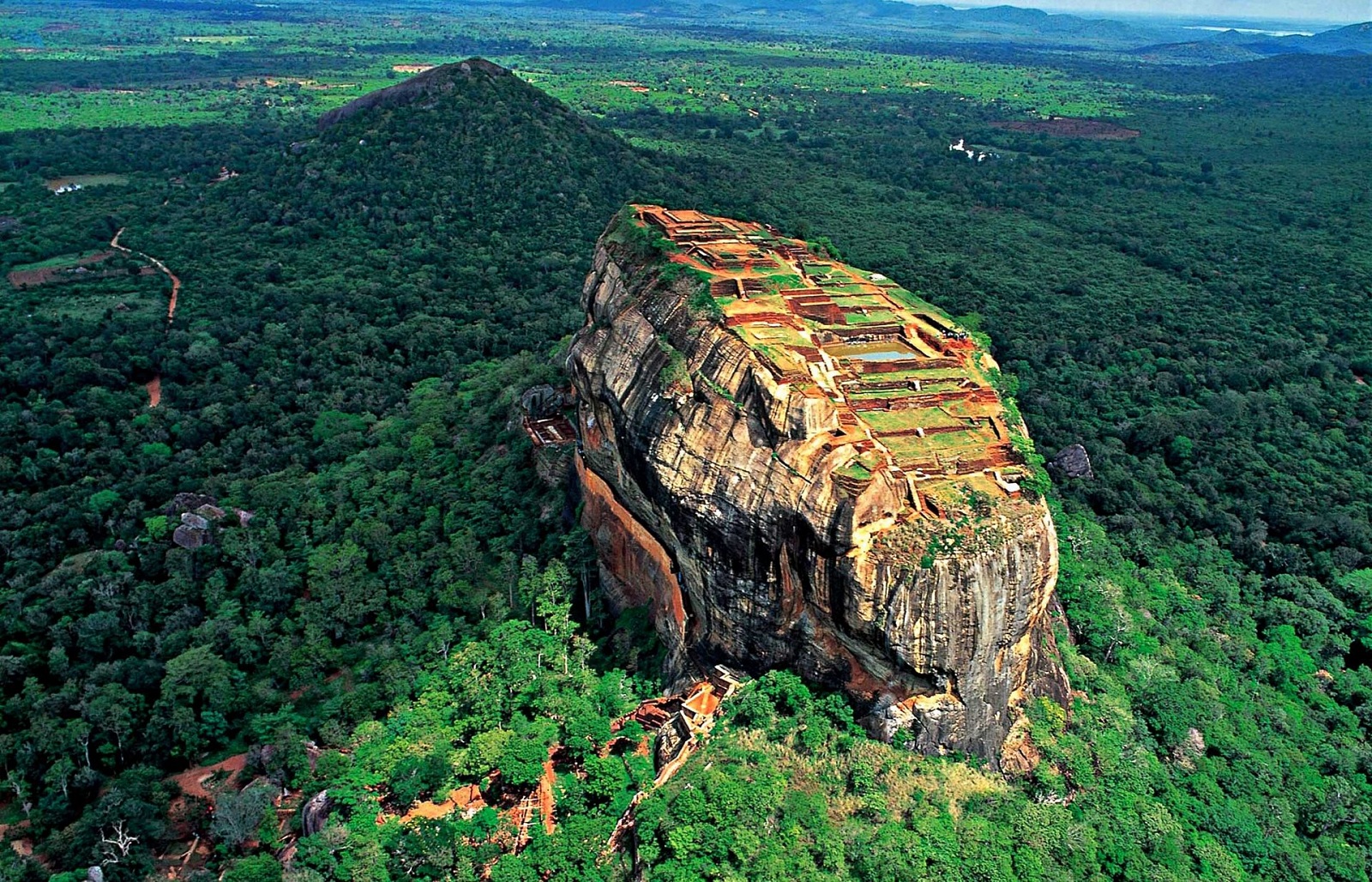
The Indo-Aryan people who make up Sri Lanka’s majority today arrived in the 6th century BCE. Over the centuries which followed, the island was divided into numerous kingdoms. In the 5th century CE, Sigiriya was selected by King Kasyapa as the location of his capital, a site which includes a 200 meter tall stone column which became onto (and into) which was built an ancient city full of frescoes, statuary, gardens, pools, and is today a UNESCO World Heritage Site. It’s the most-visited tourist destination in Sri Lanka and in 1982 it was featured prominently in the video for Duran Duran‘s “Save a Prayer.”
In 1505, Portuguese soldier and explorer Lourenço de Almeida arrived on the island. Soon the British and Dutch joined the Portuguese in controlling parts of the island. The entire island was subjugated and united by the British in 1815. There were rebellions against the British and independence was finally granted in 1948, although it was then known as Ceylon. Ceylon remained a dominion of the British Empire until 1972 when it assumed the status of a republic as Sri Lanka.
From 1983 until 2009 the country was embroiled in the bloody Sri Lankan Civil War which pitted the Sinhalese-dominated government against the Liberation Tigers of Tamil Eelam. Up to 100,000 Sri Lankans were killed during the 26-year conflict. In the years since the end of the war, Sri Lanka’s economy has emerged as one of the world’s fastest growing.
Sri Lankans today have a life expectancy of 77.9 years, almost the same as Americans. Sri Lankans enjoy free universal healthcare, free undergraduate university education, and all nine provinces in the country and major cities are connected by heavy rail. On the other hand, press censorship, corruption, and human rights abuses are common.
SRI LANKAN RESTAURANTS
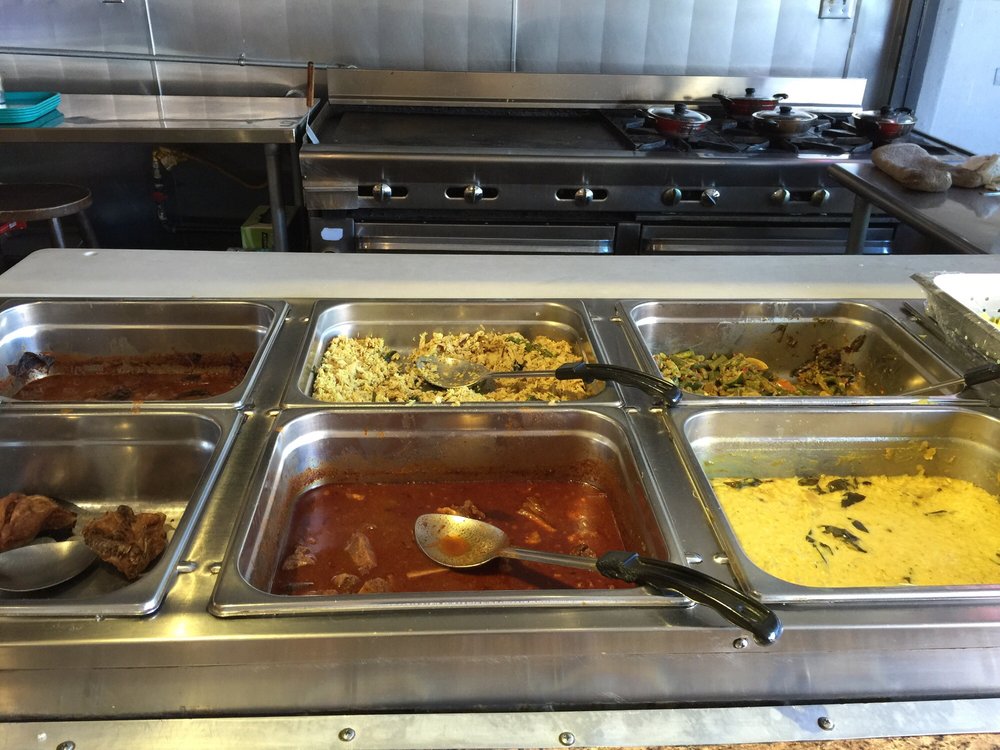
The most obvious impact of Sri Lankans on the culture of Los Angeles is through their restaurants. Most Sri Lankan cuisine is typified by Sinhalese or Tamil influences although the influence of British, Dutch, Portuguese, and Middle Eastern cultures are also evident. Common items and dishes found on the Sri Lankan table include rice, curry, jackfruit, kiribath, kottu, pittu, roti, idiyappam (string hoppers), wattalapam, and appam (hoppers). Sri Lankan food is traditionally served on a plantain or lotus leaf.
The first Sri Lankan restaurant in Los Angeles was probably the one that opened in Encino around 1979. It was located across the street from a Burger King — known as the “Home of the Whopper.” The Sri Lankan place boasted that it was the “Home of the Hopper” — a reference to Sri Lanka’s popular street food pancake. Unfortunately, I’ve been unable to determine the restaurant’s name. It’s unfortunate because just by existing it was historic. The first Sri Lankan restaurant in the entire country, Sri Lanka Curry House, had only been opened by Heather Janz Balasuriya in Minneapolis a year or two earlier.
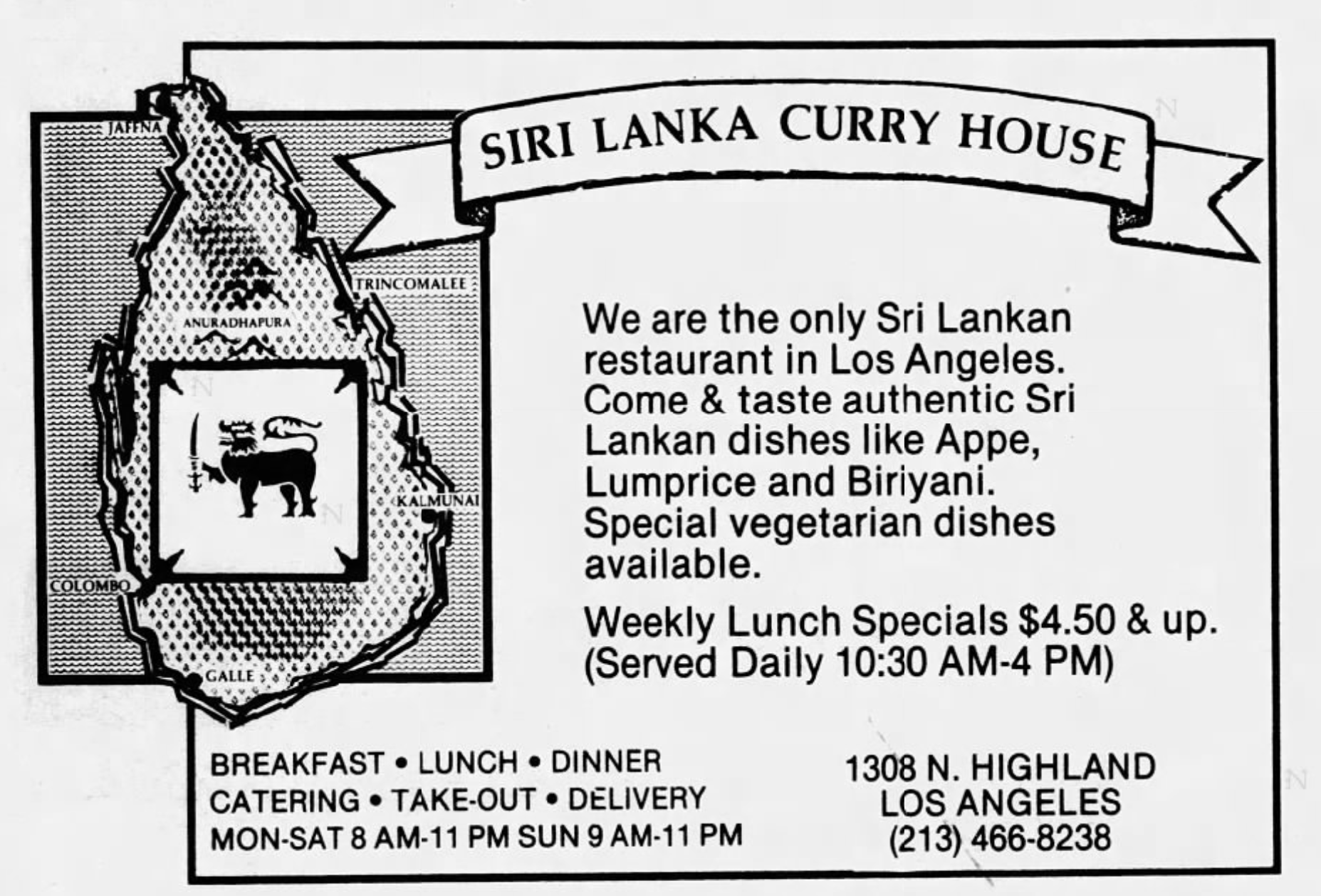
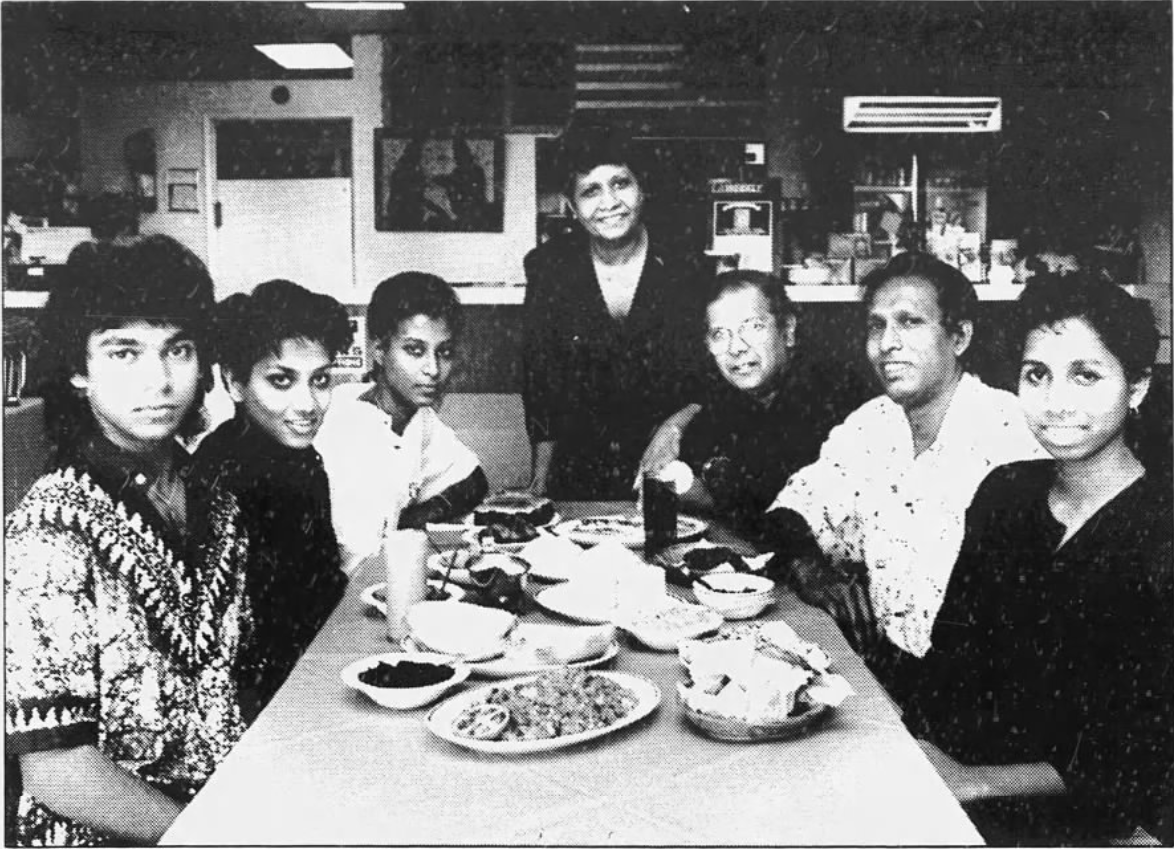
In 1981, Manju Thakur opened The Elephant Boy, a mostly Indian South Asian restaurant that served some Sri Lankan dishes in Torrance, but there wouldn’t be another dedicated Sri Lankan restaurant until 1989. Ratnapura-born Kusala and Bandu Siriwardhane opened Siri Lanka Curry House in Central Hollywood in 1989. It was then one of just three Sri Lankan restaurants in the entire US — the others being the aforementioned Sri Lanka Curry House and Curry Village in San Jose. By 1991, there were three Sri Lankan restaurants in Los Angeles, after Siri Lanka Curry House was joined by Roma’s Kitchen and Cafe Ceylon. The former, in Palms, was owned by Colombo-born Roma do Zoysa Tira. Roya and her daughter, Sonali Tucker, co-owned Island Spice in 1992, which shared its space with Roma’s Kitchen. By 1993, however, Roma’s Kitchen was the only Sri Lankan restaurant still open in Southern California. Chamika Catering was founded in the Yucca Corridor by a former cook at Siri Lanka Curry House.in 1995, by which time it was the only Sri Lankan restaurant in Los Angeles. In 1997, Sri Lankan restaurateurs took over a Tarzana barbecue place called California B.B.Q. and kept the name. The space is now home to Sri Lankan Delight. Curry Bowl opened down the street in 2003 and is now Apey Kade. Chinetheka Ganasekera opened Orange County’s first Sri Lankan restaurant, Wadiya, around 2009.
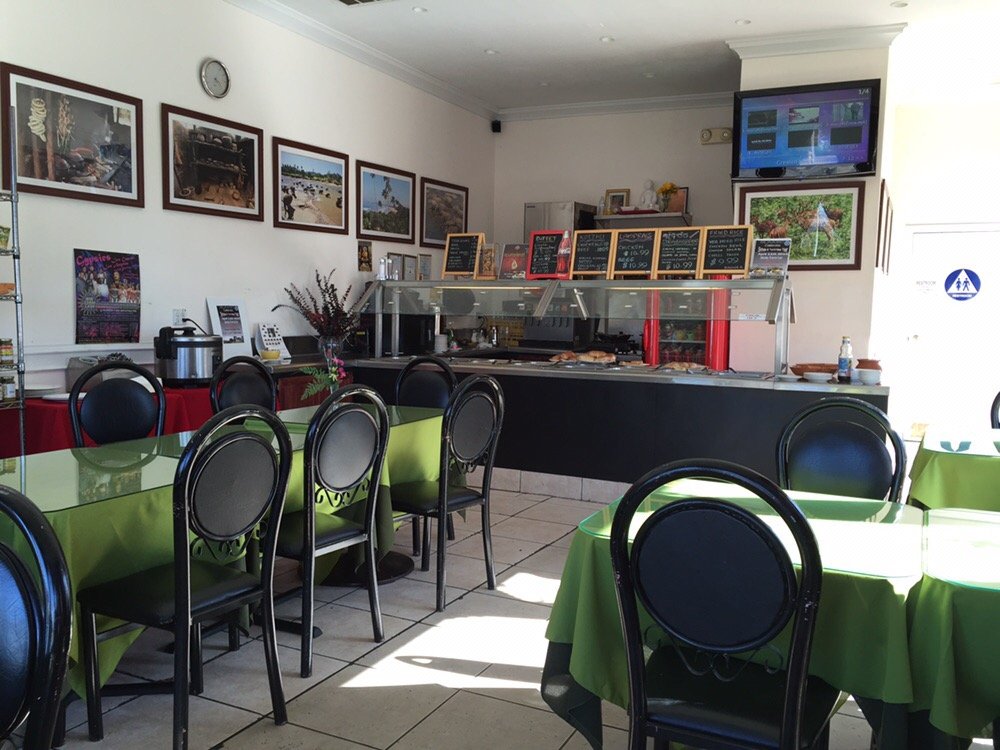
Contemporary Sri Lankan restaurants (and restaurants with Sri Lankan dishes) include Curry Leaf, Serendib Sri Lankan, and Sri Lankan Cafe (all in Reseda); Café Lanka (Glendale); Baja Subs Market & Deli (Northridge); and Pearl Island Food To-Go (West Hills). In Anaheim, there’s a new Sri Lankan restaurant, Rice N’ Spice.
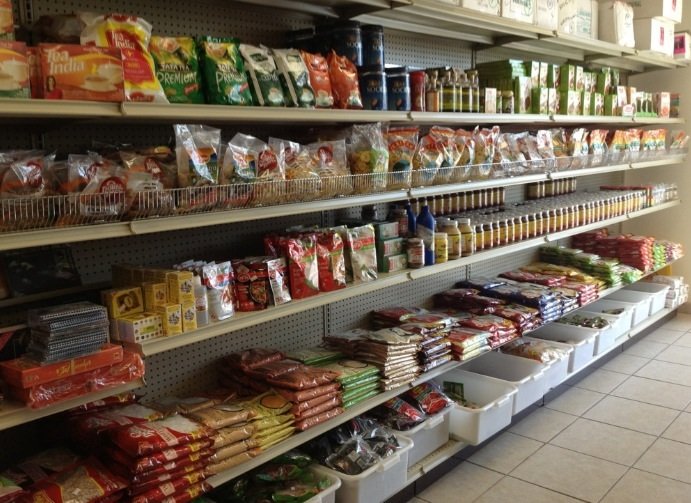
Sri Lankan groceries (and other products) are available for purchase in Indo Lanka Cash & Carry (there’s one in Little India and another in Lake Balboa), Sri Lankan Delight (in Tarzana), and online from Niwasa.com.
SEE ALSO: “Great Sri Lankan Food at Apey Kade in Tarzana“
SRI LANKA DAY AND OTHER SRI LANKAN OBSERVANCES
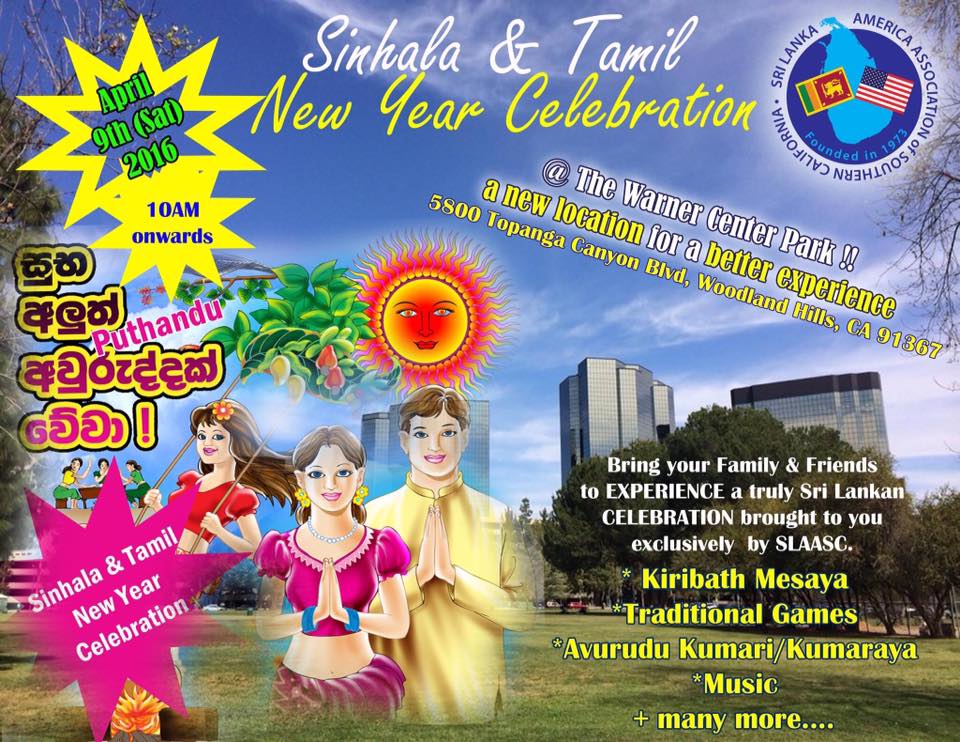
April’s New Year celebrations are is closely related to the New Year observances which take place at the same time in Thailand, Bangladesh, Cambodia, Laos, Burma, and parts of India. The New Year is known to the Sinhalese as Aluth Avurudda (අලුත් අවුරුද්ද) and to the Tamil as Puthandu (தமிழ்ப் புத்தாண்டு). For several years, Sinhala and Tamil New Year observances were held at Woodley Park (in Sepulveda Basin) before moving, this year, to Warner Center Park in Warner Center.
The Kandy Esala Perahera is a Buddhist festival consisting of dances and decorated elephants and held in August. The annual Sri Lanka Day, held in August in Los Angeles County, is organized by the non-profit Sri Lanka Foundation. On offer are Sri Lankan food, fashion, jewelry, music, dance, art, theater, and more. Until 2015, when it moved to Pasadena, it was held in Santa Monica. Easter and Christmas are important for Christians, Muslims observe Hajj and Ramadan, and Tamils additionally observe Thai Pongal and Maha Shivaratri.
SRI LANKAN ASSOCIATIONS AND ORGANIZATIONS
Los Angeles’s Sri Lankan community is served by the Sri Lanka America Association of Southern California (founded in 1973 by Jayam Ratnam), the aforementioned Sri Lanka Foundation (founded in 2003 by Walter Jayasinghe), and Lancaster is also home to the Tamil Refugee Relief Org. The offices of the Consulate General of Sri Lanka are located, as with those of many consulates, on Wilshire Boulevard in Koreatown. Online, there’s a website, Ransilu. I can’t read Sinhala but from what I can gather it’s maintained by the Culver City-based Ransilu Information Technology Foundation. The website is a curious mishmash of recipes, news, gossip, and provocative photos and videos mostly of Sri Lankan women.
SRI LANKAN TEMPLES
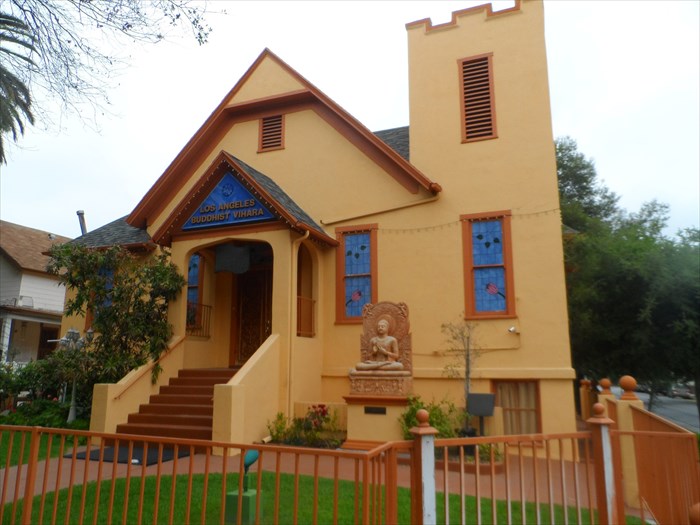
70% of Sri Lankans are Buddhists, mostly following the Theravada school. 13% of Sri Lankans are Hindu, 10% are Muslim (mostly Sunni who follow the Shafi’i school), and 7% are Christian (mostly Roman Catholic). In Southern California, there are at least four Sri Lankan temples including Sri Lanka America Buddha Dhamma Society (established in 1978, moved to Pasadena in 2000), Sri Lankarama Buddhist Temple (South San Jose Hills), and Sri Ratana International Buddhist Center (Anaheim). Dharma Vijaya Buddhist Vihara, in LaFayette Square, welcomes Sri Lankan Buddhists, Christians, Hindus, and Muslims.
SRI LANKAN CINEMA
The history of Sri Lankan Cinema begins with the film Kadawunu Poronduwa (The broken promise), directed by Jyothish Singh, based upon a play by Bernard Aloysius Wanniarachchi Jayamanne, and released in 1947. It was a musical and musicals remain popular, along with melodramas. The most well-known Sri Lankan filmmaker internationally is probably Lester James Peiris, director of Rekava (Line of Destiny, 1956), Gamperaliya (The Changing Village, 1964), Nidhanaya (The Treasure, 1970) and Golu Hadawatha (Cold Heart, 1968).
Another key figure in Sri Lankan cinema is filmmaker Chandran Rutnam. He worked as a production supervisor on several Hollywood films: Indiana Jones and the Temple of Doom (1984), The Iron Triangle (1989), Beyond Rangoon (1995), and Victory (1996). His most recent work as a director was on the Sri Lankan/American co-production, A Common Man (2013), starring Indian-English actor Ben Kingsley. Other Sri Lankan Angelenos in the film industry include actor-playwright Ahash Francis, Pakistani-Sri Lankan writer-director Aqsa Altaf, actor-singer Dilan Jay, actor-director Gehan Cooray, and filmmaker Rajee Samarasinghe.
SRI LANKAN MUSIC
Sri Lankan music is closely related to Sri Lankan theater and dance and traditional Sri Lankan musical instruments include the béra, thammátama, daŭla, and răbān. Celebrated musicians include W. D. Amaradeva, H. R. Jothipala, Neela Wickramasinghe, and Clarence Wijewardene.
Globally, the most famous Sri Lankan pop singer is M.I.A., born Mathangi Arulpragasam in 1975. Although raised in the London neighborhood of Hounslow, M.I.A. was briefly an Angeleno of sorts, when she lived in a palatial home in the affluent Brentwood neighborhood. M.I.A. lived there with the father of her child and then-fiancee, billionaire Seagram’s and Warner Music heir Ben Bronfman. They split in 2012 and both moved, independently of one another, to Brooklyn.
Sri Lankan musicians and performing artists play in Los Angeles somewhat regularly, usually in small venues. In 2015, Sunil Edirisinghe & Neela Wickramasinghe played a concert in the San Gabriel Mission Playhouse, Ranwan Rayak was performed at Lawndale High School (featuring Sabeetha Perera), Marians performed at the Pearson Park Amphitheatre in Anaheim, and the musical, Madhura Gee Sandawa, was performed at the Senshin Buddhist Temple. The best resource for keeping up with Sri Lankan cultural events that I know of is undoubtedly the Sri Lanka America Association. Other Sri Lankan musicians born in or who at least at one point lived in Los Angeles include Bala Mandala, singer Hirushi Jayasena, rapper Jay Princce, and Mahesh Balasooriya.
SRI LANKAN SPORT
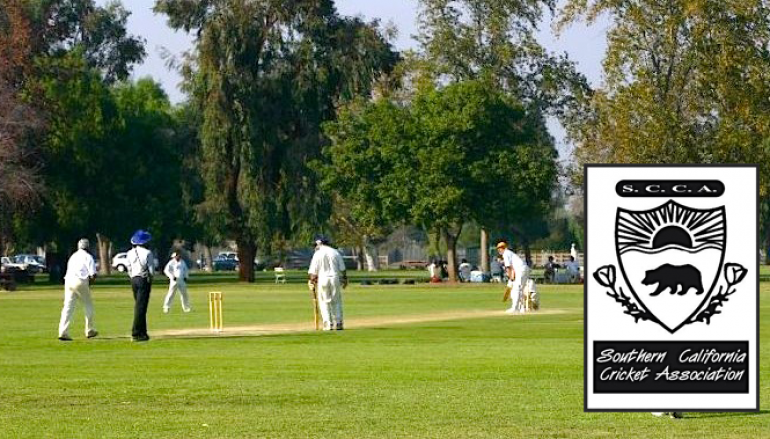
Although rugby, football, and tennis are popular, cricket is by far the most popular sport amongst Sri Lankans. The Sri Lanka national cricket team first visited Los Angeles in 1996, when they were lead by all-rounder Arjuna Ranatunga. They played the US and USC teams at the Leo Magnus Cricket Complex in the Sepulveda Basin Recreation Area before going on to win the Cricket World Cup. The cricket grounds in the San Fernando Valley are still regularly used by members of the Southern California Cricket Association: SCCA, many of the 41 teams of which include a good number of Sri Lankans and other South Asians.
SRI LANKAN ANGELENO ART & ARTISTS
Visual arts in Sri Lanka included drawing, painting, drawing, sculpture and other forms stretching from the modern era back to the 3rd century BCE. The Kandyan Era Frescoes, murals painted during the Kingdom of Kandy (1469–1815), are perhaps the most widely recognized example of Sri Lankan art. Not surprisingly, contemporary Sri Lankan artists tend to work in more modern media. Local Sri Lankan artists of Los Angeles include or have included fashion photographer Mishan Warnakulasuriya, artist Shyama Golden, digital artist and video editor Thiruna Fernando, artist Viranga Wettewa, and photographer Yasara Gunawardena.
SRI LANKAN LITERATURE & MEDIA
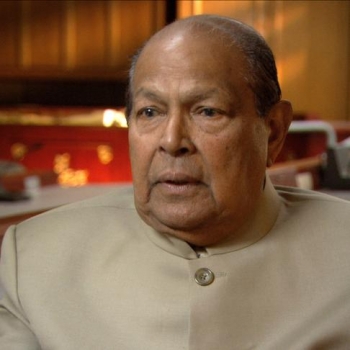
Sri Lankan literature is dominated by Sinhalese writing, especially in the short story format. There are also traditions, however, of novels, essays, poems, radio dramas, and plays.
One of the most prolific Sri Lankan-American writers was Ananda Wahihana PalliyaGuruge, a diplomat, scholar, and writer who spent much of his life in Southern California. Guruge was an adjunct professor of Religious Studies at Cal State Fullerton and was the dean of academic affairs at Rosemead‘s University of the West (formerly Hsi Lai University). Guruge authored 53 books in Sinhala and English; over 175 research articles on Asian history, Buddhism and education; and in 1989 translated the Mahavamsa into English. He died, aged 85, in 2014.
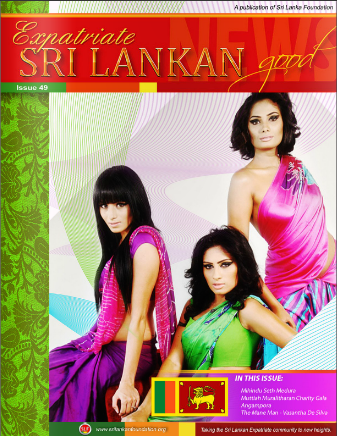
The aforementioned Sri Lanka Foundation publishes a magazine, Sri Lankan Good News, which is distributed globally to 10,000 households and covers news relevant to Sri Lankans in Sri Lanka and internationally.
Support Eric Brightwell on Patreon

Eric Brightwell is an adventurer, essayist, rambler, explorer, cartographer, and guerrilla gardener who is always seeking paid writing, speaking, traveling, and art opportunities. He is not interested in generating advertorials, cranking out clickbait, or laboring away in a listicle mill “for exposure.”
Brightwell has written for Angels Walk LA, Amoeblog, Boom: A Journal of California, diaCRITICS, Hey Freelancer!, Hidden Los Angeles, and KCET Departures. His art has been featured by the American Institute of Architects, the Architecture & Design Museum, the Craft Contemporary, Form Follows Function, the Los Angeles County Store, Sidewalking: Coming to Terms With Los Angeles, Skid Row Housing Trust, the 1650 Gallery, and Abundant Housing LA.
Brightwell has been featured as subject and/or guest in The Los Angeles Times, VICE, Huffington Post, Los Angeles Magazine, LAist, CurbedLA, LA Times 404, Marketplace, Office Hours Live, L.A. Untangled, Spectrum News, Eastsider LA, Boing Boing, Los Angeles, I’m Yours, Notebook on Cities and Culture, the Silver Lake History Collective, KCRW‘s Which Way, LA?, All Valley Everything, Hear in LA, KPCC‘s How to LA, at Emerson College, and at the University of Southern California. He is the co-host of the podcast, Nobody Drives in LA.
Brightwell has written a haiku-inspired guidebook, Los Angeles Neighborhoods — From Academy Hill to Zamperini Field and All Points Between, that he hopes to have published. If you’re a literary agent or publisher, please contact him.
You can follow him on:
Bluesky, Duolingo, Facebook, Goodreads, iNaturalist, Instagram, Letterboxd, Medium, Mubi, Threads, and TikTok.


Hi Eric, very nice piece on Sri Lanka. Please note that the Pearl Island restaurant is in West Hills not Lake Balboa.
LikeLike
Thank you for catching that. I changed the text to reflect the proper neighborhood.
LikeLike
We feel at home to visit this detailed site. Very informative and helpful for all Sri Lankas in USA. Appreciate your time and effort. Best regards
Srj
New Jersey
LikeLiked by 1 person
We feel at home to visit this detailed site. Very informative and helpful for all Sri Lankas in USA. Appreciate your time and effort. Best regards
Srj
New Jersey
LikeLiked by 1 person