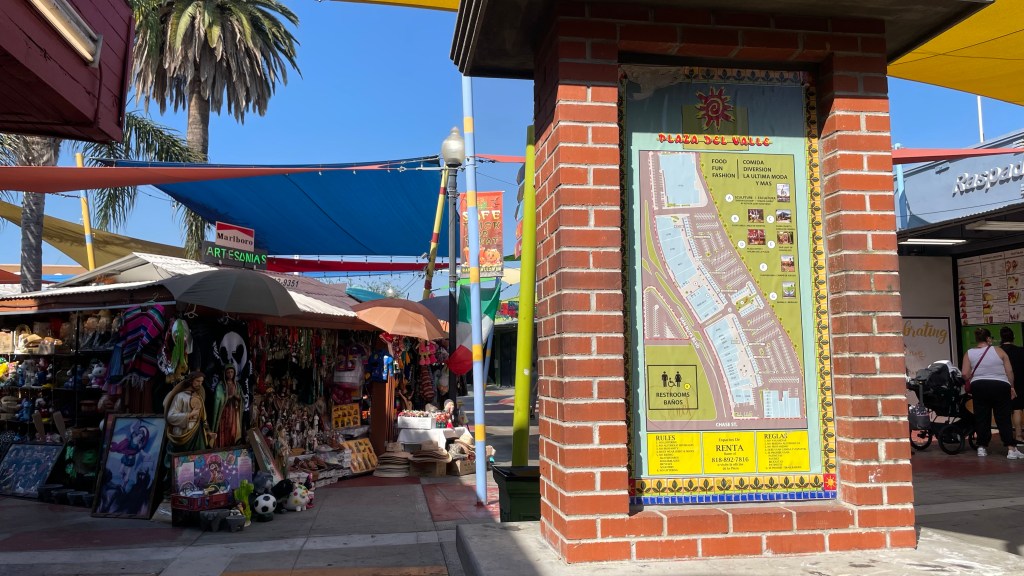
I was recently a guest on a new podcast, All Valley Everything, hosted by Albert Corado and featuring a rotating cast of co-hosts. For the episode on which I was a guest, the co-host was Veronica Shirley, of Valley Girl Hiking Club. Albert asked me to prepare for my guest spot by thinking about some Valley topics we might discuss. I sent him a few ideas. I have never lived in the Valley. I do have a relationship with it, though. I’ve worked there, dated there, partied there, hiked there, explored neighborhoods and transit lines there, and painted a map of it. Of the topics I listed, Albert chose Plaza del Valle — a Panorama City shopping center that’s special to me.
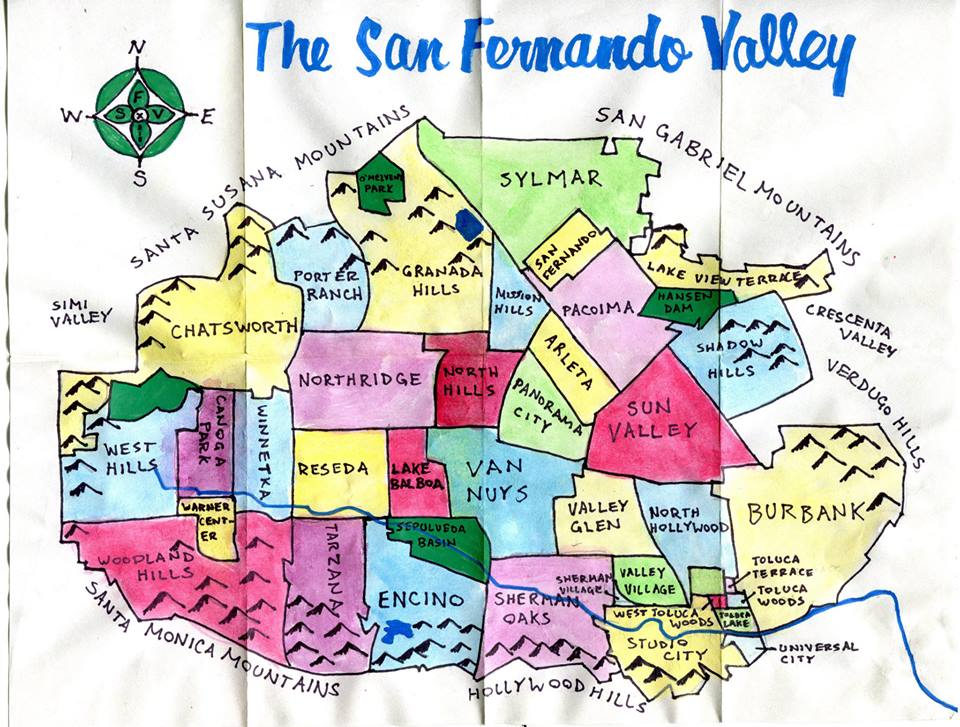
Over the course of our two-hour chat, the co-hosts and I discussed a lot more than just Plaza del Valle… and we didn’t discuss Plaza del Valle all that much. I’m not complaining. I had a lot of fun and it was my first appearance on a podcast since 2012, when I was on Colin Marshall‘s Notebook on Cities and Culture, in an episode titled “The Discerning Cosmopolitan Cartographer.” After our episode of All Valley Everything, I was still pondering why Plaza del Valle is noteworthy, so I decided to write this tie-in and headed over for a re-visit.
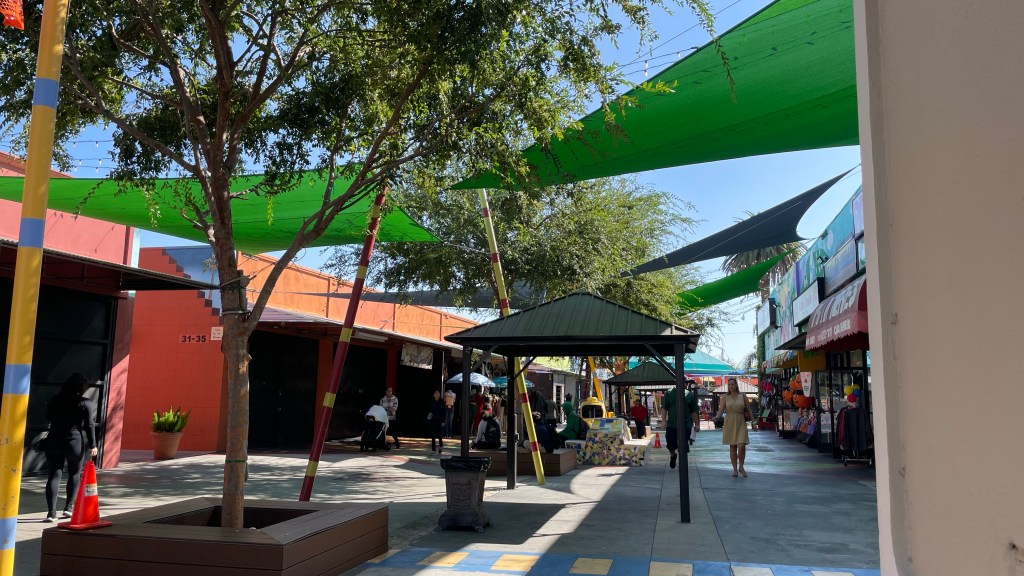
The first time I came to Plaza del Valle was about a decade ago and was because some Pinoy Rock bands were playing at Bamboo Bistro. As is often the case with seeing Pinoy Rock bands, I usually end up somewhere I’ve never been before. Bamboo Bistro bills itself as a “Filipino Comedy Karaoke Bar & Restaurant.” The bands, if I remember correctly, included From the Valley, Lemona, Zipcode, and others. Maybe Dragonfly Collector? It was at night and most of the shops at Plaza del Valle were closed… but I wondered along the plaza between bands and wondered what was this place and why had I never heard of it before.
A BRIEF HISTORY OF THE AREA
My discovery of Plaza del Valle was a discovery in the Columbus sense. Plenty of people before me knew about Plaza del Valle and even before there was a Plaza del Valle, there were people here in this place without history. The first humans to have lived in what’s now Los Angeles were the Paleoamerican ancestors of the Chumash, who arrived in what’s now Southern Californiaat least 13,000 years ago. Their formerly once vast territory shrank after the Los Angeles Basin and San Fernando Valley were struck by a centuries-long mega-drought.
Some 10,000 years after the Chumash settled here, the Tataviam, Tongva, and their Takic language-speaking brethren arrived from the Sonoran Desert to the east. They traded with one another and the Chumash at Asha’awangna, in what’s now Chatsworth. The Spanish Empire‘s Portolà Expedition passed through the Valley in August 1769. In 1797, the Spanish founded La Misión del Señor Fernando, Rey de España. Most of the Valley’s land was administered by the Mission.
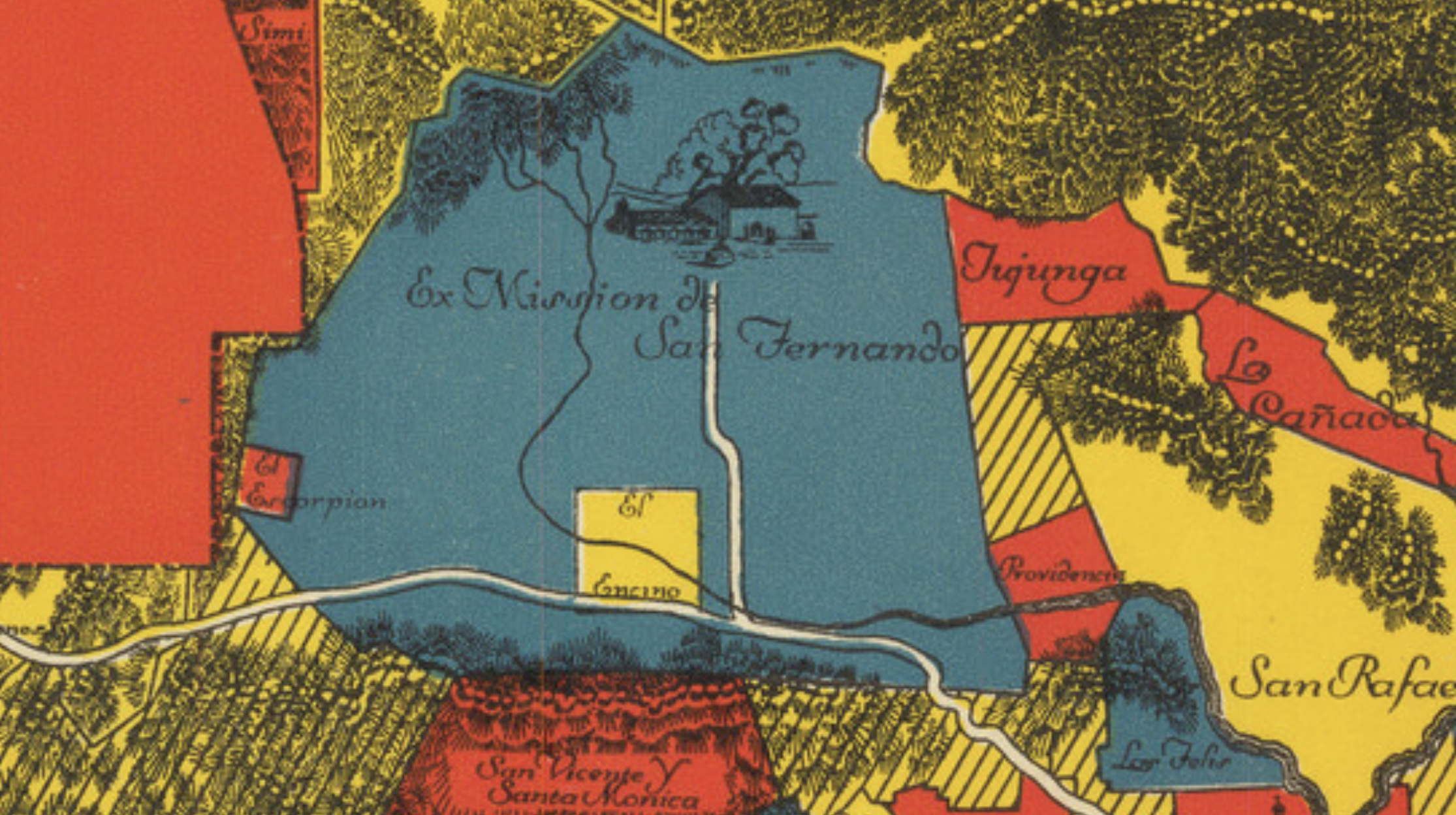
On 16 September 1810, Mexico declared independence from Spain. Between 1834 and ’36, Mexico secularized the missions — evicting both the friars and indigenous neophytes. The US invaded Mexico in 1846 and conquered 55% of that countriy’s territory, including all of Alta California, by 1848. On 18 February 1850, the San Fernando Valley became part of the newly formed Los Angeles County. On 9 September 1850, California became the nation’s 31st state. On 29 March 1915, 440 square kilometers of the Valley were annexed by the City of Los Angeles.
PANORAMA CITY
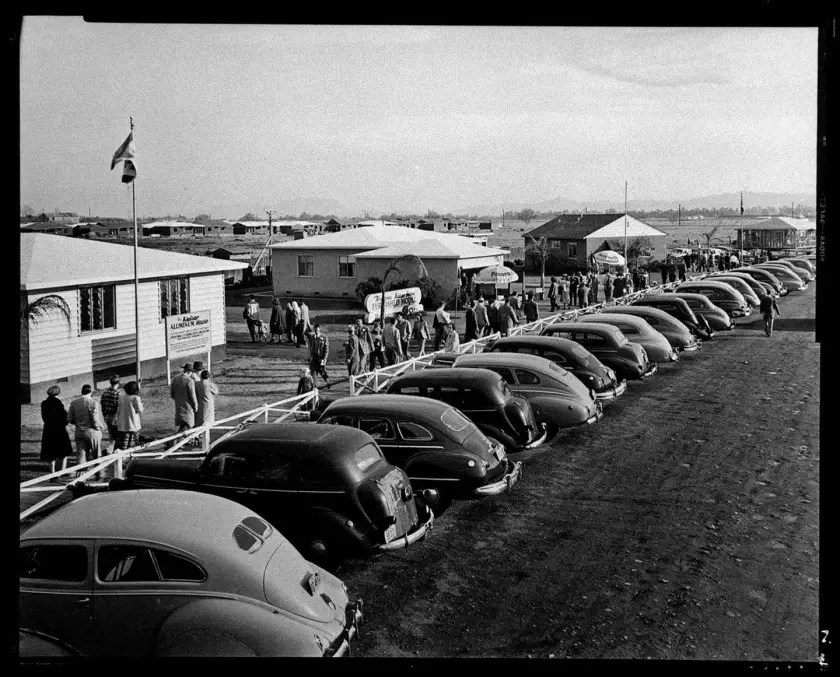
In 1948, New York-born industrialist Henry John Kaiser, developer Fritz B. Burns, and the architectural firm of Wuderman & Becket created the Valley’s first planned community — Panorama City. F.S. Bauersfeld, the general sales manager for Kaiser Community Homes, announced in February of that year the planned construction of 1,800 homes. Panorama City, in addition to the residential area, would include “a church area, school area, and a business district.” Although designed to be self-contained, rather than a commuter town, Panorama City’s location was partly chosen because of the existence of the Pacific Electric Railway’s San Fernando Valley Line, which then traveled up Van Nuys Boulevard and Parthenia Street on its route between the city of San Fernando and Downtown Los Angeles. Baursefeld also lobbied the State Public Utilities Commission to create better bus service for the then-planned community. The first homes were made available in Panorama City on 13 November of that year. It was then the nation’s largest “individual residential development” — one comprised, that is, of detached, suburban-style uniplexes.
It’s somewhat ironic that the homes in Panorama City came with deeds stating that none of them could be “used or occupied by any person whose blood is not entirely that of the white or Caucasian race.” Ironic, not because racist housing covenants weren’t common — they were, in fact, a widespread tool of racist discrimination employed across the US at that time. It’s ironic, though, because this Panorama City opened in 1948 — and 1948 was the year the US Supreme Court heard the case of Shelley v. Kraemer and concluded that racially restrictive housing was unconstitutional. It’s also something like ironic because only about 12% of Panorama City residents today would’ve been considered “white” in 1948. Today, 68% of residents are Latino of any ethnicity or “race.” Most have roots in Mexico or El Salvador. 16% of Panorama City residents are Asian — mostly with roots in the Philippines. When I visited Plaza del Valle, yesterday, I didn’t see any white people in the neighborhood except for my friend, Mike Morgan, who met me there. When I asked him if he’d seen any other whites, he said that he’d seen another white inside a restaurant — but that he looked “like Miklo.” You might conceivably describe the ethnic diversity of the population today as “panoramic.”
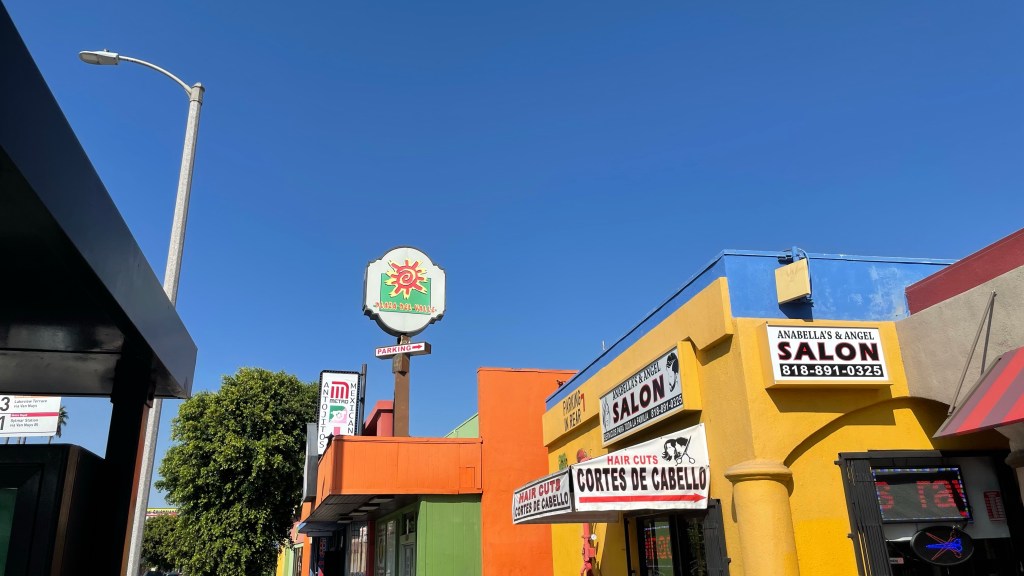
The development of Plaza del Valle can be easily broken into two eras. The first begins in 1950s — when the oldest of the extant seventeen buildings at the front of the plaza — the ones that face Van Nuys Boulevard– were constructed. The bright colors presumably were painted later. This wide and gently curving boulevard was, until 1952, served by Pacific Electric’s San Fernando Line, which connected Downtown Los Angeles to Downtown San Fernando. By then, Los Angeles had developed a serious car dependancy. Behind these shops there was a giant parking lot — a lifeless eight acres of asphalt devoted entirely to car storage. In this era, the shops in front of the gargauntuan parking lot were home to beauty shops, paint stores, a bank, a furniture store, a mattress store, a five-screen multiplex called Americana Cinema, and the Panorama Bowl — among others. There were also restaurants, including Rothbard’s, Tiny Taylor’s, and Moongate. Moongate was a beloved Cantonese restaurant owned by actor Philip Ahn. It opened in 1954 and was in operation until 1990.
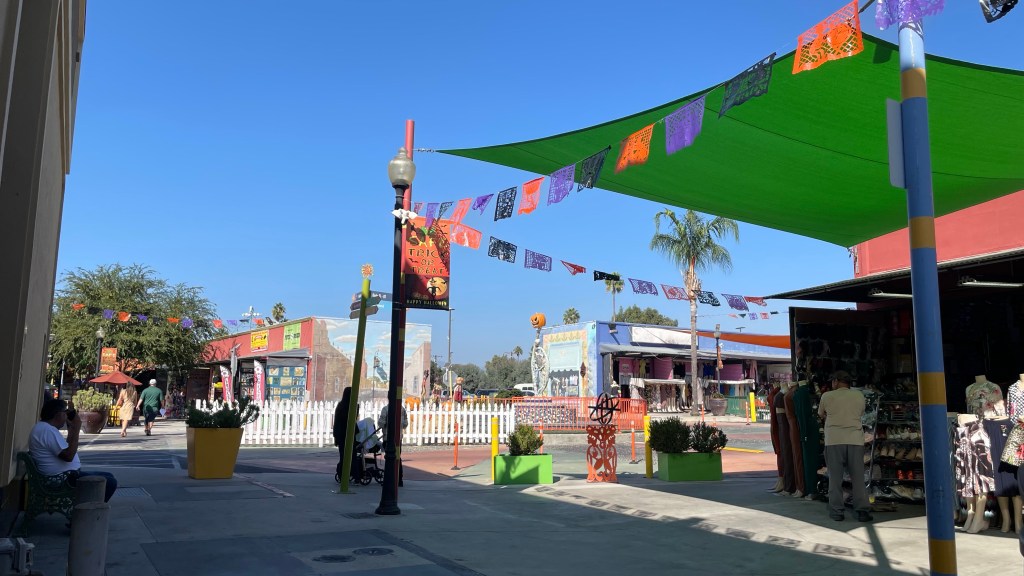
The second era of Plaza del Valle begins in 1999, when it began to transform into what it is today. Back then, Sherman Oaks-based Agora Realty & Management bought the row of unexceptional stores for $10.3 million. Agora was co-founded by Michael Bollenbacher and Cary J. Lefton. Lefton, like Olvera Street‘s developer, Christine Sterling, or Plaza Mexico’s Donald Chae — was not himself Latino — but had a vision of a Latino shopping center. Lefton’s inspiration, supposedly, came from a trip to to San Miguel de Allende, in Guanajuato.
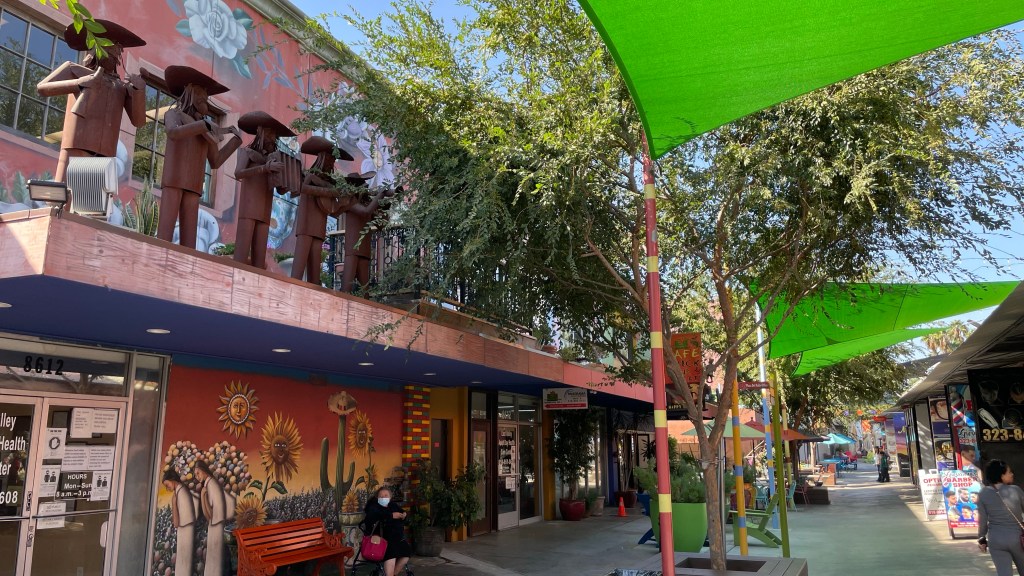
I’ve not had the pleasure of visiting San Miguel de Allende but it apparently has several plazas or squares. The most famous, from what I can tell, is Jardín Allende. It looks, from images online, like it’s dominated by trees, sounded by Baroque buildings, and loomed over by a Gothic cathedral. This amuses me because even though I love Plaza del Valle, it’s not especially green — and there’s nothing that even approaches the Baroque. Most of the architecture could best be described as Smog Check Revival. It’s all loomed over by Panorama Tower — a fourteen-story office tower built in 1964 and that was abandoned for years afterthe 1994 Northridge Earthquake before being converted, fairly recently, into residences.
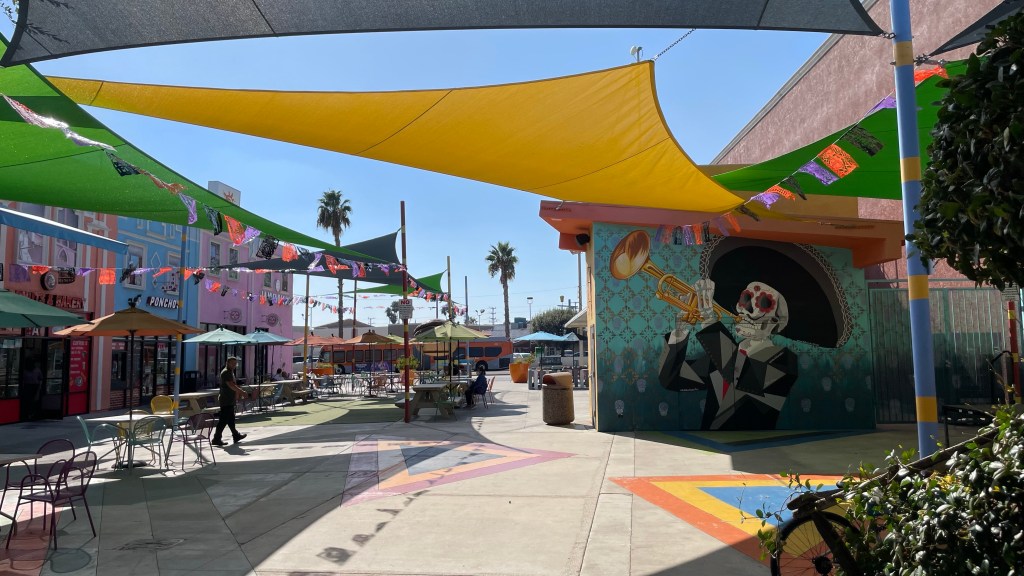
Even though, to me, Plaza del Valle looks less like a 17th Century garden square than it does an outdoor swap meet or a fairly typical plaza in Tijuana — I like it a lot. I don’t know who was employed in the design of Plaza del Valle but I did read that $19 million wwas invested in its re-design. A sizable chunk, I assume, went to constructing fourteen small and simple buildings where there had formerly been parking spots. There are also fountains, murals, sun shades, strings of lights, kiddie rides, decorative tiles, some plants, statues, and a promenade with stars embedded in its Walk of Fame. Both the new construction and the amenities were instrumental in creating a sense of place where, previously, there had only been “parking.” Plaza del Valle hosts live music, baile folklórico, mariachis, lucha libre, and holiday celebrations. As I write this, it’s a week before Halloween and Día de los Muertos — so there were plenty of decorations for both.
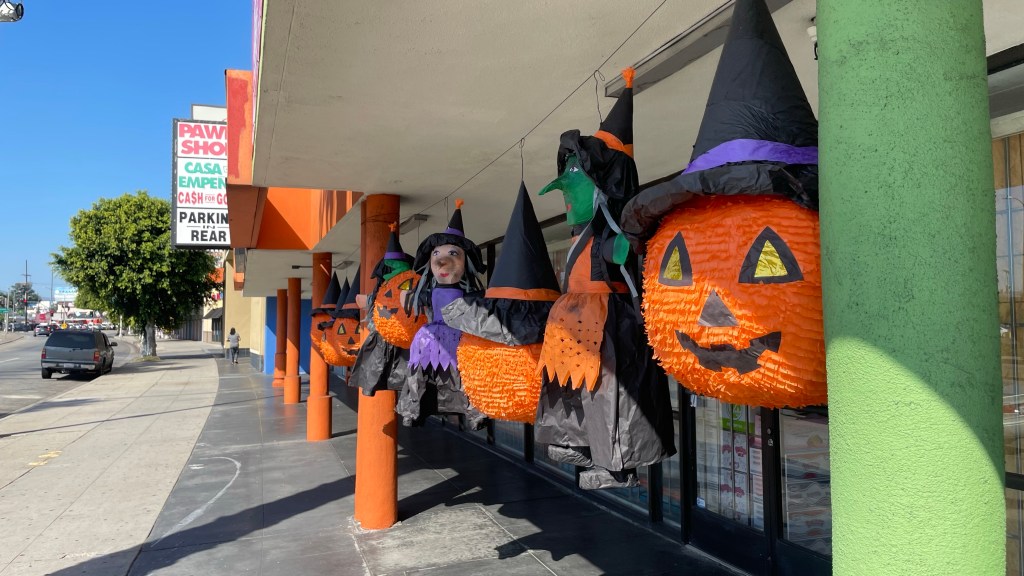
One thing that always strikes me about Plaza del Valle is how low the vacancy is compared to many malls. I read that, before its redevelopment, only 40% of the businesses in front had occupants. There are restaurants, of course, but also quite a few barbershops, western wear shops, and Colombian shapewear boutiques. It appears to be about 96% full today. Plaza del Valle is also home to the non-profit Maravilla Foundation, which provides weatherization, bill assistance, lead paint removal, appliance repair for poor and working class Angelenos. At the north end, there’s the LA Kings Valley Ice Center — which seems somewhat unlikely — and yet it’s true.
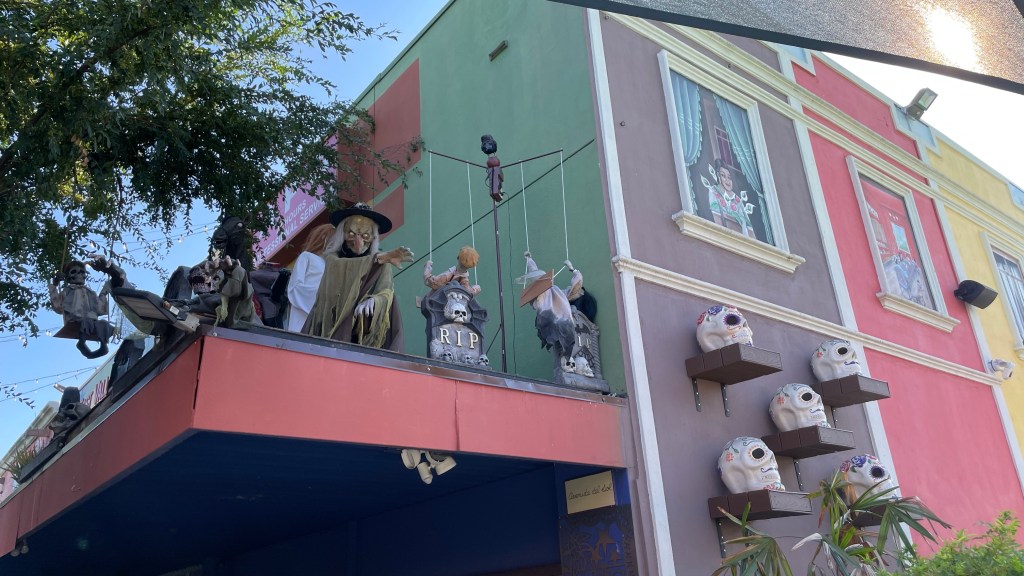
Most of the restaurants are Mexican or Salvadoran. There’s the aforementioned Bamboo Bistro, from which I was tasked with picking up some turon. It proved to be closed, however, because it was Tuesday. As I waited outside, two women tried the door and one exclaimed, “it’s closed on Tuesdays?!”
Mike and I then walked to the other end of the plaza to check out Rincon Taurino — which opened in 1983 and thus predates the plaza. I’ve only eaten there once — upon tasting the red sauce, immediately knew that there had to be a King Taco connection. Research down a spicy rabbit hole revealed that Adolfo Martinez, the founder of Rincon Taurino, is a brother of Raul Martinez — the founder of King Taco. The salsa picante has to have come from a family recipe. Mike wanted to eat somewhere I hadn’t before but wanted to check out the menu anyway. It also was closed and, right on cue, a man pulled up and seeing me jiggle the locked door asked, “it’s closed?” We thought it might just be closed between lunch and dinner — as unlikely as that sounds. I consulted the internet and read both that “Yelpers report that this business has closed” but also that it’s open from 8:00 AM – 10:30 PM and typically somewhat busy at that time.
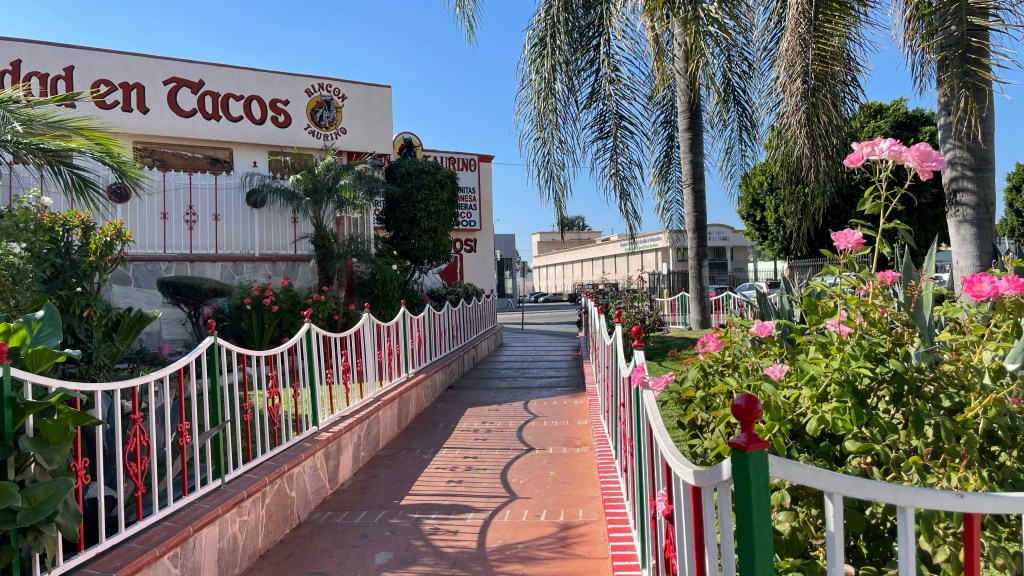
We ended up grabbing lunch from Malena’s and I enjoyed my burrito. Mike, I think, liked his caldo de res. I wolfed down my lunch almost entirely before his bowl of soup arrived. My meal thus gone, I was left with more time to take in my surroundings and ponder my relationship with malls.
What interest I have in malls is almost purely in their architecture and atmosphere — and how they function (or don’t) as public spaces. Of course, I follow the Instagram account, @mallarchitecture. When I was a kid, they were places I was dragged to by my mom when she needed something. They were never places I went for fun. In fact, being inside of them used to make my joints hurt. The kids my age that haunted their food courts were, in my opinion, all — without exception — irredeemable assholes. I had no concept of “urbanism,” but I always preferred to go Downtown to a mall unless it was to see a film.
Only after the Columbia Mall opened and the older Biscayne Mall (1972)and Parkade Plaza (1965) began to slide into liminality did they acquire an appealing bleakness. No mall is as good as a dead mall. Koreatown malls, though, come close. Koreatown malls are usually anchored not by a store full of ugly clothes but by a grocery store which, more often than not, shares its space with a bunch of smaller specialty shops at the margins. These markets are like malls within malls. If they made the top floor of City Center on 6th or Koreatown Galleria — and I could afford to — I would live there. I like the idea of living above shops instead of crossing an asphalt sea of car storage to get to them. But if we’re allowed to live and shop and work in the same place, it’s no longer really a traditional mall, is it? It’s something more like the Americana — where there are at least residences although I’ve never met anyone who lives in them… or who ever has.
When Atlantic Times Square opened in Monterey Park, my friend (and Monterey Parker) Stella Tran jokingly referred to it as “the Asian Americana.” Like the Americana, Atlantic Times Square has residences and an outdoor promenade. There’s a gazebo for live performances but — let’s be honest — there’s not much else in the way of placemaking. Someone once challenged me to say something nice about Rick Caruso and I said two things. One, he knows how to create a sense of place. The Americana is his interpretation of Charleston in the 1940s. Two, he can get people to drive to his malls, pay to park, and then line up to take mass transit that doesn’t even go anywhere — namely, his mall trolleys. In Los Angeles, that counts for something.
The Americana sits across the street from — and in contrast to — the Glendale Galleria — an exemplar, when it opened in 1976, of the malls of that era. The Galleria is a giant, unadorned, hermetically sealed, brown brick box. The only windows are display ones and thus can’t be opened to let fresh air in or the noxious stench of body spray out. Like other malls of its era, the Galleria is two-stories and has a food court full of the sorts of restaurants that seem only to exist inside food courts — Cinnabon, Hot Dog on a Stick, Wetzel’s Pretzels — that sort of thing. It is designed to be as generic and interchangeable with other unremarkable malls as possible. In the old days, there may’ve been a Montgomery Ward. If it were in the South, there might be a Dillard’s instead of a Nordstrom. In the Midwest, it might be a Younkers. It would be equally boring anywhere and in any era.
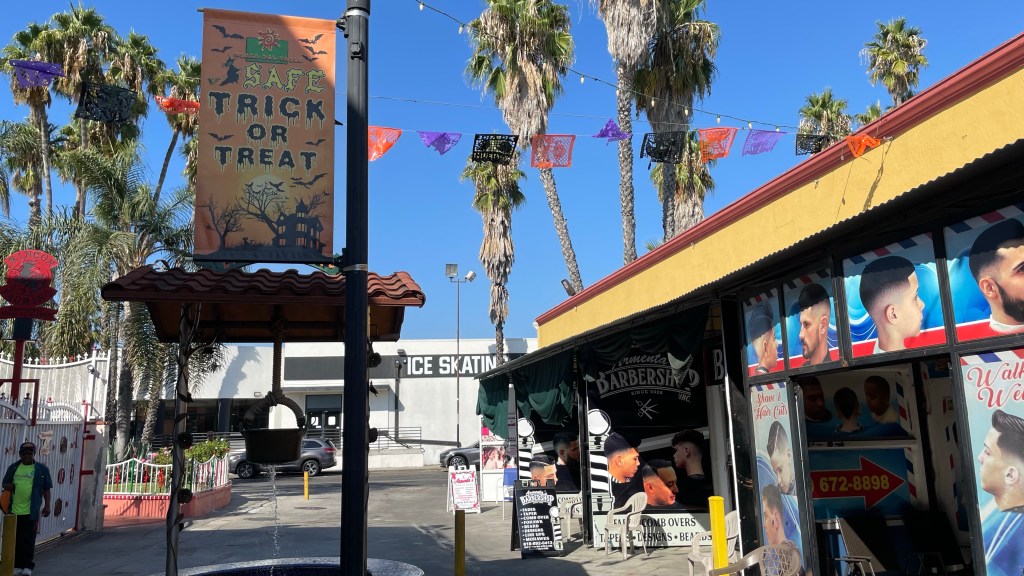
By comparison, the American feels more like Disneyland’s Main Street, U.S.A. (which is modeled afterEarly 20th Century Marceline, Missouri) — or at least a themed outdoor shopping center like Ports O’ Call Village (RIP), Mary’s Gate Village (RIP), Alpine Village (RIP), or Old World Village. Plaza del Valle has that sense of place, too. If Atlantic Times Square is “the Asian Americana,” surely Plaza del Valle is “the Mexican Americana.” But — as a street/parking-to-plaza conversion, it is also like Little Toyko’s Japanese Village Plaza (car-free since 1978), Santa Monica’s 3rd Street Promenade (car-free since 1965) and Olvera Street (car-free since 1929).
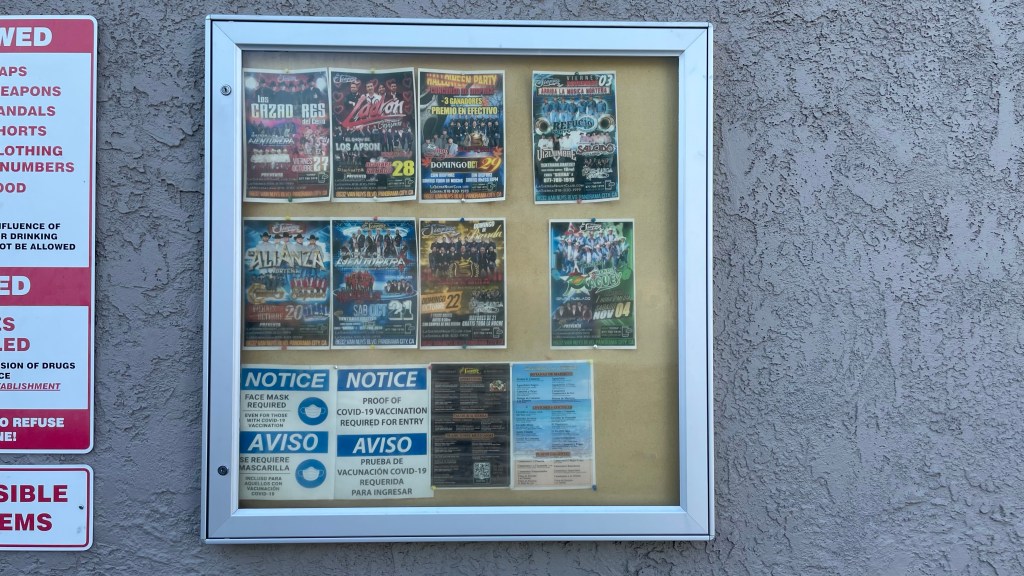
But Plaza del Valle is also unlike these other places. That, surely, is part of the reason teenagers and elders came there on a Tuesday afternoon to loiter, despite the prohibition against doing so. The atmosphere during the day is perhaps too languorous to be described as vibrant, but there is life here. We pass a man who is sleeping in a chair — not because he is drunk or unhoused — but simply because it’s a nice time and place for a nap — even though sleeping is also against the rules. So, too, are bicycles — and yet I see people riding them.
No one complains. No one is yelling at the rule-breakers, or filming them portrait-style with their phones. The rules are the owner’s but the space seems to belong to the people renting businesses, their customers, and the public. It is a true and proper third place. There are, aside from myself and Mike, no people who might be mistaken for tourists. I see no one taking pictures — not even selfies. People called out greetings to familiar faces. People were talking to one another.
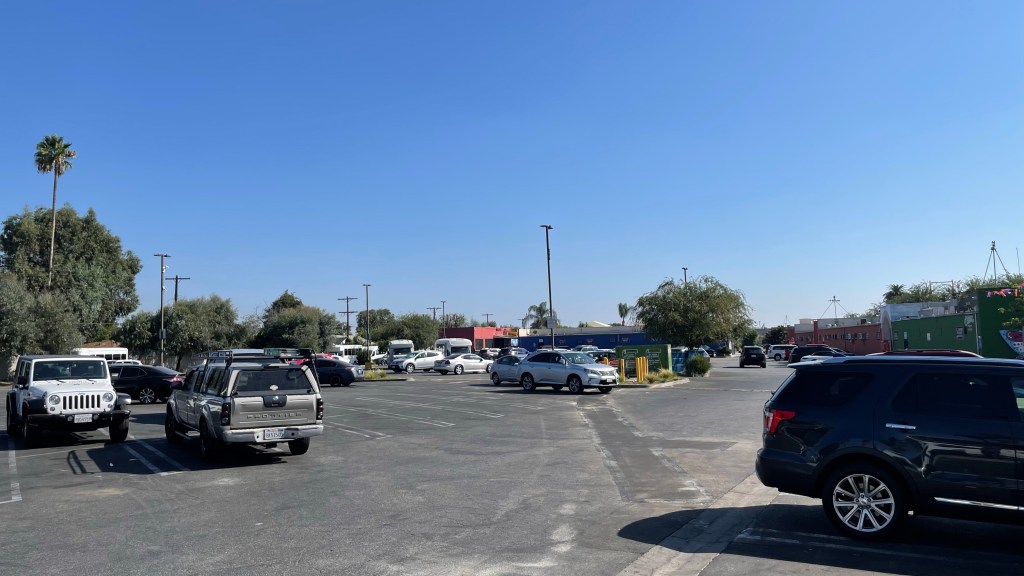
If I could, there are things I’d change about Plaza del Valle. Mainly — it’s still overwhelmingly car-dependent. Even with the reduction of spaces, there are still about 800 parking spots — which, at an given time, are never in my experience more than one-fourth full (of lifeless, empty automobiles). But most Angelenos think nothing of driving to a place just so that they can have a nice place to walk around. There are giant parking structures and lots adjacent to the aforementioned Japanese Village Plaza, 3rd Street Promenade, and Olvera Street. What are we supposed to do? Ride a bike? Take the bus?
I got there by taking Metrolink from the Glendale Transit Center to Van Nuys Station. As silly as I feel writing it — taking Metrolink is always a thrill. To get from Van Nuys Station to Plaza del Valle, my transit ap recommended waiting for LADOT‘s Panorama City/Van Nuys line. Rather than wait, I chose to walk. I never did see the LADOT bus and Metro‘s 233 and 761 only caught up with me as I arrived at my destination. I haven’t spent that much time in either Van Nuys or Panorama City and there’s no better way to explore a new neighborhood than on foot. And I came away with the unshakeable impression that Van Nuys/Panorama City, rather than North Hollywood (or Warner Center), is the closest thing the Valley has to a “downtown of the Valley.” It was fairly bustling and felt legitimately urban. And when Metro’s East San Fernando Valley Light Rail Line opens, (around 2029), there will be a station there right at Plaza del Valle.
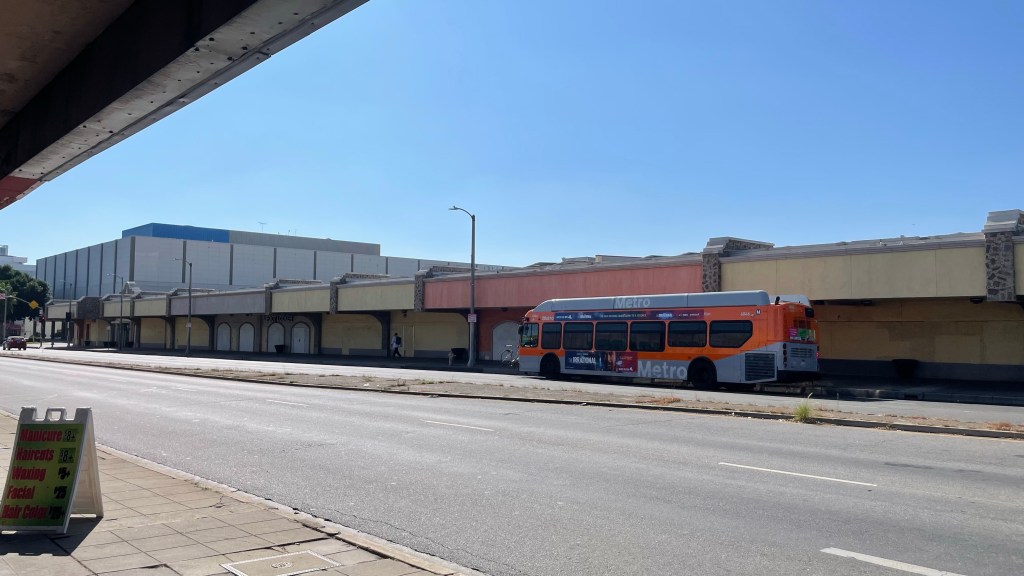
My other main issue is that Plaza del Valle isn’t a true public space. It’s, at best, a quasi-public one. It is designed primarily to produce a profit for the owner — not a tax-funded amenity for the benefit of the public. The “public” restrooms (of which there are a good number) cost a quarter to access. Not that that’s a shortcoming of the plaza — it’s a shortcoming of the city — which doesn’t create enough actual public squares. Since Pershing Square (1918) and Fletcher Bowron Square (1974), the city has tossed up over 100 signs over smog-choked intersections nominally designating them public squares. But for all of their flaws — none of these public squares are even remotely as square like as either Pershing Square or Fletcher Bowron Square.
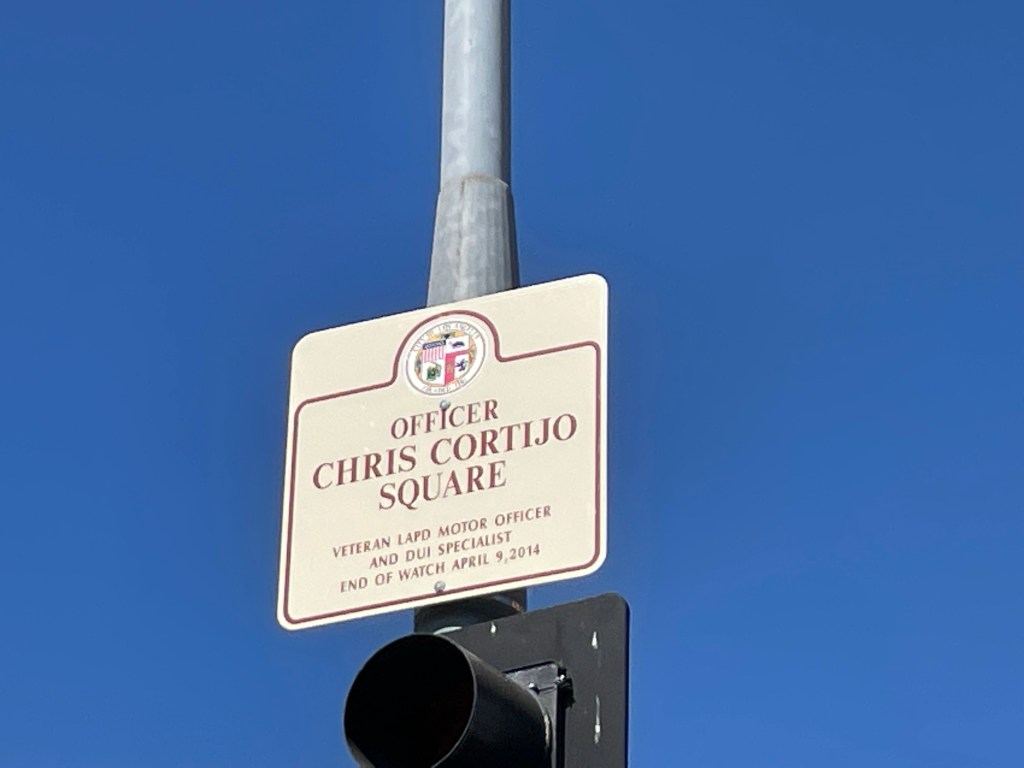
As I walked to Plaza del Valle, I passed through one of the city’s pathetic public squares. I wouldn’t have even noticed except that I look up and spied one of those sad beige signs informed that that I was passing through Officer Chris Cortijo Square. There was no plaque or stanchion so I had to read a paywall-protected article from some online newspaper that informed me that in 2004, Cortijo was struck by a motorist at the intersection of Van Nuys Boulevard and Arminta Street. He died a few days later of his injuries. His killer, Qaneak Shaney Cobb, was given fifteen to life. The city designated the intersection a public square the following year but — to add insult to injury — did nothing to make it safer or more square-like in any meaningful way whatsoever. There are no bulb-outs, medians, or trees to slow down drivers. There is no seating, no trees, no fountain, no statue, no murals for visitors. Paul Krekorian and LAPD officers congratulated themselves for a job well done.
Although Cortijo was a victim of the city’s addiction to automobiles, the square ironically named in his honor remains a deadly intersections with zero considerations for people. The LADOT created the Bradley Plaza Green Alley and NoHo Plaza in 2015 when they transformed a couple of underutilized alleys into people-friendly plazas. But “beige signs over car sewers” is the rule, rather than the exception, when creating public squares not just in the Valley but across the entire city. As Mike and I headed out of the Valley for a hike, we passed through another “public square” in Krekorian’s district, Harry Williams Square. I noted its people-friendly design: painted crosswalks across fourteen lanes of traffic.
In the San Fernando Valley of 2023 — the best and closest thing you’ll find to a proper public square is — for the time being — a 24-year-old, privately owned, shopping center.
Support Eric Brightwell on Patreon

Eric Brightwell is an adventurer, essayist, rambler, explorer, cartographer, and guerrilla gardener who is always seeking paid writing, speaking, traveling, and art opportunities. He is not interested in generating advertorials, cranking out clickbait, or laboring away in a listicle mill “for exposure.”
Brightwell has written for Angels Walk LA, Amoeblog, Boom: A Journal of California, diaCRITICS, Hey Freelancer!, Hidden Los Angeles, and KCET Departures. His art has been featured by the American Institute of Architects, the Architecture & Design Museum, the Craft Contemporary, Form Follows Function, the Los Angeles County Store, Sidewalking: Coming to Terms With Los Angeles, Skid Row Housing Trust, the 1650 Gallery, and Abundant Housing LA.
Brightwell has been featured as subject and/or guest in The Los Angeles Times, VICE, Huffington Post, Los Angeles Magazine, LAist, CurbedLA, Office Hours Live, L.A. Untangled, Spectrum News, Eastsider LA, Boing Boing, Los Angeles, I’m Yours, Notebook on Cities and Culture, the Silver Lake History Collective, KCRW‘s Which Way, LA?, All Valley Everything, Hear in LA, at Emerson College, and at the University of Southern California.
Brightwell is currently writing a book about Los Angeles.
You can follow him on Ameba, Duolingo, Facebook, Goodreads, iNaturalist, Instagram, Letterboxd, Mastodon, Medium, Mubi, the StoryGraph, Threads, TikTok, and Twitter.


 Eric Brightwell
Great articlel
LikeLike
Thanks, James!
LikeLike
I resolutely love your blog, Eric. And I LOVE that you are still active on one of the last un-gentrified tech platforms, micro-blogging!
Since moving here year two years ago, I spend every second and dollar I have exploring the city. It’s fun to read your old articles from 10-12 years ago. I shouldn’t be surprised at how much the city has changed, it is massive, after all. But it is a bit sad how some of LA’s neighborhoods have taken turns since COVID (exactly when I transplanted here). There used to be more businesses, foot traffic, it seems. People got more provincial and private during the pandemic, and have less faith in the big city. But Gen-Z wants third places to commune outside of the internet, and Echo Park and Elysian Heights (where I am), are thriving.
I’m gonna stay 🙂
LikeLiked by 2 people
Thank you for the comment.
It _does_ seem a bit less vibrant out there since COVID — but I do get the sense that things are slowly moving in the right direction, overall. Then again, the anti-social driving has never been worse.
I do get the sense that people realized, once they had to be isolated and rely on the internet for pretty much everything, just how much they crave third places (whether or not they articulated it that way), face-to-face interaction, and just real life experiences. I think it’s true of most generations, actually. The only people that I know who really seem to be happy being online all of the time, ironically, are older people.
The other day, someone was telling me that they’re thinking about trading their smart phone for a dumb phone and I’ve seen a couple of efforts to create social meet-ups in the Silver Lake Meadow, a singles’ night at the bar, and a third of the inquiries on r/AskLosAngeles are along the lines of “how do I make friends?” All seem like efforts to turn outward, which is good.
LikeLiked by 1 person
I also love your blog. I’m from Detroit and have never been to LA, but have some fascination with it and your blog is one of my favorite things to read when I have the time. Sometimes it is one of the things I read in the middle of the night when I cant sleep or got up too early. Always feels like an old friend. I love that you are doing it. I think the main thing I love about it is that you are just keeping at your niche. You should make a photozine series for us to buy.
LikeLiked by 1 person
That’s so nice to hear. I love Detroit — and have only been once. I feel like city’s have personalities and I like Detroit’s a lot. A photozine is an idea I’ll think about.
LikeLike