INTRODUCTION
I had originally planned to post this on 1 March — Saint David’s Day — the feast day of David, the patron saint of Wales. Obviously, that didn’t happen so I filed it away for next year… or the year after that. But I’m heading to Wales early next month so I’ve been boning up as much as I can on my Cymraeg and figured now is as good a time as any (with apologies to Dewi Sant), to publish this piece now. Besides, with the Eisteddfod Genedlaethol Cymru right around the corner, maybe this is an even more appropriate time.
WALES
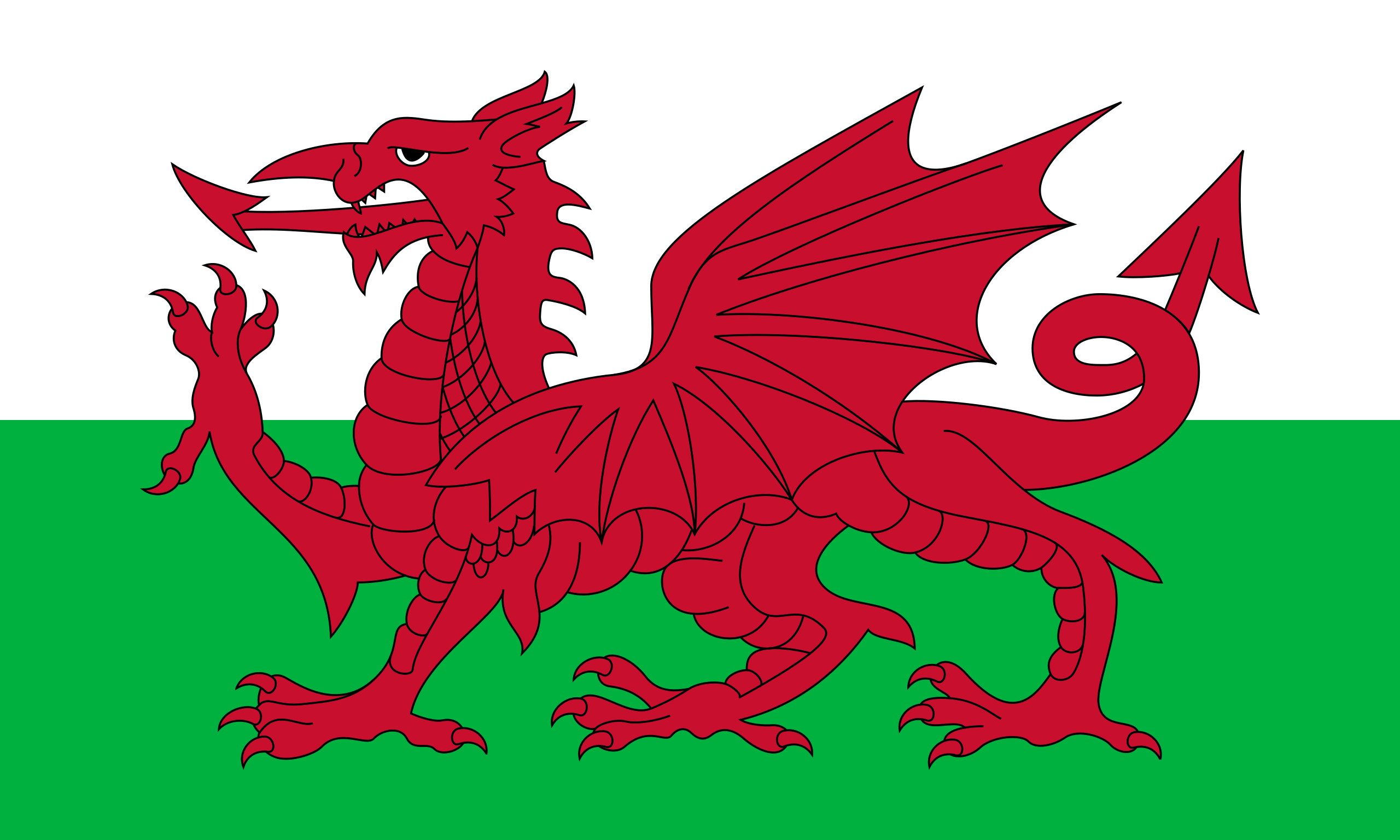
Wales (Cymru) is a country on the island of Great Britain. It is bordered by England, the Celtic Sea, the Irish Sea, and the Bristol Channel. To the west is Ireland; to the north, the Isle of Man. The entire population of Wales is roughly 3.16 million, well below the population of just the City of Los Angeles. Its entire area, 20,779 km2, is about twice that of Los Angeles County (12,310 km2). Wales is characterized by a dramatic landscape of rugged mountains and deep valleys. Its highest peak, Snowdown (Welsh: Yr Wyddfa), is 1,039 meters tall. Los Angeles is also characterized by mountains and valleys. Its highest peak, Mount San Antonio (Tongva: Yoát) is 1,897 meters tall. Wales has a temperate maritime climate and receives an annual average of 138.5 cm of rainfall. Los Angeles has a dry subtropical climate and receives an annual average of 37.5 cm of rainfall.
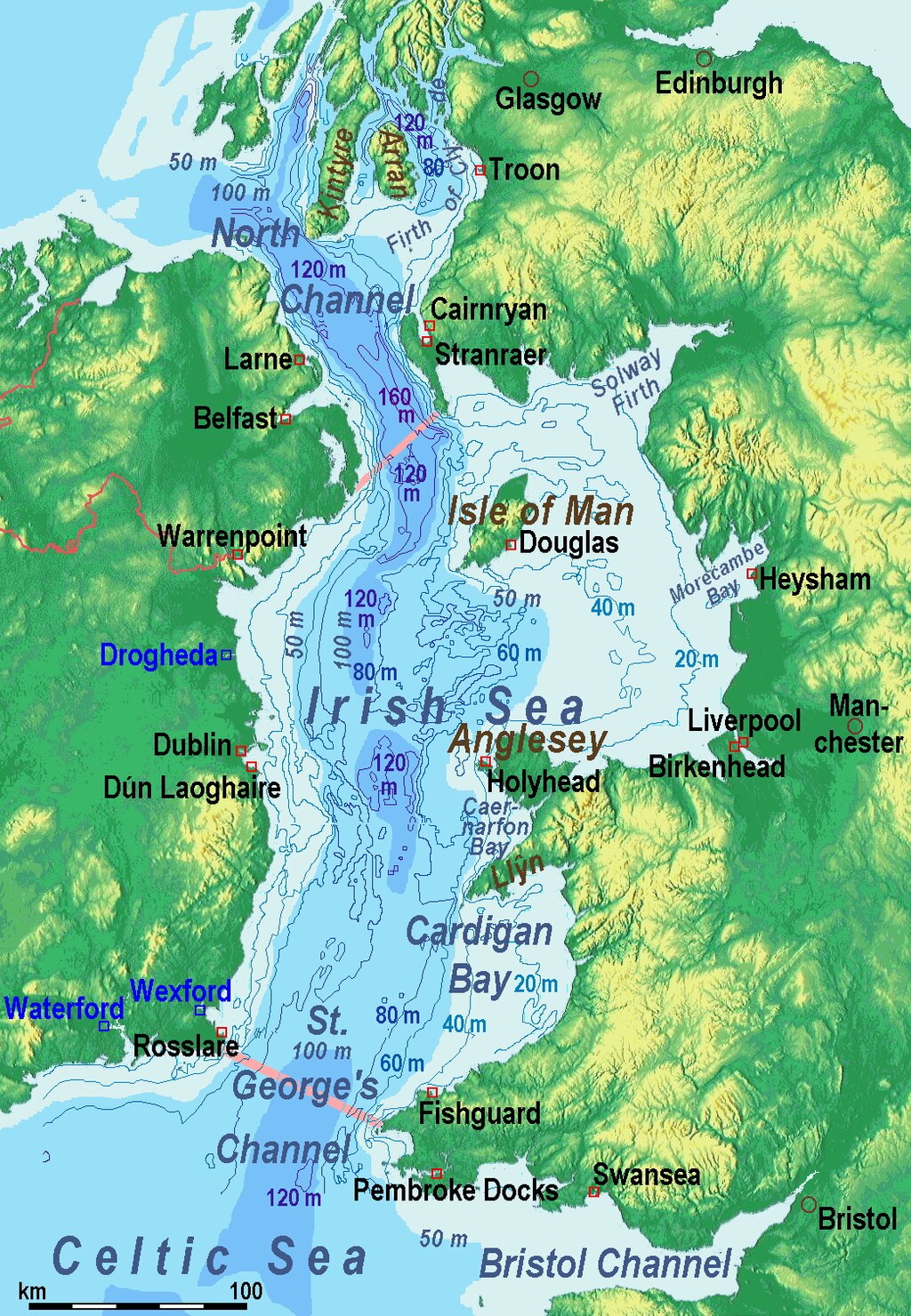
The human habitation of Wales begins at least 230,000 years ago, when Homo neanderthalensis arrived during the the Palaeolithic Period. The first Homo sapiens arrived some 31,000 years ago. Continuous habitation of Wales by modern humans began around 9000 BCE. A distinct Welsh identity began to emerge in the wake of the Roman withdrawal from Britain in the 5th century CE. For centuries after, the Welsh political landscape was characterized by presence of small, independent, rural kingdoms organized around agriculture and led by warrior chieftains. Wales unified, to various degrees, under the so-called “Princes of Wales”: Rhodri Mawr (820-878), Gruffydd ap Llywelyn (c. 1010-1063), and Llywelyn ab Iorwerth (1173-1240).
The Conquest of Wales by England under King Edward I began in 1277.. The English invested heavily in castle construction in order to solidify English control and create garrison towns for English settlers but Welsh identity persisted and colonization was met with resistance and revolts, such as the one led by brothers Llywelyn ap Gruffudd (1223-1282) and Dafydd ap Gruffudd (1238-1283). Following their deaths, the conquest was complete and “Prince of Wales” or “Princess of Wales” is, ever since, a title bestowed upon members of the British Royal Family.
Owain Glyndŵr declared himself Prince of Wales in 1400, marking the beginning of a Welsh revolt against the English and the brief restoration of independence. By 1409, the English had recaptured key castles and Glyndŵr retreated to the hills. From there, he continued to wage guerrilla warfare on the English until his disappearance in 1412. He is believed to have died in 1415.
The Acts of Union (1536 and 1543) abolished Welsh law, established English as the official language, and legally and administratively integrated Wales with England. In 1706, the Kingdom of Great Britain was established with England, Scotland, and Wales. Coal and iron mining fueled the industrialization of Wales in the 18th and 19th centuries. The 20th century decline in heavy industries led to economic restructuring and social changes, including secularization, widespread emigration to North America, a rise in Welsh nationalism, and the revival of the Welsh language. The center-left Welsh Nationalist Party, Plaid Cymru, was founded in 1925. The the National Assembly for Wales (Senedd Cymru) was formed in 1999.
THE WELSH DIASPORA
Although migration from Wales to other corners of Britain has taken place throughout history, it was during the Industrial Revolution that waves of migration occurred, with thousands of Welsh relocating to English towns like Liverpool and Ashton-in-Makerfield. Welsh also emigrated overseas, establishing communities in places like Pas-de-Calais, Newfoundland; Y Wladfa, Argentina; and Pennsylvania.
WELSH AMERICANS
In a 2008 survey, roughly 1.98 million Americans reported Welsh ancestry. Welsh ancestry is more commonly identified amongst Southerners in states like Alabama, Georgia, South Carolina, Tennessee, and West Virginia. It is also widely identified in Ohio and the aforementioned Pennsylvania — founded as a Quaker colony by William Penn, where a third of colonists, in 1700, were Welsh. I suspect that many Americans with Welsh ancestry have no knowledge of it. If your family name is Welsh — or someone in your family tree’s is — chances are, it would seem, that you’re part Welsh. Common Welsh family names in the US include Jones, Williams, Davis/Davies, Evans, Roberts, Richards, Daniels, and Hughes (all of which are patronymic names derived from a father’s given name: i.e. “son of John,” “son of William,” “son of David,” &c).
Most Welsh Americans elsewhere are descended from Welsh who immigrated in the 19th century, especially between 1850 and 1870, and most pursued farming, coal mining, or work as quarrymen in the Ohio River Valley and Appalachia. I don’t have a sense that most Americans with Welsh ancestry maintain many (if any) cultural ties to Wales. If they eat leeks or grow daffodils, it’s probably just because they like them. Like many white Americans, I’d been raised to believe that I was mostly white (German and English, in my case), and “one-sixteenth” Native (Cherokee (naturally) but also Chickasaw and Choctaw). A DNA test suggested, perhaps not surprisingly, that the Native ancestry was nonexistent but revealed, just as surprisingly, unknown ties to the Celtic countries of Ireland, Scotland, and Wales — fairly specifically North Wales.
WELSH IN CALIFORNIA
Welsh miners, shepherds, and merchants were also drawn to the more distant shores of California during the Gold Rush. Welsh mainly settled in the Sacramento Valley, Sierra Nevada, and Amador County. Migration to Southern California was less common but not insignificant. The Welsh Presbyterian Church was founded in Los Angeles in 1888. In 1896, 100 families of Welsh dairy farmers planned to establish a colony on Fernandez Rancho in Santa Barbara County.
Furthermore, one of the most-recognized characters in Los Angeles history — Griffith J. Griffith — was an immigrant from Wales.
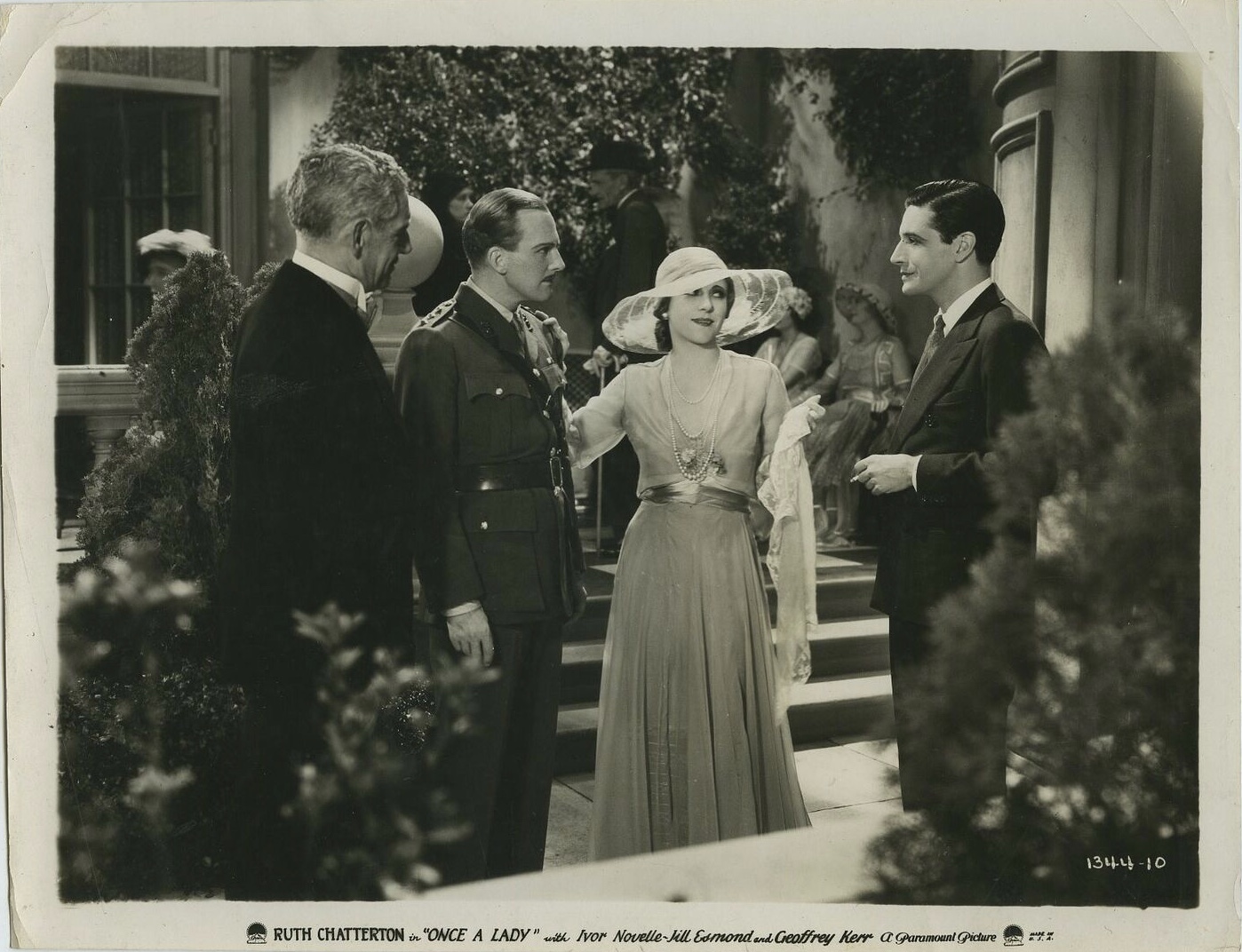
It seems likely that some Welsh immigrants — certainly many higher profile ones — came to Southern California to pursue work in the burgeoning film industry, although not many attained status as stars or are well remembered today. Exceptions include Gareth Hughes, today mostly forgotten, and the great Ivor Novello, who lived in Los Angeles only briefly and didn’t seem to find it to his liking. The handsome, gay actor found theater to be “so much more satisfying” than film and complained of being typecast as a “a ladies’ darling.” He made his Hollywood debut in The White Rose (1923) and his last Hollywood acting role was Once a Lady (1931). He also contributed dialogue to Tarzan the Ape Man (1932) and But the Flesh Is Weak (1932) before returning to the UK.
GRIFFITH J. GRIFFITH
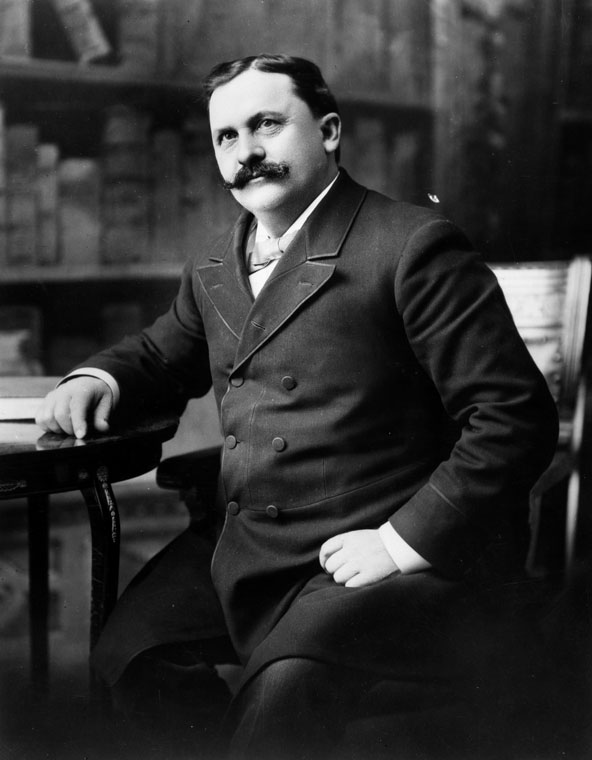
Colonel Griffith Jenkins Griffith is still one of the most recognized names in Los Angeles. Griffith was born in Bettws in 1850. He came to the US around 1865. After making a small fortune in silver mines, he came to Los Angeles in 1881, where he bought the 1647-hectare Rancho Los Feliz the following year. He subdivided what he could and held on to the areas that resisted development. He was followed by his father, stepmother, and eight half-siblings who migrated from South Wales to Los Feliz.
In 1885, Griffith partnered to move an ostrich farm west of Anaheim to his rancho, which was the impetus for the creation of the Los Angeles Ostrich Farm Railway. It ran along what’s now Sunset and Griffith Park boulevards from Victor Heights to the site of the old Los Angeles Zoo.
Griffith had grand ambitions and wanted to be accepted into high society but he was, at best, tolerated by them. A writer for the Los Angeles Times referred to him, in 1898, as “Part visionary and part blowhard.” He was also described as a “Midget egomaniac” and “Roly-poly pompous little fellow.” Although he adopted the title, “Colonel,” his actual military rank was of Major of Rifle Practice with the California National Guard. He married heiress Mary Agnes Christina Mesmer, a member of the wealthy and respectable Mesmer family, in 1887. They had one son, Vandell Mowry “Van” Griffith, in 1888.
The Ostrich Farm was not around long. In 1889, two of the partners — Granville P. Beauchamp and the farm’s founder, Dr. Charles J. Sketchley — sued another partner — Randolph Stracey — for irreparably damaging their reputation by having a sexual relationship with an Asian servant named Govinda. Miscegenation was a crime in California until 1948. The ostrich farm closed. Two years later, in 1981, another former partner, Frank Burkett, shot Griffith with a shotgun loaded with birdshot in an attempted murder and afterward shot and killed himself. Griffith survived relatively unscathed, physically.
On 16 December 1896, Griffith donated 1,220 hectares of the hilliest part of his ranch to the city as a Christmas present. Griffith Park opened to the public on 25 December 25 of that year. Griffith was finally being accepted into high society. In 1896, he was named the first honorary member of the Chamber of Commerce. Griffith was also a member of the Jonathan Club, the Fruit Growing Association of Los Angeles, the Merchants and Manufacturers Association, and the Citizens and Free Harbor Leagues. He blew all the good will when, on 4 September 1903, the outspoken teetotaler shot his wife in the face during a drunken outrage. She escaped, disfigured and minus an eye, by jumping through the window of the Hotel Arcadia, in which they were staying during a Santa Monica vacation, and fleeing to safety. She divorced him. He spent a year and eight months at San Quentin and was released on 3 December 1906.
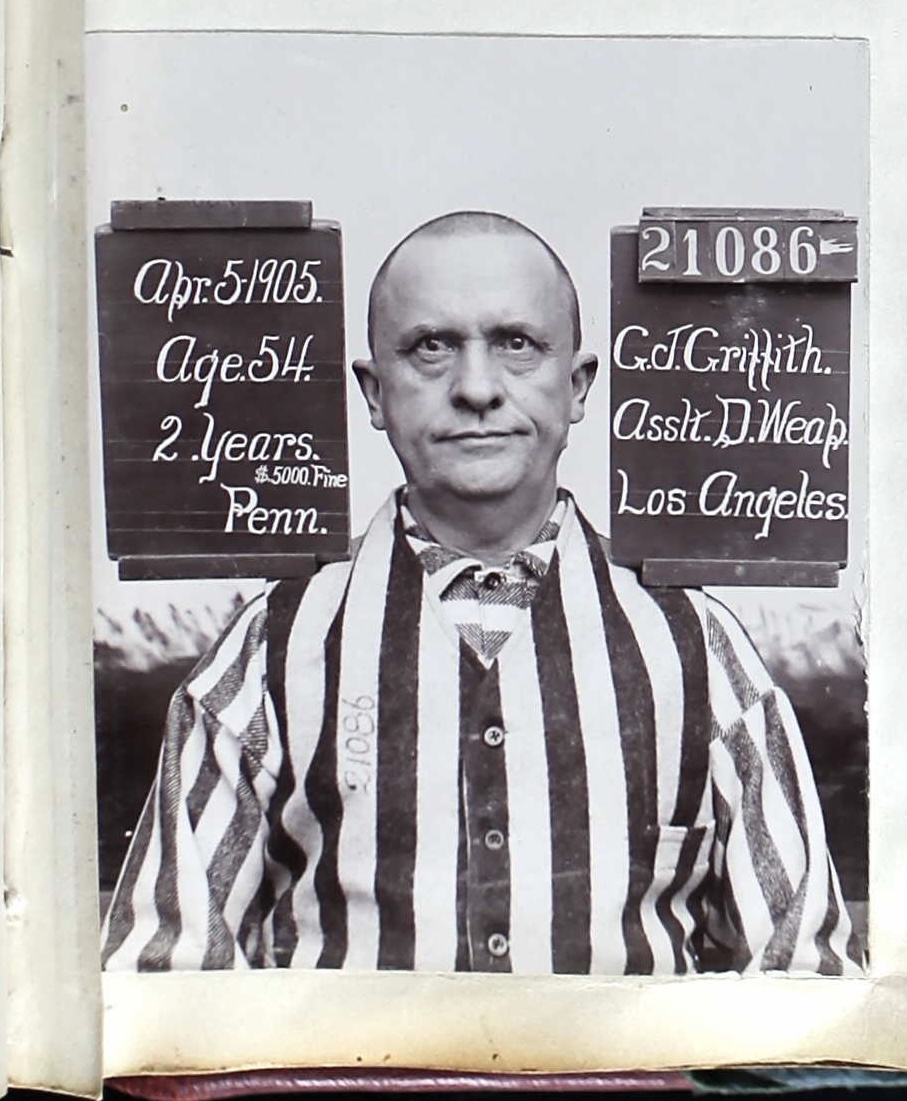
Hoping to worm his way back into the city’s good graces, the wealthy would-be wife murder offered to build an amphitheater and observatory in the park in December 1912, which he again presented as a Christmas gift. As city leaders mulled the offer, Griffith died on 6 July 1919, at the age of 69, from liver disease. Childs Avenue was renamed Griffith Park Boulevard in 1925. The city broke ground on the Greek Theater in 1928 and the Griffith Observatory in 1933. Jonathan Bickart‘s more than four-meter-tall bronze statue honoring the diminutive Griffith was installed at Griffith Park’s main entrance in 1996.
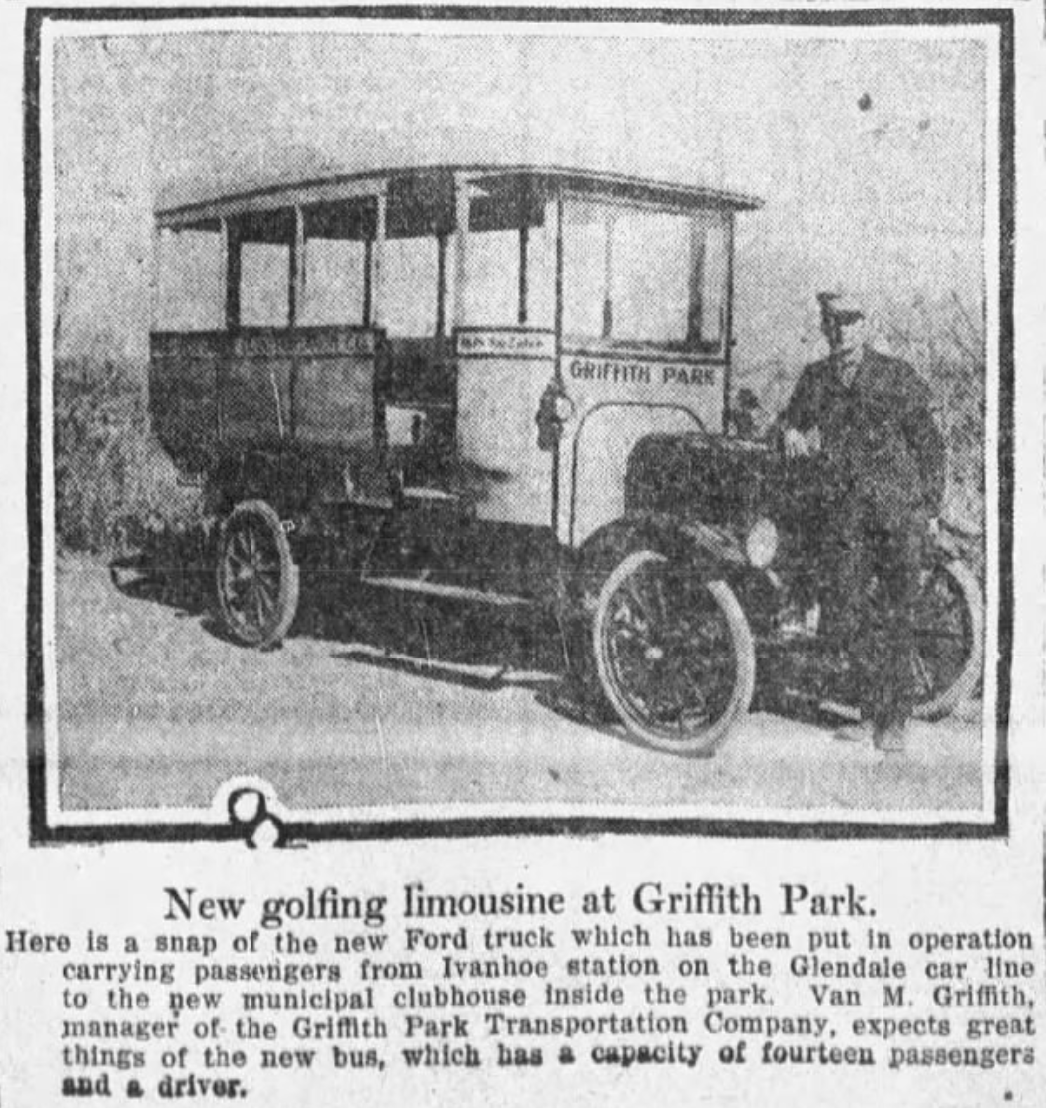
Tina Mesmer apparently lived out the rest of her days in virtual seclusion, staying with younger sister Lucy Mesmer Whipple, until her death on 11 August 1948. Their son, Van, attended Stanford University and later served as president of the Los Angeles Park Board and oversaw many improvement projects there including the planting of trees, the creation of the tennis courts, and the construction of the observatory and theater. As the manager the Griffith Park Transportation Company, he provided mass transit access to the park. He was also a Los Angeles Police Commissioner. He died on 14 July 1974.
LLEWELLYN IRON WORKS
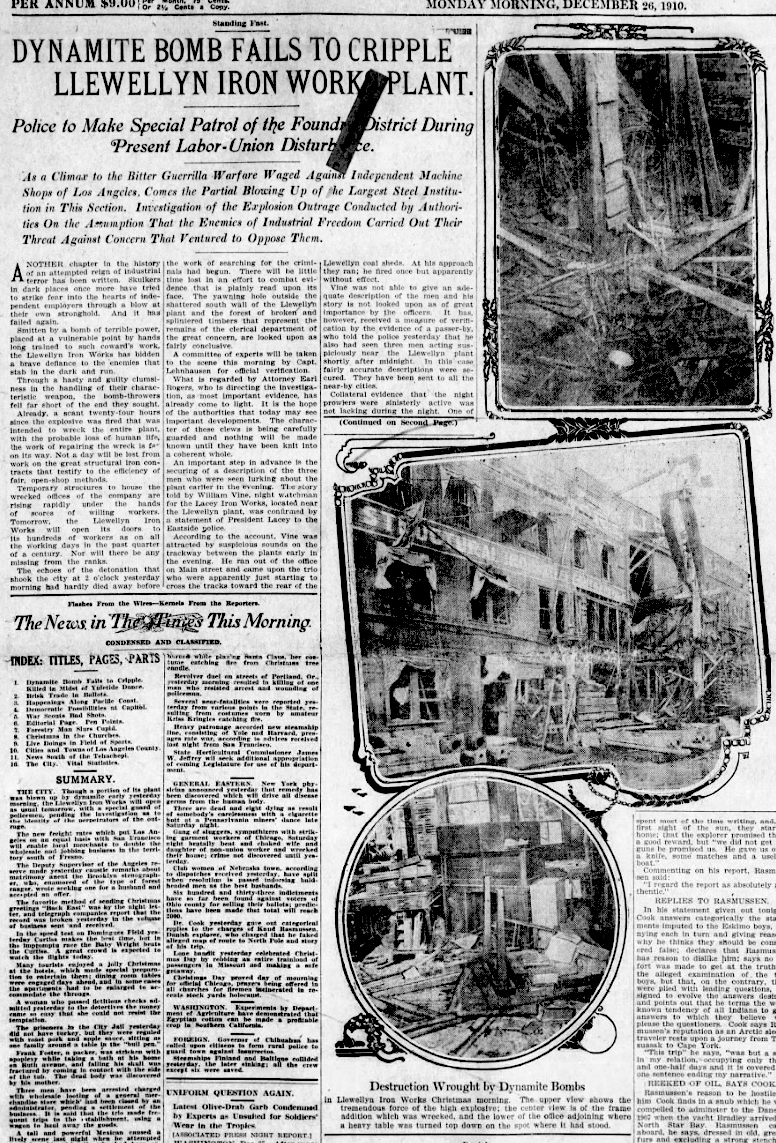
Llewellyn Iron Works was an import foundry known for manufacturing the city’s iconic multiple-globe streetlights (“Llewellyn Electroliers“) and for supplying the cast-iron railings for the Bradbury Building. The company was founded in 1886 by Amman Valley-born brothers David, John, Reese, and William Llewellyn. An anti-union operation, they were bombed on Christmas Day, 1910 — not two months after the bombing of the anti-union Los Angeles Times. A nightwatchman was injured but no one was killed. The culprit of the latter was most likely by Ohio-born anarchist Ortie McManigal, who was arrested on 14 April 1911 in Detroit and found to be in possession of blasting caps and dynamite. In 1912, the iron works relocated to Torrance, where they merged with with Columbia Steel Corporation in 1923. That company was acquired by US Steel in 1929. The Torrance plant closed in 1979 and resulted in the loss of 1,400 jobs.
NOMINALLY WELSH
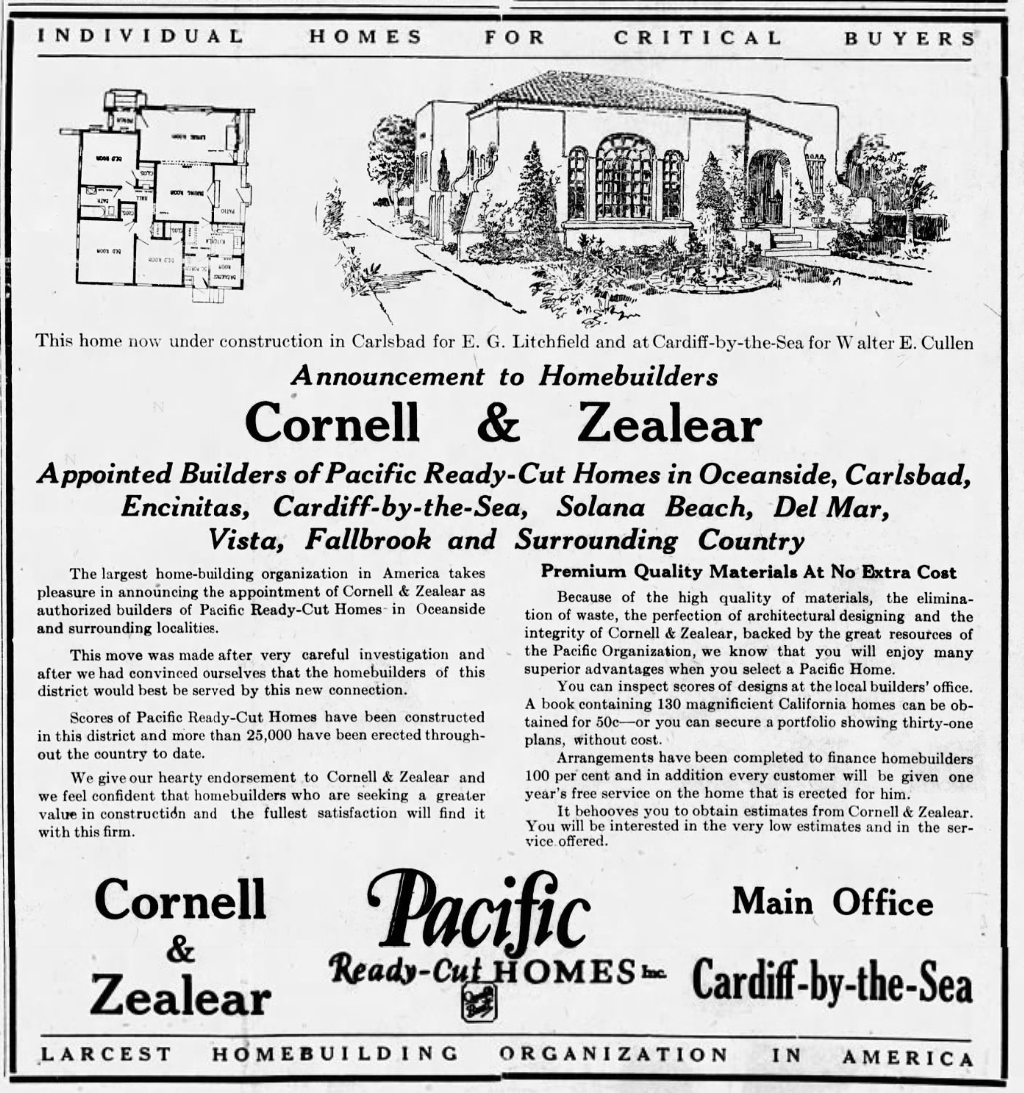
Over in San Diego County, Bostonian developer J. Frank Cullen founded Cardiff-by-the-Sea, at the suggestion of his Welsh wife, Esther Young, who although widely reported to have been a native of Cardiff was, in fact, born in Belfast… Maine. That might explain why there are streets there with names like Aberdeen Drive, Brighton Avenue, and Dublin Drive — which are at least in the ballpark of Wales. The fact that it was San Diego County in the 1920s explains why the homes there were built in the Spanish Colonial Revival style.
As with Cardiff-by-the-Sea, the Westside‘s Cardiff Avenue bears little relation to the Welsh capital. It began life, in 1913, as Welsh Avenue — named not after the country but Lawrence Martin Welsh (1875-1959), one of the founders of Culver City. Perhaps it looked a bit too much like nearby Walsh Avenue but for whatever reason, it was renamed Cardiff Avenue in 1917.
(Further reading: LA Street Names — Cardiff Avenue)
THE WELSH CHURCH
Today, a plurality of Welsh identify as having no religious affiliation. Of those who do adhere to a religious tradition, most are Christian. Lucius of Britain, who may exist only in legend, was said to have introduced Christianity to Wales around 200 CE — even before Constantine. He first appears in a 6th century biography of popes and was likely concocted to help convert Britons. Christian martyrs, Julius and Aaron, also appear in a 6th century text, which claimes that they were martyred in Wales or the East Midlands around 304. Christianity became the official religion of Rome in 380, though, and the Romans withdrew from Britain in 383. It was Irish missionaries, beginning in the 500s, who really began to further spread Christianity in Wales.
Before Christianity, most Welsh (like their Irish, Breton, Cornish, Manx, and Scottish brethren) practiced a Celtic Religion, in the case of Wales, Welsh Mythology (Y Chwedlau). No extant records detail their beliefs, what is known of them is mostly gleaned from oral traditions and sometimes hostile accounts by outsiders. It was a pantheistic religion and sacred springs played a great deal of importance. Triplicity is a common theme. The priestly class was comprised of Druids. They made votive offerings at caves, wells, and wetlands. These liminal spaces between Elfydd (the realm of humans) and Annwn (the Otherworld) could be traversed by some people, spirits, and fairies — especially on particular days like those marking the beginning of the light and dark halves of the year and at Mid-summer and Mid-winter. The druids also sacrificed animals (including, possibly, humans). By the 600s, the old ways were mostly replaced by Celtic Christianity, The Welsh Methodist revival of the 18th century was a significant religious and social movement. The Calvinistic Methodist denomination was established in 1823 — and renamed the Presbyterian Church of Wales in 1928.
The Welsh Sabbath School first met in December 1887 at Caledonia Hall, located at 17 West 1st Street (The Evening Express Building). On 21 December 1887, Llanuwchllyn-born Reverend David Hughes founded the Welsh Presbyterian Church in Los Angeles. Services were offered in both English and Welsh. They initially shared with the First Presbyterian Church at Fort and Second. By 1900 it was meeting at , 438 Crocker Street in what’s now Skid Row. By 1909, there were 22 members of the congregation.
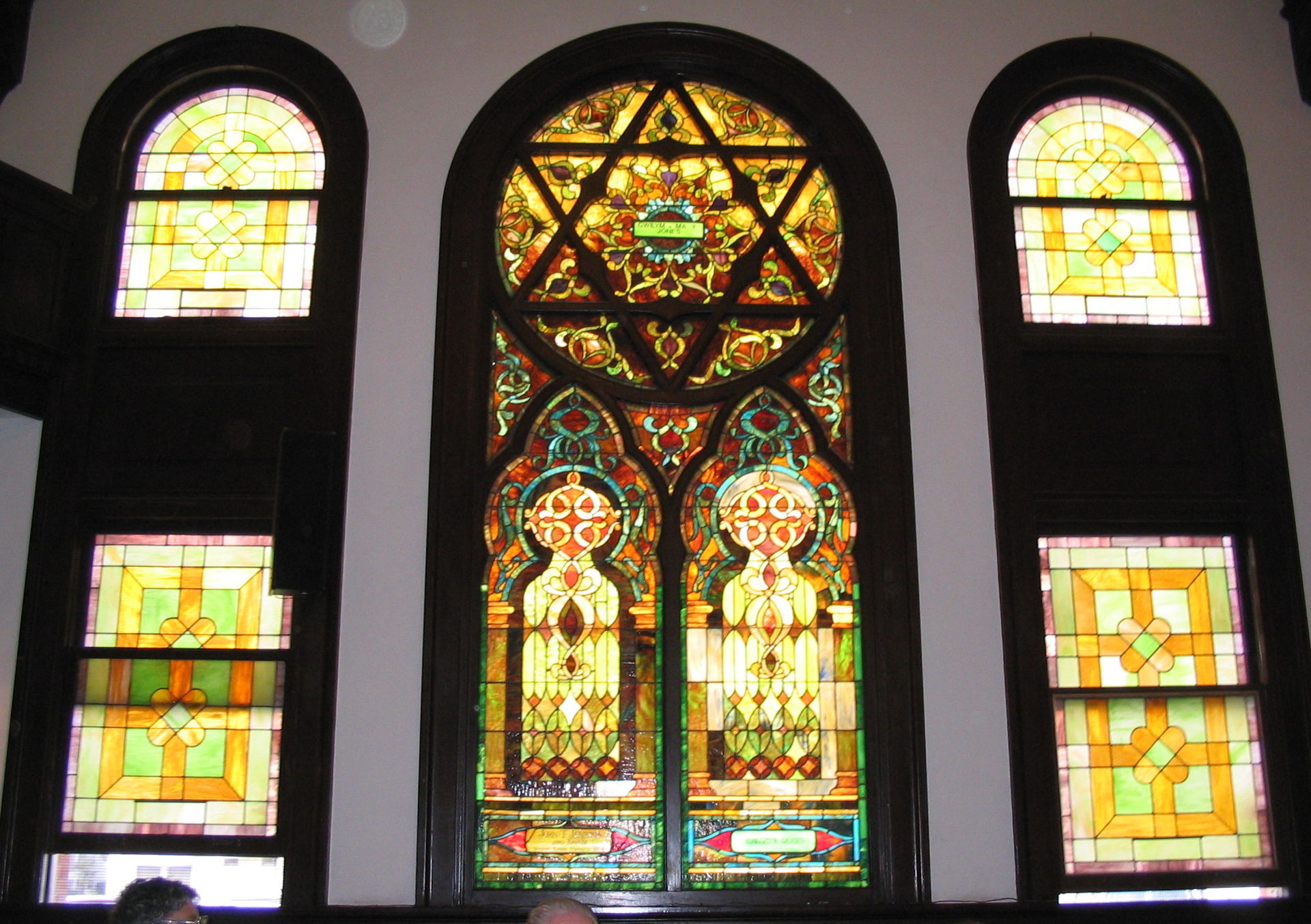
Over time, the congregation outgrew the space and, in 1926, the church relocated to 1153 Valencia Street in Pico-Union, where it took over the conservative Jewish Sinai Temple, whose growing congregants had outgrown it. Built in the Greek Revival style in 1909, it is the oldest remaining synagogue building in Los Angeles. During its heyday, up to 300 Welsh immigrants attended services there. In 1941, the church’s choir appeared in the film, How Green Was My Valley. However, as demographics changed, membership dwindled. There was no full-time pastor after 1964. It was designated Los Angeles Historic-Cultural Monument No. 173 on 5 September 20 April 1977. In 1986, there were still 161 members — enough for the annual Gymanfa Ganu. By the 2012, the congregation had dwindled to about ten regulars. The church held its last service in 2012 and, since 2013, has been home to a multi-faith arts center/house of worship known as the Pico Union Project.
WELSH FESTIVALS AND OBERVANCES
Important pre-Christian holidays of Wales include Cyntefin/Calan Mai, Gŵyl Ifan (Gŵyl Ifan Ganol Haf), Nos Galan Gaeaf, Gŵyl Fair y Canhwyllau, and Heuldro’r Gaeaf/Alban Arthan. In modern times, kfestivals, holidays, and observances in Wales include St. David’s Day, St. Dwynwen’s Day, Dylan Thomas Day, Owain Glyndwr Day, Pride Cymru, Machynlleth Comedy Festival, the Eisteddfod (a week-long festival of Welsh culture, music, and literature), the literary Hay Festival, the music and arts Green Man Festival.
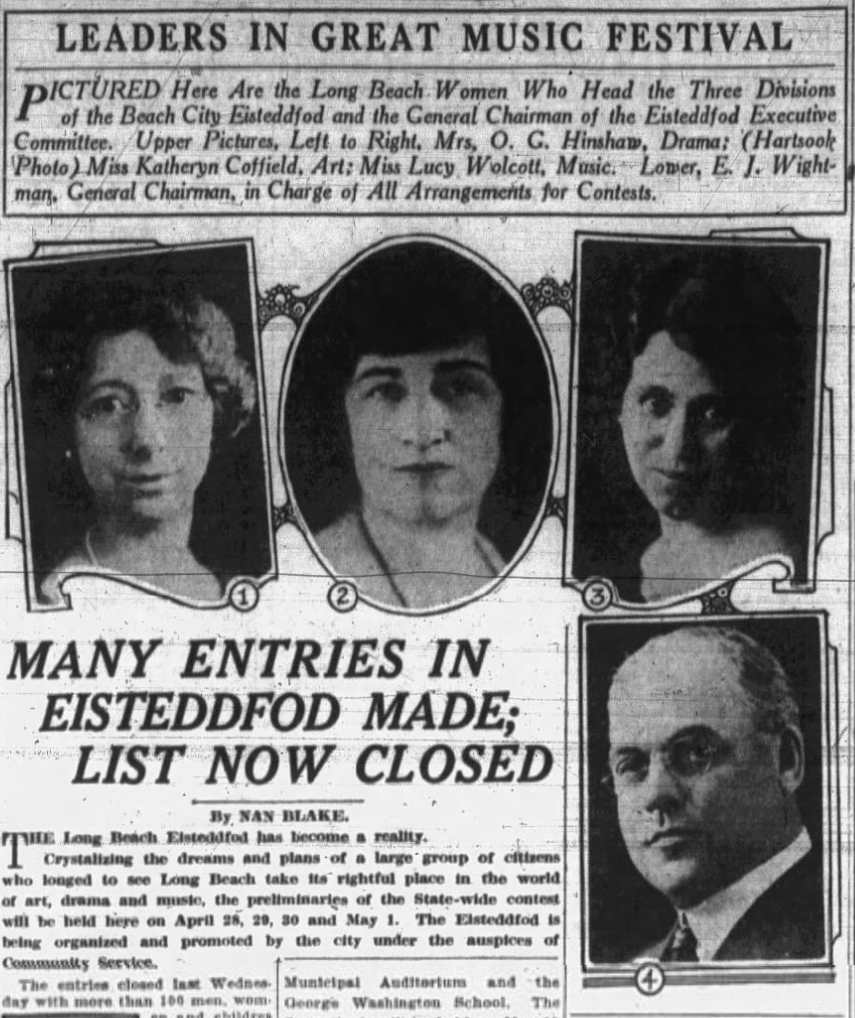
Los Angeles has, more so in the past than the present, celebrated some Welsh events. The first Eisteddfod in Southern California took place in 1890 and continued annually until at least 1905. Another series of Eisteddfodau took place in the from 1923 until 1925. It was revived, as the West Coast Eisteddfod, in 2011, by A Raven Above Press and AmeriCymru. It drew over 2,000 attendees. After the Welsh Presbyterian Church closed, Lorin Morgan-Richards and the Welsh League of Southern California launched an annual St. David’s Day celebration. The most recent St. David’s Day festival, however, took place at the Mayflower Club in North Hollywood all the way back in 2016.
THE LLOYD WRIGHTS
Celebrated architect Frank Lloyd Wright was matrilineally descended from a Welsh family, the Lloyd Jones. His grandparents, John Enoch Jones and Margaret Lloyd, emigrated from Wales to Spring Green, Wisconsin in 1844 with seven children, losing a child along the way to typhoid. They combined their family names to create the family name, “Lloyd Jones.” One of their daughters, Anna Lloyd Jones, married William Cary Wright and gave birth to Frank Lloyd Wright, in 1867, in the community of Richland Center. His parents separated in 1881.
Frank Lloyd Wright first came to Los Angeles in 1915 and, in Los Angeles, designed the Ennis House and the Hollyhock House (both in Los Feliz), the Storer House (in Crescent Heights), and other homes. His architectural legacy continued with his son, Frank Lloyd Wright, Jr. (aka Lloyd Wright), who preceded his father, coming to Los Angeles in 1911. He designed the Gainsburg House (in La Cañada Flintridge), the Lloyd Wright Studio-Residence (in West Hollywood’s Norma Triangle neighborhood), the Lombardi House (in Palos Verdes Estates), and the Samuel-Novarro Residence and Sowden House (both in Los Feliz). He moved to West Hollywood and later, Santa Monica, where he died in 1978. His son, Eric Lloyd Wright, was born in West Hollywood in 1929 and also became an architect, designing the Allan and Borgny Dorland House (in Altadena), and the Anais Nin/Rupert Pole and Ross houses (both in Silver Lake).
WELSH LANGUAGE AND LITERATURE
A few years ago I read the Mabinogion (in translation). It’s a collection of the earliest Welsh prose, compiled in the 12th and 13th centuries from earlier oral traditions. I absolutely loved it. I first became aware of the Mabinogion after completing, in elementary school, the Chronicles of Prydain — a fantasy series inspired by that collection and other Welsh folklore. They were my sisters and she had the 1980 editions, with the amazing cover art by David Wyatt. I loved those books so much that, in fifth grade, I submitted a drawing of protagonist and Assistant Pig-Keeper, Taran, as part of a contest organized to promote the Disney adaptation of The Black Cauldron. The cartoon was underwhelming, though, and I haven’t watched it since. It’s worth mentioning, though, because even though it’s set in the fictional land of Prydain, Prydain is basically a fantasy Middle Ages version of Wales.
The Welsh language is a Celtic language of the Brittonic subgroup — a group that includes the extant languages Breton, Cornish, and Welsh as well as the extinct Spanish language of Britonia (or Gallaecian). Its use was effectively banned by Henry VIII and the Laws in Wales Acts of 1535-1542. Four centuries later, the ban was partially lifted with the passage of the Welsh Language Act 1967. The ban on Welsh was only fully repealed with the passage of the Welsh Language Act 1993. Today, Welsh is the predominant language in North and West Wales, and countrywide, it’s spoken by roughly 18% of Welsh inhabitants. Welsh and, along with English, is one of two official languages of the Senedd Cymru. In Los Angeles, Welsh lessons are available through Language Trainers and Listen & Learn USA.
For fans of Welsh literature, you’ll want to check out The Huntington Library in San Marino for all kinds of reasons — but also because it holds a significant collection of rare Welsh works that were acquired by Pacific Electric‘s Henry E. Huntington in 1917. The collection includes notable pieces like Humphrey Llwyd‘s map of Wales, John Prise‘s defense of British history, Siôn Dafydd Rhys’s handbook to Welsh grammar, The Notebook of John Penry, along with other books and manuscripts.
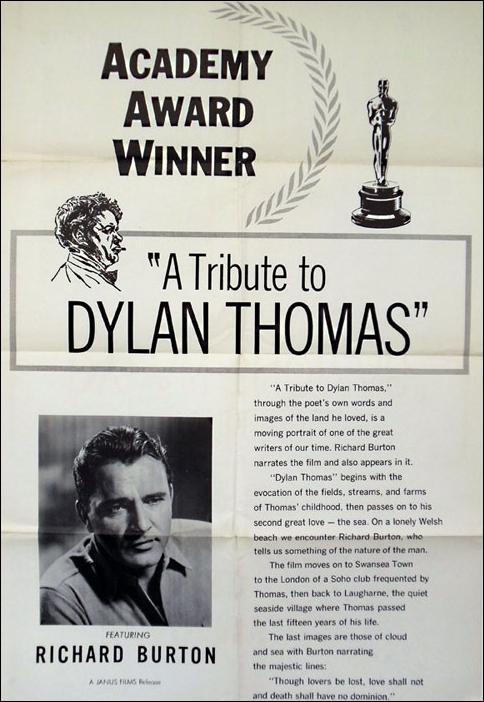
Surely the most celebrated Welsh author is Dylan Thomas. He never lived in Los Angeles but he did come to Los Angeles in 1950 and gave a reading at UCLA. In 1961, the Academy awared the Best Short Oscar to the Richard Burton-narrated A Tribute to Dylan Thomas. The 2014 film, Set Fire to the Stars, depicts the poet’s trip to the US but focuses on his time in New York and Connecticut.
Although usually characterized as a British author, Roald Dahl was born in Wales (to Norwegian parents). He and his first wife, actress Patricia Neal, lived the Pacific Palisades whilst she was filming A Face in the Crowd.. Although Los Angeles wasn’t always a filming location, Hollywood certainly had a hand in several adapatations of his films, including the excellent Charlie and the Chocolate Factory (1971), The Witches (1990), Matilda (1996), and Fantastic Mr. Fox (2009). And, although it was filmed in New York City, it’s worth mentioning that Dahl hosted an Outer Limits/Twilight Zone sort of anthology television series, Way Out, on CBS in 1961.
One last Welsh author with ties to Los Angeles was pioneering trans author, Jan Morris. Morris was born in Clevedon and spent time writing about Los Angeles in her first work, Coast to Coast (published in the US as As I Saw the USA). She later wrote, “Los Angeles: The Know-How City,” which was published in Rolling Stone in 1976 and included in a collection of travel essays, Destinations.
WELSH ANGELENO FILM
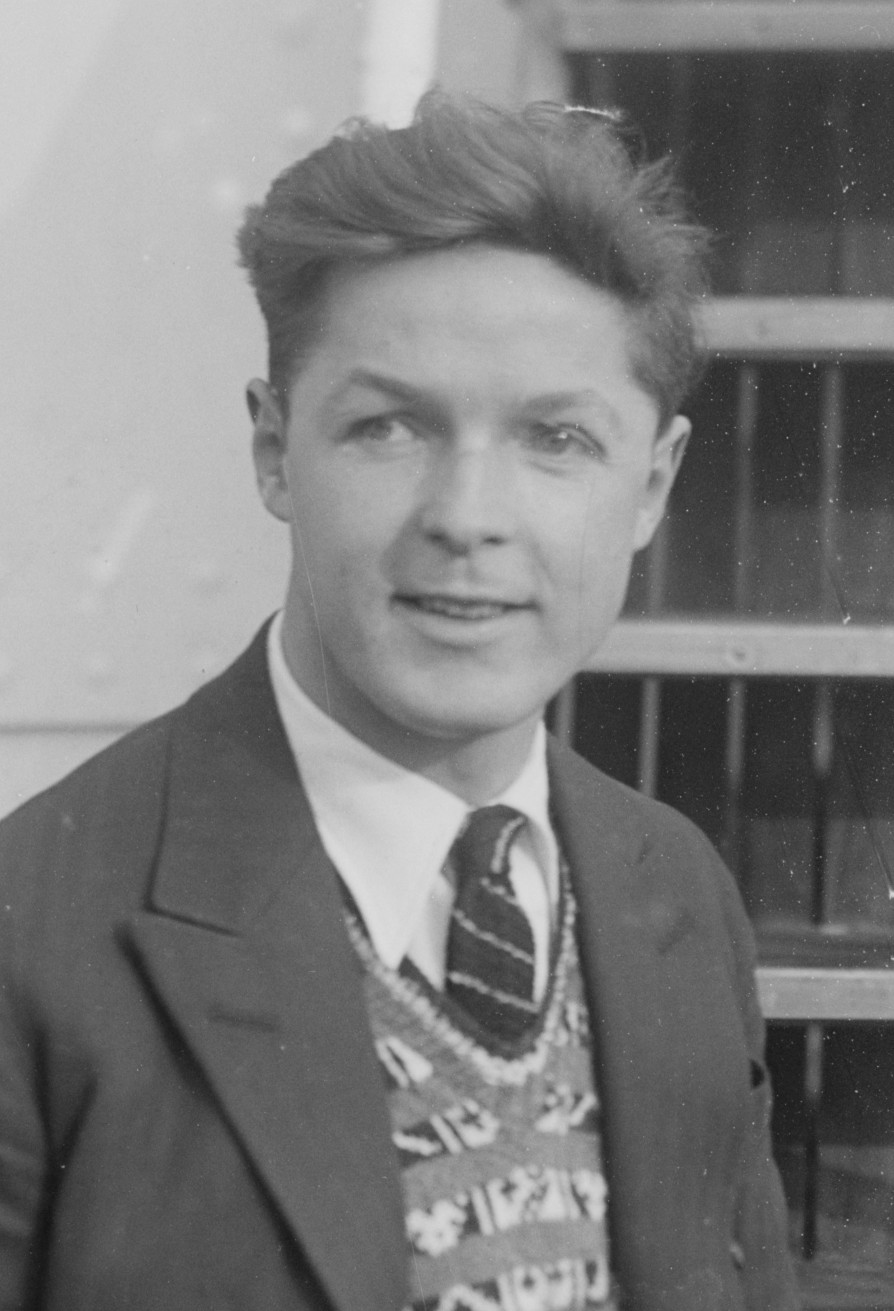
Earlier, I mentioned Welsh Angelenos in Hollywood film, specifically Gareth Hughes. Hughes was born William John Hughes in Dafen in 1894. In 1914, he set sail for New York to appear on Broadway. After making his way to Chicago, he appeared in his first film role in 1915. After making his way to Los Angeles, Metro Pictures offered him a contract in 1920 and billed him, thank to his boyish features, as their “boy star.” Dancer Isadora Duncan later called him “the world’s greatest dancer.” He found that Hollywood glitz suited him. He lived in both a Hollywood town house and a Laurel Canyon lodge and employed a chauffeur. Over time, his star declined and the the Wall Street Crash of 1929 ruined him financially. He downsized to an apartment in Echo Park. There, he found work as the director of Shakespearean and religious drama for the Federal Theatre Project. He then felt called upon by God and became a missionary, Brother David, who ministered to the Piaute people of California. His last involvment with Hollywood was acting as Bette Davis‘s dialect coach for the 1945 film, The Corn is Green, about a schoolteacher determined to bring education to a Welsh mining town. In 1958, he retired and returned to Wales, only to find the climate disagreeable. He moved back to Los Angeles’s Motion Picture Home and Country Hospital, where he died in 1965
Another Welsh Angeleno actor was Ray Milland, born Alfred Reginald Jones in Neath in 1907). He’s best remembered for his role in in Billy Wilder‘s The Lost Weekend (1945), which him Best Actor at Cannes, a Golden Globe Award, and an Academy Award — the first presented to a Welshman. He also memorably appeared in Alfred Hitchcock‘s Dial M for Murder (1954). Although less highly regarded, perhaps, I loved him in the Roger Corman proto-psychedelic horror films, The Premature Burial (1962) and X: The Man with the X-ray Eyes (1963). He died in Torrance in 1986.
The most highly regarded Welsh Angeleno film actor was the great Richard Burton. Burton was born in Pontrhydyfen in 1925. He first came to the US in 1949 with The Lady’s Not for Burning on its Broadway run. His first Hollywood film was My Cousin Rachel (1952). My favorite film of his is the British New Wave Look Back in Anger (1959), based on the John Osborne play that was part of the Angry Young Men literary movement. by In 1962 (when he was married to Sybil Burton) he embarked on a romantic relationship with Elizabeth Taylor (when she was married.to Eddie Fischer) on the set of the 20th Century Fox film, Cleopatra. They rented a bungalow in Beverly Hills. The film, although the highest-grossing film of 1963, was hugely expensive and nearly bankrupted the studio, who, in order to recoup some of its costs, sold the land on which the studio was located — which became the neighborhood of Century City.
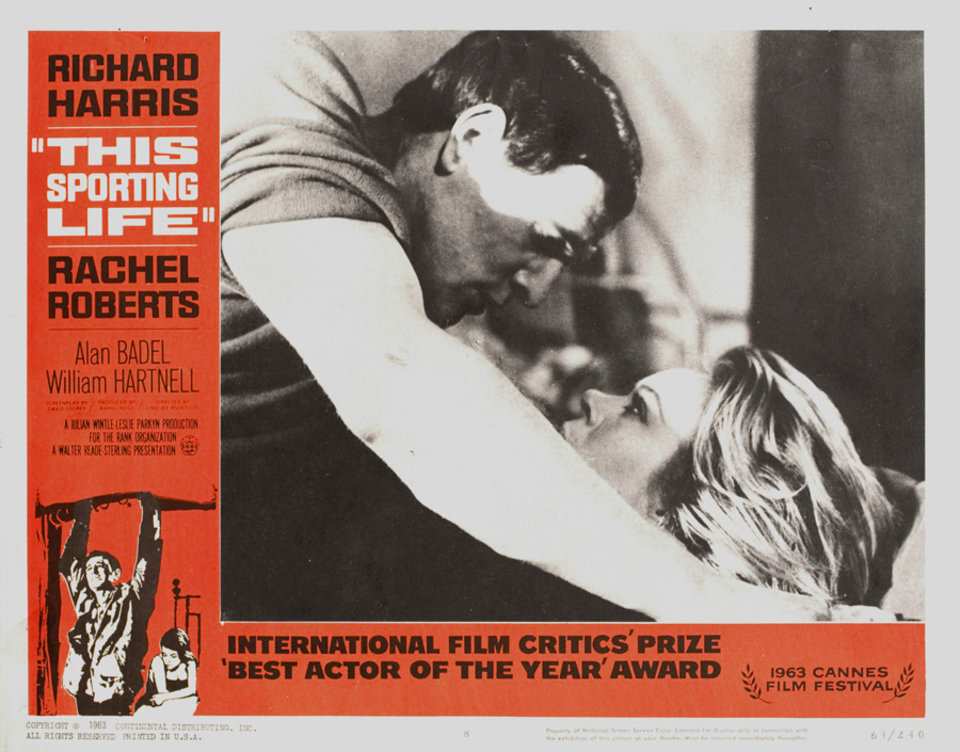
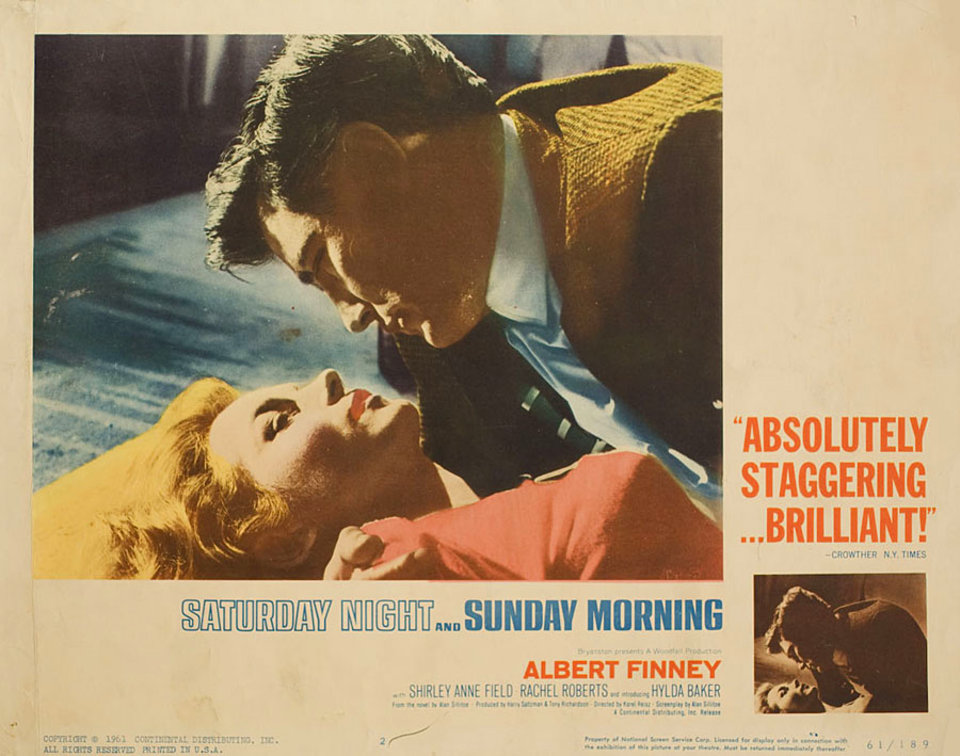
Another fine Welsh actor was Rachel Roberts. She was born in Llanelli in 1927 and appeared in three films that are almost perfect to my mind; two films based on Angry Young Men works (Saturday Night and Sunday Morning (1960) This Sporting Life (1963)); and the Australian film, Picnic at Hanging Rock (1975). None of them, naturally, were Hollywood productions. She moved to Los Angeles, though, in 1975 and continued acting, and her Hollywood credits include Foul Play (1978), When a Stranger Calls (1979), and Charlie Chan and the Curse of the Dragon Queen (1981). She died in Los Angeles in 1980.
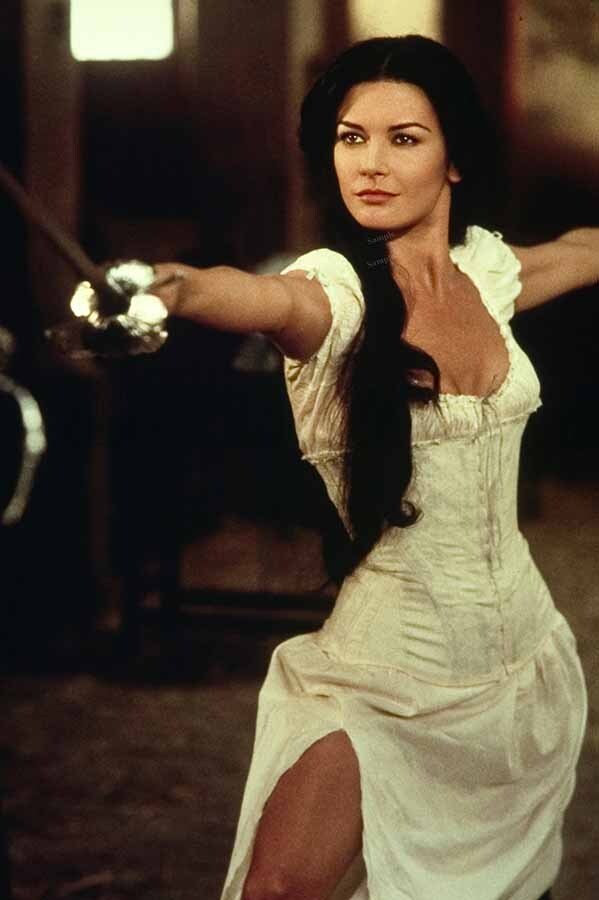
More recent Welsh Angeleno film figures include actors Anthony Hopkins, Catherine Zeta-Jones, Ioan Gruffudd, Ivor Barry, and Rosemarie Frankland — all of whom were born in Wales. Zeta-Jones deserves a special shout-out for playing the character, Elena Montero, in The Mask of Zorro (1998) and The Legend of Zorro (2005), both of which were set in and around El Pueblo de Nuestra Señora la Reina de los Ángeles del Río de Porciúncula, making Montero something of an Angelena.
Glynis Johns was born in Pretoria to a Welsh father and Australian mother. Actor Henry Thomas was born in San Antonio but claims that he’s Welsh on both sides. He also supports Swansea City A.F.C. Filmmaker Gareth Edwards was born in Warwickshire to Welsh parents and later came to Los Angeles.
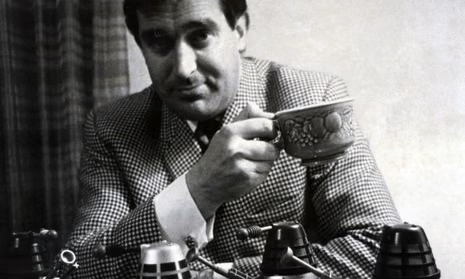
Writer Terry Nation was born in Cardiff in 1930. His name may not be widely recognized, today, but he’s a legend — having created the Daleks and Davros for Doctor Who, as well as the series Survivors and Blake’s 7 . He also wrote for The Avengers, The Baron, The Champions, Department S, The Persuaders!, and The Saint. He moved to Los Angeles in 1980 and wrote episodes of MacGyver. He died in 1997.
There have been a few notable Hollywood productions set in Wales. The aforementioned How Green Was My Valley (1941) was set in a mining village in Wales and filmed in Malibu, where a Welsh village was built.
For the also aforementioned The Corn was Green (1945), the filmmakers just opted to film in an actual Welsh village, Ysbyty Ifan. And, although Bette Davis was born in Llowell, Massachusetts, we’ve already established that “Davis” is a Welsh family name.
James Whale’s campy horror film, The Old Dark House (1932), though set in a rain-swept Welsh mansion, was filmed entirely on the Universal Studios lot in Universal City. The Wolf Man (1941) set in the fictional village of Llanwelly was also filmed at Universal Studios. More recently, The Killer Elite (2011) and Dolittle (2020) featured Welsh settings and scenery.
THE PRISONER
Trying to shoehorn an appreciation of The Prisoner (1967) into a piece about Welsh Los Angeles is perhaps a stretch. It’s one of my absolute all-timers, though, so bear with me. The Prisoner was the project of Astoria, Queens-born Patrick McGoohan, who moved to the Pacific Palisades in the 1973, not long after having completed work on his seminal starring role as No. 6 on the psychedelic series. He lived there with his wife, Joan, until his death in 2009. Also, one of the No. 2s, Guy Doleman, later moved to Los Angeles.
The Prisoner was filmed in Portmeirion in North Wales. Portmerion a folly tourist village and it could almost be described as McGoohan’s co-star. Southern California and Metro Los Angeles, in particular, is obsessed with these village-like simulacra: Alpine Village, The Americana at Brand, Chinatown, Fisherman’s Village, Frontier Village, the Grove, Japanese Village and Deer Park, Main Street, U.S.A., Mary’s Gate Village, Old World Village, Pioneer Town, Ports O’ Call Village, Shoreline Village, Solvang, the THUMS Islands… all of which, like the Village in The Prisoner, are both comfortable and appealing but at the same time, eerie, menacing, and suffocating.
WELSH MUSIC
The canon of traditional Welsh music is primarily composed of folk ballads and religious hymns. The harp is particularly associated with Welsh music. For people of my generation (X), the phrase “Music of Wales” may stir hazy memories of a crop of guitar bands that the British Music Press hyped as “Cool Cymru” after Britpop finally fizzled out. I can’t say that I’m a massive fan of any of them although I reckon that, what little I’ve heard of Gorky’s Zygotic Mynci, 60 Ft. Dolls, and Super Furry Animals wasn’t offensive. There was a Welsh band, though, Teen Anthems was humorously vitriolic and understandably opposed to the suffocating retro-ness of the ’90s rock scene. They followed up their singel, “I Hate Oasis (And I Hate The Beatles),” with “Welsh Bands Suck” that singled out out NME and Melody Maker for abuse. Cool Cymru-flogging Melody Maker and Select both ran out of gas not long after.
I don’t hate old bands, though, not even retro-minded ones (well, not always) and I think that there are quite a few Welsh Bands and performers who don’t “suck.” Badfinger, The Darling Buds, Dafydd Iwan, The Hepburns, Joanna Gruesome, Julian Cope, Kelly Lee Owens, Man, Meic Stevens, Shirley Bassey, World Party, and Young Marble Giants are all alright in my book.
John Cale is a Welsh musician (born in Garnant), composer, singer-songwriter, and music producer. He studied at Goldsmiths College, before moving to the US in 1963 to study with Aaron Copland and Iannis Xenakis. In New York City, he collaborated with La Monte Young in the Theatre of Eternal Music and met Lou Reed, with whom he co-founded The Velvet Underground in 1965. Reed kicked him out of the band in ’68, after which he became an acclaimed producer and solo artist. Cale moved to Los Angeles around 1972 to work as a staff producer/A&R at Warner Bros under Mo Ostin. During this time, he recorded Paris 1919 with members of the UCLA Symphony Orchestra. He does much of his recording at his own ARM studio in Los Angeles.
Gene Loves Jezebel was formed (as Slavaryan) by Cornelly-born twins Jay and Michael Aston. in 1980. Michael moved to Los Angeles in 1987 and left the band in 1989 to embark on a solo career. The Michael-less band released Kiss of Life in 1990. The brothers reconciled in the mid-1990s and shared a home in Los Angeles. Whilst touring to support 1999’s VII, they again had a falling out and they, at times, have both performed as Gene Loves Jezebel. Jay’s version is known as Gene Loves Jezebel with Jay Aston in the US whilst Michael’s is known as Michael Aston’s Gene Loves Jezebel elsewhere. Both are billed simply as Gene Loves Jezebel in their respective home countries. Since Michael lives in Los Angeles, he gets points for being a Welsh Angeleno — even though he’s said he has no interest in becoming an American citizen.
There’s been a bit more traditional Welsh music that’s come from Los Angeles. The Welsh Choir of Southern California (Côr Cymraeg De California) was formed in 1997. Past St. David’s Day Festival also featured Welsh performers, including Meinir Gwilym, and Siobhán Owen.
Tom Jones was possibly the highest-profile Welsh Angeleno — or ex-Welsh Angeleno. Sir Tom was born Thomas John Woodward in Treforest in 1940. From 1969 through 1971, he hosted and filmed This is Tom Jones at the ABC Television Center. In 1974, he moved to Bel Air. In 2016, after his wife died, he returned to the UK.
Other Welsh Angelenos include guitarist Joey Molland, the last surviving member of Badfinger, who moved to Los Angeles after that band’s initial break-up before moving to Minnesota where he died in 2025. I’m not sure when she moved here, but Shirley Bassey was living in Los Angeles in 1982, when she returned to the UK to tape A Special Lady for ITV. Members of Lostprophets, including guitarist Mike Lewis, live in Los Angeles (whilst their disgraced pedophile singer remains in prison in the UK). Penclawdd-born Mark Thomas later lived (and died) in Los Angeles. Neath-born Katherine Jenkins moved to Los Angeles in 2009. Paul Freeman lived in Santa Monica from roughly 2009-2016, when he moved to Nashville. Penboyr-born Cate Le Bon moved to Los Angeles in 2013.
WELSH SPORTS AND LOS ANGELES
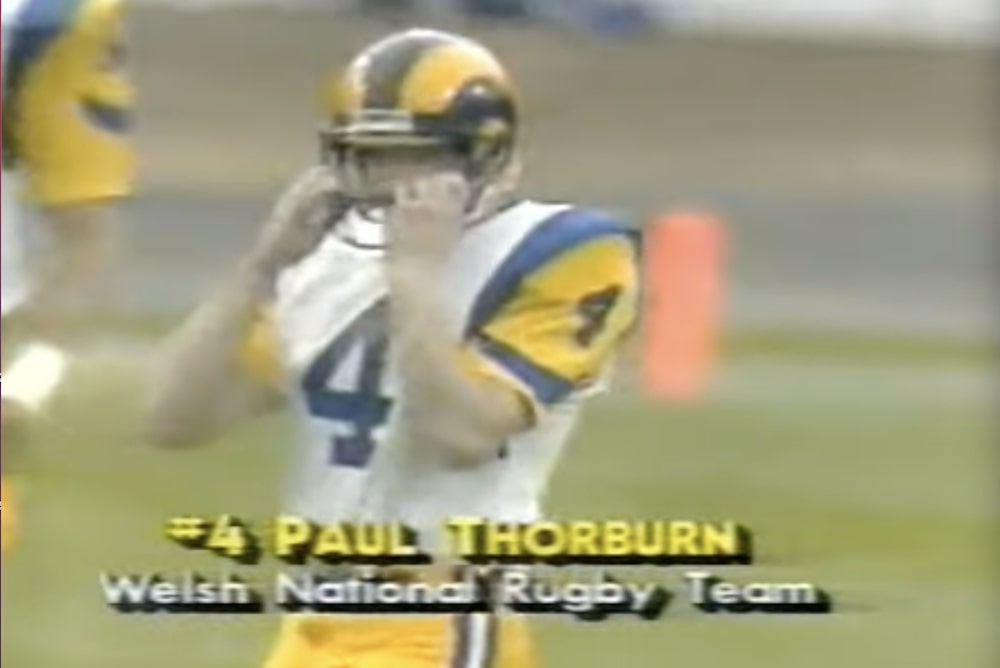
The most popular sport in Wales in Rugby Union, which arrived in the country in the 1850s. One of the first Welsh athletes with a connection, albeit tenuous, to Los Angeles, is Paul Thorburn. The former Neath RFC and international Wales rugby union player currently holds the record for the longest successful kick in an international rugby union test match. In the 1980s, his skill attracted the attention of Georgia Frontiere, then owner of the Los Angeles Rams, He was signed as a trialist when the Rams played in a pre-season game at Wembley against the Denver Broncos in 1987 as part of the American Bowl — an event held from 1986-2005 in an effort to increase the popularity of American Football abroad. It was not successful and American Football still fails to trouble the Top 10 most popular sports, globally.
Of course, proper Football (Soccer) was and remains the most popular sport in the world — commanding about 3.5 billion viewers (compared to American Football’s 410 million). In Wales, football is growing more popular — especially amongst younger Welsh. Several Welsh football teams compete in various divisions of the English Football League, ranging from the Championship (Swansea and Wrexham) to League One (Cardiff City) and League Two (Newport County). In 2022, Cardiff-bron Gareth Bale (formerly with Southampton, Tottenham, and Real Madrid) joined Los Angeles FC before retiring in 2023.
WELSH CUISINE
Welsh cuisine is characterized by hearty dishes with a focus on local ingredients like lamb, seafood, and vegetables. Key dishes include bara brith (a fruit loaf), cawl (a traditional stew), glamorgan sausage (a vegetarian sausage made of cheese and bread), laverbread (made with a red algae), Crempogau (thick pancakes eaten on Shrove Tuesday), and Welsh cakes (a griddle-baked treat). Welsh beverages include Penderyn whisky and Barti Ddu Rum (rum infused with laver), and gins from the Pembrokeshire Gin Co. and Dyfi Distillery. Welsh rarebit, although popular throughout the UK (and delicious) may not have originated in Wales. “Welsh” was, until recent times, often used by the English as a slur for things perceived to be of lower quality. “To welsh” is slang for going back on a promise or failing to pay a debt.
There have never, from what I’ve seen, ever been any Welsh restaurants in Los Angeles or Southern California. Food for thought!
WELSH ORGANIZATIONS IN SOUTHERN CALIFORNIA
There are not many Welsh Angeleno organizations active today. There’s the aforementioned Welsh League of Southern California, which formed in 2014. There used to be the Long Beach Welsh Cambrian Society, which formed at least as early as 1926 and was active at least as recently as 1947. Wales does not have its own Consulate and is represented here by the British Consulate General in Los Angeles. It’s located in Century City, which owes its existence, in part, to a Richard Burton film. Not exactly “full circle” — but a conclusion.
Support Eric Brightwell on Patreon

Eric Brightwell is an adventurer, essayist, rambler, explorer, cartographer, and guerrilla gardener who is always seeking paid writing, speaking, traveling, and art opportunities. He is not interested in generating advertorials, cranking out clickbait, or laboring away in a listicle mill “for exposure.”
Brightwell has written for Angels Walk LA, Amoeblog, Boom: A Journal of California, diaCRITICS, Hey Freelancer!, Hidden Los Angeles, and KCET Departures. His art has been featured by the American Institute of Architects, the Architecture & Design Museum, the Craft Contemporary, Form Follows Function, the Los Angeles County Store, Sidewalking: Coming to Terms With Los Angeles, Skid Row Housing Trust, the 1650 Gallery, and Abundant Housing LA.
Brightwell has been featured as subject and/or guest in The Los Angeles Times, VICE, Huffington Post, Los Angeles Magazine, LAist, CurbedLA, LA Times 404, Marketplace, Office Hours Live, L.A. Untangled, Spectrum News, Eastsider LA, Boing Boing, Los Angeles, I’m Yours, Notebook on Cities and Culture, the Silver Lake History Collective, KCRW‘s Which Way, LA?, All Valley Everything, Hear in LA, KPCC‘s How to LA, at Emerson College, and at the University of Southern California. He is the co-host of the podcast, Nobody Drives in LA.
Brightwell has written a haiku-inspired guidebook, Los Angeles Neighborhoods — From Academy Hill to Zamperini Field and All Points Between, that he hopes to have published. If you’re a literary agent or publisher, please contact him.
You can follow him on:
Bluesky, Duolingo, Facebook, Goodreads, iNaturalist, Instagram, Letterboxd, Medium, Mubi, Threads, and TikTok.


 Eric Brightwell
How about “double that of”
Its entire area, 20779 km2, is smaller than that of Los Angeles County (10,570 km2).
LikeLiked by 1 person
Thanks for catching that!
LikeLike
nice picture of the stain glass window in the Welsh Presbyterian Church in LA. I went there for 6 months until it closed in 2012. They sang in Welsh some spoke in Welsh as well. Cymru Am byth!
LikeLiked by 1 person