The other day, I visited one of my favorite places in Los Angeles — The Huntington Library, Art Museum, and Botanical Gardens (or, “The Huntington” to you and me). For anyone who hasn’t visited, the Huntington is the former estate of railroad magnate, Henry Edwards Huntington (1850-1927). After Huntington’s death, the mansion opened as the Huntington Art Gallery in 1928. Its art collections are focused on American and European art from the 17th to mid-20th century. Surrounding the mansion are roughly 50 hectares of specialized landscapes. Some are botanically themed, including the Australian, Desert, Herb, Jungle, Rose, Palm, and Subtropical. A lot of the property seems to me mostly to have been influenced by the English Garden tradition but the Chinese and Japanese gardens, of course, are in those.
The most recent addition to the Huntington is the roughly 320-year-old Japanese Heritage Shōya House, which opened on 21 October 2023. That was the main reason I wanted to visit. Whenever there’s an expansion at the Huntington, I’m amazed that there’s more property in which to expand. Then again, there are about 38 acres around the properties periphery and northwest corner that are off-limits to the public. Back there, there are various support buildings and the private residences at 1600 and 1650 Orlando Road (the Director’s House). The public parking area alone occupies about six hectares.
I also wanted to visit the Chinese Garden, Liu Fang Yuan (流芳園), which opened quite a ways back now — on 23 February 2008. Although I visited the garden when it opened, when it expanded, and several other times since — a garden takes a bit of time to really come into its own so I wanted to see how it was getting on now that the passage of time has allowed it to get more settled.
And then, I also wanted to go because it just rained pretty hard a few days ago and one of my dreams is to spend a long rainy night in the Huntington. I would awaken and emerge from inside the ombú (Phytolacca dioica) and then just quietly stroll through the grounds in gloomy darkness. Maybe lightning would occasionally illuminate my path. Perhaps there’d be some cheap, heated sake and curry waiting inside the Japanese House or the Japanese Heritage Shōya House (or both). Or there could be warm a meal and some tea or baiju in the Chinese Garden’s Tea House. Until that wish is granted, I will settle for visiting during the hours in which the Huntington is open.
It is unfortunately not easy to get to the Hungtington using mass transit. This is sort of ironic because were it not for mass transit, there would be neither a Huntington nor a City of San Marino. Henry Huntington bought the Los Angeles Railway (LARy) in 1898. In 1901, he formed the Pacific Electric Railway (PE). Huntington was also a real estate tycoon — and LARy’s yellow cars and PE’s red cars — were the primary incentive for the neighborhoods he developed around mass transit. That’s right — Los Angeles was built around the (street) car. PE launched the Monrovia-Glendora Line in 1902. It traveled across San Marino along Huntington Boulevard — that’s why it’s so ridiculously wide — more than 40 meters. The railroad ended service in 1951 and the former right-of-way is today divided into six lanes for cars and zero dedicated bus lanes. The eighteen-meter-wide median could surely accommodate a bicycle trail but… that’s crazy talk. No, it has to be entirely covered with thirsty, high maintenance, non-native grass. In 1904, PE launched the Sierra Madre Line, which branched off of Huntington Drive and traveled up San Marino Avenue and Sierra Madre Boulevard. Huntington’s private spur traveled San Marino Avenue, where it splits from Sierra Madre Boulevard, and then turned west at Stratford Road, and finally entering his property along Bound Drive. Attention nouveau riche — get yourself a private train car.
Sierra Madre had three interurban lines until 1950. The last, the Monrovia-Glendora Line, ended operation in 1951. Today, San Marino is served by Metro’s 179 and 487 lines. The closest mass transit gets to the Huntington today is the stop at East Del Mar Boulevard and Allen Avenue — a not unwalkable but annoying one kilometer distant stop without a single amenity. No seating, no lighting, no shelter, no waste receptacle, no system or route map, no restroom — nothing. Well, nothing but a sign letting riders know that yes, this patch of concrete in front of carcinogenic gas pumps is, in fact, exactly where you’re supposed to disembark to walk to the former estate of a railroad baron who, in his lifetime, oversaw the creation and operation of history’s most extensive electric, interurban railway.
I reached out to friends to see if any would want to visit after — warning them that I’d want to spend at least a few unhurried hours there. Mike was available and game and so we agreed to meet at his place, in nearby South Pasadena, and then bike over. I rode along the Los Angeles River Greenway Trail to the Arroyo Seco, with the intention of connecting with it near the confluence of the two rivers or taking the Metro A Line. The Metro A Line is one of the network’s most scenic but I’d never yet ridden the the Arroyo Seco Bicycle Path and I decided, if it wasn’t submerged or covered with detritus deposited by floods, that I should finally ride it. The path doesn’t actually start at the confluence, though, it turned out. It begins almost three kilometers upstream, meaning a not-terribly pleasant ride along Figueroa Street is required. The Bicycle Path, once I arrived to it, was quite pleasant, though. 3.5 kilometers further upstream, the bicycle path ends. Unfortunately, it ended at a locked gate. A sign from the Department of Public Works on the gate stated, “For your protection trail gates will be locked during periods of forecasted rain or scheduled water releases.” The weather forecast assigned a 0% of rain for the next ten days. If there was a scheduled water release, I’d have had no way of knowing. What’s more, I could only read the sign once I hoisted my bike and myself over the gate as I made a mental note to start carrying bolt cutters at all times. I rode the rest of the way to Mike’s without incident and we rode over to the Huntington — only to find that it’s closed on Tuesdays.
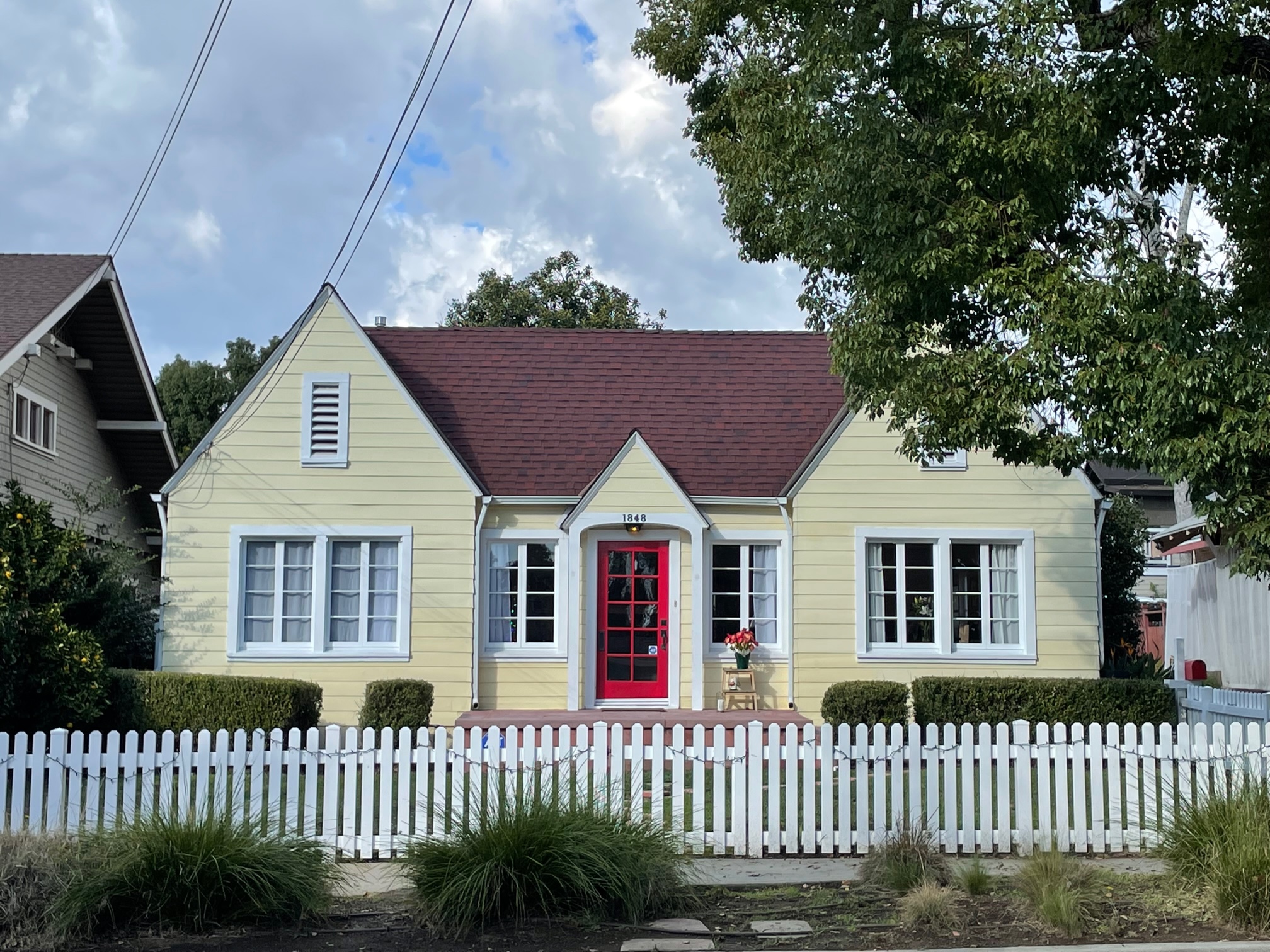
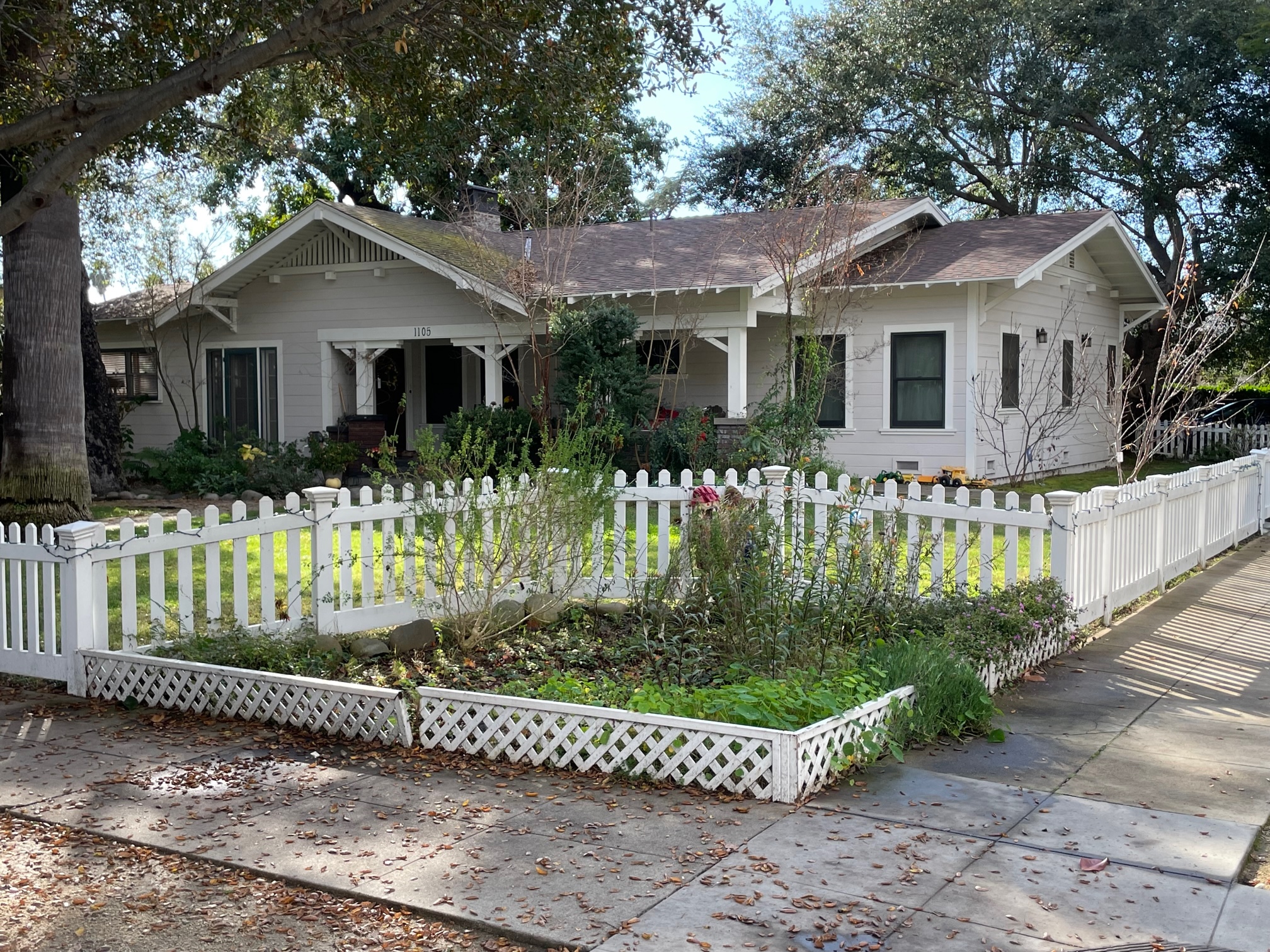
Disappointed but undaunted, I suggested we ride to the Pacific Asia Museum but, this time wisely checking beforehand, learned that it, too, is closed on Tuesdays. We decided to get lunch. Afterward, we rode to the house where Pee-Wee Herman did his “I meant to do that” trick and, across the street, his house in Pee-Wee’s Big Adventure. We cruised through Lacy Park on our way to El Molino Viejo, only to find — you guessed it — that it was closed — although it is not normally closed on Tuesdays. A note posted on a gate apologized for any inconvenience. We went back to Mike’s and then decided to restore our spirits with a film at the Vista, which was screening Zone of Interest.
I decided to come back to the Huntington the following day. I wanted to get something for my sister’s birthday from the gift shop in time for it not to arrive too long after her birthday, on the 27th. It wasn’t raining but it was nice, cool, and cloudy. As I walked through the camellias — some popping and some getting ready too — I passed through invisible folds of fragrant air. I wish I could recognize and describe smells better but, to me, it smelled like roses. I knew, though, that the rose garden was probably not the source of that scent in January. There were anise-like, citrusy, fruity, grassy, mineralic, musky, musty, spicy, tangy, and woody scents. The scent of wet soil and freshly applied mulch were easily identifiable. Some scents were subtle. Others were intense — especially when emanating from perfume soaked youngsters who for whatever reason seem to favor aggressively sweet perfumes that singe my nostrils and turn my stomach. There were only a few of them wandering the grounds, thankfully.
A stroll through such a space is a feast for the senses — or an all-you-can sense buffet. And, like someone at a buffet, I paced myself and tried to get my fill. I opened my ears and let my perception travel outward. The agreeable sound of flowing water is audible almost everywhere in the gardens. There were people chattering both quietly and loudly. I recognized several dialects of English: Midwestern, British, and the Yasss Queen’s English. There was Japanese, Korean, Mandarin, and Spanish as well as less familiar ones that sounded to me (and informed by the appearance of the speakers) as broadly Eastern European, Central or North Asian, and South Asian. Beyond the garden, I could hear the incessant whine of a leaf blower I’d until then blocked out, the low hum of automobile traffic, and the occasional honk of someone banging their steering wheel in impotent frustration. Not infrequently, a jet airplane rumbled overhead.
It was actually very pleasant visiting by myself. Normally, in the company of others, I might anxiously wonder when I’m going to be on the receiving ned of a gentle verbal nudging along the lines of “are you getting hungry, yet?” or “I think I need a nap” or “I have to get some work done.” I was in no rush.
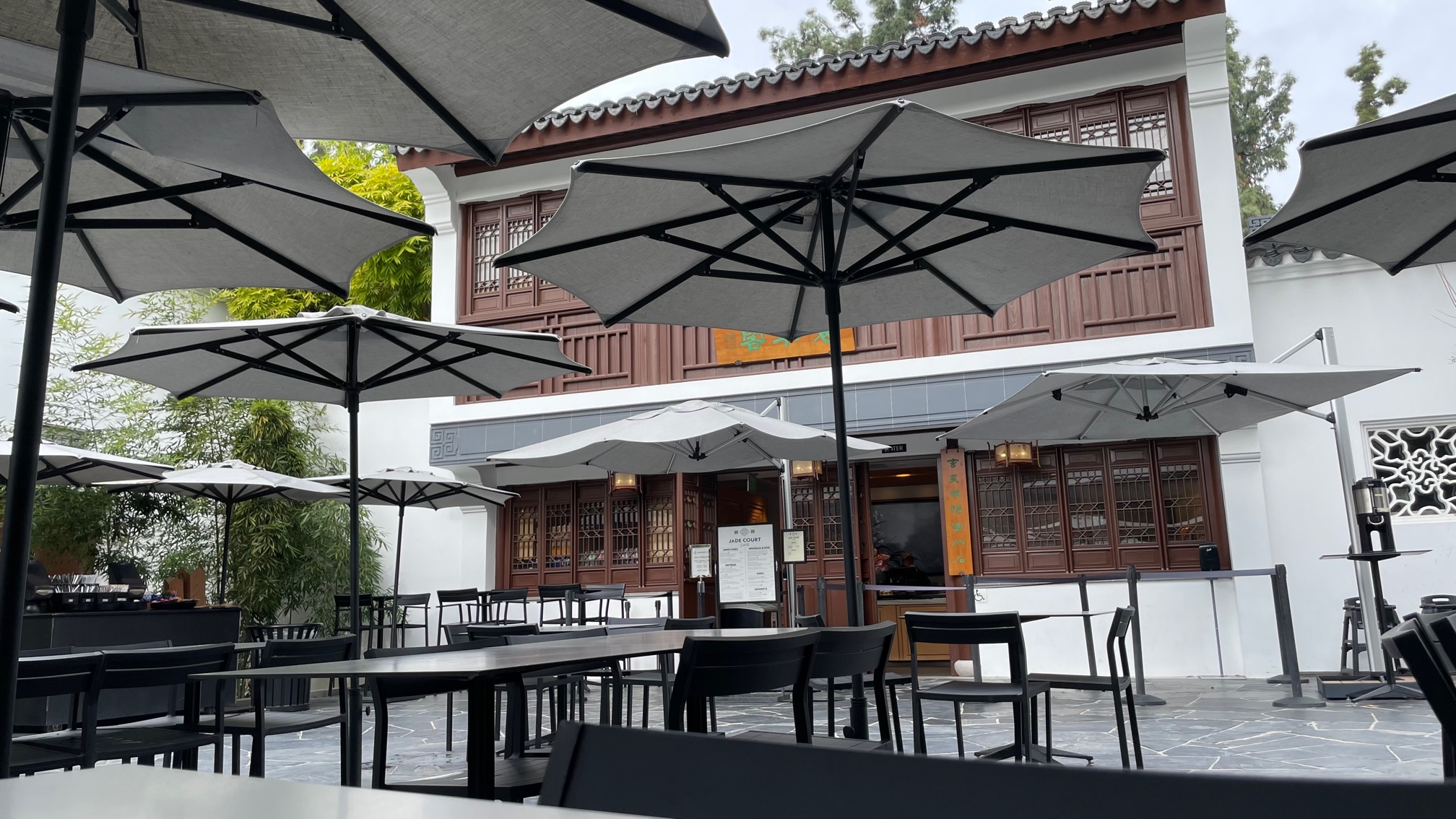
I grabbed some oolong and vegetarian mapo tofu from the Jade Court Cafe for elevenses. The oolong was good! The mapo tofu was pretty good, too, although I swear the portions you get in restaurants these days are twice the size of an average human stomach. I felt pretty weighed down for the rest of the day.
The Chinese Garden re-opened after a 2014 expansion in 2020. Los Angeles is home to few Chinese gardens — at least ones open to the public. In fact, it’s the only one that I know of. There are probably some that I don’t, though. Metro Los Angeles is home, after all, to the largest population of Taiwanese outside of Taiwan and if I can be forgive for a sweeping generalization — Taiwanese people are often both more progressive and conservative. Forward thinking but simultaneously more devoted preserving Chinese cultural traditions than their cross strait natures.
It’s largely thanks to Los Angeles’s Taiwanese population that we have so many night markets, boba shops, and the odd (in more than one sense) themed píjiǔ wū. Just one public Chinese Garden that I know of, though. That said, it’s a great one — the largest Chinese Garden in the US. And its in San Marino, a city where Taiwanese comprise both the most common ancestry and the majority of foreign born residents.
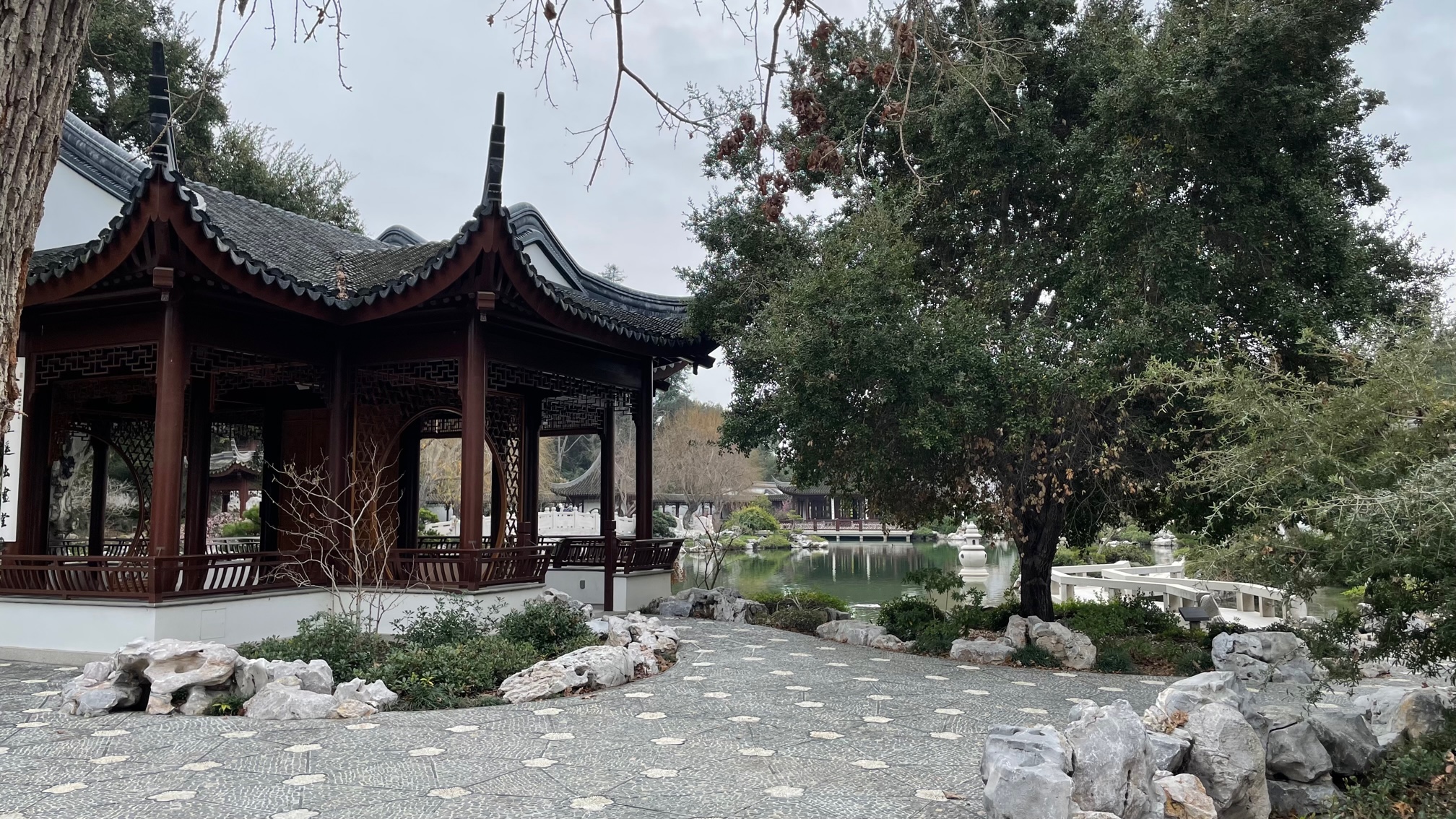
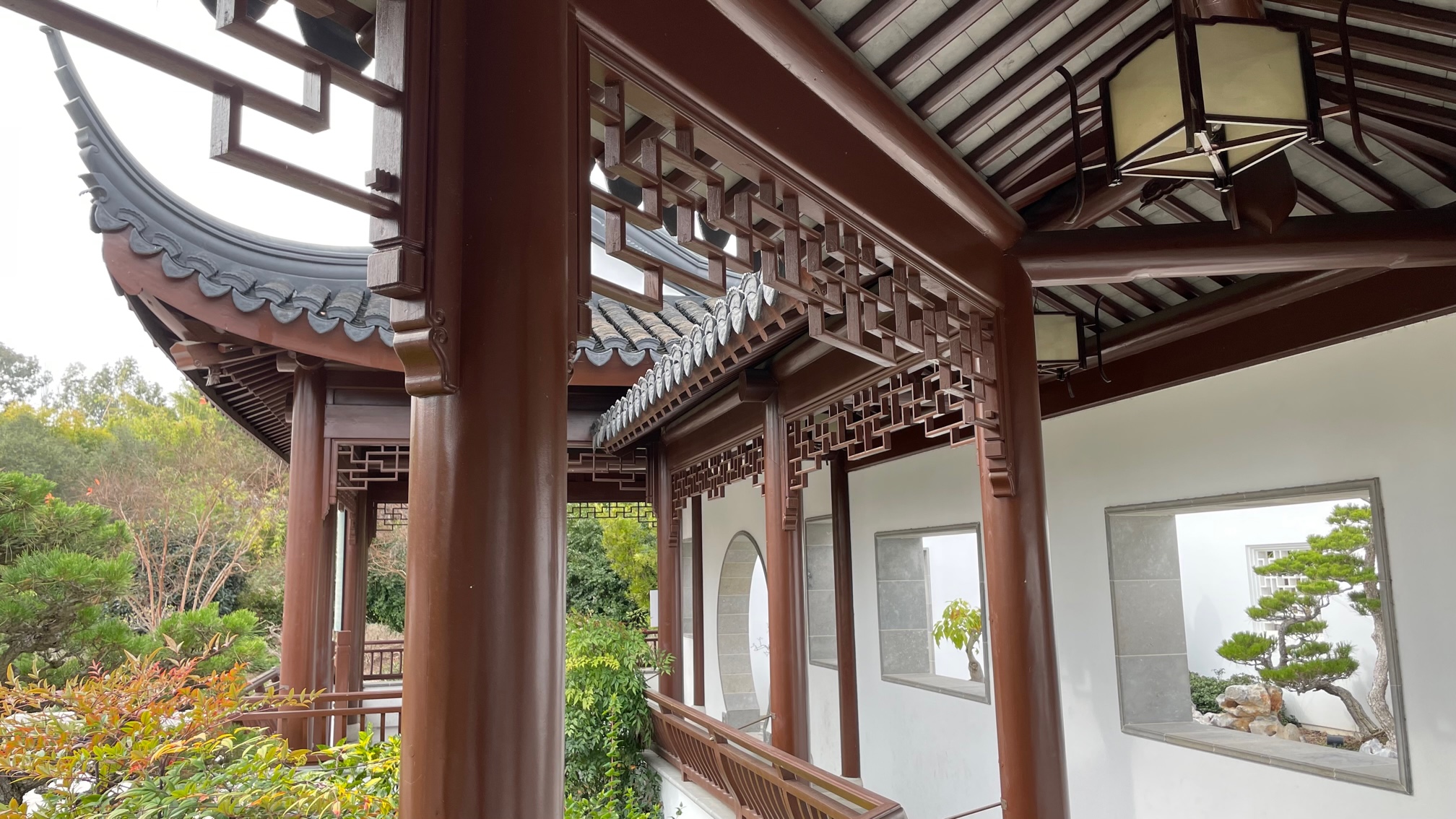
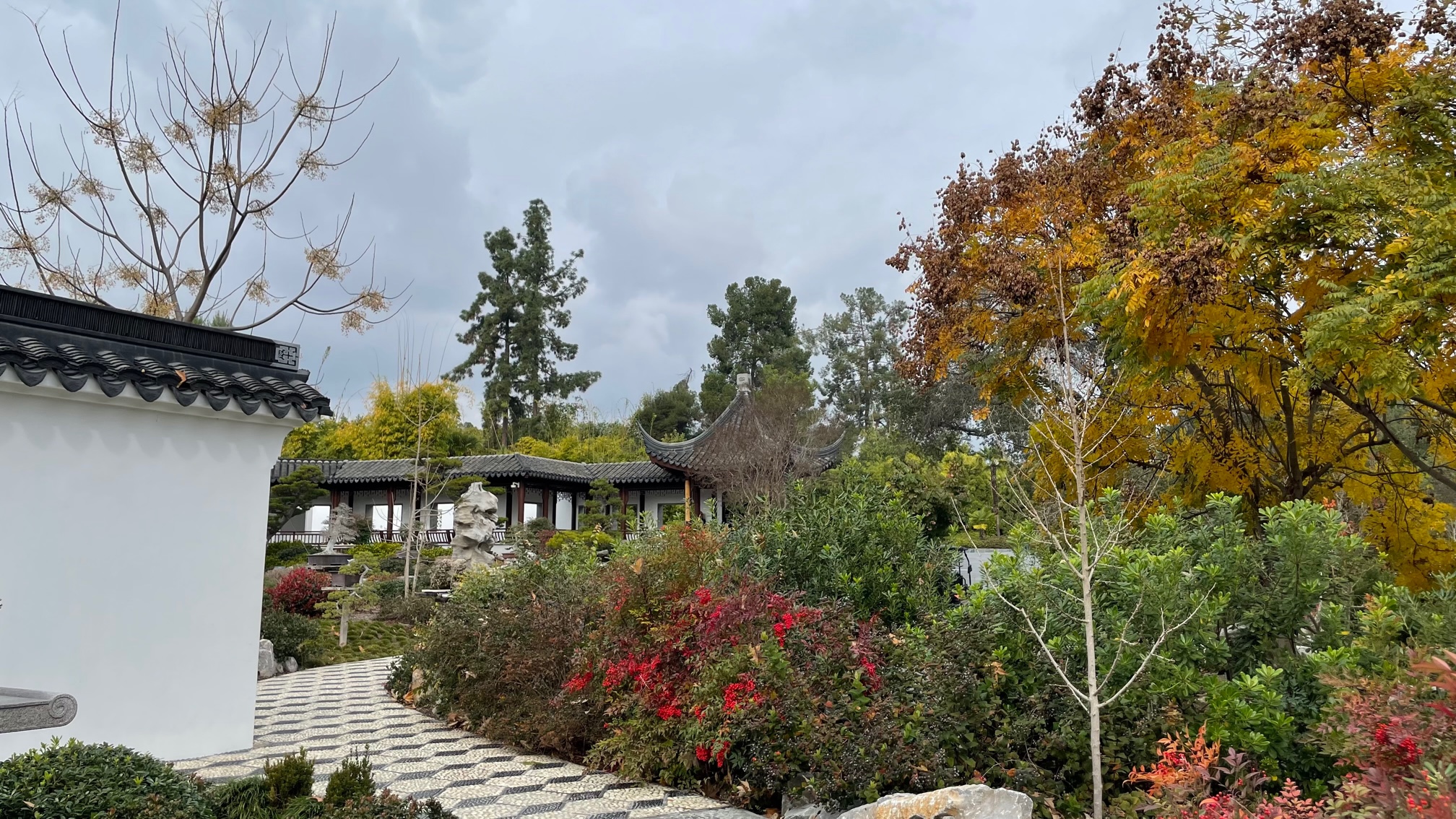
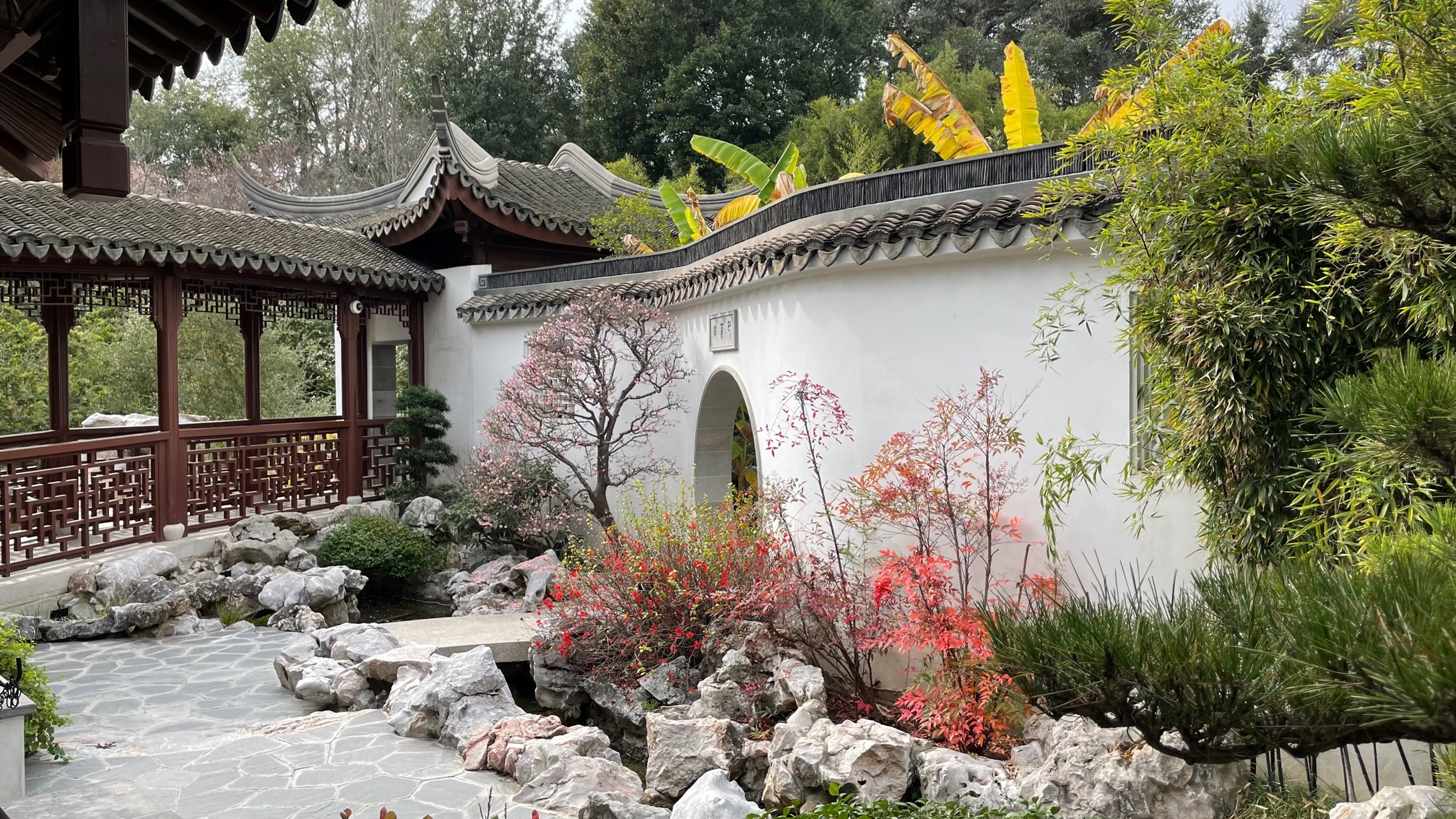
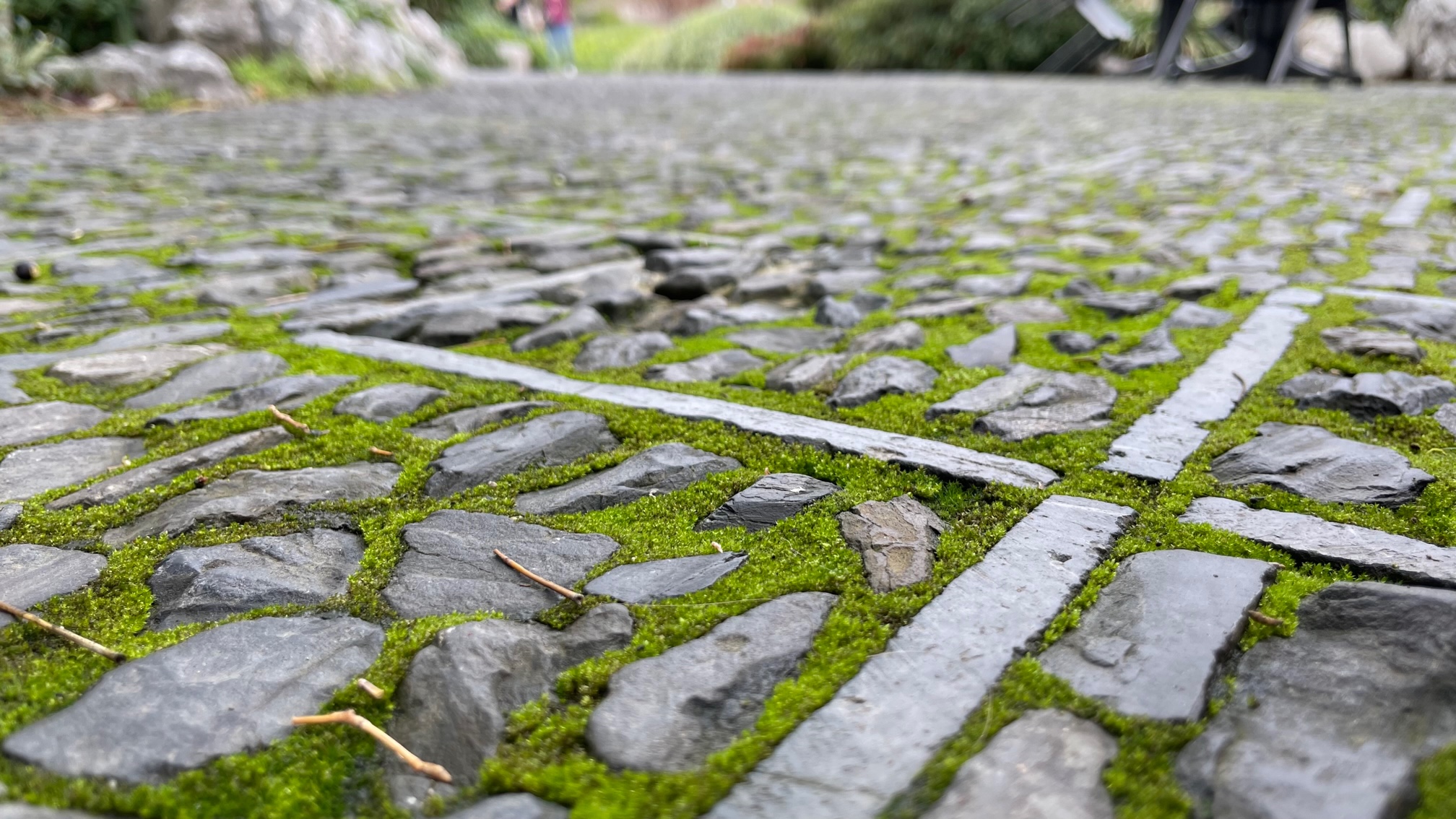
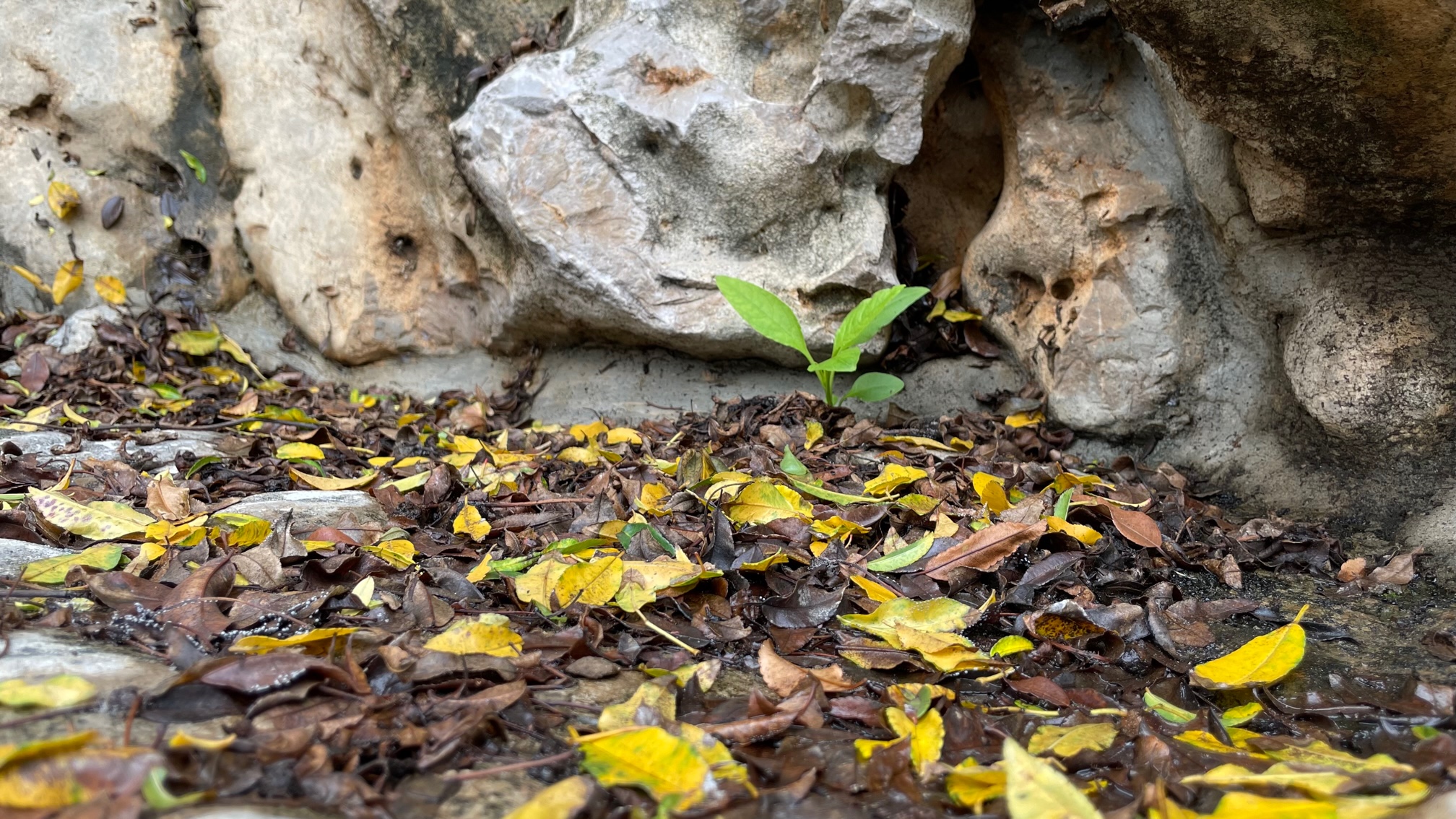
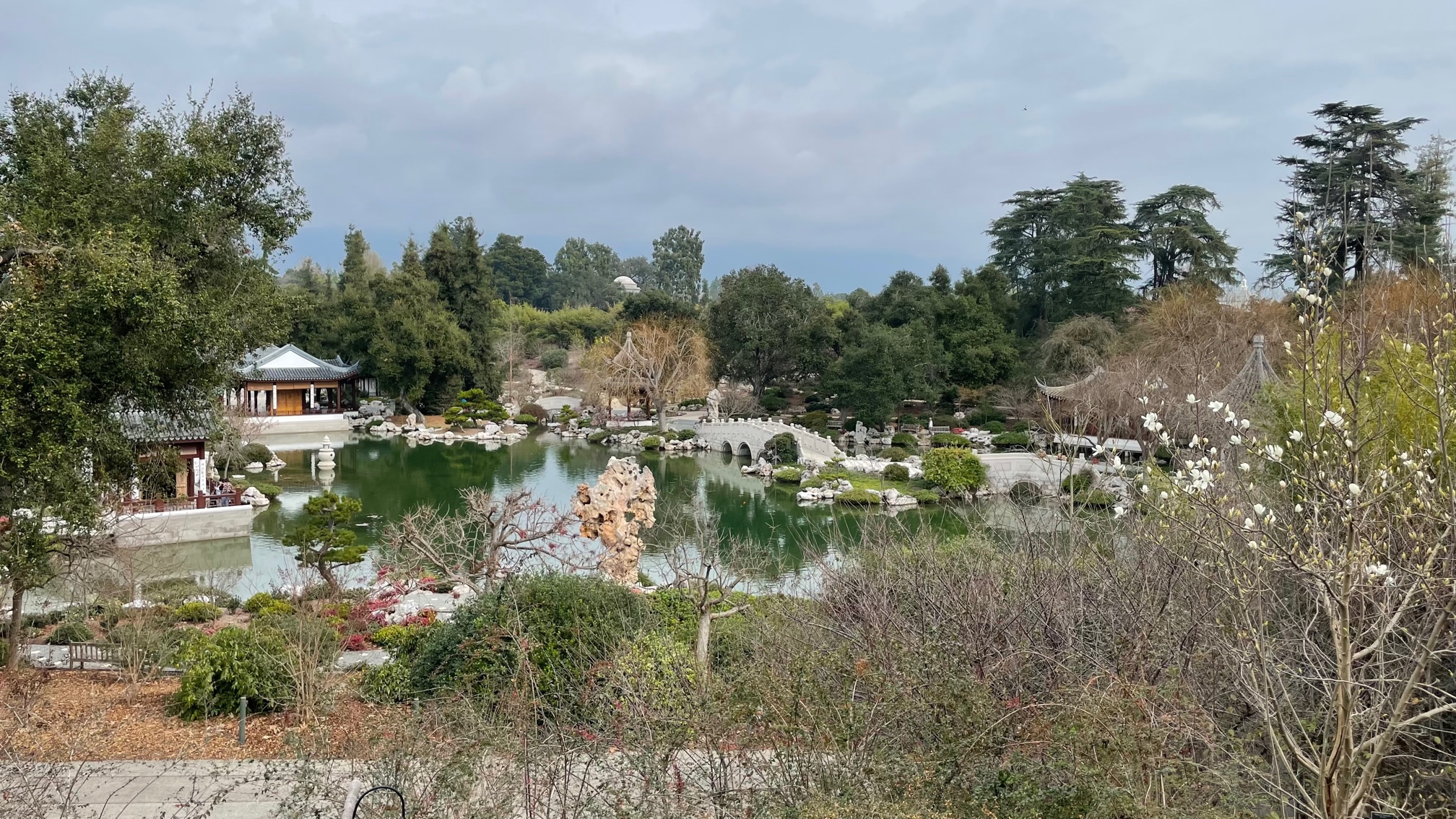
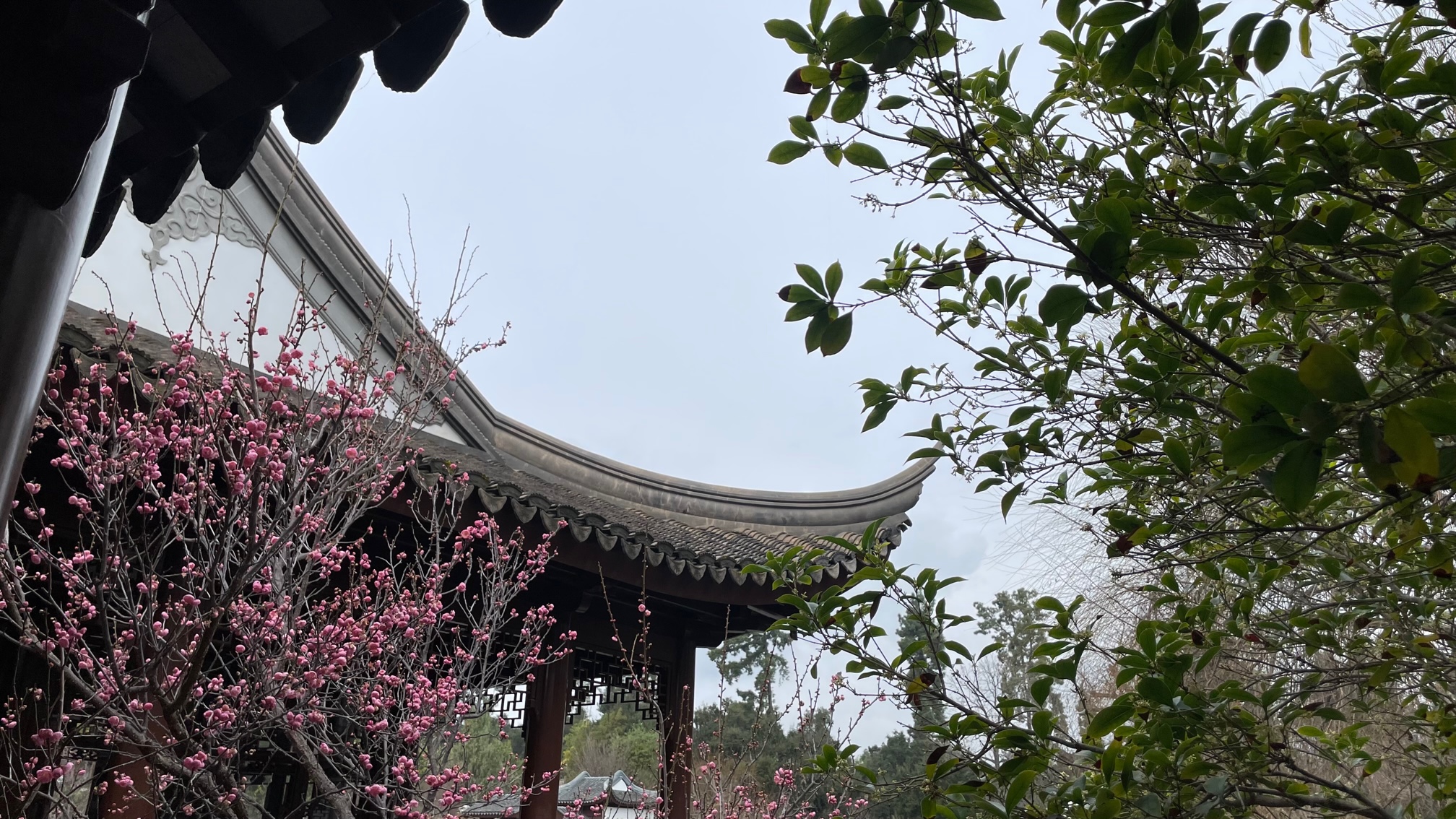
The Chinese Garden looks great, even as late winter transitions into early spring. There’s now lichen on rocks, moss growing on footpaths, and dead leaves on the roof tiles. Cones and flower petals litter the ground. Decaying plant material, volunteer plants, and spiders have settled into the nooks and crannies. Plants have had time to get established, to flower, and to fruit. Peeling paint was being repainted.
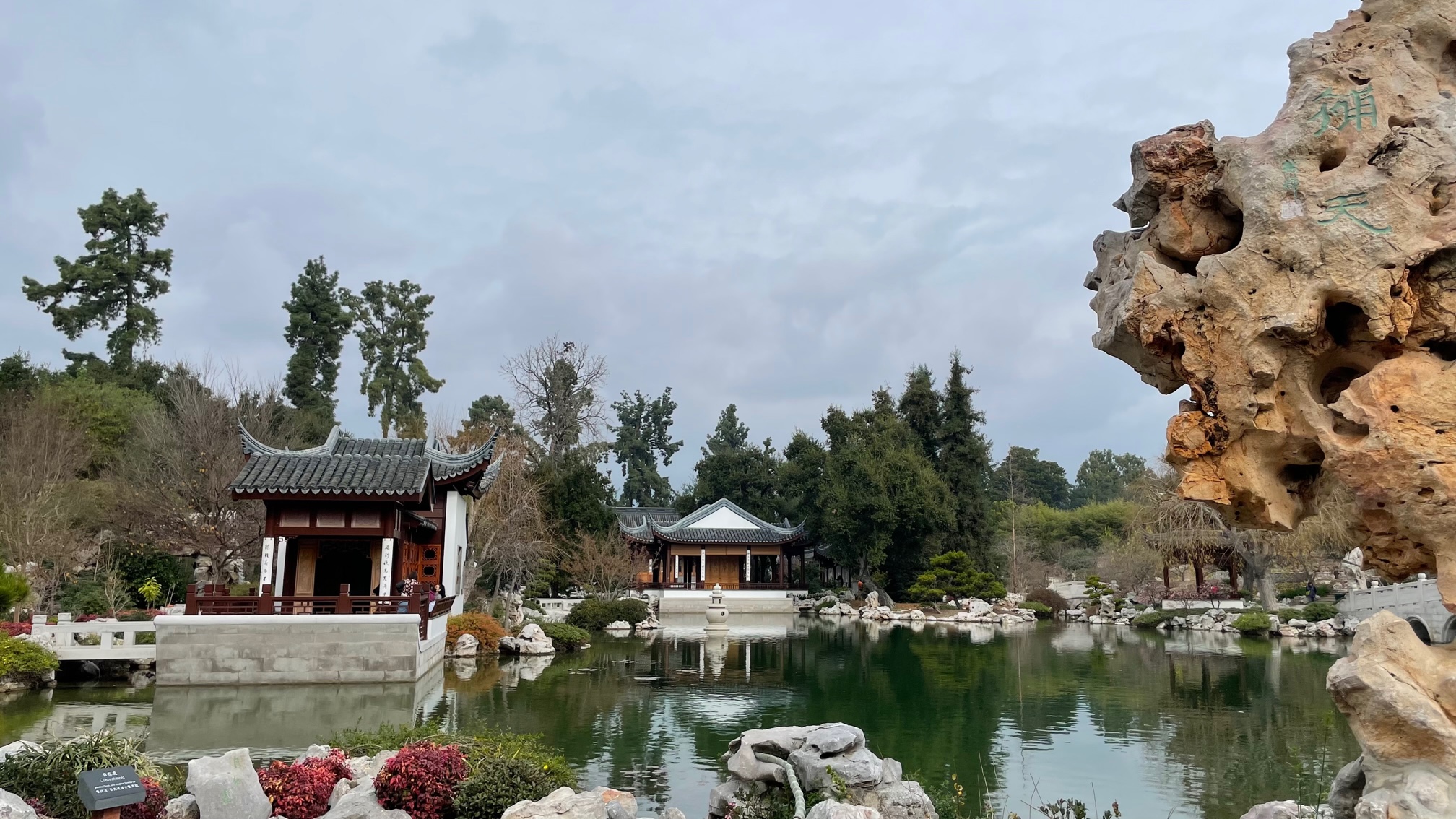
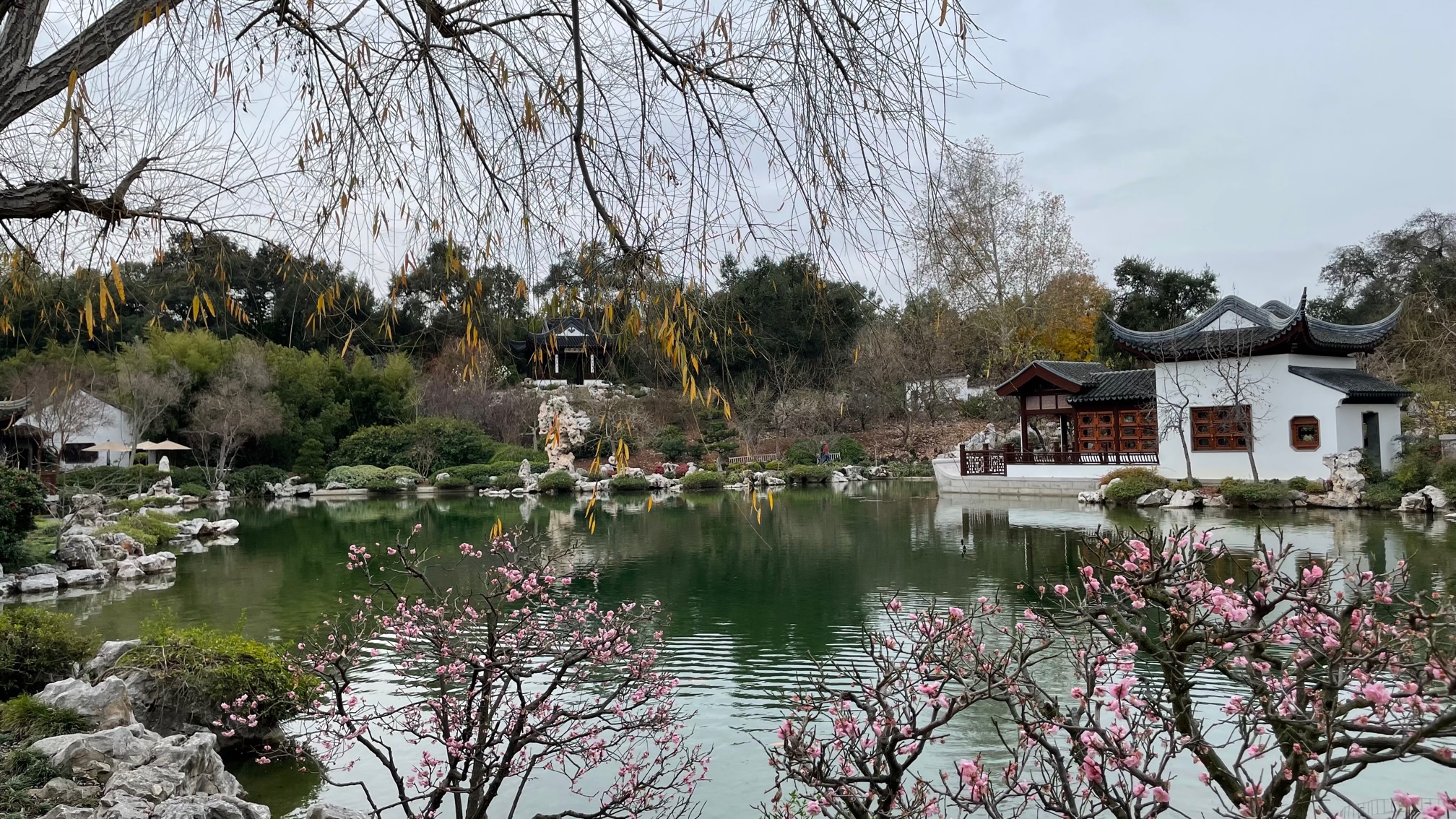
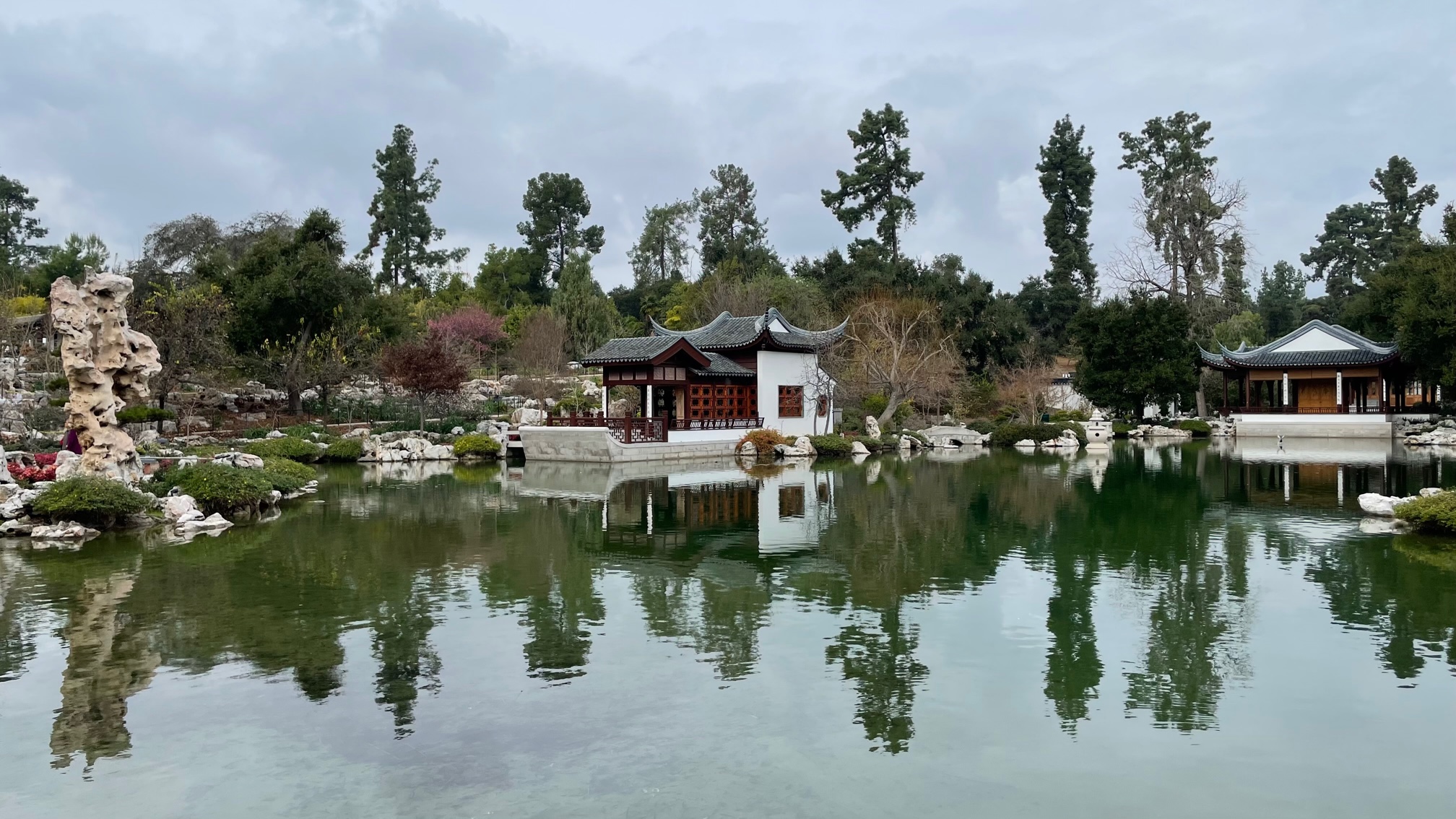
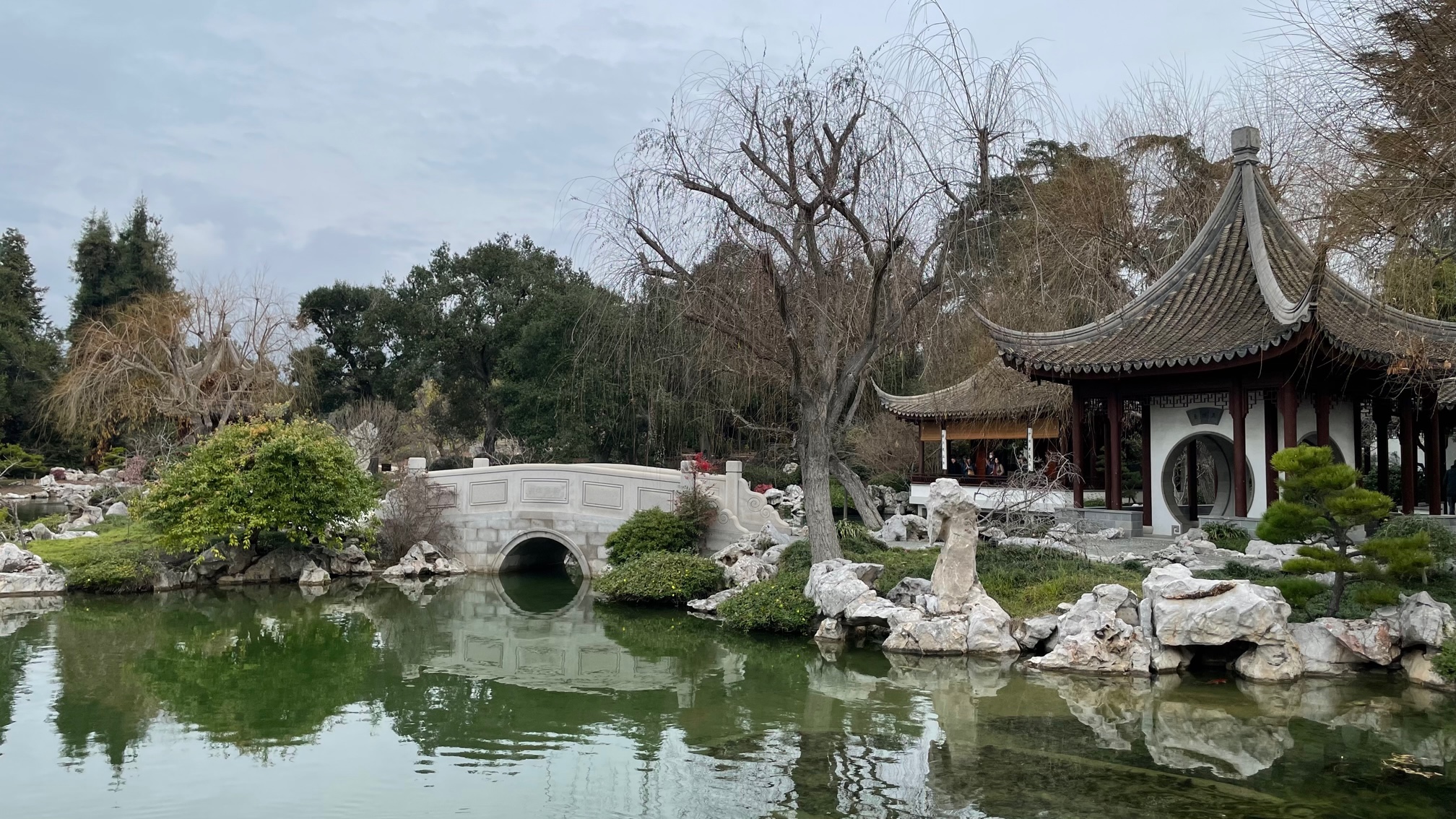
The pond, steeped with leaf litter, had a pleasant hue through which water striders, koi, mallards, and minnows all swam. Eventually I sauntered over to the Japanese Garden.
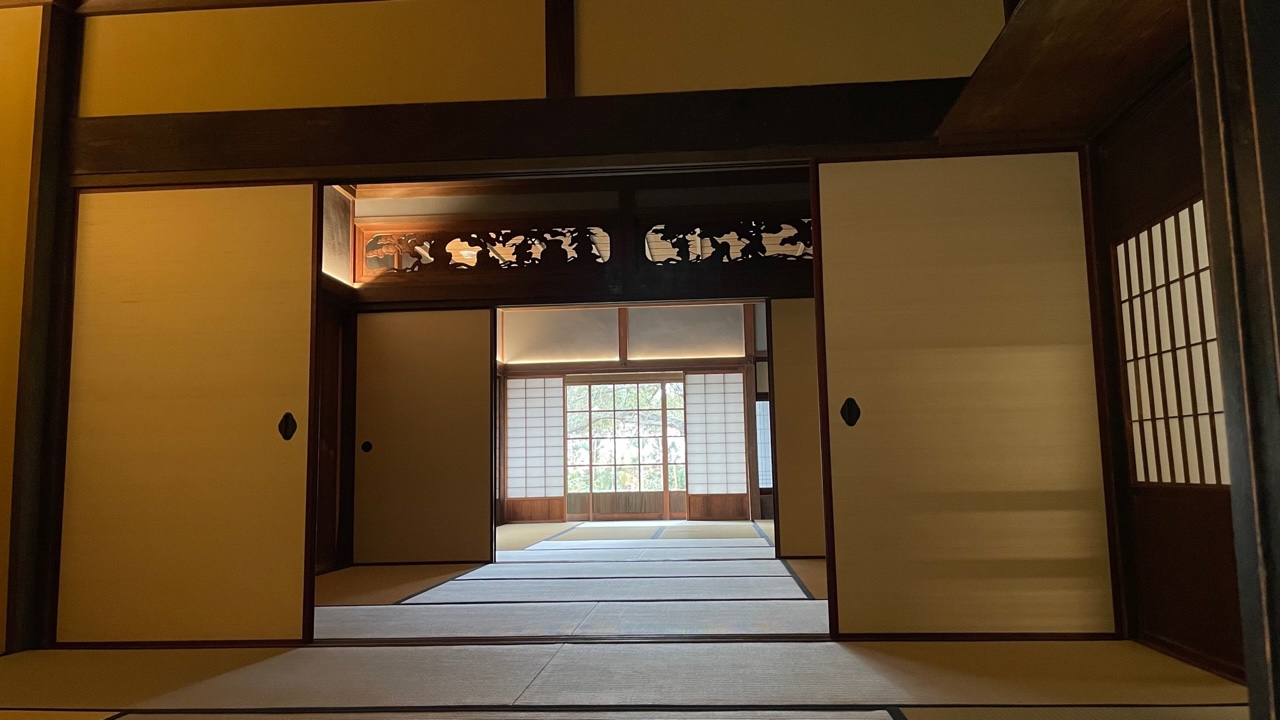
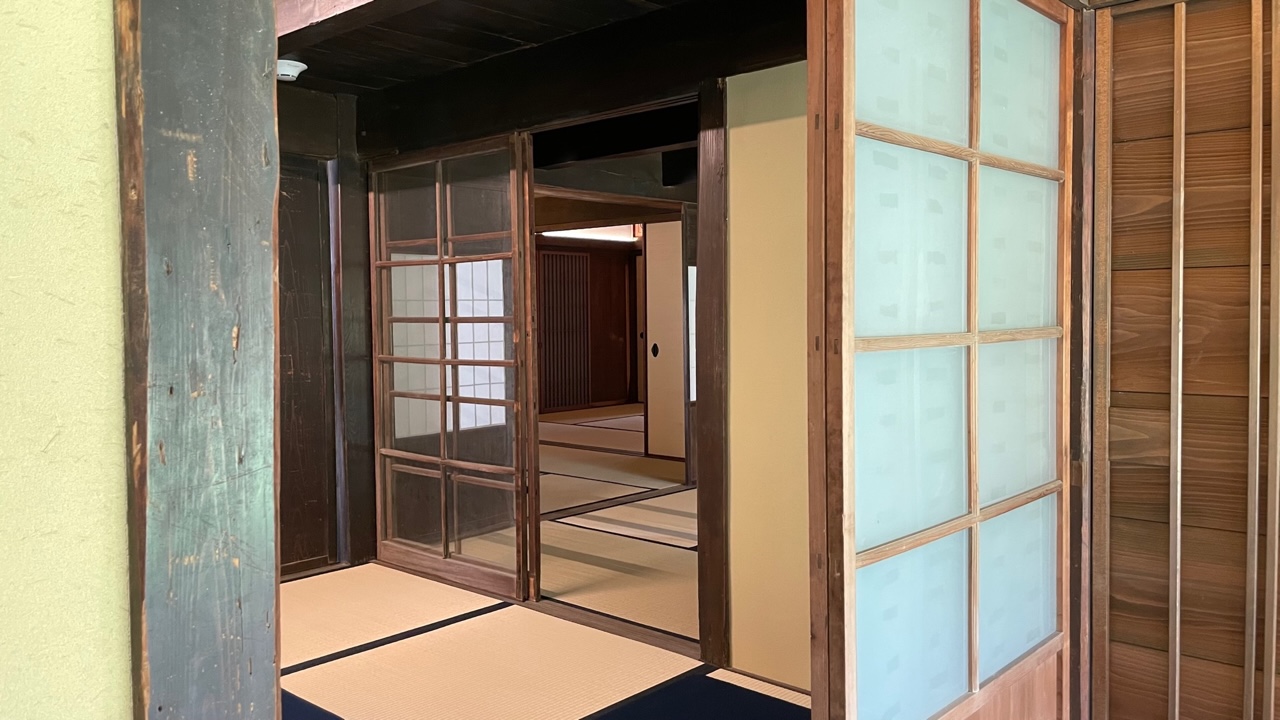
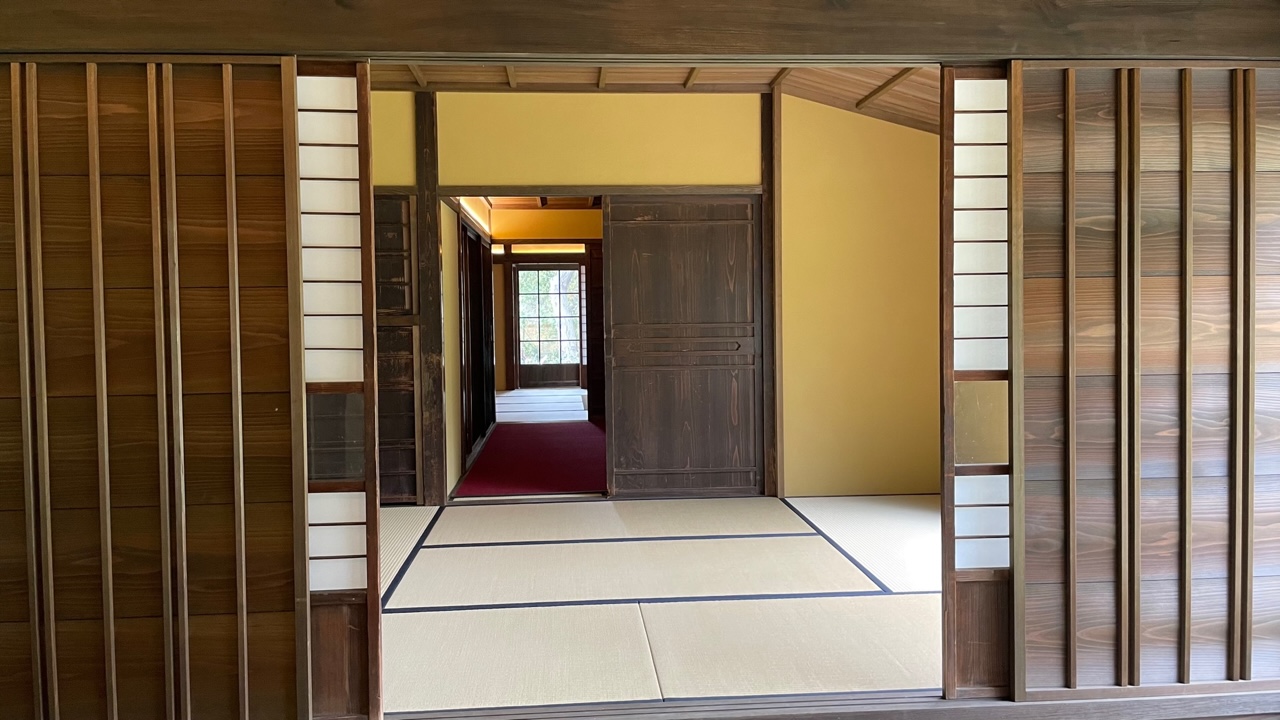
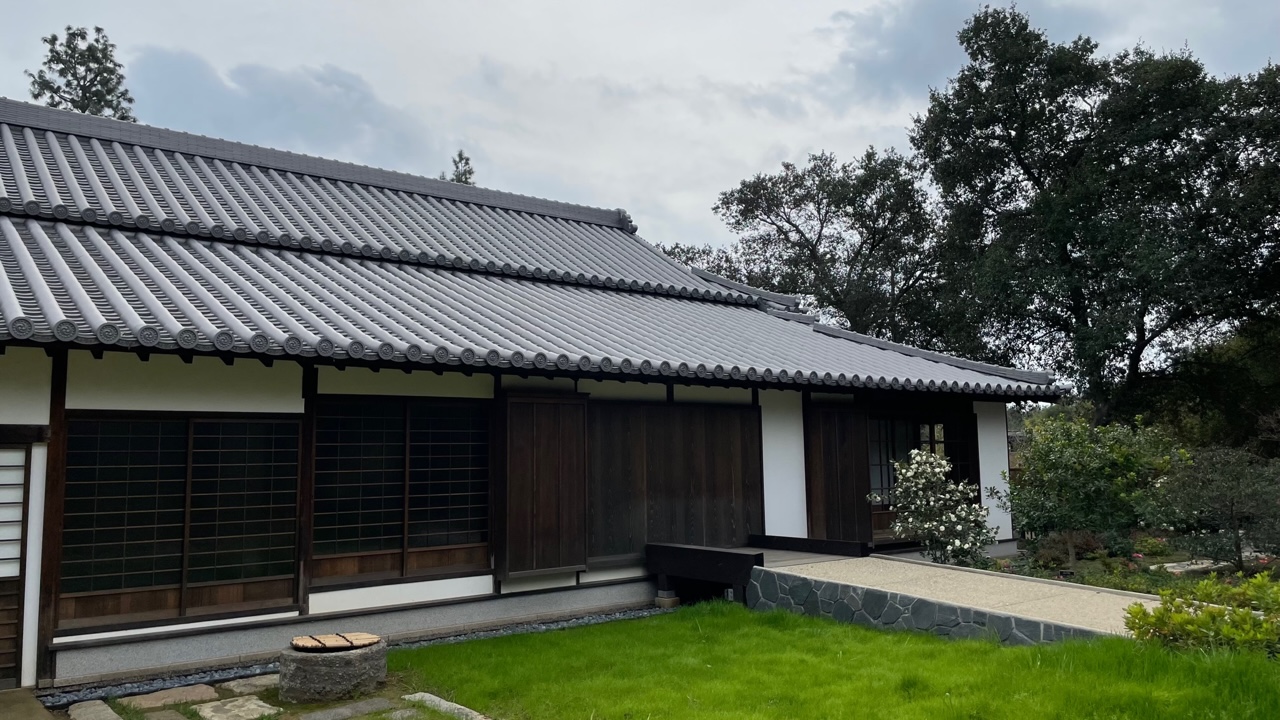
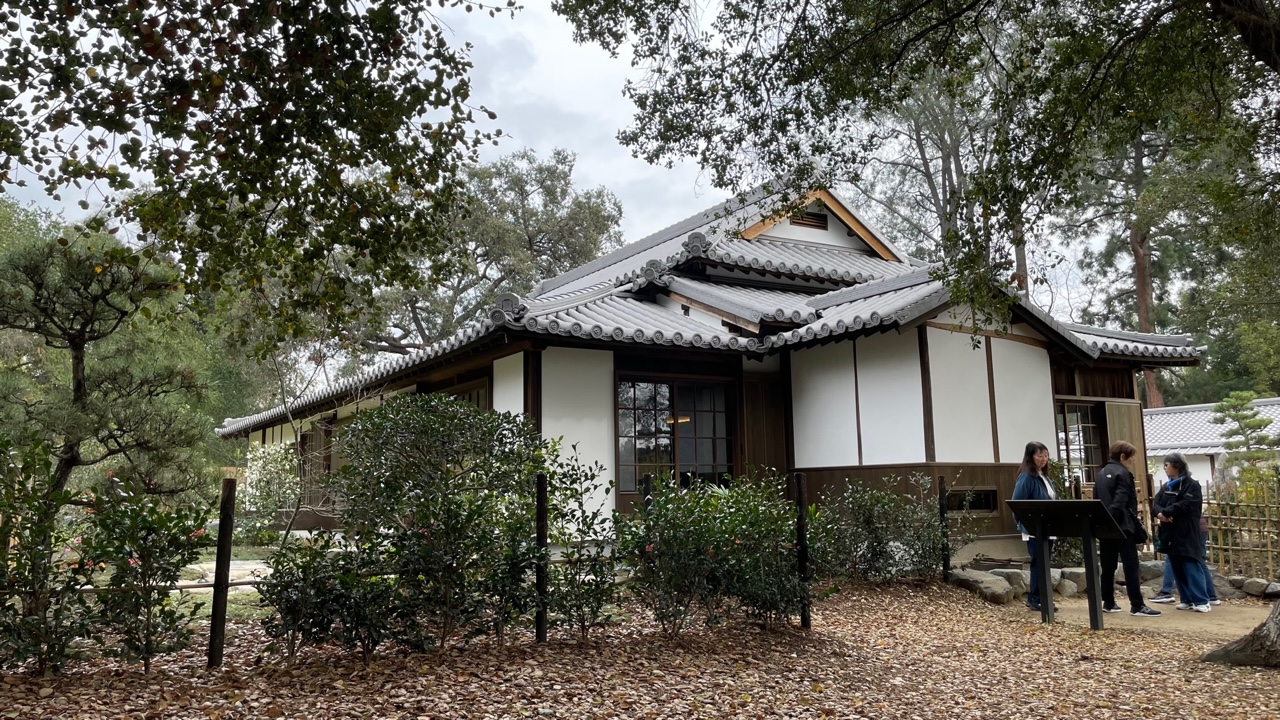
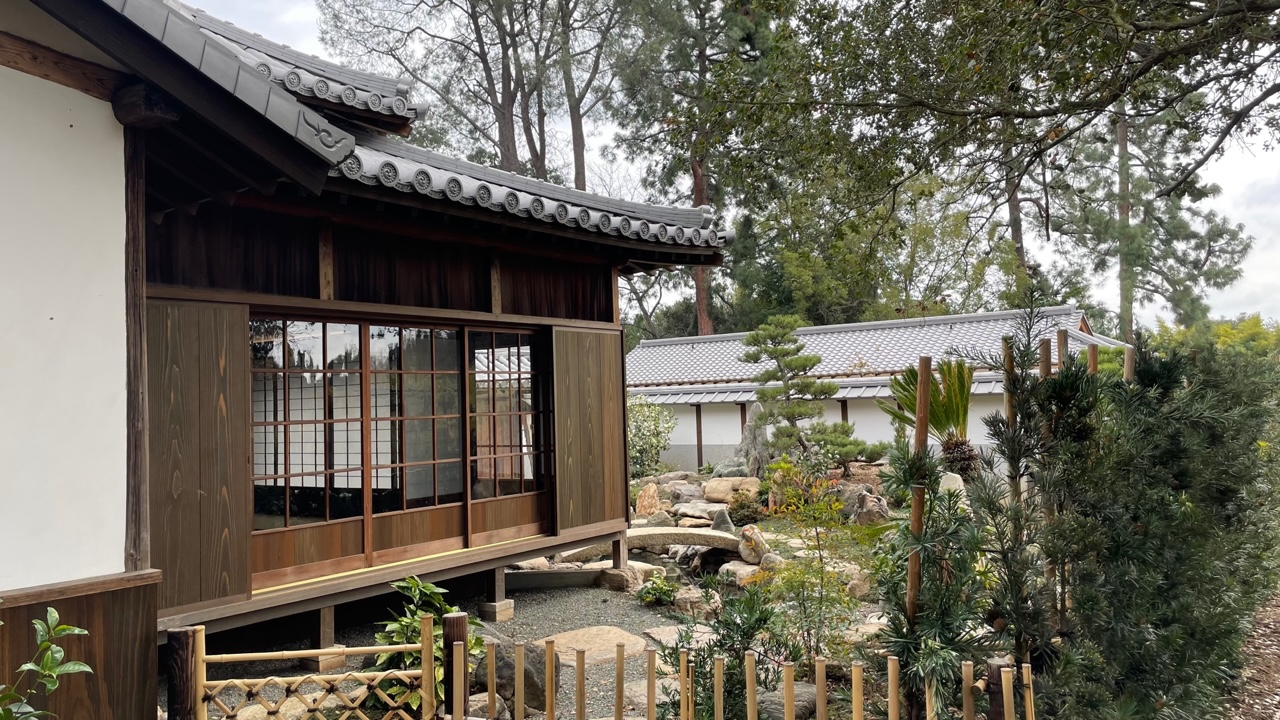
THE SHOYA HOUSE
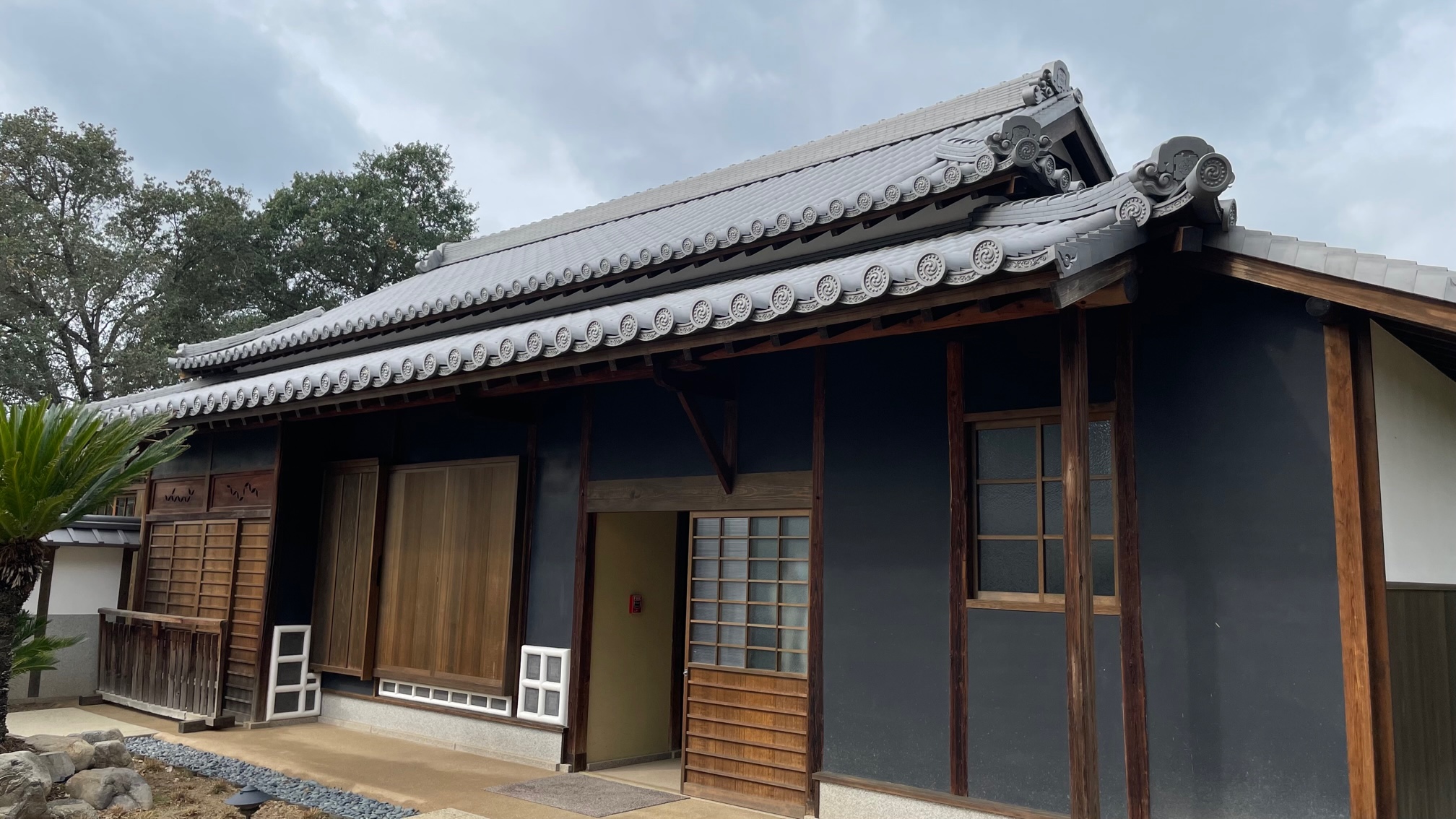
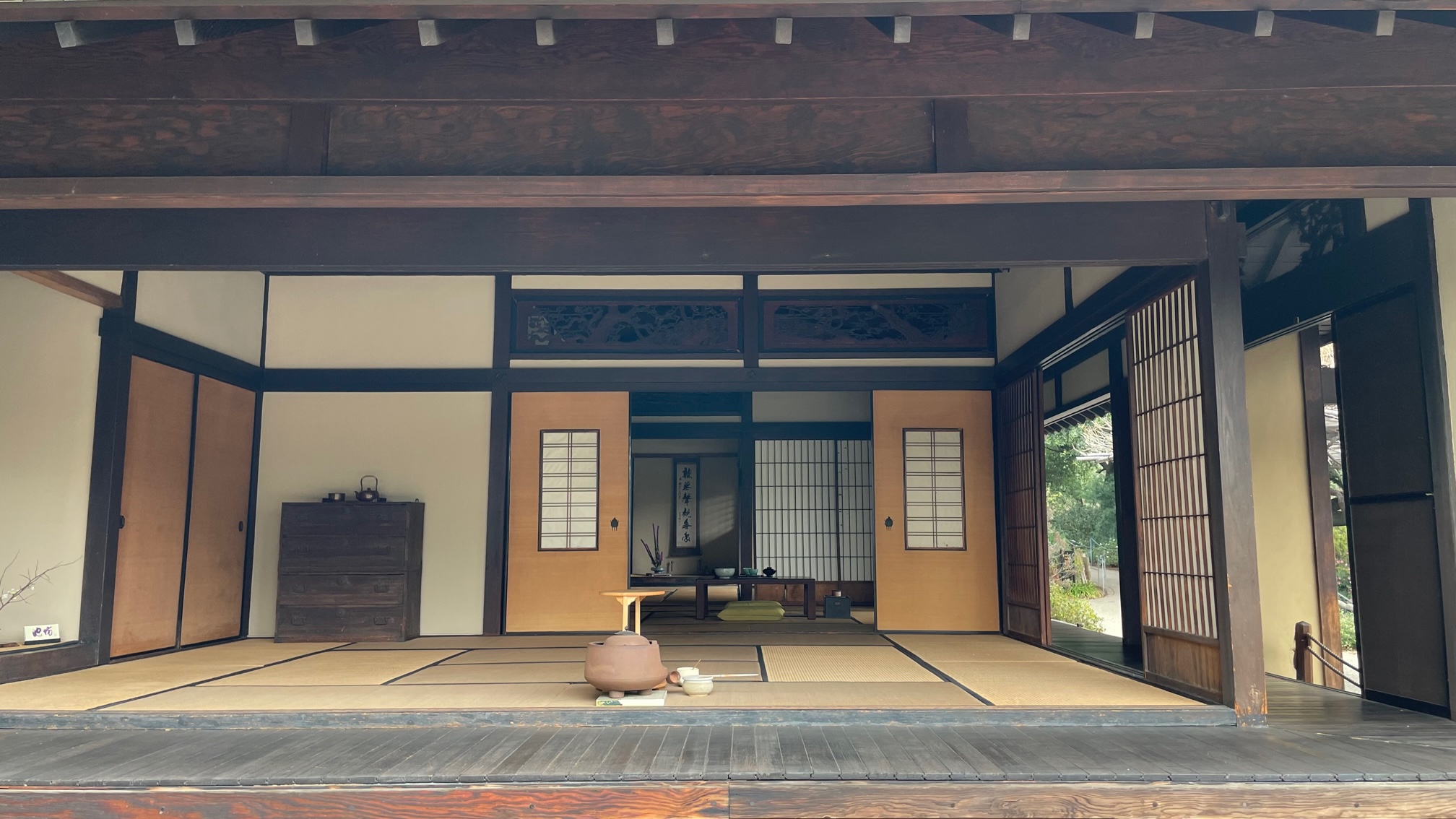
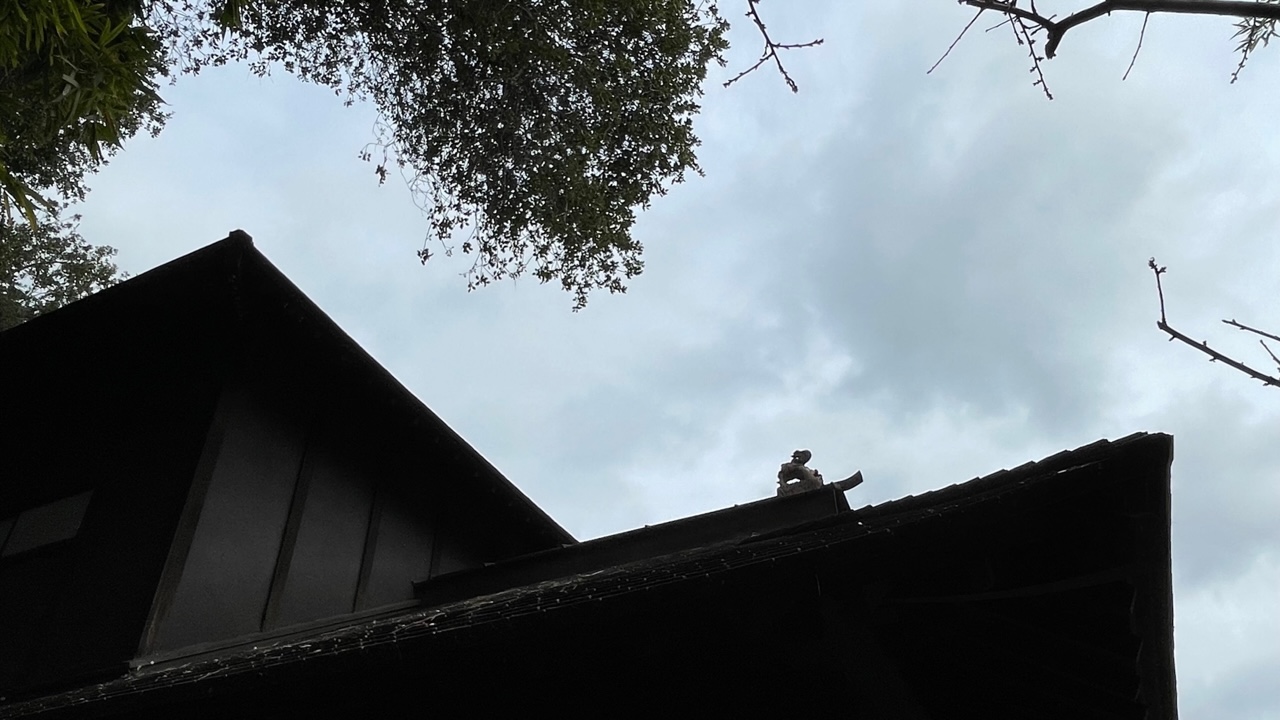
The Shōya House is a farm house/compound that was originally built around 1700. It was deconstructed, transported across the Pacific, and reconstructed. The plater walls, tatami mats, and other features are new but you can see insect damage in some of the wooden parts. Of course, there are smoke detectors and things like that to make it up to code. Still — at roughly three hundred years old, it’s withstood its share of earthquakes.
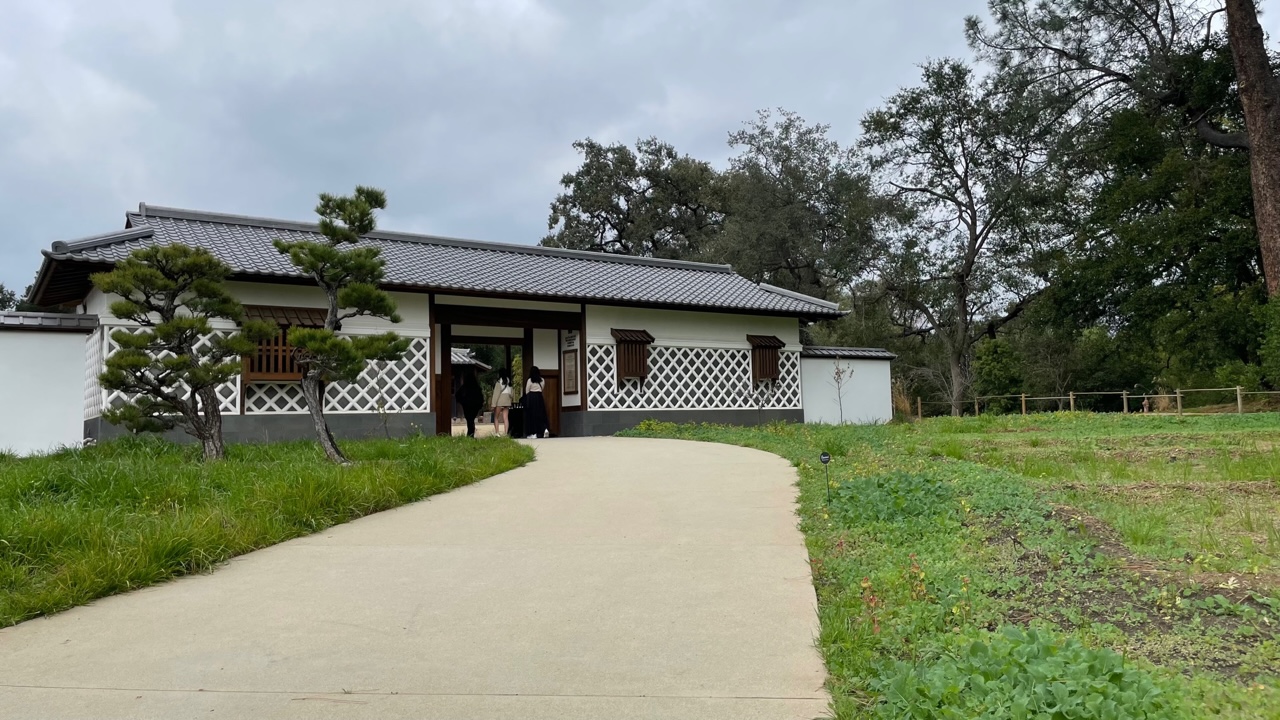
The Shōya House is surrounded by various crops and patties. It feels like a working hobby farm. I bet, in summer, when its muggy and hot, it will feel even more farmy. I wonder what they’ll do with their harvest.
ELSEWHERE IN THE JAPANESE GARDEN
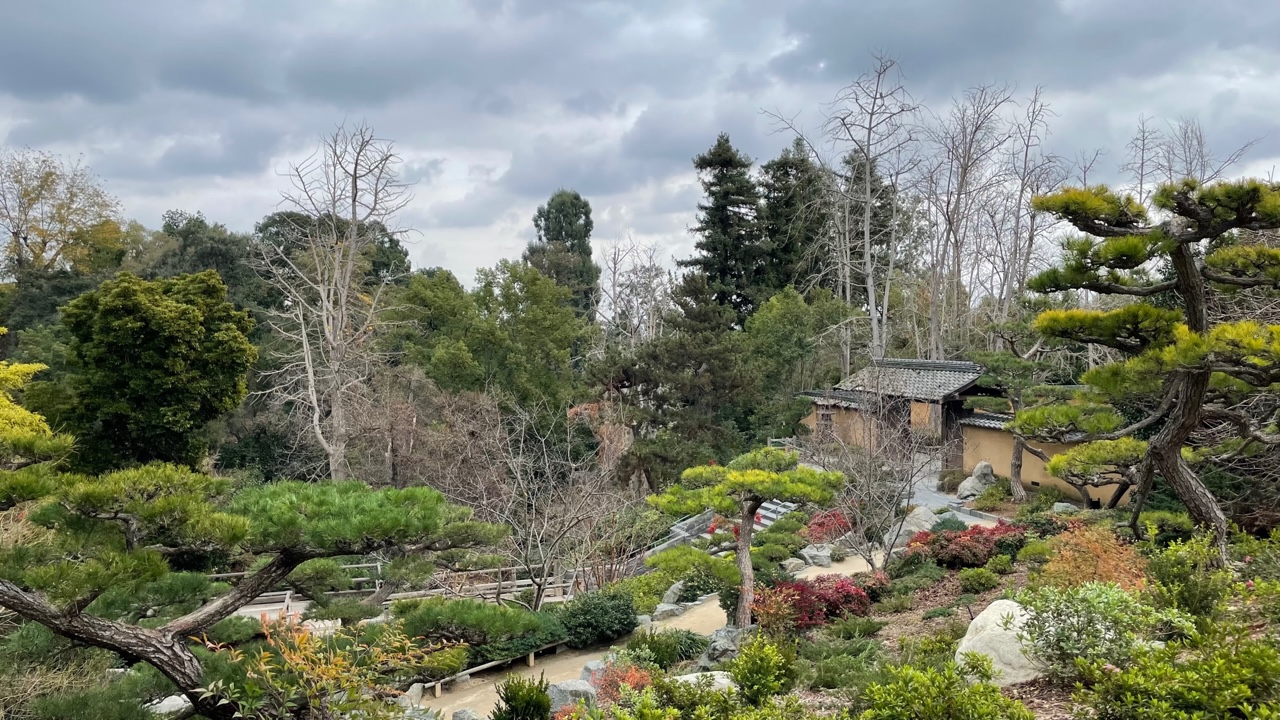
I love a Japanese Garden and Metro Los Angeles is home to eighteen that I know of. The Hungtington’s is one of the best, though. It was completed in 1912 but has been expanded and improved substantially over the decades. The bonsai courts, suiseki court, and karesansui were added in 1968.
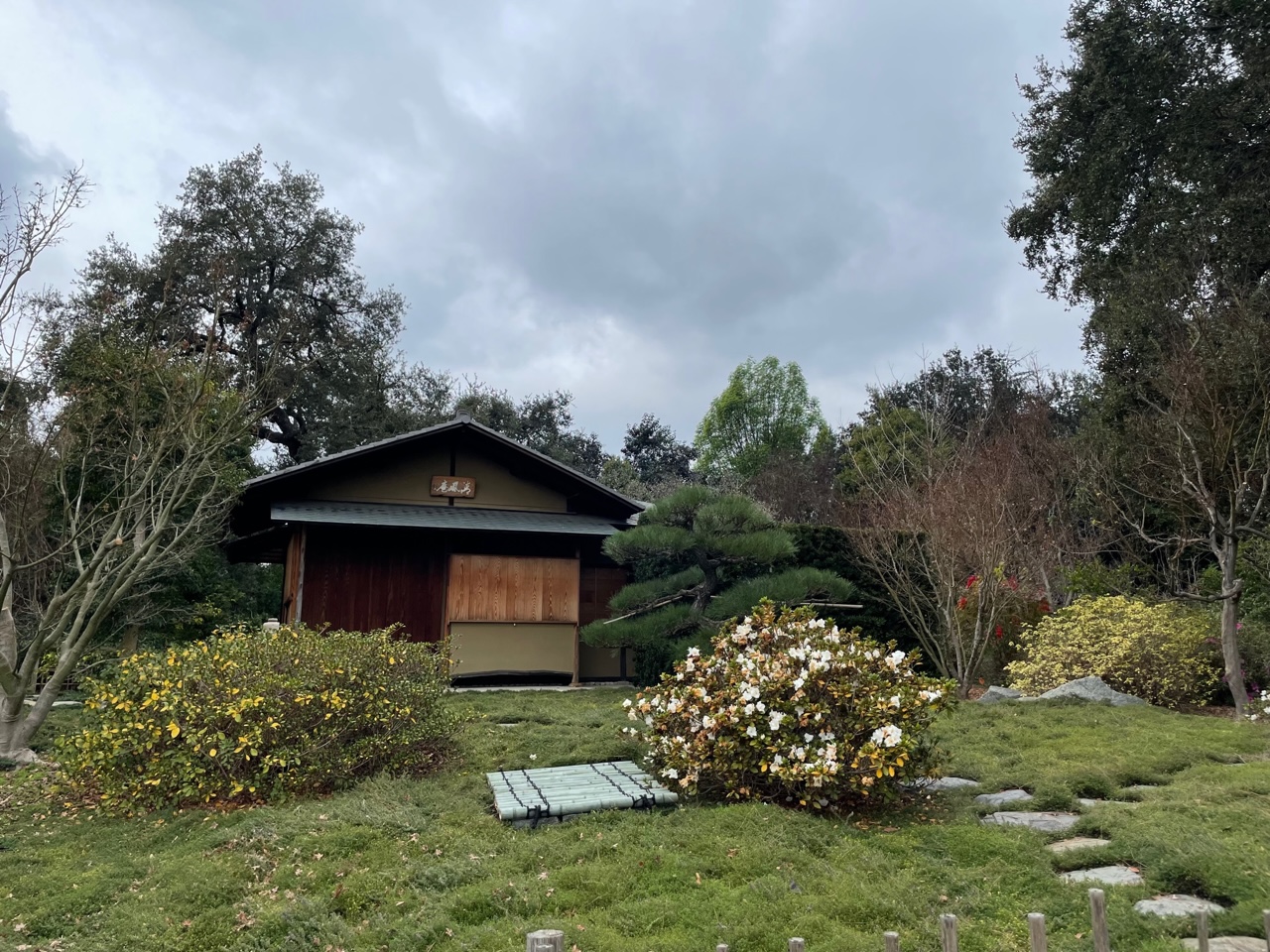
I don’t think I’d ever checked out Seifu-an, donated in 2010 and dedicated in 2012.
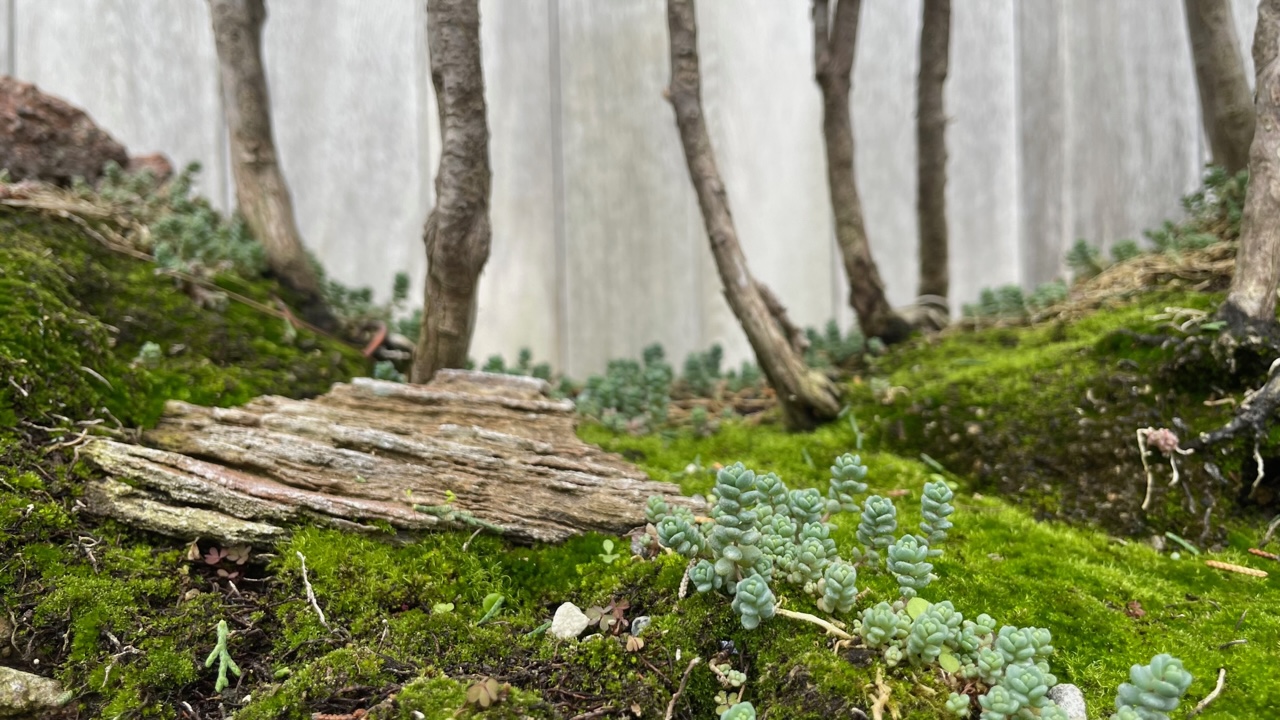
A close-up of one of the bonsai forests
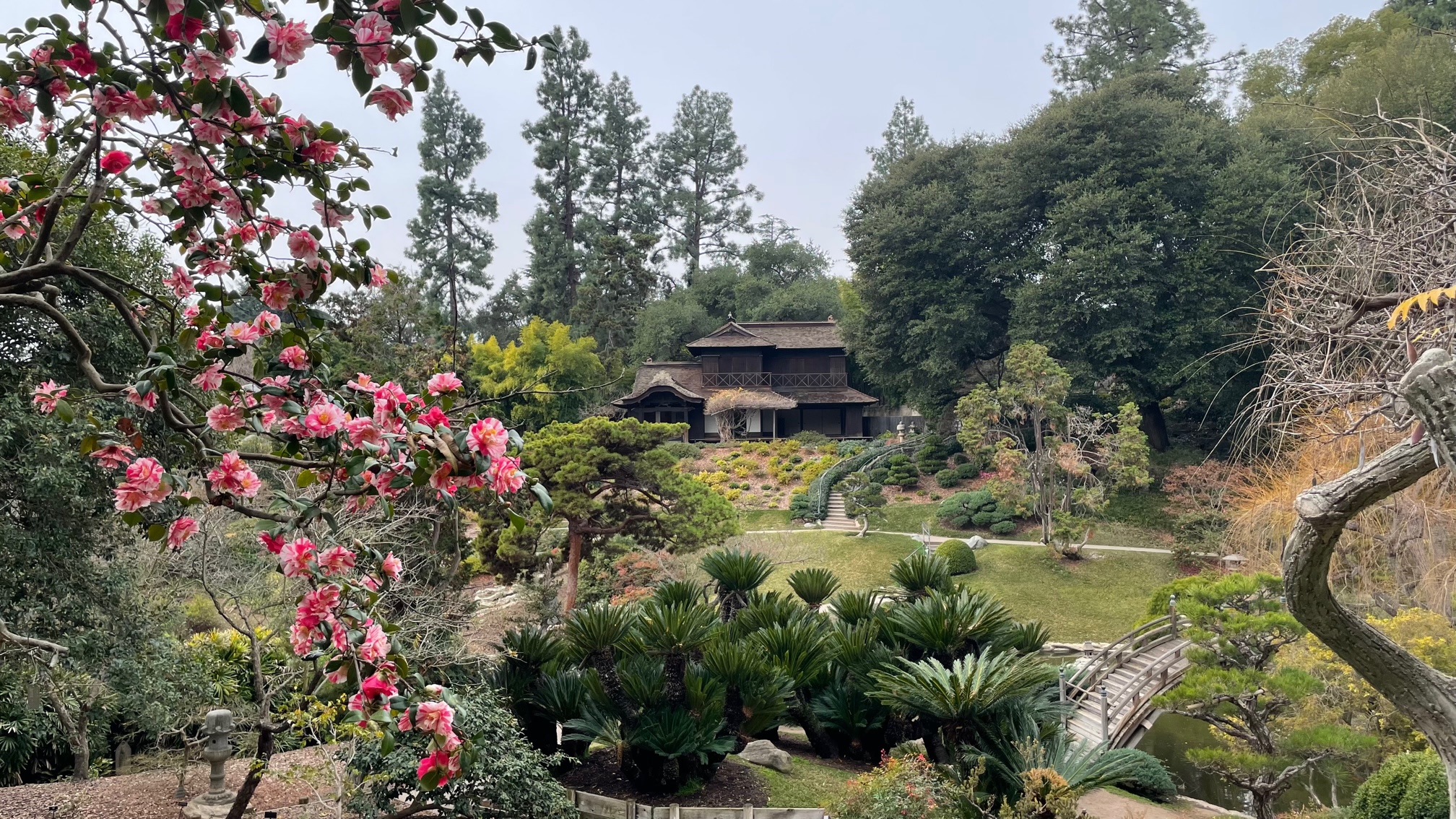
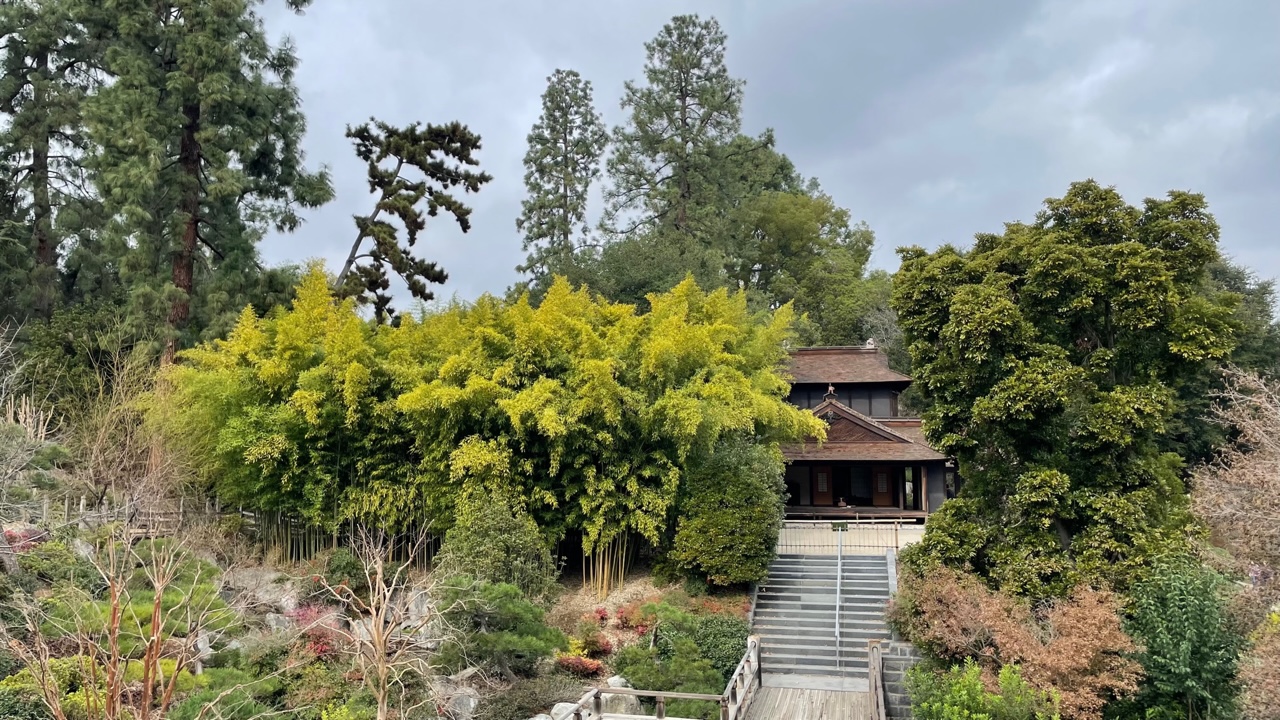
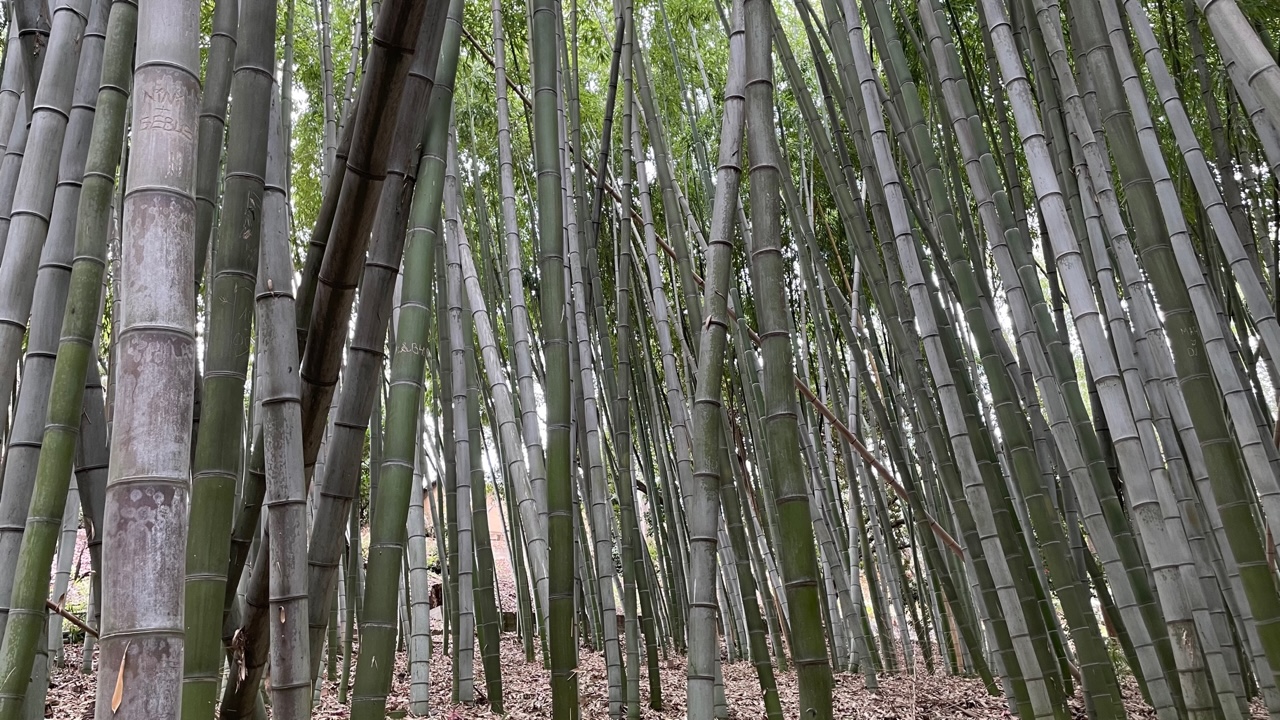
I can’t walk through the bamboo grove without thinking of King Hu‘s film, Xiá Nǚ (俠女).
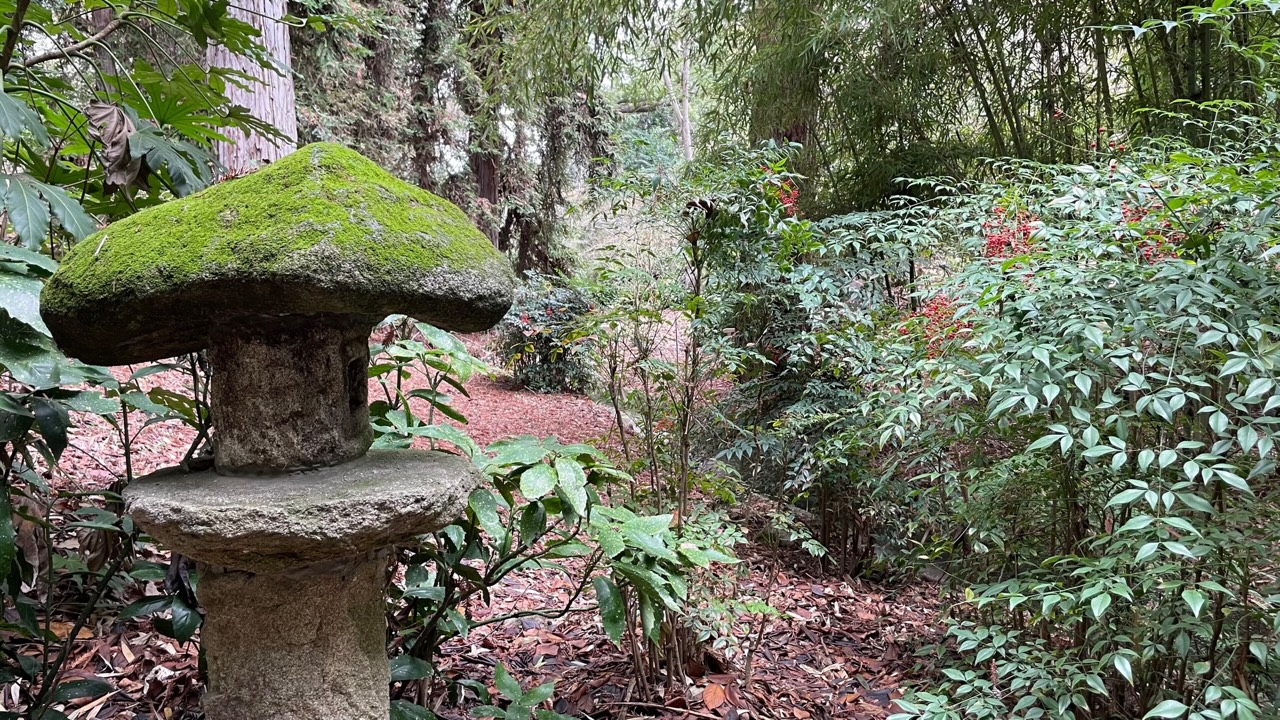
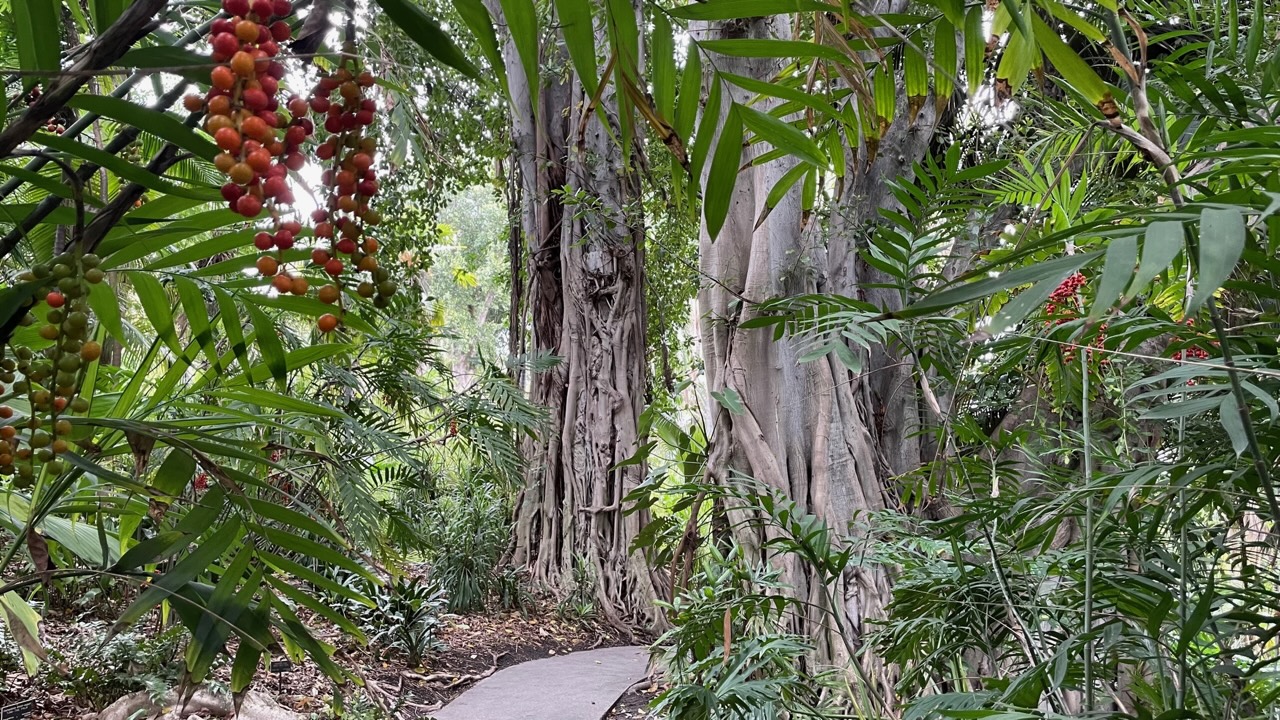
One of the many great things about the Huntington is that — despite how many times I’ve been there over the years — I always seem to stumble across something new to me. I realized that I usually rotate through the gardens in a counterclockwise direction. At the bottom of the clock, I usually stroll through the Australian Garden rather than the Subtropical Garden. This time I did the latter — and then I passed through the Jungle Garden. I walked up a winding path surrounded by Bromeliaceae and striking Mugumo trees I don’t recall having seen up close before. It’s not impossible that I’ve never walked along this path before.
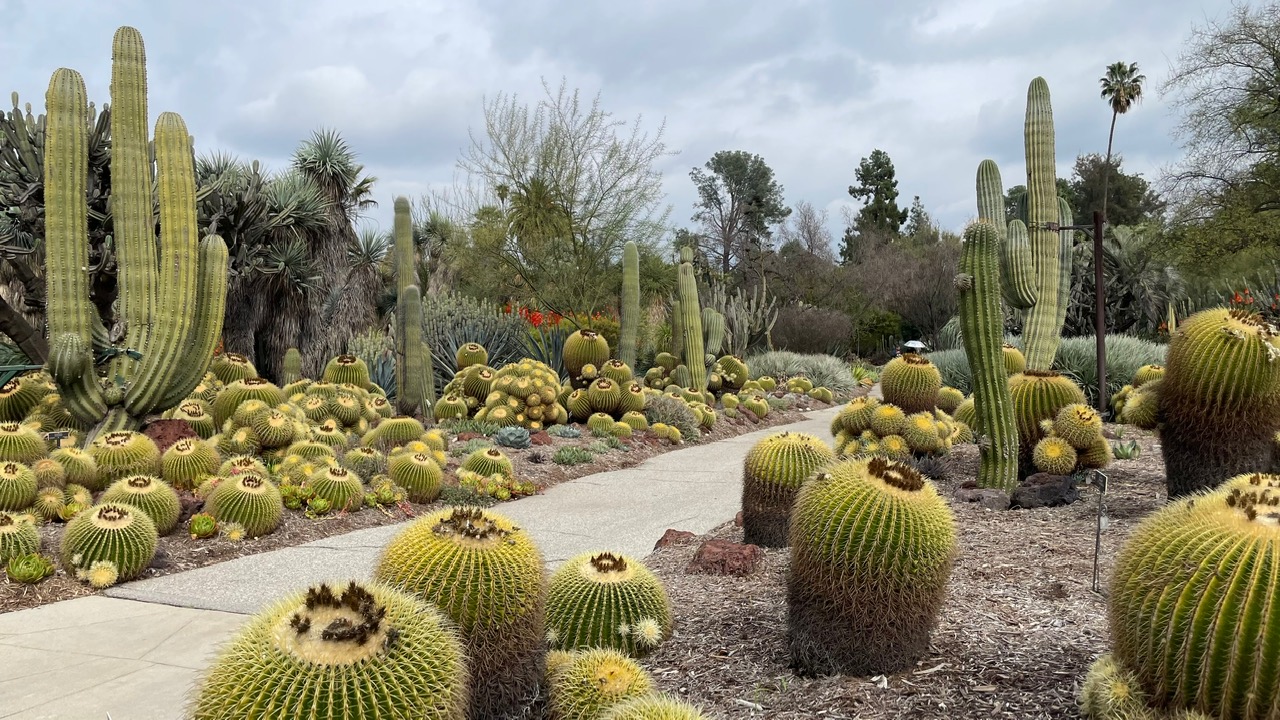
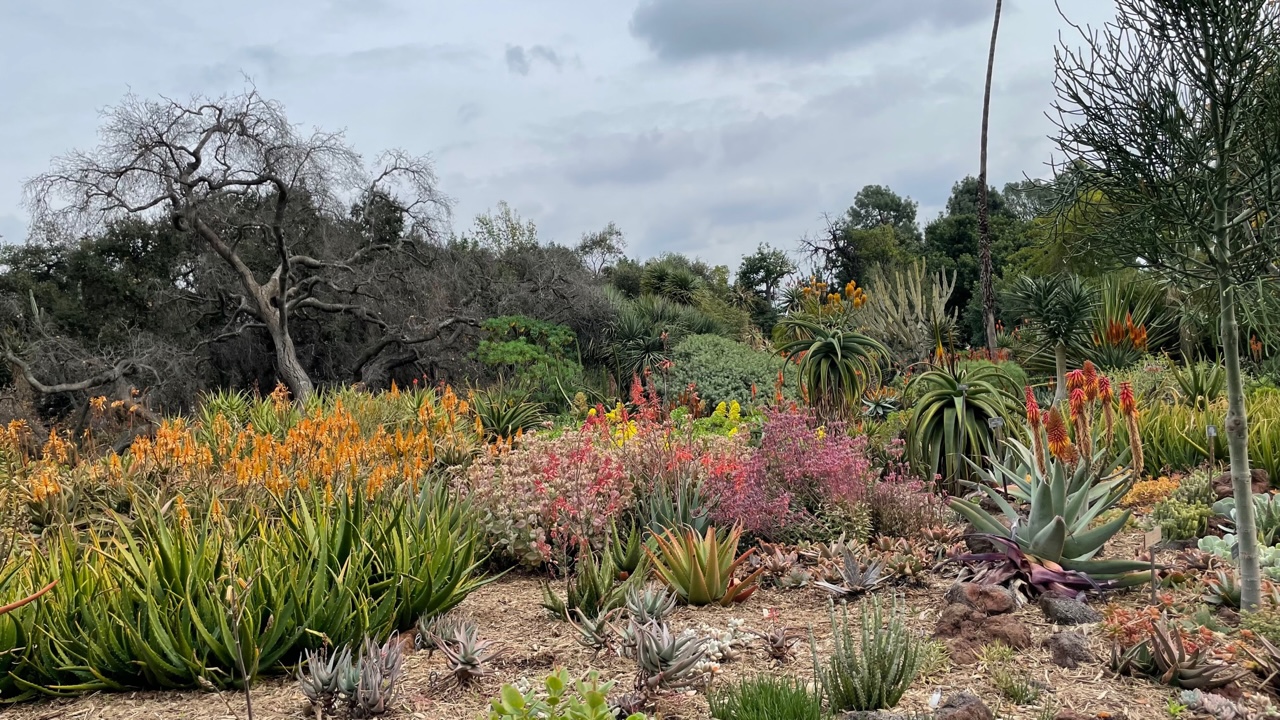
Afterward, I wound down to the Desert Garden, where the many of the cacti and other succulents were swollen with rain. The atonal chorus of birds, there, was especially discordant and cacophonous — but somehow mellifluous.
On my way out, I did stop by the Huntington Store to pick up some regionally specific gifts for my sister’s birthday and ended up getting something for myself, too.
Support Eric Brightwell on Patreon

Eric Brightwell is an adventurer, essayist, rambler, explorer, cartographer, and guerrilla gardener who is always seeking paid writing, speaking, traveling, and art opportunities. He is not interested in generating advertorials, cranking out clickbait, or laboring away in a listicle mill “for exposure.”
Brightwell has written for Angels Walk LA, Amoeblog, Boom: A Journal of California, diaCRITICS, Hey Freelancer!, Hidden Los Angeles, and KCET Departures. His art has been featured by the American Institute of Architects, the Architecture & Design Museum, the Craft Contemporary, Form Follows Function, the Los Angeles County Store, Sidewalking: Coming to Terms With Los Angeles, Skid Row Housing Trust, the 1650 Gallery, and Abundant Housing LA.
Brightwell has been featured as subject and/or guest in The Los Angeles Times, VICE, Huffington Post, Los Angeles Magazine, LAist, CurbedLA, Office Hours Live, L.A. Untangled, Spectrum News, Eastsider LA, Boing Boing, Los Angeles, I’m Yours, Notebook on Cities and Culture, the Silver Lake History Collective, KCRW‘s Which Way, LA?, All Valley Everything, Hear in LA, KPCC‘s How to LA, at Emerson College, and at the University of Southern California.
Brightwell is currently writing a book about Los Angeles.
You can follow him on Ameba, Duolingo, Facebook, Goodreads, iNaturalist, Instagram, Letterboxd, Mastodon, Medium, Mubi, the StoryGraph, Threads, TikTok, and Twitter.


Very evocative post! It was an honor to run into you during your visit, I’m glad we got to meet!
LikeLiked by 1 person
It was nice to meet you too. Are you still blogging as TransitingLA or mostly Instagram?
LikeLike
Both! I’ve been working on a new Transiting guide, should have at least part of it released soon!
LikeLiked by 1 person
I haven’t been to the Huntington lately, but my first visit was over 70 years ago. I remember going through the desert garden on a warm, sunny day, and finding a shady arbor with a drinking fountain at one of the exits. My wife and I used to go there for late afternoon musical events with friends and bring picnic suppers.
LikeLiked by 1 person