Los Angeles is a global city known for its ecological, geographical, and human diversity. Since 16 December is South Africa’s Day of Reconciliation, that historic and cultural contributions of that country’s people to the identity of Los Angeles is the subject of this edition of “No Enclave.”
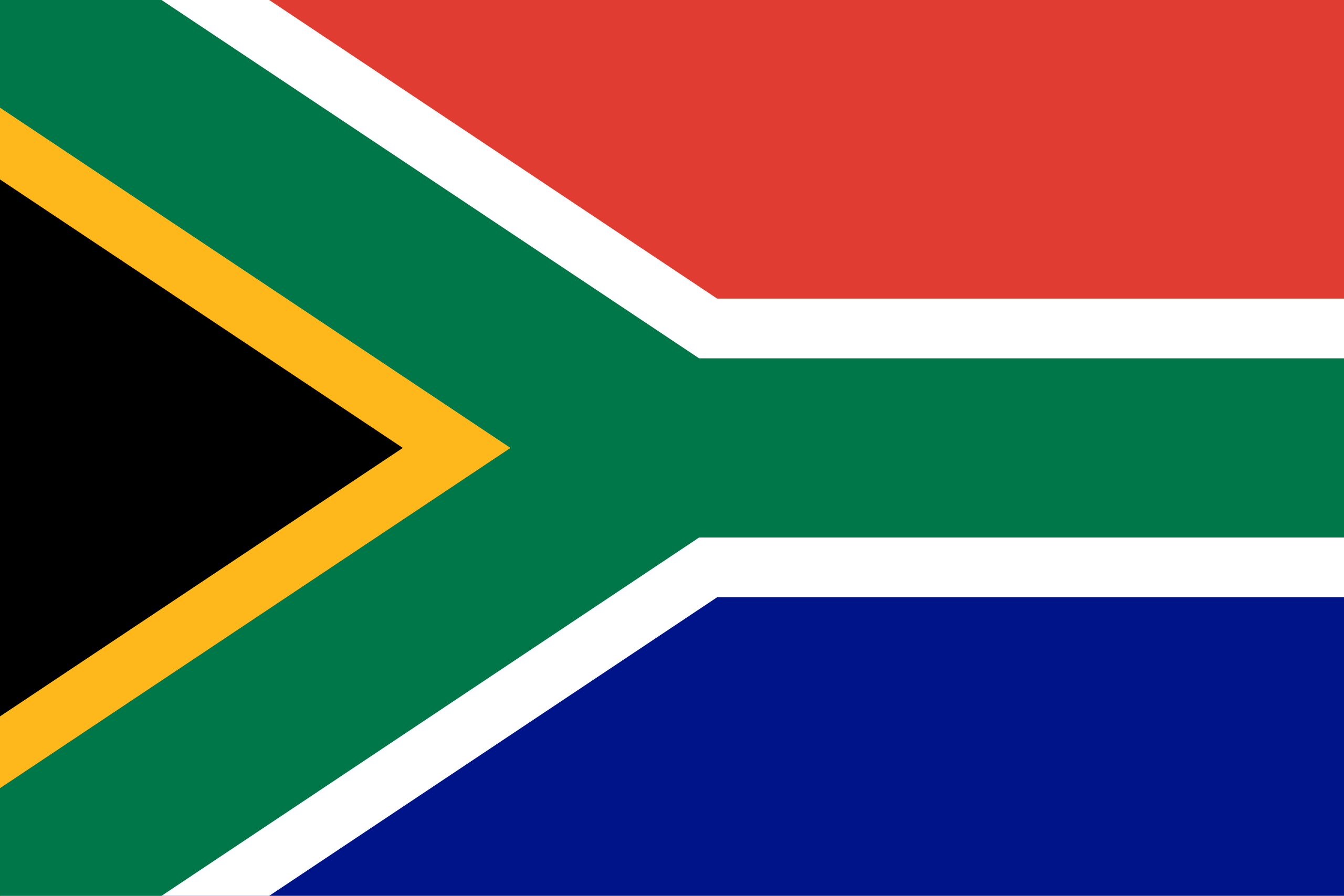
The Republic of South Africa (RSA) is the southernmost country in Africa. At 1,221,037 km2 in size, it’s the 25th largest country in the world, a bit smaller than Mali and a bit larger than Colombia – or to put it in a Californian context – about three times the size of the Golden State. Home to roughly 63 million, South Africa occupies the 24th position in population, just below Thailand and above Italy. It’s a highly diverse, multi-ethnic society, with eleven official languages (Afrikaans, English, isiNdebele, isiXhosa, isiZulu, Sepedi, Sesotho, Setswana, siSwati, South African Sign Language, Tshivenda, and Xitsonga) recognized by the constitution: It has the largest economy in Africa, measured by Nominal GDP but only seventh when measured per capita.
Modern humans have inhabited what’s now South Africa for more than 100,000 years. There, they joined various hominid species, some of which had already by then lived there for three million years. The first Homo sapiens were likely the ancestors of today’s Bushmen (also known as San, Saan, or Basarwa). Around 2000 years ago, the nomadic hunter-gatherers acquired livestock from neighbors to the north, possibly the pastoralist Khoikhoi, who afterward migrated to the area where they intermarried with the indigenous people they referred to as “San” meaning roughly “those who pick up from the ground.” Although the Bushmen had no demonym, the Khoikhoi’s endonym means “people people.” Today the Khoikhoi and Bushmen/San are often collectively referred to as “Khoisan.”
The Bantu Expansion was a major prehistoric demographic movement which saw a people who’d arisen in West-Central Africa spread across much of sub-Saharan Africa during the 2nd and 1st millennia BCE. Bantu-speaking Africans reached South Africa from the Congo basin in the first centuries of the 1st millennium CE. The Khoisan were both absorbed into and displaced by these new migrants, especially on the coasts, and thus migrated to the less resource-rich deserts. The Kingdom of Mapungubwe (1075–1220) flourished at the confluence of the Shashe and Limpopo rivers, near the northern edge of South Africa. A major regional power, Mapungubwe engaged in trade with far off Arabia, China, India, and Persia.
The first European to explore the coastline of South Africa was Portuguese mariner Bartolomeu Dias, who arrived in 1488 in search of an ocean route to East Asia. The Dutch East India Company (Vereenigde Oostindische Compagnie — the VOC) established a permanent settlement at the Cape of Good Hope in 1652. The settlement grew with the arrival of a group of French Huguenot refugees in 1688. The VOC, meanwhile, began importing slaves from Dutch colonies in Bali, Ceylon, Java, Madagascar, Malacca, Sulawesi, and Timor. The descendants of these slaves and Dutch settlers came to be officially known as “the Cape Coloureds.”
The descendants of Dutch, French Hugenot, and Germans, meanwhile, came to collectively be known as the Boers (Dutch for “farmers”), an agrarian people who practiced Calvinism and would develop into Afrikaners. The British took control of the Cape in 1795 but it returned to the Dutch in 1803 but struggles for control continued. The indigenous San and KhoiKhoi, meanwhile – known to the Dutch as “Hottentots” (today considered highly derogatory) – were required to carry passes to move around their own homeland after the passage of the Hottentot Proclamation of 1809.
Under the leadership of Shaka kaSenzangakhona, a clan of Nguni known as the Zulus formed their own neighboring state in 1818. War erupted between the British and Xhosa in 1850. War erupted between the Boers and the British in 1880, after the British annexed the independent South African Republic (Transvaal) in 1877. A second Boer war erupted in 1899. The entire nineteenth century was full of armed conflicts fought for diamonds, ivory, gold, land, and power but in 1902, a period of relative stability arrived after the British defeated the Boers and unified several colonies as the Union of South Africa in 1909. The society they established may’ve been relatively stable, but it was highly unequal.
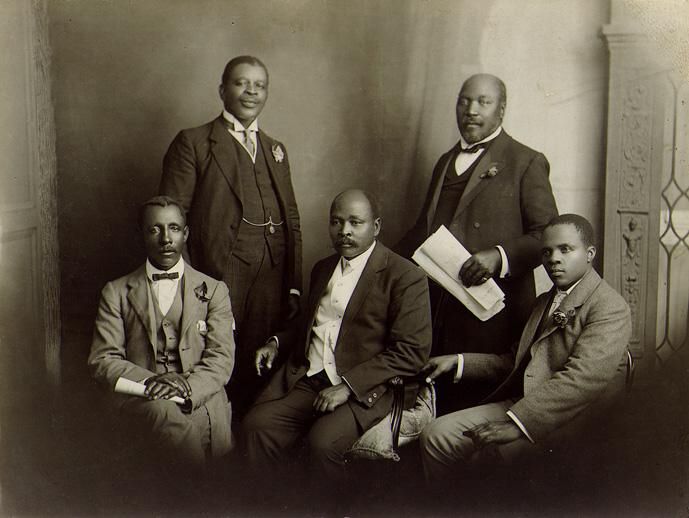
Discriminatory and segregationist laws had been in place in South Africa since 1856 and in the new union, black South Africans were denied voting rights and allotted only 8% of the country for occupancy. White South Africans, meanwhile, who then constituted 20% of the population, retained 90% of the land for themselves, forming the basis of the policy of legal racial discrimination known as apartheid (Afrikaans for “separateness”). The African National Congress (ANC) was founded on 8 January 1912, in Bloemfontein, initially as the South African Native National Congress (SANNC). Its goal was to unite Black Africans and defend their rights against racial discrimination and exclusion. They became the ANC in 1923.
South Africa became self-governing in 1934 with the enactment of the Status of the Union Act. South Africa became a sovereign state on 31 May 1961. The apartheid regime was primarily supported by France, Israel, the UK, US, and West Germany. The ANC, meanwhile, garnered most of its support from other African countries (Angola, Botswana, Lesotho, Mozambique, Nigeria, Swaziland, Tanzania, Zambia, and Zimbabwe), Cuba, Nordic countries (Denmark, Iceland, Finland, Norway, and Sweden), the USSR, and, somewhat ironically, the Netherlands.
When the Soviet Union began to collapse in the late 1980s, the ANC lost one of its primary benefactors. At the same time, the apartheid regime’s Western backers could no longer point to the threat of godless communism as the reason for their support of a racist and quasi-fascist government. The ban on the ANC, the Pan Africanist Congress, and South African Communist Party were lifted. After 27 years of imprisonment, freedom fighter Nelson Mandela was freed in 1990. In 1994, the ANC achieved victory in the first democratic election and has continuously run the country since.
EARLY SOUTH AFRICANS IN SOUTHERN CALIFORNIA
South Africans had been present in the US and California since at least the mid-19th century, when Afrikaner miners came here in search of gold. Interestingly, though, the towns of Randsburg and Johannesburg were not founded by South African miners – but they did attract miners from South Africa. Additionally, the most profitable mine was eventually taken over by a South African company.
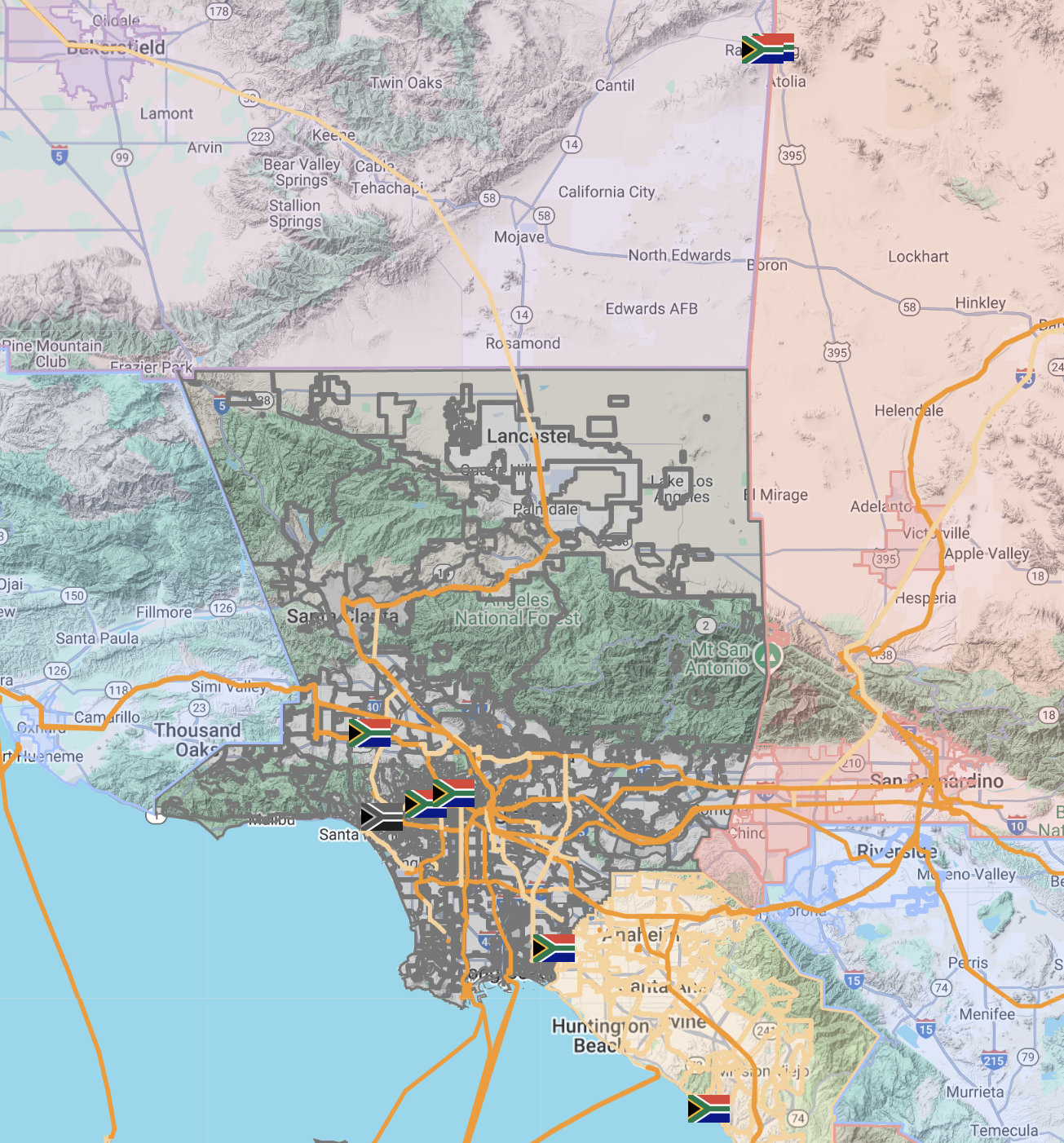
RANDSBURG AND JOHANNESBURG, CALIFORNIA
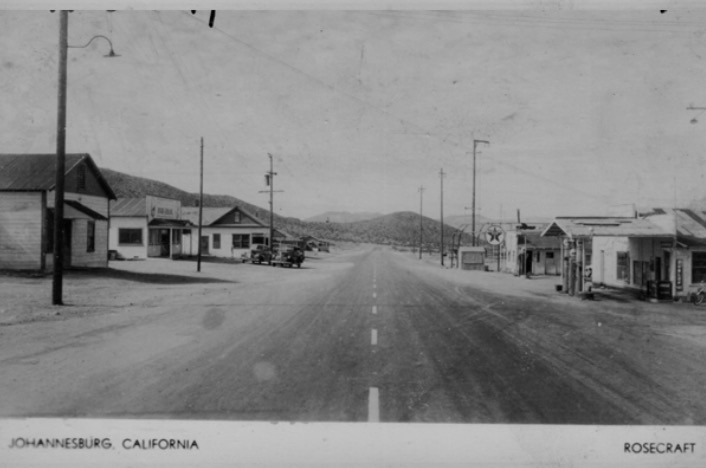
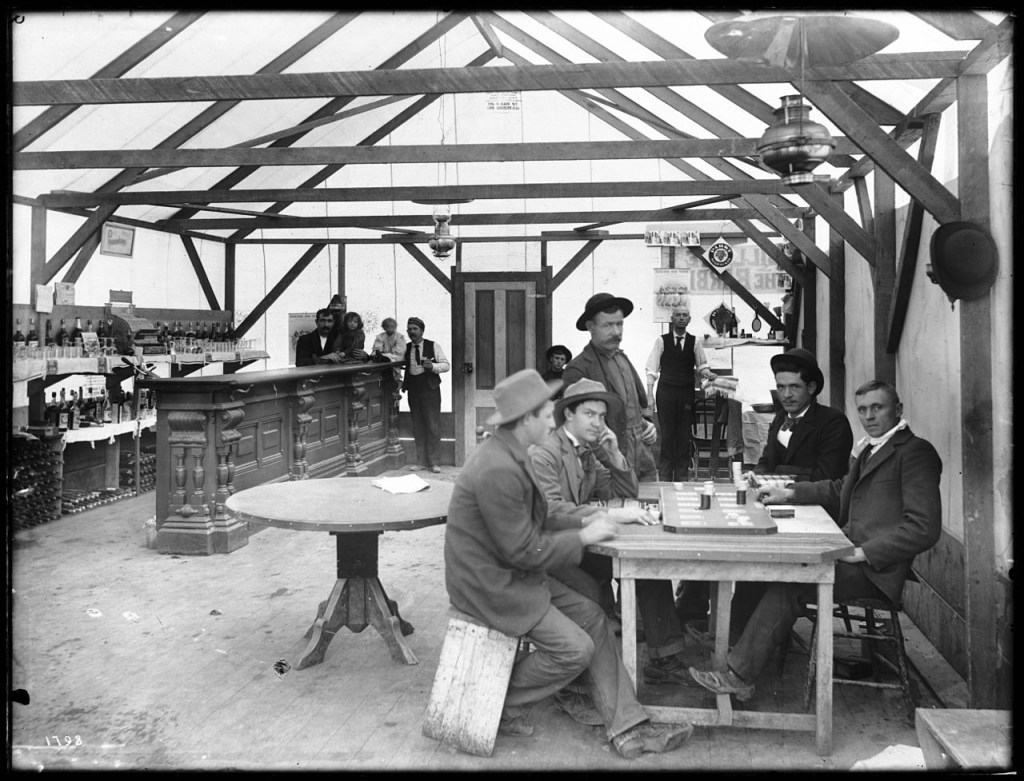
In April 1895, prospectors Charles Burcham, Frederic Mooers, and John Singleton discovered a massive gold vein on a prominence they named Rand Mountain, after South Africa’s Witwatersrand, a geological ridge in the Gauteng province that contains the world’s largest known gold deposits. They named their settlement, Rand Camp, and incorporated their enterprise as the Rand Mountain Mining Company. The prospectors, however, were Americans from San Bernardino, New York, and Tennessee. In 1896, their Johannesburg Water and Townsite Company laid out a plan for a nearby town, named Johannesburg. Like its namesake, many locals refer to it as “Jo-burg.” At its peak, the town was a vital transportation hub and the terminus of the Randsburg Railway (1897–1933). The Anglo-American Mining Corporation – founded in Johannesburg, South Africa in 1917 – took over operations of the Yellow Aster Mine in 1933 and managed it in its final years. It was formally idled by Federal Order L-208 in order to divert resources to the war effort in 1942 and never really recovered. By 2006, all remaining gold-bearing rock that was economically viable had been extracted and both towns became “living ghost towns.” Jo-burg has an estimated population of 77 and Randsburg is only slightly larger with 112 residents.
South Africans immigrants to the US were nearly universally of European heritage for over a century. Following the Soweto uprising in 1976, many South African Jews emigrated to the suburbs of Chicago and a small number of black South Africans were admitted to the US as refugees. After the end of apartheid and the election of Nelson Mandela, large numbers of white South Africans emigrated to Australia, New Zealand, and the American states of Georgia, Illinois, Maryland, Minnesota, New York, and, in particular, California. According to most estimates, the largest South African American community is found in San Diego and numbers roughly 20,000 out of a nation-wide total estimated to number around 78,616. However, if one considers the entire Metro Los Angeles, it’s population is likely closer to 26,000 — with Irvine reportedly home to the largest community of Jewish South Africans outside of South Africa.
In 2025, the thoroughly-dunked narrative of “white genocide” in South Africa re-entered major diplomatic discourse during an Oval Office meeting between Presidents Trump and Cyril Ramaphosa during which Trump presented misidentified photos and videos. Independent investigations and human rights organizations have found no evidence of a coordinated effort to eliminate white citizens. Nevertheless, the Trump regime suggested that white South Africans should be prioritized as refugees. Although roughly 90% South Africans are black, approximately 80% of South African Americans are white. Most South African Americans that aren’t white are of Asian ancestry (mostly Chinese and Indian). Only about 13% of South African Americans are black.
SOUTH AFRICAN CUISINE
South African cuisine is a fusion of diversity. Indigenous traditions mix with Dutch, French, Indian, and Malaysian influences to create dishes like biltong (cured meat), bobotie (curried mince bake), boerewors (traditional farmer’s sausage), bunny chow (loaf bread filled with curry), malva pudding (spongy baked pudding made with apricot jam and soaked in a warm cream sauce), and pap (maize porridge similar to grits and often served with a spicy vegetable relish called chakalaka). Dishes tend to incorporate a good deal of animal flesh (especially from cows, ostriches, pigs, sheep, and springbok) and lots of spices (chili, cinnamon, coriander, and turmeric). Staple vegetables include beetroot, bell peppers, butternut squash, cabbage, carrots, chillies, gem squash, green beans, maize, morogo (imifino) (African spinach), onions, potatoes, pumpkin, sweet potatoes, taro, tomatoes, and waterblommetjie.
Three South African expats and former rugby players: Graham Taylor (of Johannesburg), Peter Walker (of Cape Town), and Robin McLean (of Durban) opened the South African sports bar, Springbok Bar & Grill, on the border of Van Nuys and Lake Balboa around 2003, making it likely the first South African restaurant in Los Angeles. The original chef,Trevor Nettmann, was known for his peri-peri chicken and lamb chops. (Eat the World Los Angeles’s review)
Despite its name, Mozambique takes its inspiration from the Sheesh Mahal in Durban and its menu is focused on wood-fired peri-peri chicken and seafood. It was opened by Ivan Spiers in Laguna Beach around 2005.
Around 2006,Kenyan-born chef, Peter Gatonia, opened Pili Pili in Sawtelle. The menu was defined by its flame-grilled peri-peri chicken but also included South African casual dining staples like boerewors, slaw, and yellow rice. It apparently closed around 2010 (information is scant) and was taken over by Pili’s Tacos, who retained part of the name.
In 2012, Springbok’s former chef, Trevor Nettmann, bought a classic steakhouse in Long Beach’s Rancho Estates neighborhood, the Eldorado. He turned it into another South African sports bar and rebranded it the Eldo.
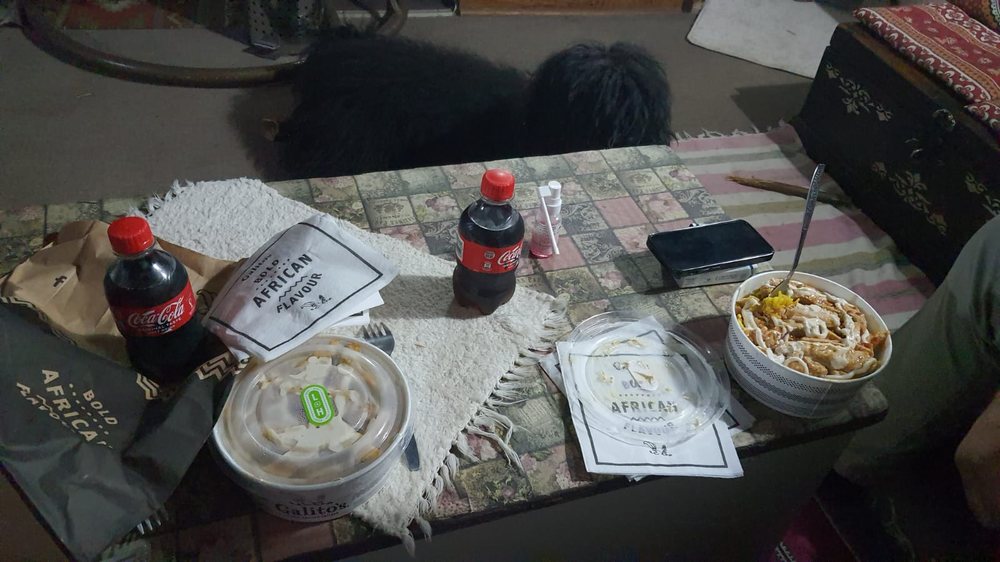
The South African chain, Galito’s Flame Grilled Chicken, was founded by Louis Germishuys (a former Nando’s franchisee) in 1996 in Mbombela (then Nelspruit), where intentionally opened it next door to a location of Nando’s. Galito’s began franchising in 2003 and a location opened in Larchmont in 2022 but closed in 2024. Speaking of Nando’s, there are 46 locations of the South African chain in the US although, for whatever reason they’re all in the East Coast, Midwest, or South.
ROOIBOS
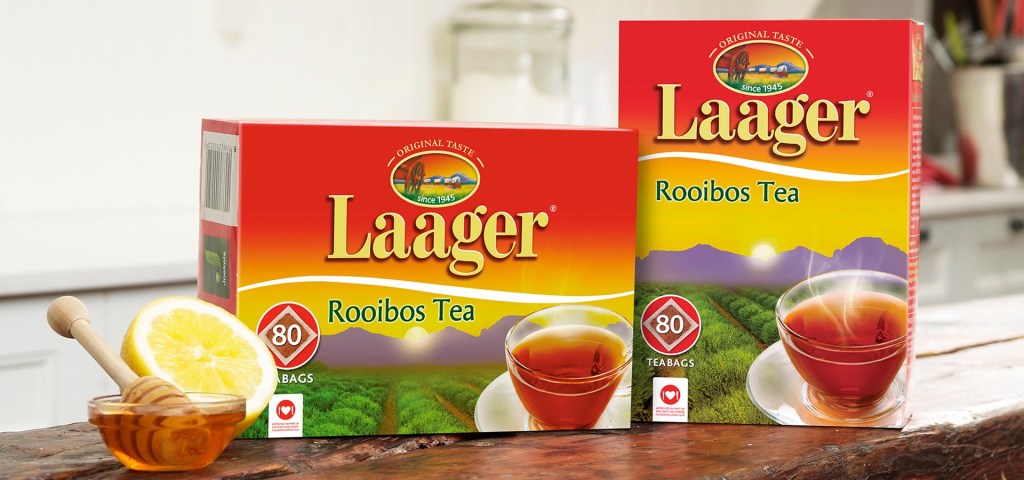
Whilst South African cuisine has remained, in Los Angeles, known mostly within the South African community – one South African staple has crossed over into the mainstream, rooibos. Rooibos (Afrikaans for “red bush”) is a tisane made from the leaves of the Aspalathus linearis, a plant endemic to South Africa’s Cederberg Mountains. Once a health store speciality item, it has crossed over into the mainstream. It was introduced to the US around 1961 but remained virtually unknown for decades after.
In 1994, South African entrepreneur Annique Theron registered “rooibos” as a trademark with the U.S. Patent and Trademark Office (USPTO) for her company,Forever Young. In 2001, she sold the rights to Virginia Burke-Watkins of Burke International for roughly $250,000. Burke-Watkins began demanding royalties from tea shops, internet resellers, and importers who used the word, “rooibos”. The South African government and the industry-led Rooibos Limited fought back, arguing that “rooibos” (Afrikaans for “red bush”) was a generic name… like bologna, cheddar, or sriracha. Major US brands, including The Republic of Tea, joined the litigation. Burke-Watkins voluntarily surrendered the trademark but rooibos received Geographical Indication status in 2014, ensuring only producers from South Africa’s Cederberg region can use the name… like champagne, scotch, or tequila. Trader Joe’s released their own version around 2015. Today, the US annually imports about 5,600 metric tons of the stuff – roughly 21% of the global market.
SOUTH AFRICAN WINE
One plant-based beverage that did not originate in South Africa is wine. That face hasn’t stopped South Africa from emerging as an important wine producer, though, as of 2025. The industry is dominated by white varietals including Chenin Blanc, Sauvignon Blanc, and Chardonnay — but it also produces the country’s signature Pinotage (a 1925 cross between Pinot Noir and Cinsault) as well as Cabernet Sauvignon and Shiraz. The Western Cape region is the primary region of production. Much of South Africa’s wine is exported. Although South Africa ranks seventh in production, it is only thirteenth in consumption (and 52nd per capita). Beer accounts for about 75% of alcoholic beverage consumption in the country. You can find a good selection of South African wines at several specialty wine shops in Metro Los Angeles, though, including the Liquor Fountain, Silverlake Wine, Vinovore, and The Wine House.
SOUTH AFRICAN PLANTS AND ANIMALS
Coastal and inland areas of Southern California and the Western Cape region of South Africa both share a climate. Both regions are biodiversity hotspots that experience hot, dry summers and mild, wet winters. Both are dominated by shrubland ecosystems adapted for wildfires and moderated by cold ocean currents. Due to gardeners and landscapers for the “exotic” and their drought tolerance many plants from South Africa have been introduced to Los Angeles and Southern California – even though many are not truly ecologically compatible – having evolved as they did within an entirely different community of fauna, flora, and fungi. Some, too, are allelopathic – chemically altering the Southern California soil and suppressing the growth of native competitors. Others, like the the popular Pencil Cactus (Euphorbia tirucalli), produce a highly toxic and corrosive sap that can cause severe irritation or burns and temporary blindness and becomes especially unpleasant when it burns. Others include African Iris (Afrocarpus falcatus), African Fern Pine (Afrocarpus falcatus), Fortnight lily (Dietes grandiflora), African Sumac (Searsia lancea), Agapanthus (Agapanthus praecox), Bird of Paradise (Strelitzia reginae), Clivia (Clivia miniata), Conebush (Leucadendron), Dymondia (Dymondia margaretae), Ice Plant (Carpobrotus edulis), Jade Plant (Crassula ovata), King Protea (Protea cynaroides), Krantz Aloe (Aloe arborescens), Lion’s Tail (Leonotis leonurus), and Tree Aloe (Aloe barberae). In the late 19th and early 20th centuries, the introduction of South African wildlife, too, significantly shaped the physical and cultural landscape of Los Angeles.

In 1883, English naturalist Charles Sketchley introduced the first South African ostriches to Southern California, establishing a farm near Anaheim before partnering with Griffith J. Griffith in 1885 to move the operation to Rancho Los Feliz (modern-day Griffith Park). Investors built the Ostrich Farm Railway in 1886 specifically to transport tourists to the site located along what’s now Griffith Park Boulevard to the site of the old zoo.
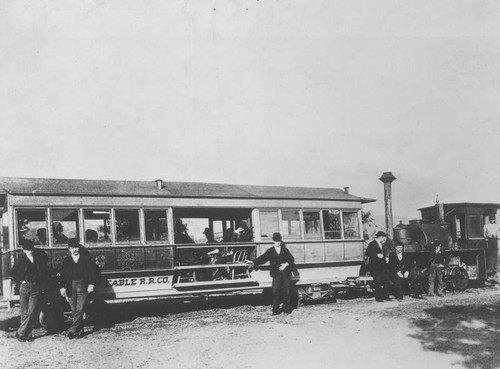
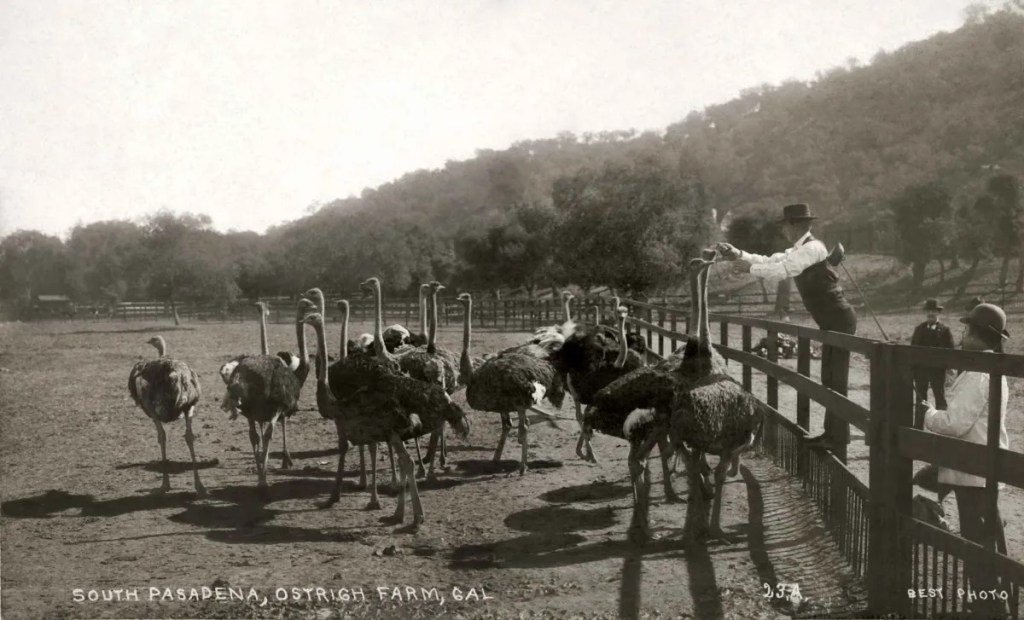
In 1886, entrepreneur Edwin Cawston commissioned a ship to transport fifty ostriches directly from Natal for the Cawston Ostrich Farm in South Pasadena.
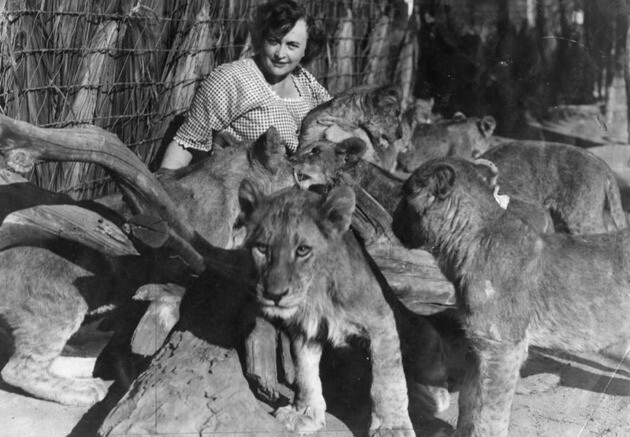
Anglo-French circus performers Charles and Muriel Gay opened Gay’s Lion Farm in El Monte in 1925. The operation housed over 200 South African lions at its peak and became famous for supplying Metro-Goldwyn-Mayer with its iconic mascot, “Leo the Lion” (first played by Slats, then his successor, Jackie, who provided the famous “roar” once they transitioned to talkies).
SOUTH AFRICAN ANGELENO FILM
Film was introduced to South Africa early and Americans were especially influential. In April 1895, the first Kinetoscope reached Johannesburg. On 11 May 1895, American magician Carl Hertz publicly projected films in another first. American businessman, I.W. Schlesinger established the Killarney Film Studios in Johannesburg in 1915. Early films often focused on historical events like the Boer Wars or were adapted from British adventure novels.
In the 1950s, the government introduced a subsidy system that favored lighthearted comedies and melodramas that catered primarily to Afrikaners and promoted Afrikaner nationalism whilst studiously avoiding social commentary. A separate, low budget “Bantu” film industry was created in the 1970s for black audiences. Films critical of apartheid were usually banned, giving rise to an underground cinema movement in the 1980s.
In 1980, The Gods Must Be Crazy, directed by Jamie Uys, became the most commercially successful film in South African history and a global phenomenon. Superficially innocuous, it promoted stereotypes about the “primitiveness” of South Africa’s indigenous San people and depicts them as so isolated that they’re unfamiliar even with Coca-Cola and assume that a white man’s litter is a gift from the gods. Uys claimed that the film’s star using, Nǃxau ǂToma, communicated with the director using smoke signals. In fact he spoke three languages fluently and some Afrikaans. The film grossed over $60 million – but Nǃxau ǂToma, received only $300. He agreed to star in three sequels for which he negotiated much higher pay.
By contrast, 2006’s District 9 rather directly confronted apartheid and xenophobia albeit through a science-fiction lens. Made on a budget of $30 million, it grossed $210.8 million. It’s big budget Hollywood follow-up, Elysium (2013) — set in the dystopian Los Angeles of 2154 — received mixed reviews. Chappie (2015) and Demonic (2021) were not well-received, but his next Hollywood production, Gran Turismo (2023) fared better.
Aside from these crossover filmmakers, most South African films screened in Los Angeles do so at the Pan African Film & Arts Festival. South African films screened at PAFF have included Hopeville (2010, dir. John Trengove), The Manuscripts of Timbuktu (2011, dir. Zola Maseko), Of Good Report (2013, dir. Jahmil X.T. Qubeka), The Forgiven (2017, dir. Roland Joffé), Ellen: The Ellen Pakkies Story (2018, dir. Daryne Joshua), Zulu Wedding (2019, dir. Lineo Sekeleoane), Knuckle City (2019, dir. Jahmil X.T. Qubeka), Back of the Moon (2019, dir. Angus Gibson), Africa and I (2021, dir. Othmane Zolati & Chris Green), The Honeymoon (2023, dir. Bianca Isaac), and Legacy: The De-Colonized History of South Africa (2024, dir. Tara Moore).
South Africans in Hollywood, meanwhile, go back all the way to at least the Classic Hollywood Era. Johannesburg-born Basil Rathbone moved to Los Angeles around 1934 and appeared in more than 70 films. Cape Town-born Cecil Kellaway signed with RKO in 1938 and lived in Los Angeles until his death in 1973. Boksburg-born Molly Lamont moved to Brentwood in the mid-1930s and appeared in films like Mary of Scotland (1936) and The Awful Truth (1937). Cape Town-born Sybil Jason came to Warner Bros. in 1935 and debuted as a child star in Little Big Shot (1935). Pretoria-born Arnold Vosloo moved to the US in the 1980s and appeared in films like The Mummy (1999). Upington-born Alice Krige moved to the US and is known for her appearances in Ghostbusters II (1989) and Stephen King’s It (1990).
Actress Embeth Davidtz was born in the US to South African parents and raised there before moving to Los Angeles in 1991. Producer Gary Barber was born in Johannesburg. Benoni-born Charlize Theron moved to Los Angeles in the 1990s and became one of the biggest African immigrants in Hollywood. Dave Wittenberg moved to Los Angeles after living in Boston to pursue voice acting. Stelio Savante initially came to the US on a tennis scholarship before pivoting into acting. Tammin Sursok moved to Los Angeles in 2006, after enjoying success in Australia. After his success in District 9, Sharlto Copley moved to Los Angeles to continue his career. Comedian/late night host, Trevor Noah, moved to Los Angeles in 2011 and bought a $20.5 million Bel Air mansion in 2019, followed by a $27.5 million mansion, also in Bel Air, in 2021, which he sold in 2022. Actor Sean Cameron Michael moved to Los Angeles in 2016. Actress Lesley-Ann Brandt moved to Los Angeles after initially finding success in New Zealand.
Other South African Angelenos in film include cinematographer Frances Kroon, actor/filmmaker Niza Jay, writer/director Phumi Morare, actor Riley Bowes, and director/cinematographer Savannah Bloch.
SOUTH AFRICAN-ANGELENO MUSIC
South African music evolved from ancient indigenous traditions, which emphasized functional songs for ceremonies, social activities, and work. It utilizes vocal harmonies, hand claps, and instruments like musical bows, rattles, and flutes. With urbanization and exposure to global sounds, new genres emerged, such as kwela (pennywhistle jive) and marabi, which blend traditional elements with jazz influences. This, in turn, gave rise to a unique form of South African jazz, made famous by exiled artists like Hugh Masekela and Miriam Makeba.
Masekela moved to Los Angeles around 1966. In March and April, he had residencies at the Whisky a Go Go. In June, he performed at the Monterey Pop Festival. In September, he recorded his live album, Hugh Masekela Is Alive and Well at the Whisky, over three nights. His number one hit, “Grazing in the Grass,” was recorded at Hollywood’s Gold Star Studios on 12 March 1968 as a last-minute addition to the album The Promise of a Future. The melody was written by Witbank-born actor and musician, Philemon Hou, who was present in the studio that day.
Singer Miriam Makeba made American television debut on 1 November 1959, when she appeared on The Steve Allen Show, filmed in Los Angeles. Although she primarily lived in exile in New York City and Guinea, she often performed with Masakela (to whom she was married from 1964-1966) in Los Angeles, including, notably, in April 1988 at the Wiltern Theatre and again in 1991 at the Playboy Jazz Festival, held at the Hollywood Bowl.
Modern South African music often served as a vehicle for anti-apartheid resistance and cultural assertion. Following the end of apartheid, the smooth electronic sounds of kwaito emerged to capture and reflect the spirit of post-apartheid youth culture. Kwaito dominated the popular music scene for years and paved the way for current electronic dance genres like amapiano and gqom.
In addition to Masekela, Los Angeles has been home to a fair amount of South African musicians, including DJ Apiwe Bubu, singer Belinda Davids, singer Candice Pillay, singer/rapper Doja Cat, rapper Earl Sweatshirt, singer-songwriter (and son of Johnny Clegg) Jesse Clegg, jazz/gospel artist Jonathan Butler, singer Kaien Cruz, producer Luc Lavigne, violinist-composer Nokuthula Ngwenyama, singer Sasha Pieterse, and composer and former Yes guitarist Trevor Rabin. Other South African Angeleno musicians include Apiwe Bubu and Bernerd Blom.
PATRICK SOON-SHIONG
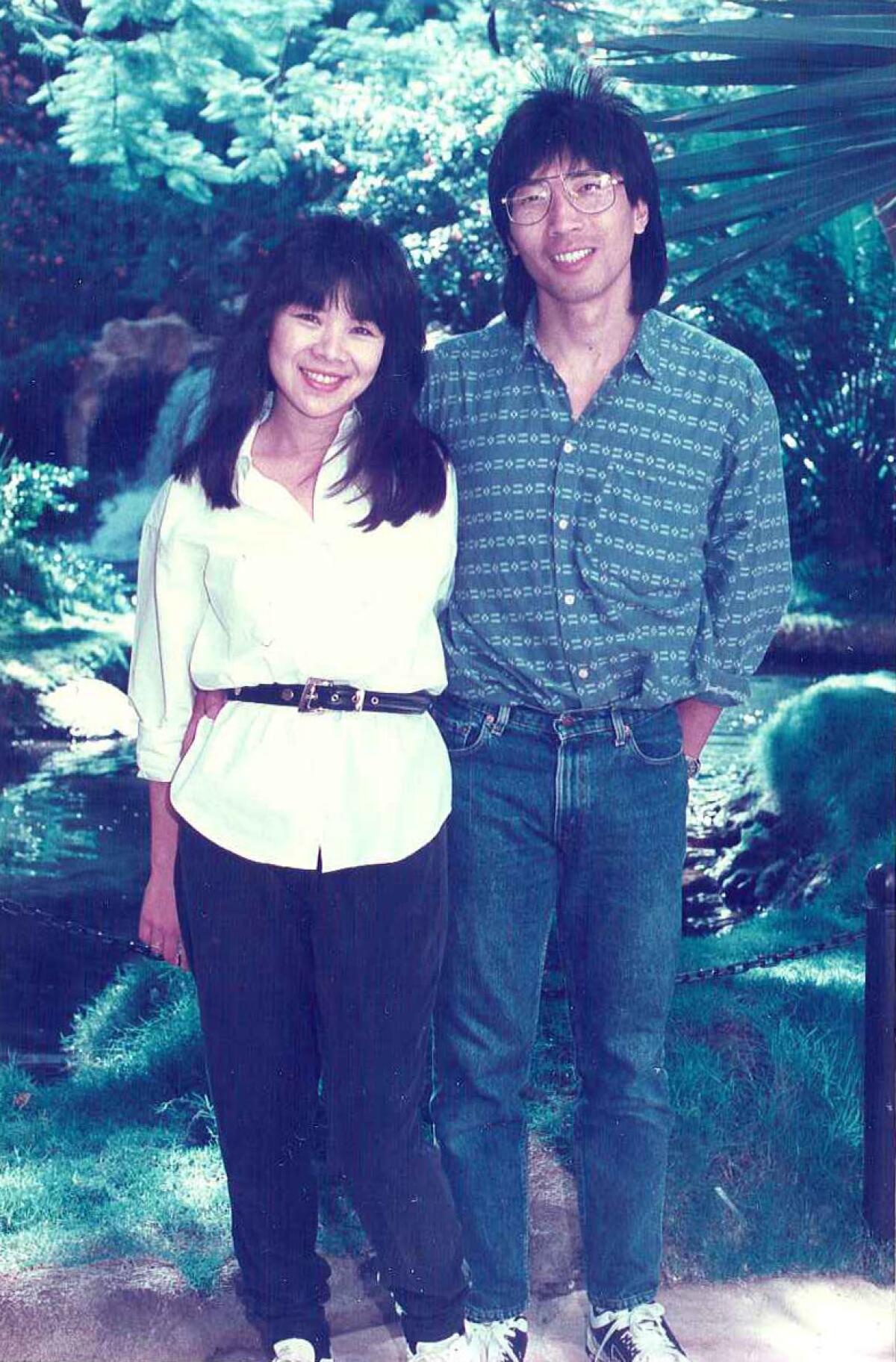
Patrick Soon-Shiong is a billionaire surgeon and newspaper owner who was born in Gqeberha (Port Elizabeth) in 1952. He and his wife, Michele Chan-Sam (born in East London, South Africa) moved to Vancouver in 1977. They next moved to Los Angeles in 1982, where Dr. Soon-Shiong earned a fortune developing cancer drugs.
In 2018, he purchased The Los Angeles Times in 2018 for $500 million, citing his upbringing under apartheid as the source of his deep appreciation for a free press. His ownership, though, has been marked by significant turmoil, including deep financial losses and an “editorial exodus” in late 2024 after he blocked the newspaper’s planned endorsement of Kamala Harris. The Soon-Shiong’s daughter, activist Nika, has been accused by publications like Politico, TheWrap, and Los Angeles Magazine of meddling in the paper’s newsroom, which Patrick Soon-Shiong has largely denied. In July 2025, he dissolved the editorial board and announced plans to take the paper public within a year to “democratize” its ownership.
ELON MUSK
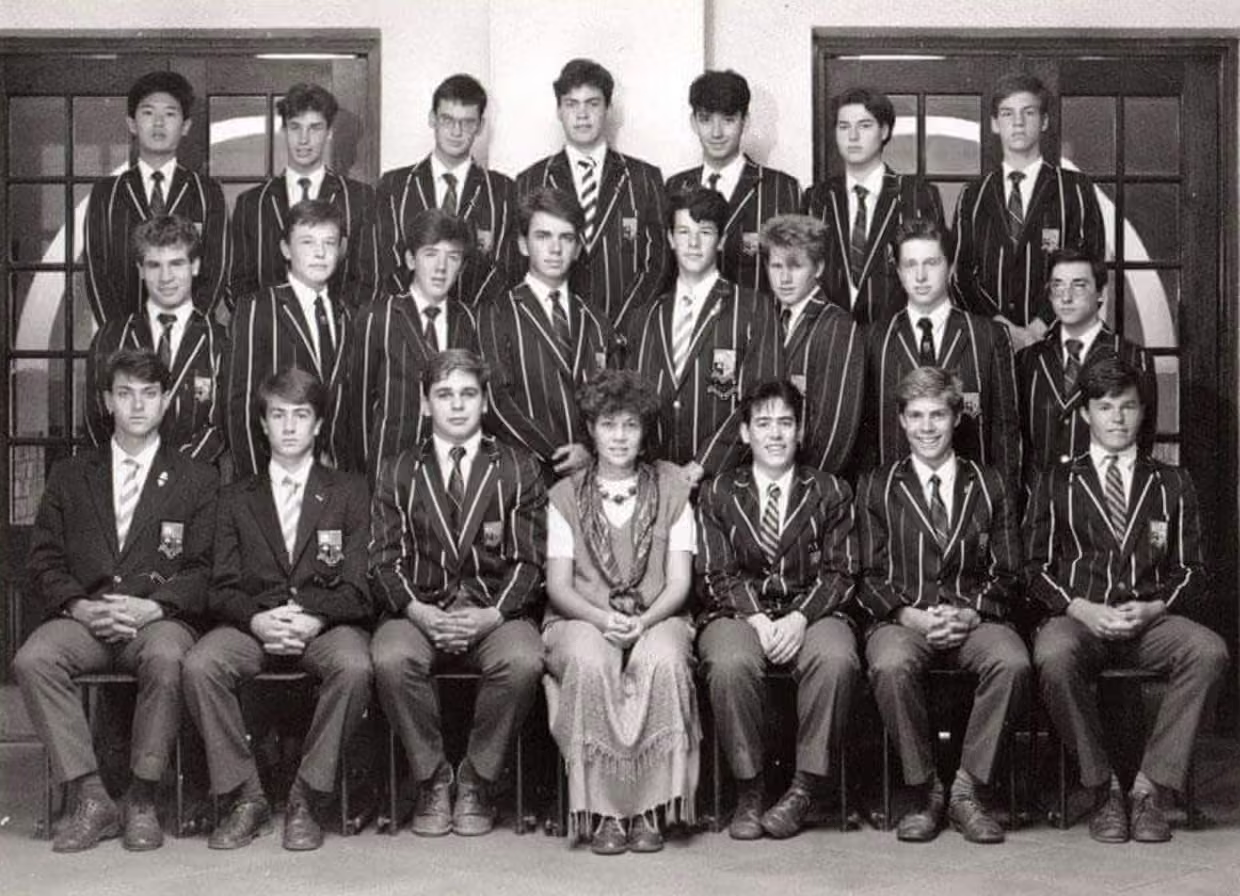
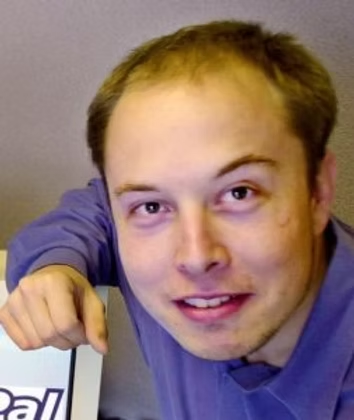
Elon Musk at Pretoria Boys High School (middle row, second from left) and PayPal
Elon Musk needs no introduction but he is South African and he was an Angeleno. Since his departure, you still see him referenced on the bumper stickers on Teslas placed by owners wishing to distance themselves from the right-wing extremist. It’s probably worth pointing out that Tesla existed before Elon Musk. It was founded in California by Martin Eberhard and Marc Tarpenning — not Musk… but it remains associated with him.
Musk was born in Pretoria in 1971. He moved to California in 1995 to attend Stanford University but dropped out after two days to cofound his first company, Zip2. With the sale of Zip2, he co-founded X.com. X merged with its competitor, Confinity which had developed PayPal. Musk became CEO but the was ousted by the board of directors and replaced with Peter Thiel. PayPal was acquired by eBay and Musk, as the largest shareholder, received a large sum that allowed him to found SpaceX in Hawthorne in 2002.
- In 2013, Musk promoted the Hyperloop Alpha, which he claimed would travel 700 mph between Los Angeles and San Francisco. In 2016, he promised to build a network of high-speed underground tunnels — a bit like a subway — in Los Angeles to solve the city’s “destroying” traffic. Neither came to fruition and after his trans daughter, Vivian Jenna Wilson, filed to legally sever ties with him in a Los Angeles court in 2022, he moved to Texas. He speant at least $294 million to support Donald Trump and other Republican candidates during the 2024 election cycle, Since then, he has claimed that South Africa enforces “openly racist” laws that favor the Black majority, which lead the Trump regime to suspend aid to the nation.
SOUTH AFRICAN ANGELENO SPORTS AND ATHLETES
In South Africa, sports are sometimes described as the “national religion,” due to their purported ability to unite diverse people across class, cultural, and ethnic divisions. That said, football (soccer) is most popular with black South Africans,rugby union is most popular with white South Africans (especially Afrikaners), andcricket is most popular with Asian and Anglo South Africans. Mixed martial arts, track & field, and surfing are also popular.
Several South African-born athletes have played for Los Angeles professional teams or have established a presence in the city as residents including Martin Cohen (Aztecs), Steve Nash (Lakers), and Taylor Scott (Dodgers) as well as javelin star, Jana van Schalkwyk, sprinter Wiaan Martin, and long distance runner Zola Budd.
SOUTH AFRICAN OBSERVANCES AND COMMUNITY ORGANIZATIONS
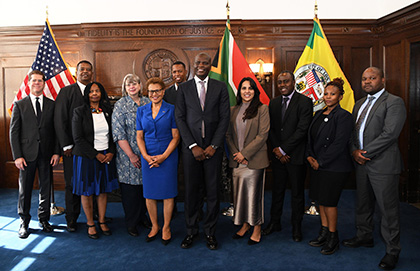
The major observances specific to South Africa include Freedom Day (27 April), Heritage Day ( September 24), Youth Day (16 June), Nelson Mandela Day (18 July), and Day of Reconciliation (16 December). In Los Angeles, the South African community is served by a mix of formal diplomatic and non-profit entities alongside informal social networks. There’s the South African Consulate General (the primary diplomatic hub) and South Africans In Los Angeles CA (a Facebook group).
Support Eric Brightwell on Patreon

Eric Brightwell is an adventurer, essayist, rambler, explorer, cartographer, and guerrilla gardener who is always seeking paid writing, speaking, traveling, and art opportunities. He is not interested in generating advertorials, cranking out clickbait, or laboring away in a listicle mill “for exposure.”
Brightwell has written for Angels Walk LA, Amoeblog, Boom: A Journal of California, diaCRITICS, Hey Freelancer!, Hidden Los Angeles, and KCET Departures. His art has been featured by the American Institute of Architects, the Architecture & Design Museum, the Craft Contemporary, Form Follows Function, the Los Angeles County Store, Sidewalking: Coming to Terms With Los Angeles, Skid Row Housing Trust, the 1650 Gallery, and Abundant Housing LA.
Brightwell has been featured as subject and/or guest in The Los Angeles Times, VICE, Huffington Post, Los Angeles Magazine, LAist, CurbedLA, LA Times 404, Marketplace, Office Hours Live, L.A. Untangled, Spectrum News, Eastsider LA, Boing Boing, Los Angeles, I’m Yours, Notebook on Cities and Culture, the Silver Lake History Collective, KCRW‘s Which Way, LA?, All Valley Everything, Hear in LA, KPCC‘s How to LA, at Emerson College, and at the University of Southern California. He is the co-host of the podcast, Nobody Drives in LA.
Brightwell has written a haiku-inspired guidebook, Los Angeles Neighborhoods — From Academy Hill to Zamperini Field and All Points Between; and a self-guided walking tour of Silver Lake covering architecture, history, and culture, titled Silver Lake Walks. If you’re an interested literary agent or publisher, please out. You can also follow him on Bluesky, Duolingo, Facebook, Goodreads, iNaturalist, Instagram, Letterboxd, Medium, Mubi, Substack, Threads, and TikTok.


 Eric Brightwell