The following was first published by the Silver Lake Neighborhood Council as part of it’s “Ask Silver Lake” column. “Ask Silver Lake” is dedicated to exploring the history of our community. If you have questions or ideas you’d like us to consider, please send them to outreach@silverlakenc.org.
We’ve received a few “Ask Silver Lake” inquiries about Silver Lake’s historic place in film history. Edendale, for example, is sometimes described as “Hollywood before there was Hollywood.” Other readers wanted to know, specifically, about film figures like Mabel Normand, Mack Sennett, Tom Mix, and Walt Disney and their connections to Silver Lake. We decided in the Outreach Committee to roll them into one “Ask Silver Lake” about all of Silver Lake’s historic film studios. Here you go.
EDENDALE
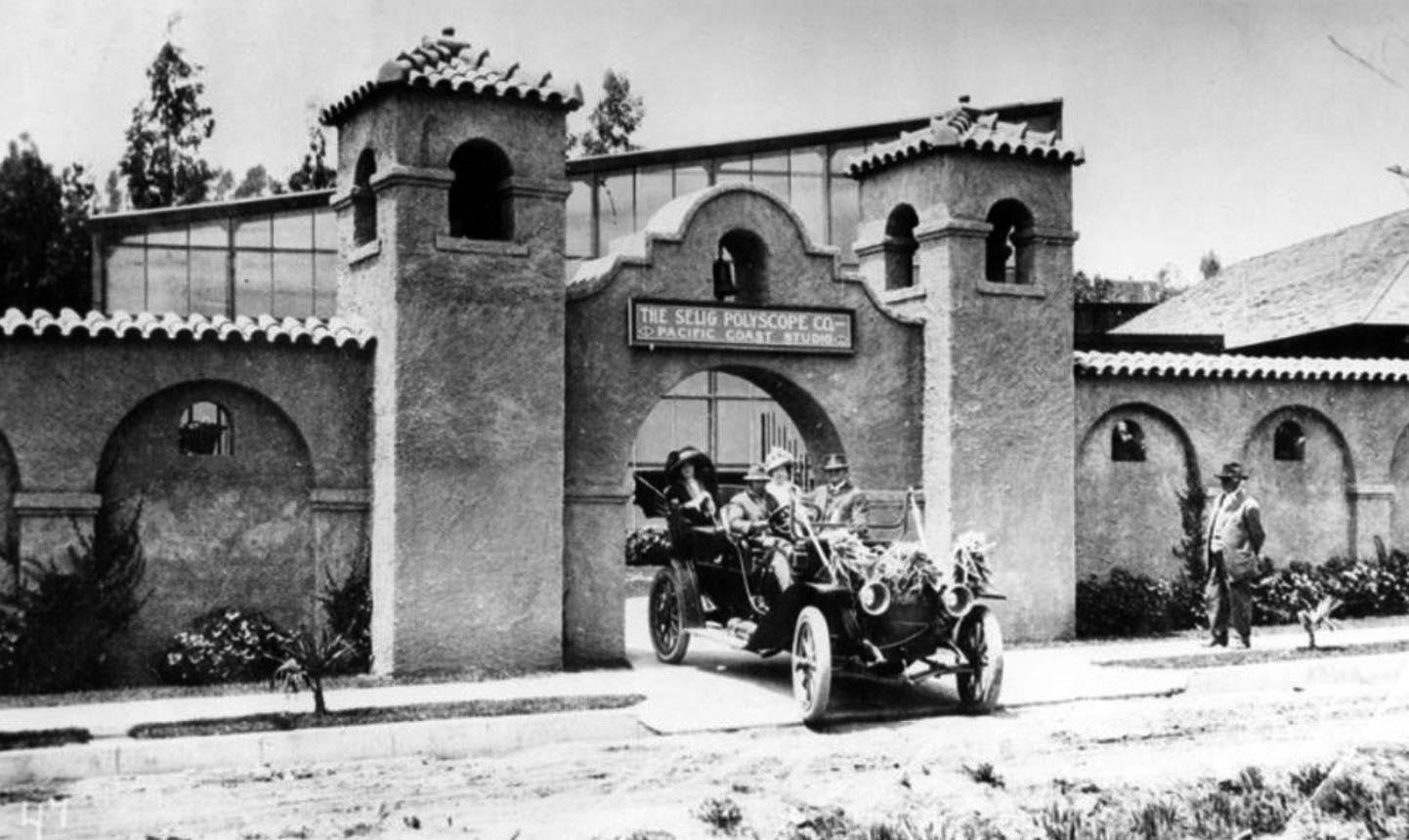
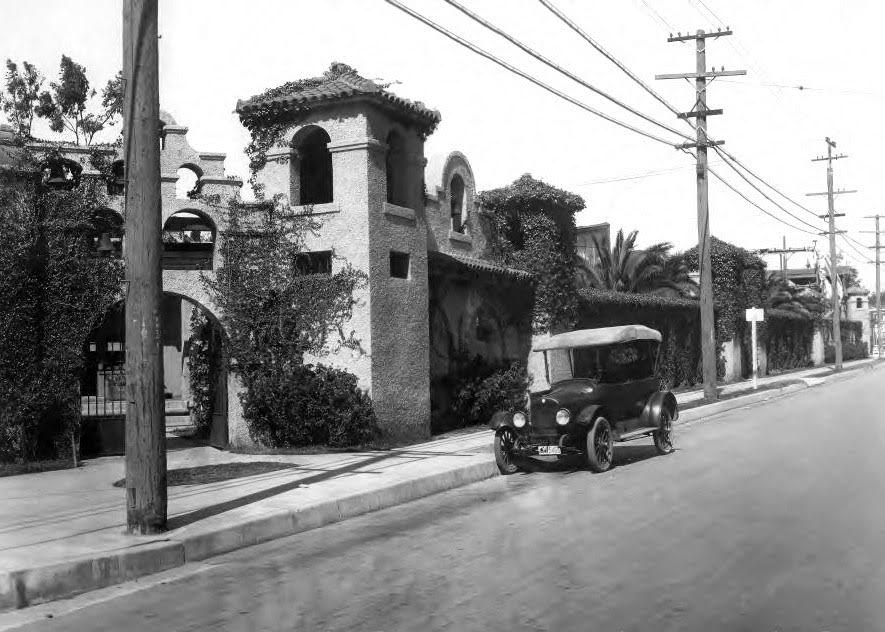
Edendale is sometimes described as Los Angeles’s original Hollywood. This, of course, isn’t strictly correct in the literal sense. For starters, Hollywood is older than Edendale, having been founded in 1887. Edendale, on the other hand, was founded in 1902. In the metonymic sense, however, Edendale was indeed the original “Hollywood.” Back when that actual Hollywood was a dry town devoid of even a single cinema, Edendale was home to three of the city’s first film studios: the Bison Film Company, the Pathé Studio, and the Selig Polyscope Company.
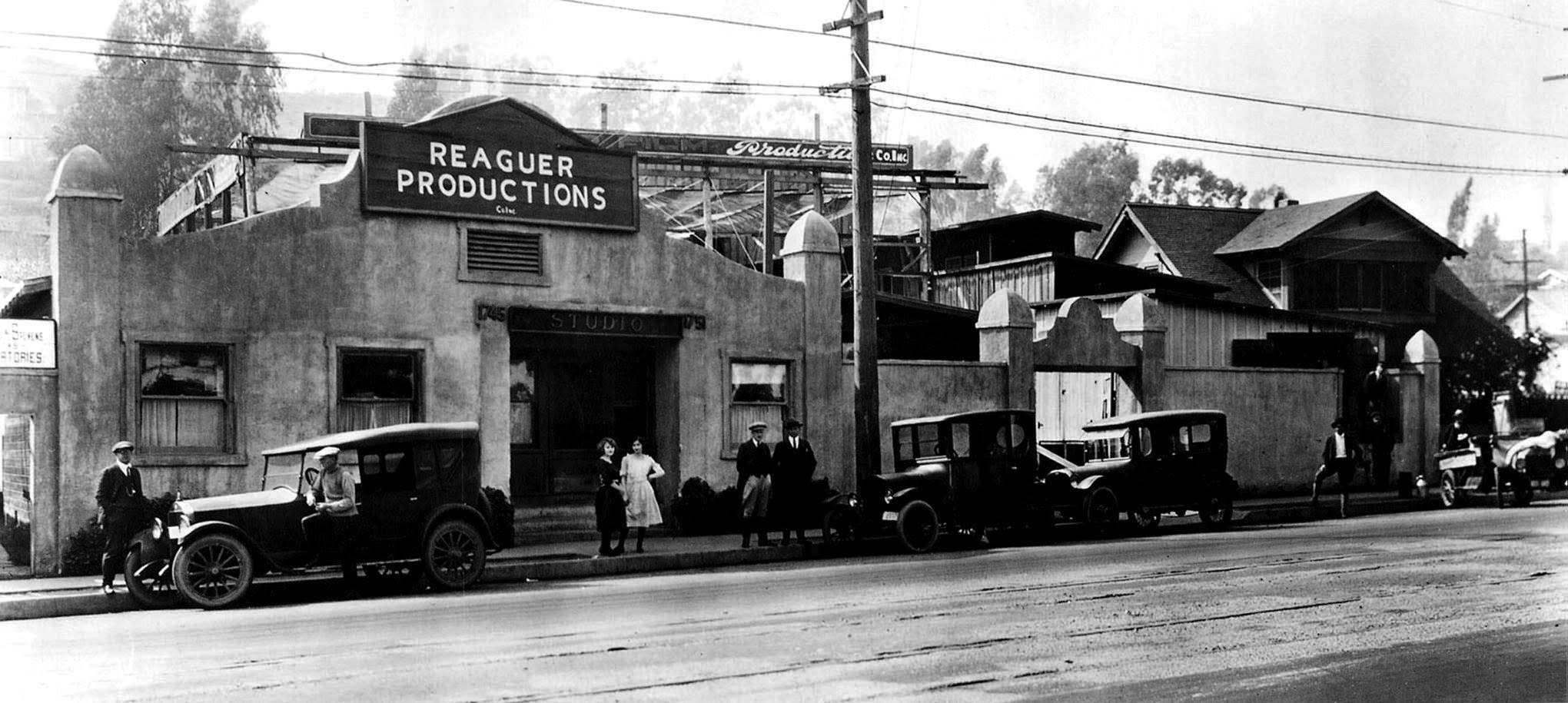
Chicago-born William Selig ran the latter. Selig made the first narrative film shot in Los Angeles, The Count of Monte Cristo, in 1908. In 1909, he opened Los Angeles’s first permanent film studio in Edendale, on the west side of Glendale Boulevard between Clifford and Duane streets, in what’s now generally regarded as Silver Lake. By the end of the 1920s, a five-block stretch from Selig’s studio, south to Berkeley Avenue supported roughly thirty film studios, lots, and other filmmaking operations. Unfortunately, only one of these historic structures was preserved – the Mack Sennett Studio.
Although also in Edendale, that side of the street is today generally regarded as Echo Park. Regardless, Mack Sennett (né Michael Sinnot) was the Quebec-born “King of Comedy” whose stable of talent included Charlie Chaplin, Roscoe Arbuckle, Gloria Swanson, Harold Lloyd, Harry Langdon, WC Fields, the Sennett Bathing Beauties, and the Keystone Cops. He founded Keystone Studios in Edendale in 1912. The Mack Sennett Studio closed in 1928. It was designated Los Angeles Historic-Cultural Monument No. 256 in 1982. The main building was long ago transformed into public storage and still looms behind Jack in the Box’s Echo Park location
LUBIN AND VITAGRAPH
The studios’ exodus from Edendale to Hollywood began very quickly – in 1911 – just a year and a half after Hollywood was absorbed into Los Angeles. Studios continued to open in Edendale, however, and nearby in East Hollywood and Los Feliz. The Lubin Manufacturing Studio opened in Los Feliz in 1912. Today it’s home to the Church of Scientology’s Media Productions Center, making it the oldest continuously-producing film studio in Los Angeles. Nearby on Talmadge Street (named in honor of silent screen star Norma Talmadge named after Los Angeles City Engineer Homer Hamlin’s wife, Hattie Talmadge) is the old Vitagraph Studio, which opened in 1913. It was renamed Prospect Studios in 2002.
MIXVILLE
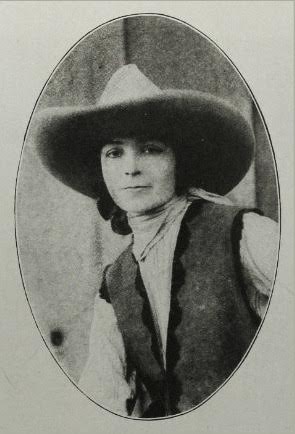
Silver Lake proper got itself a movie ranch in 1914. It was founded on the ranch of a Pennsylvania-born cowgirl and stuntwoman named Winifred “Winna” Katherine Brown (also spelled “Browne”). Winna mostly appeared as stunt doubles and was rarely received on-screen credit for her work. She began to delve a bit into acting, though, after she was “discovered” by Norma Talmadge’s scenarist, Frances Marion. Her acting career seems to have begun around 1913 with roles in The Prairie Trail and Campaigning with Custer. In 1914, she leased part of her ranch to William Selig, who created Selig Ranch on Teviot Street.
Selig Ranch was a movie ranch that had everything one needed to film a horse opera, namely a a jail, bank, doctor’s office, surveyor’s office, and saloon. Behind the old western town set was an “Indian village” ringed by miniature plaster mountains. Selig, however, moved operations to Lincoln Heights later that year and leased both his studio and ranch to William Fox, of the Fox Film Corporation. Thus, Selig Ranch became Fox Ranch in 1915. After Fox relocated to Hollywood in 1916, Pennsylvania-born cowboy star, Tom Mix, bought the ranch, and named it Mixville.
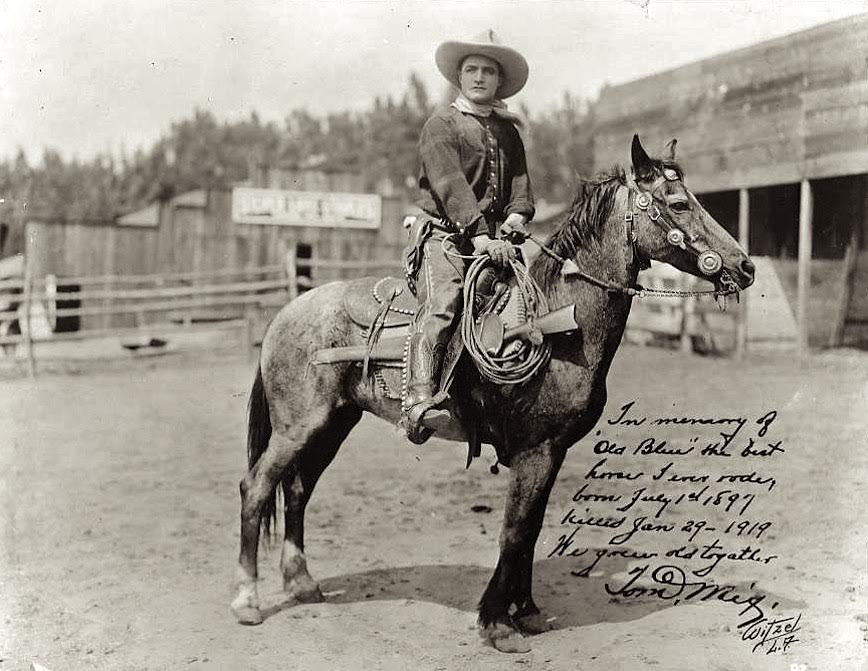
Tom Mix was the biggest cowboy film star of the 1920s. He appeared in 291 films, beginning his film career as a supporting cast member with Selig Polyscope. His equine co-star in 87 films, Old Blue, retired in 1917 and was replaced by Tony the Wonder Horse. Mix and Tony pulled up stakes and headed for the greener pastures of Fox Movietone City, which opened in 1928. No trace of Mixville remains today, except, theoretically, for the interred remains of Old Blue, who in 1919 broke a leg, was shot, and is reportedly buried beneath the surface parking lot of Silver Lake’s East West Bank. Winna Brown lived until 1967, when she died of cancer.
MABEL NORMAND STUDIO
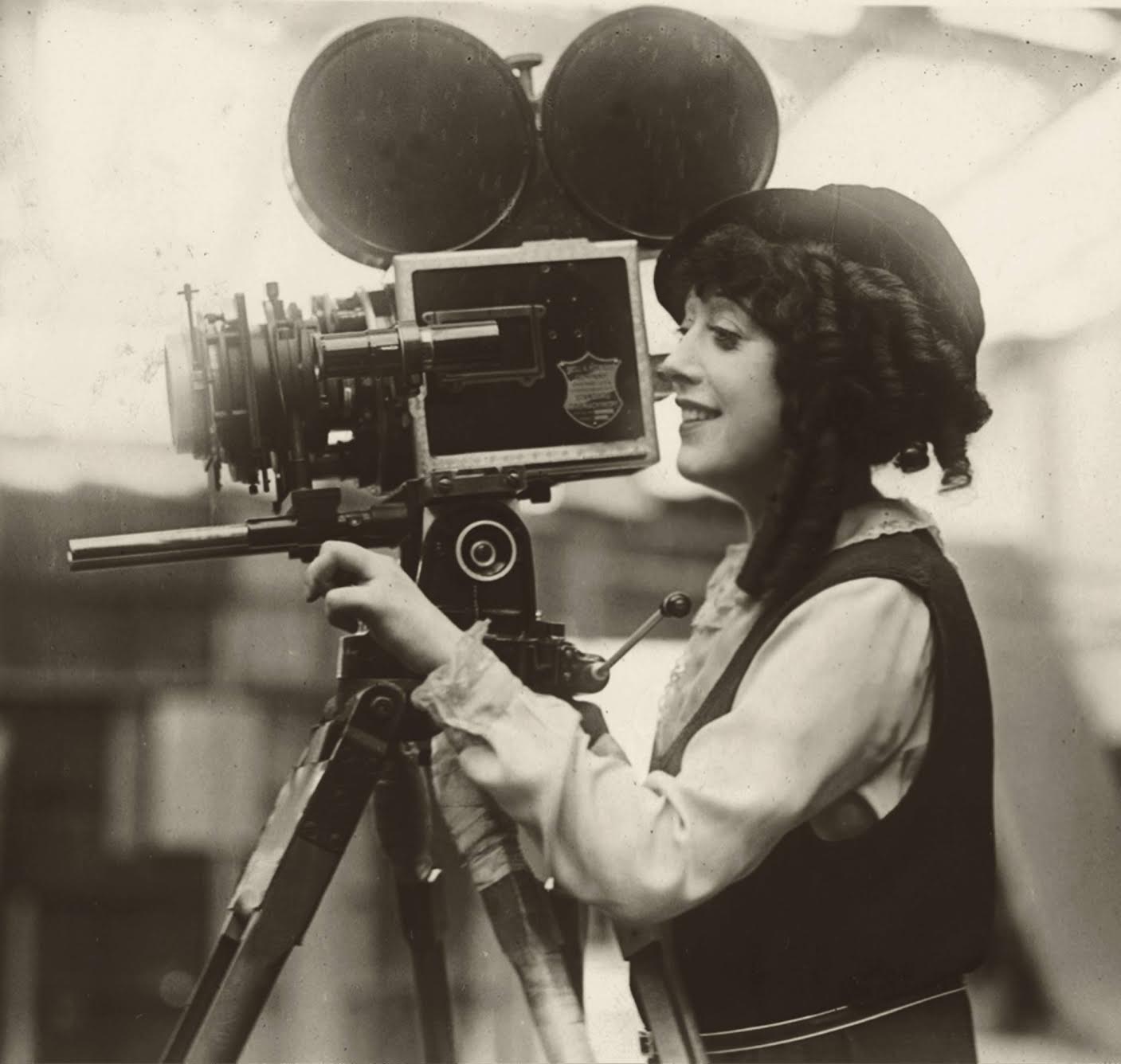
The only classic studio which does still stand in Silver Lake opened in 1916 as the Mabel Normand Feature Film Company Studio. Mabel Ethelreid Normand was born in Staten Island in 1892 and made her film acting debut in 1910. She also directed films, beginning with Mabel’s Strange Predicament (1914) – the film that introduced Charlie Chaplin’s Little Tramp. In 1918, she produced and starred in that year’s top grossing film, Mickey. That year, however, filmmaker Thomas H. Ince bought the Mabel Normand Studio and renamed it the William S. Hart Studio after the era’s other big cowboy star.
Normand’s flourishing career was quickly derailed by scandal. Normand was close friends with Motion Picture Directors Association president, William Desmond Taylor, who attempted to help her overcome her addiction to cocaine. In 1922, he was shot and killed in a murder that was never solved. Normand was interrogated, at the time, but ruled out as a suspect. Her reputation, however, suffered. The suffering compounded when, two years later, her chauffeur, Horace A. Greer, apparently shot another acquaintance of hers, oil tycoon Courtland Stark Dines. Once again, Desmond wasn’t implicated but suspicions swirled around her. In 1926, she attempted to rehabilitate her image and married actor Lew Cody – although, rather unconventionally, the newlyweds inhabited separate houses. In 1928, she was diagnosed with tuberculosis and hospitalized at Monrovia’s Pottenger Sanatorium where she died, in 1930, just 36 years old.
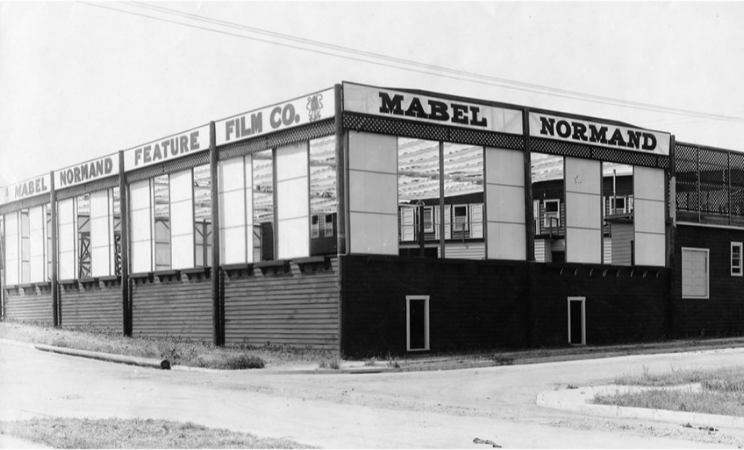
Normand’s studio went through several iterations even before she retired from film. By 1924, it was operating as the Edwin H. Flagg Studios. By 1927, it was home to the Charles and Fred M. Thompson Scenic Studios; later, Los Angeles Scenic Studios. By the ‘40s, it was engaged in the manufacture of scenery for San Francisco’s Curran Theatre and, by the ‘60s, the Los Angeles Civic Light Opera. By the ‘90s, however, it was known as the Mack Sennett Stage. Today, somewhat confusingly, it’s known as the Mack Sennett Studios.
WALT DISNEY STUDIOS
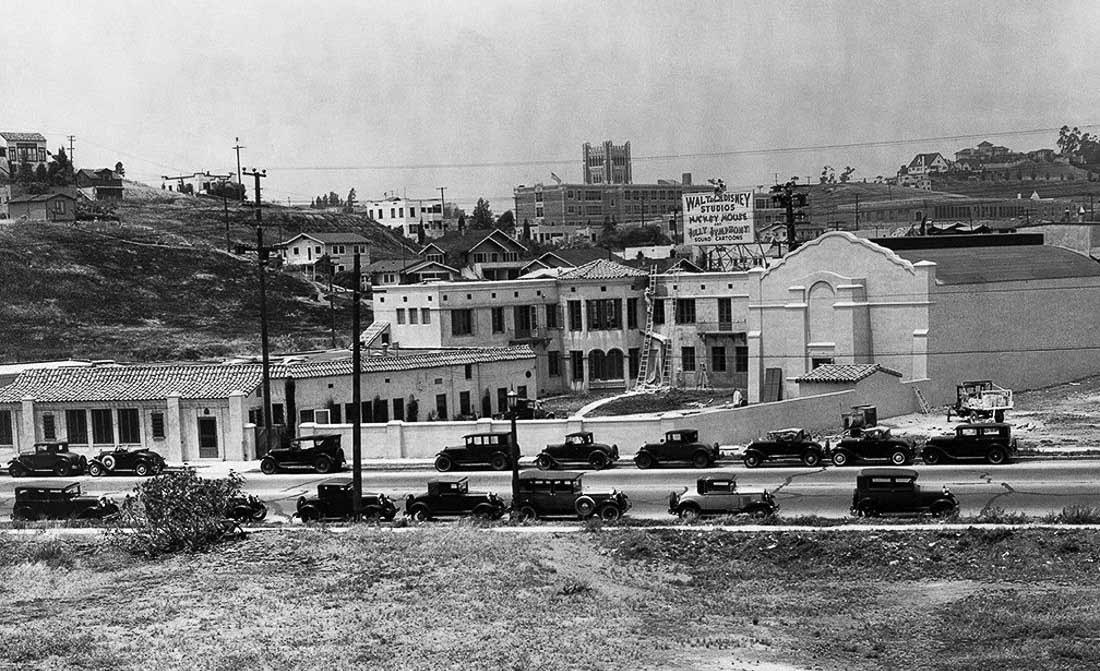
The last great film studio in the Silver Lake area was the original home to none other than Walt Disney Studios. Roy and Walt Disney moved their tiny Disney Brothers Cartoon Studio on Kingswell to a larger property on Hyperion Avenue in 1926, where it became Walt Disney Studios. Roy and Walt, meanwhile, moved into a pair of matching homes nearby on Lyric Avenue in 1928. It was at Disney’s Hyperion Studio that Ub Iwerks and Walt Disney created their most enduring creation, Mickey Mouse, in 1928. Snow White and the Seven Dwarfs, also created there, became the highest-grossing film of 1938. Disney moved to an even bigger facility in the San Fernando Valley in 1940. The historic studio, where Mickey Mouse was born and Snow White was created, was demolished in the autumn of 1966. This historical site’s replacement was a Mayfair Market and surface parking lot, both of which opened in 1969. It became a Gelson’s in 2003.
Support Eric Brightwell on Patreon

Eric Brightwell is an adventurer, essayist, rambler, explorer, cartographer, and guerrilla gardener who is always seeking paid writing, speaking, traveling, and art opportunities. He is not interested in generating advertorials, cranking out clickbait, or laboring away in a listicle mill “for exposure.”
Brightwell has written for Angels Walk LA, Amoeblog, Boom: A Journal of California, diaCRITICS, Hey Freelancer!, Hidden Los Angeles, and KCET Departures. His art has been featured by the American Institute of Architects, the Architecture & Design Museum, the Craft Contemporary, Form Follows Function, the Los Angeles County Store, Sidewalking: Coming to Terms With Los Angeles, Skid Row Housing Trust, the 1650 Gallery, and Abundant Housing LA.
Brightwell has been featured as subject and/or guest in The Los Angeles Times, VICE, Huffington Post, Los Angeles Magazine, LAist, CurbedLA, Office Hours Live, L.A. Untangled, Spectrum News, Eastsider LA, Boing Boing, Los Angeles, I’m Yours, Notebook on Cities and Culture, the Silver Lake History Collective, KCRW‘s Which Way, LA?, All Valley Everything, Hear in LA, KPCC‘s How to LA, at Emerson College, and at the University of Southern California. He is the co-host of the podcast, Nobody Drives in LA.
Brightwell has written a haiku-inspired guidebook, Los Angeles Neighborhoods — From Academy Hill to Zamperini Field and All Points Between, that he hopes to have published. If you’re a literary agent or publisher, please contact him.
You can follow him on Bluesky, Duolingo, Facebook, Goodreads, iNaturalist, Instagram, Letterboxd, Medium, Mubi, Threads, and TikTok.


 Eric Brightwell
The historical plaque at Mack Sennett Studio was originally installed at the wrong location from 1954 to 2007. It was at the site of the Selig Polyscope studio: https://www.hmdb.org/m.asp?m=120327
LikeLiked by 1 person
Hi — I’m curious as to the exact street location of the Mabel Normand building. Could you provide the specific street address of that building? I imagine it’s quite different now, but I do enjoy looking at the original (and the newer) buildings, to observe the “metamorphosis” they’ve endured. Thanks!
LikeLiked by 1 person
1215 Bates Avenue
LikeLike
This is a fascinating look at Silver Lake’s rich cinematic history, blending insight into early film production with the neighborhood’s evolving identity. It’s impressive how the article captures the unique charm of the area, making it a great resource for anyone interested in Los Angeles history or the origins of filmmaking in Southern California.
LikeLiked by 1 person
This is so interesting and I would love to know more. We live on the property of the old Mixville Ranch. Our neighbors let us know and just recently we found out! Reach out if you want to chat about it. Our place was built in 1935.
LikeLiked by 1 person
If you use Instagram, make sure to follow me (ericbrightwell_official) and/or the SilverLakeNC account. I’m going to lead a walk through Mixville and Silver Lake Heights in June… probably on 1 June in the evening a bit before sunset.
LikeLike