
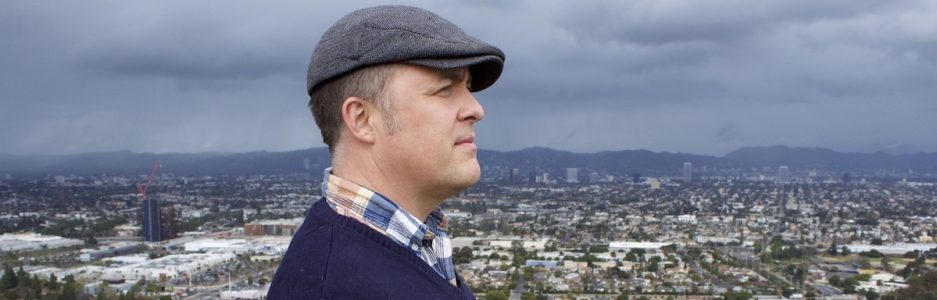
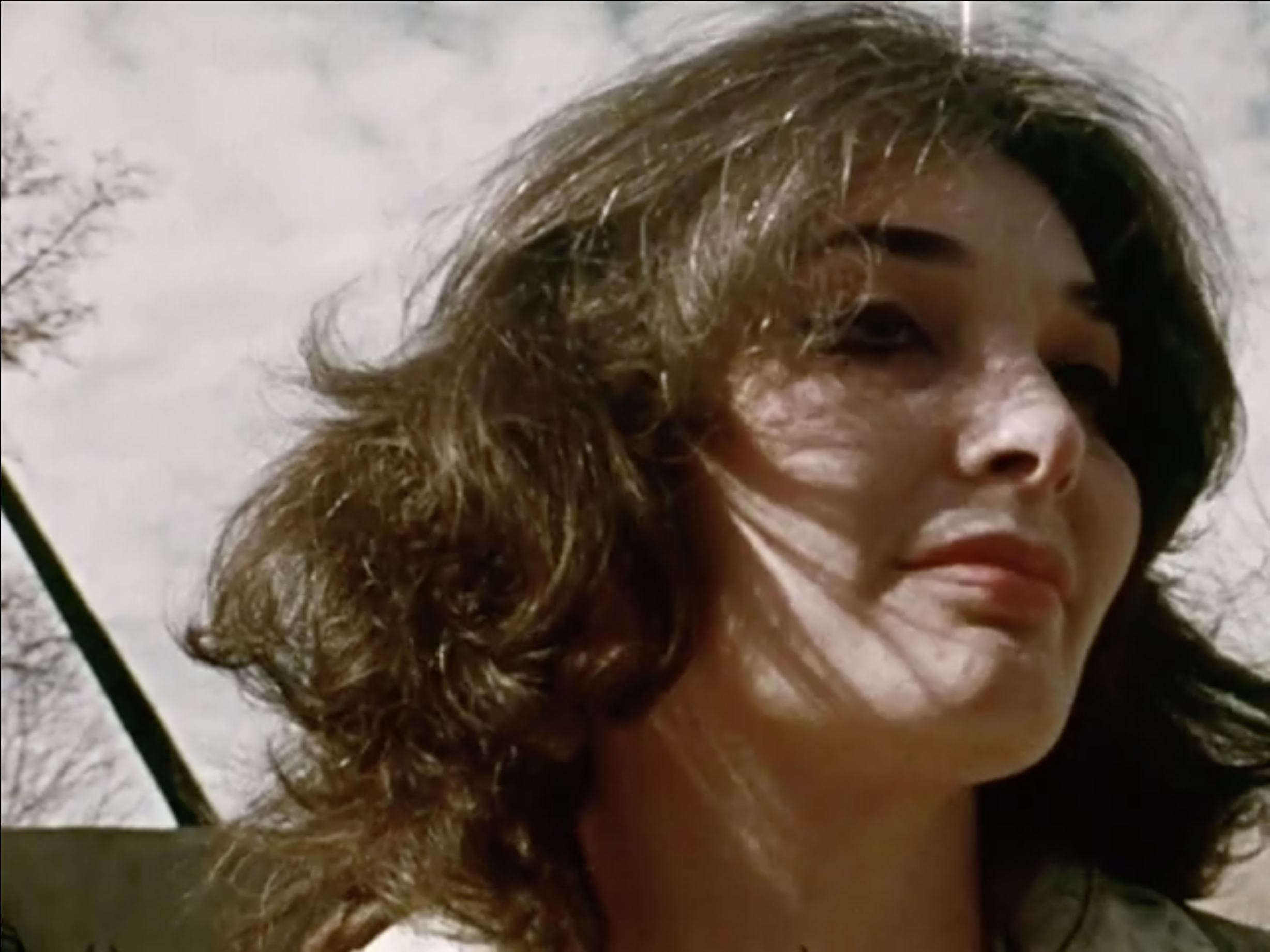
In August of this year, Thomas Lee, son of photographer Bud Lee, contacted me with an intriguing mystery about a colorful Angeleno. He’d come across my post, Los Angeles Gothic, and wondered whether I’d ever heard of anything about Princess Leda Amun-Ra and her colorful cohorts. His father had encountered them at a “castle” in the Hollywood Hills in 1969, when, accompanying writer Tom Burke, they were working on a piece for an issue of Esquire titled California Evil. It was all new to me, and, given my interests in Los Angeles history, psychedelia, and the occult; I was suitably intrigued.
❦❦❦
BACKGROUND — “JUST SAY YES”
I was in fourth grade when I became aware of the ‘60s. Obviously, I’d have reasoned that there’d been a decade preceding the one in which I was born – but I must’ve been about ten years old when I fell under the spell of the Beatles, the Byrds, and the Doors.
I’d spent much of my free time, leading up to fourth grade, reading about dinosaurs and Pleistocene megafauna. It was in fourth grade, however, that I finally turned my attention to my mother’s vinyl LPs. One that immediately resonated with me was Sgt. Pepper’s Lonely Hearts Club Band. Listening to it felt a bit like watching a film without a picture — or with a picture in my mind. My mother explained to me that it was inspired by lysergic acid diethylamide – LSD. Lucy-Sky-Diamonds. I made my own picture, a sort of collage, illustrating the lyrics as best I could to “Lucy in the Sky with Diamonds.” I remember, specifically, cutting out the silhouettes of taxis from a newspaper. The ‘60s were exotic to me as the worlds of saber-toothed cats and pterodactyls.
I didn’t like President Reagan. I wrote to him, in fourth grade, about the Sandinistas and the threat of nuclear war. I got a letter back, with the seal of the president, thanking me for the birthday wishes. The first lady popularized the slogan, “Just Say No.” I wanted to “just say yes.” I remember reading books in the library about drugs. They were pretty dated. As crack was hitting the streets and I was jotting down facts about angel dust (phencyclidine) bennies (amphetamine), blue heavens (amobarbital), purple hearts (Dexamyl), STP (2,5-Dimethoxy-4-methylamphetamine), and yellow jackets (Pentobarbital). I watched Ken Russell’s Altered States.
Our school teamed up with the sheriff’s department for an anti-drug program called Junior Deputies. I refused to pay the dollar or hear their anti-drug messages. I tried my best to act like I was on acid. My teacher removed me from class and placed me in an empty classroom where, unsupervised, I read from the encyclopedia and huffed from a tube of green glitter glue vainly hoping to receive De Quinceyian visions.
❦❦❦
FATAL VISION
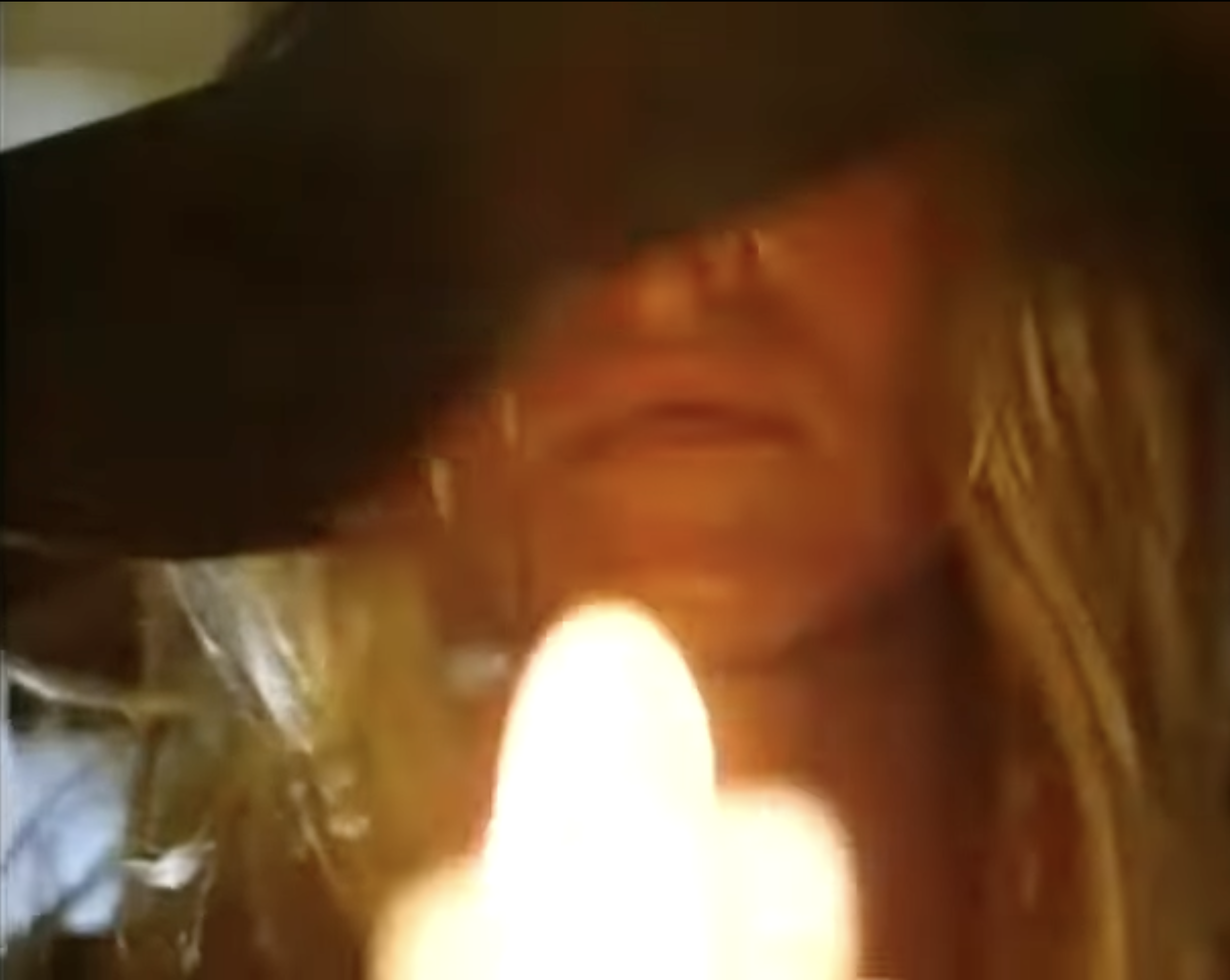
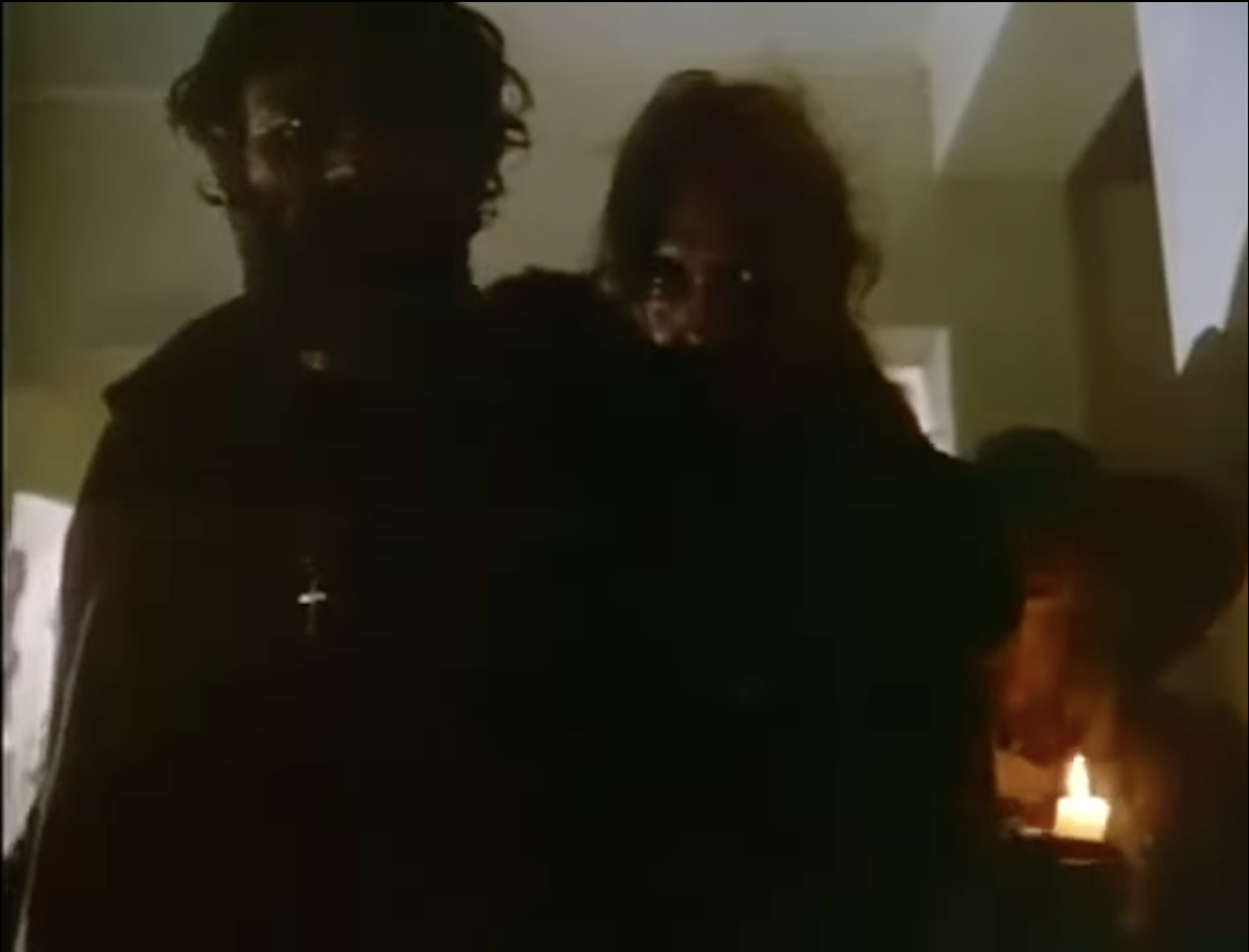
I was still in fourth grade when a made-for-television mini-series aired, called Fatal Vision. It was about a Green Beret captain and surgeon, Jeffrey MacDonald, whose wife and children were murdered in February 1970. MacDonald claimed that the perpetrators had been a hippie cult. Someone wrote “PIG” on the wall in blood. One of the hippies, holding a candle, chanted “Kill the pigs. Acid is groovy.” It scared the crap out of me and led me to awareness of Charles Manson and the grizzly murders he orchestrated in 1969. After that, I didn’t look at hippies quite the same way.
❦❦❦
I love a good Los Angeles mystery. Of course, nearly every local historian has wondered who killed the Black Dahlia. But there are other sorts of mysteries, too, like what happened to squeaky clean Craig Smith that accounted for his transformation into talented but creepy acid folkster, Maitreya Kali. Mike Stax’s 2016 book, Swim Through the Darkness: My Search for Craig Smith and the Mystery of Maitreya Kali, is, of course, on my “to-read” list. I thought that Gary Baum’s 2017 piece, “The Mystery of L.A. Billboard Diva Angelyne’s Real Identity Is Finally Solved” was pretty fascinating – although part of me wishes that Angelyne’s origins remained mysterious. Still, Thomas Lee’s inquiry got me wondering about the identities of Princess Leda Amun-Ra, King Amun-Ra, Leda’s friend with the blonde afro, Leda’s slave, and the rest of the cast of characters that was so big it seemed that someone had to remember something.
❦❦❦
MANSON MURDERS AND CALIFORNIA EVIL
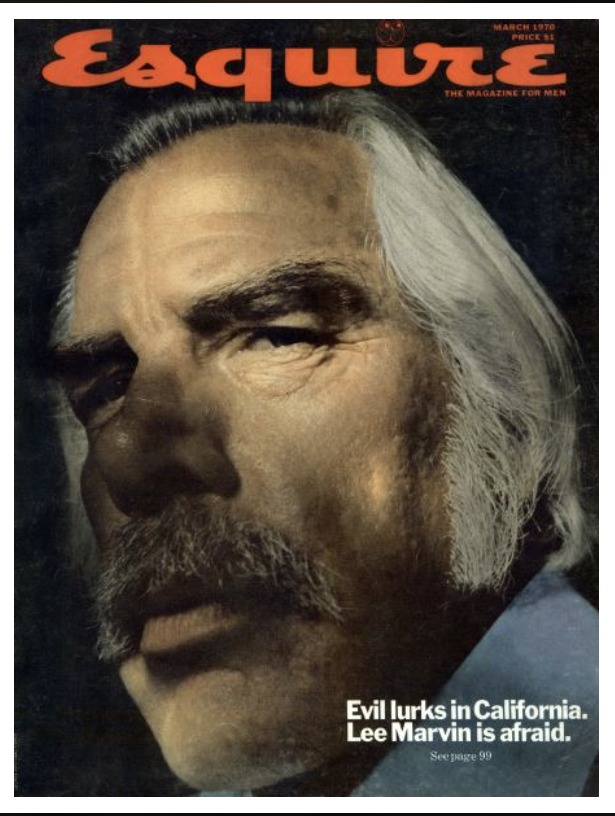
The impetus for Esquire’s California Evil edition was two grizzly ritualistic murders. On the night of 8 August/morning of 9 August 1969; Abigail Folger, Jay Sebring, Sharon Tate, Steven Parent, and Wojciech Frykowski were all gruesomely murdered in the Benedict Canyon home of Roman Polanksi and his wife, Tate. Like Mia Farrow‘s character in Polanksi’s 1968 film, Rosemary‘s Baby, she was pregnant. Tate’s blood was used to write the word, “PIG” on the front door. The following night; Leno and Rosemary LaBianca were murdered in their Los Feliz home. There was more bloody writing: “DEATH TO PIGS, “RISE.” and “HEALTER SKELTER” [sic] – the latter an apparent reference to a Beatles song released the previous year.
In her book, It Wasn’t Pretty, Folks, But Didn’t We Have Fun? Esquire in the Sixties, Carol Polsgrove recounts the genesis of California Evil.
In late 1969, the editors came up with an idea that would capture the feeling that these were latter days. The idea emerged when the editors went on a Bermuda cruise in October, a welcome break from a major renovation of the offices. The editors had approached the cruise as a lark—managing editor Don Erickson, in a memo, called it the Ding-Dong School. Hayes was headmaster, Erickson dean of women. Editors met every few days to talk business—that is, all editors except Alice Glaser, who was withdrawing more and more from her fellow editors and had not come along. Talking about ideas for the magazine, they began to consider California, which had come to seem an especially troubled place. In early August, Sharon Tate and four companions had been murdered in Los Angeles in what appeared to be a ritual killing; a couple named Leno and Rosemary LaBianca died in similar circumstances. Spending time in Cali- fornia, Hedley had observed that someone on speed in New York would just be a fast-talking character; in California you got the impression he might be a mass murderer. There was a strange edge to California life. Hedley thought it was sex and drugs, but the others said that was simplistic—they would have to investigate.
Due to the seemingly ritualistic nature of the murders, Esquire’s associate editor Jill Goldstein went to Los Angeles in search of witches and warlocks. Photographer Charles T. “Bud” Lee accompanied and writer Tom Burke were sent to profile Princess Leda Amun-Ra for a piece published as “Princess Leda’s Castle in the Air.” It was on or around 22 October 1969.
Burke first mentions his subject to a man named Lonny who was selling copies of The Bible on the Sunset Strip.
“I ask if he knows of a local woman, the Princess, Princess Leda Amun Ra.
“Oh, wow. Her. Take care man. Wear a cross…”
❦❦❦
LOOKING FOR LEDA — THE CLIMAX
Burke, Lee, and their companion, an unnamed Angeleno, next head over to Climax – a club where Princess Leda is known to dance.
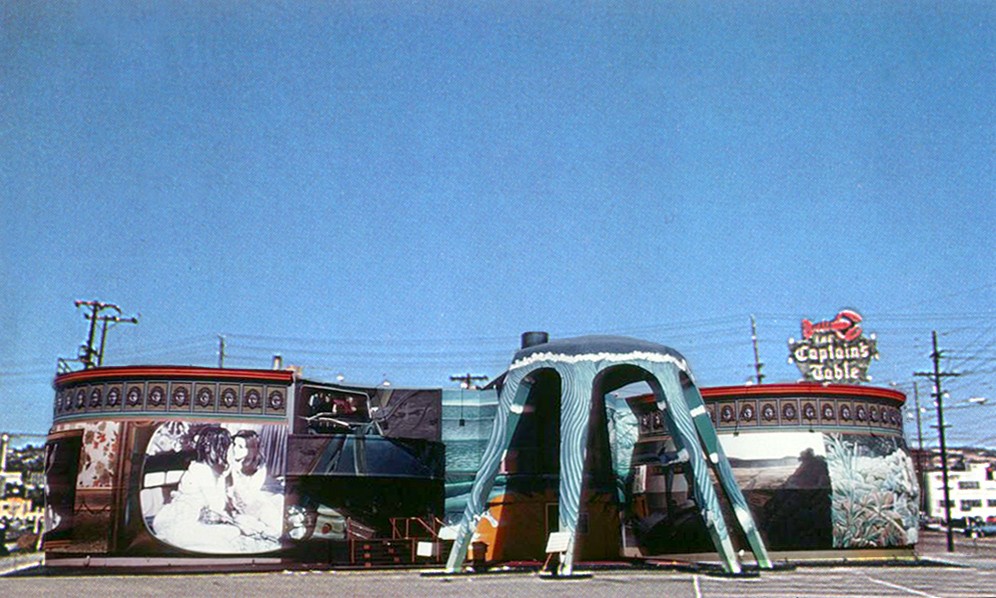
The Climax was located in an odd (some would say, ugly) building at 333 South La Cienega, in Beverly Hills’s La Cienega Park neighborhood. Its architect was also its original owner, Lee Linton. When he opened it in 1962, he named it the Millionaire Club. Inside there were five clubs-within-clubs – each with their own themes and kitschy decor. One, the Speak of the Devil Room, had a 1920/’30s Jazz Age theme, with fake stalactites and a bust of Satan.
The Millionaire Club went through several different iterations before Mike Hewitt opened the Climax there in the spring of 1969. One of the investors was said to have been Mama Cass. It was a private after hours club, open from midnight until 5:00 in the morning. The initiation fee was $10. Beginning in 1970, it was opened to the public on Sundays. Old horror films were screened and the vibe seems to have been psychedelic goth. The members of The Cramps would’ve probably loved it.
The exterior of the Climax’s formerly blank walls were decorated with a 9,000 square foot mural depicting the journey of Enlightenment of “the Siddhartha of Beverly Hills.” The artists were Jim Frazen, Leonard Koren, Terry Schoonhoven, and Vic Henderson – who formed a collective known as the L.A. Fine Arts Squad. It can be seen in the 1969 film, Clay Pigeons and a 1970 made-for-television special – more on that later. By 1972, it was known as The Climax II. The Climax II closed around August of that year and became Osko’s. Beverly Hills Siddartha was painted over.
❦❦❦
INTRODUCING THE PRINCESS
It is at the Climax that Burke finally first encounters the Princess, where she is dancing. Burke writes “Her dance is the definition of lust. She is Salome undulating with the severed head. She is the Eumenides, and Theda Bara; she is totally magnificent.” Princess Leda seems schooled in the same traditions as Burke of Classics, Symbolism, Decadence, and Hollywood Vamps. She later claims to have, in earlier lives, been both Nephthys – the Egyptian god of death – and fin de siècle stage actress, Sarah Bernhardt.
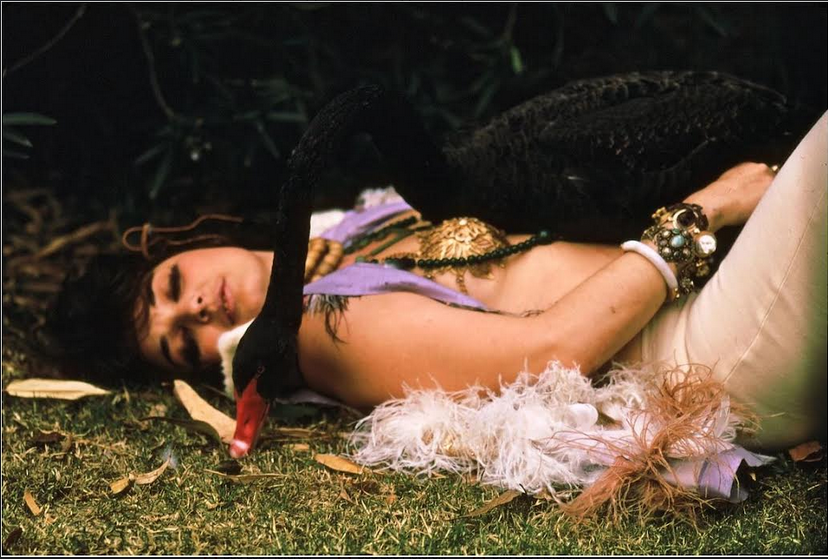
It’s fairly safe to say that Leda Amun-Ra was not the acid witch’s birth name. Leda is a figure from Greek religion; an Aetolian princess known for her beautiful black hair and pale white skin. She was seduced by Zeus in the form of a swan and then laid eggs from which hatched Castor, Clytemnestra, Helen, and Pollux. Amun-Ra was the chief god of the Egyptian religion – a combination of two earlier deities, god of the air, Amun, and god of the sun, Ra.
Burke continues:
My companion, a native, knows of her; yes, everyone knows of her. In subterranean Hollywood, she is the acid goddess, the Princess Leda Amun-Ra, a legend, supposedly a witch. She lives in a sort of castle somewhere in the hills. Her chariot is said to be a golden Jaguar. Possibly she is thirty, but in daylight, she looks twenty-one.
GARRISON AND CREW
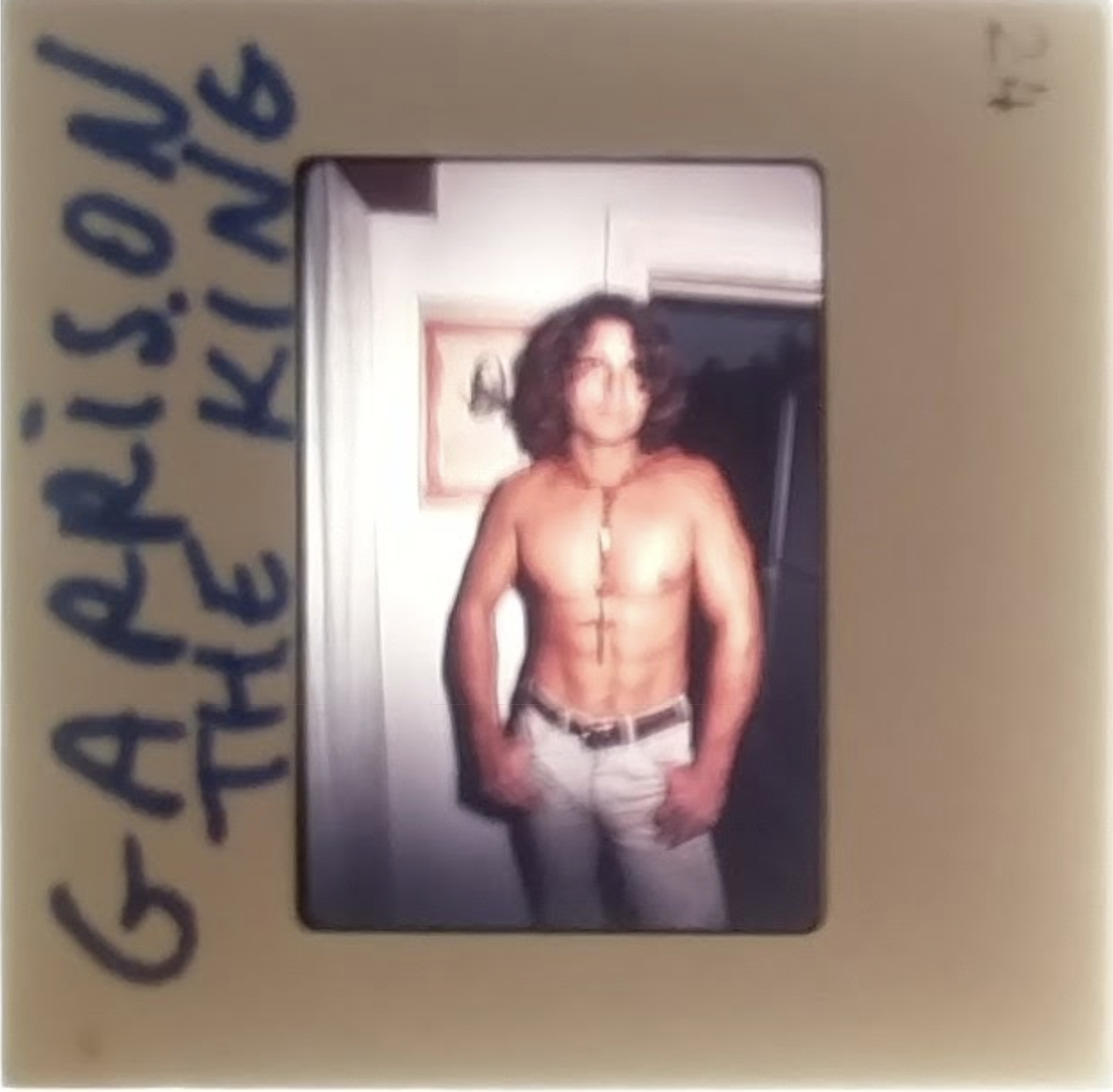
Next, Burke introduces the Princess’s king. Sitting at a table “in red tights and swashbuckler boots, with a sword in a scabbard at his hip, and a dueling shirt open to expose his carefully defined pectoral muscles, is her King, the Young King of her mythic world.” He later gives Garrison. He mentions that he’s had bit parts in film and television. It is he that supposedly owns a gold Jaguar – and it supposedly has a television in the dashboard. He also owns a horse that he rides every morning and had short hair, a nondescript job before he turned on and left his partner and their son. He also claims to be an astrologist who “commands thousand-dollar fees for a basic reading.”
“Garrison” is not a particularly common given name – but a search on IMDB has led both Lee and I nowhere. It would be supremely amusing, though, if it turned out that the acid king, with his chiseled physique, later went on to host Prairie Home Companion on public radio.
THE CASTLE
After they all leave The Climax, they head to Leda’s castle shortly after midnight. The castle is described as:
sort of a mosque, white stone, not really large; but it is so perfectly placed upon its hill that it appears to float about Hollywood, tenuously anchored: a house in the Casbah as it is imagined by persons who have read about, but not actually visited, Tangier. The narrow windows are covered with rococo shutters, hand-carved. There is no moat, but there is a high cement wall and an iron gate. Behind the house is a dank, foul-smelling garden, choked with untended tropical trees, guarded by a stone Satan’s head with moss hanging from jowls and eye sockets.
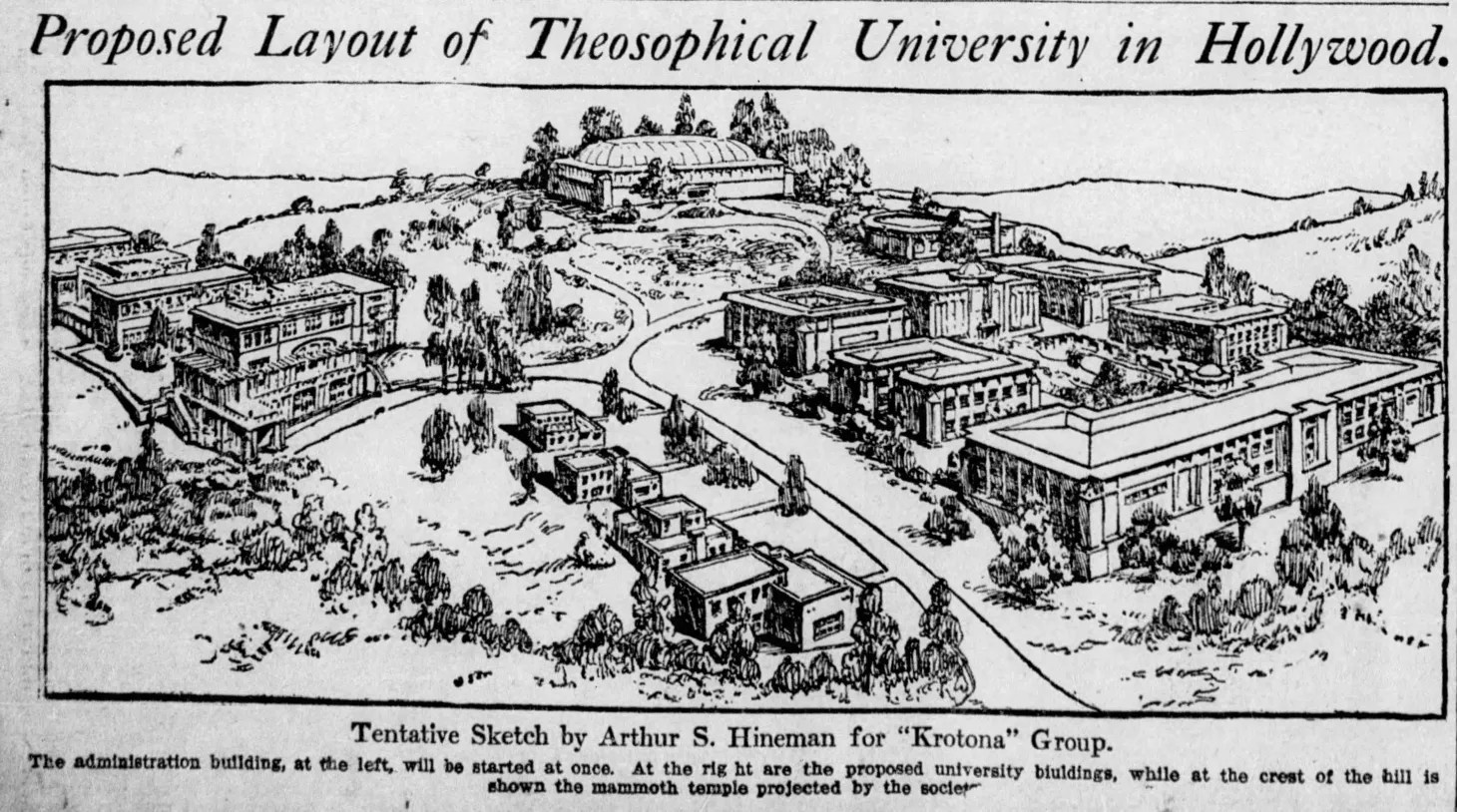
It sounds to me like a Moorish Revival home, of which there are probably about two dozen in that area. When Burke mentions that there is no smoking or no alcohol, however, I wonder if the castle was part of the Krotona Colony. The Krotona Colony was founded by a group of Theosophists who, in 1919, began construction of their mostly-Moorish Revival colony in the Hollywood Hills. They prohibited smoking tobacco and drinking alcohol. In 1924, they left – heading over to Ojai. The colony was turned into private residences in, I believe, the 1940s. Burke mentions that there is a small pool and garden. Princess Leda refers to the dungeon beneath her castle. Basements are exceedingly uncommon in Los Angeles – but the colony’s Grand Temple of the Rosy Cross, also a private residence, has one.
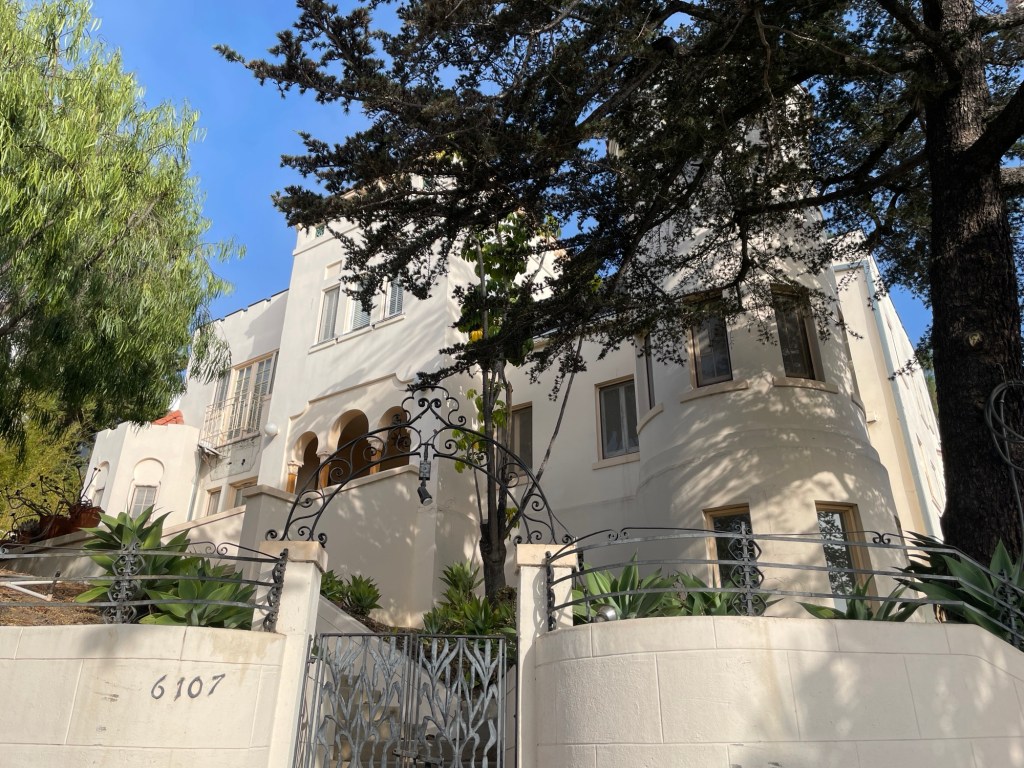
Lee thinks that the castle is a different house, nearby. It was, apparently, associated with the Krotona Colony and was designed by Theosophist and architect, Marie Russak Hotchener. His information is based, at least in part, on information provided by Hollywood Hills historian, Amanda Karkoutly, of Cahuenga Past. Apparently, it last sold on 4 November 1975. Since I was on that street a couple of days ago, I snapped a picture. It certainly looks like a Moorish Revival castle. I’m not sharing the address, though, to spare the owners any unwanted attention.
When Burke, Lee, and their companion enter the castle, they encounter all sorts of appropriately Decadent things, including rotting flowers, animal skins, candles, and creepy dolls – everything, essentially, except for des Esseintes’s jewel-encrusted tortoise. It is remarked, later, that Princess Leda sings a wordless melody over a Stravinsky record in a “pleasant contralto.”
The doorman is described as having broken teeth and wearing a “white crepe jumpsuit… unzipped from the neck to fly. On his hairless chest is tattooed, in red, “TRANSPLANT THIS HEART.”
There are “at least a dozen” other guests
… a tall, pathetically thin girl, nearly nude, with a helmet of milkweed-pod hair; a dark lovely girl who chatters incessantly to herself; a black boy in green leather pants, who wears two chains, one holding a silver pentagram, or magus medallion, the other holding a silver crucifix on which an agonized Christ hangs nailed upside down.”
Burke also notes that he has a “perfect silver star for a left front molar.”
Los Angeles Times, 29 September 1912.
❦❦❦
THE CEREMONY IS ABOUT TO BEGIN
The craziest part of Burke’s account follows, after they enter the Princess’s boudoir.
It cannot be happening, it cannot be taking place. The boudoir, painted predominantly black, is large, but the bed is almost too large for it – wide as two Y.W.C.A. rooms side by side, canopied in black bombazine. In the bed, the Princess Leda Amun Ra, doe naked, her skin dusted with pumice, or volcanic ash. She lies on her back, her legs splayed. Her thighs are firm as a girl’s. Between her thighs is a full-grown black swan, its neck arched like a cobra’s, its yellow eyes fixed, amazed. It makes one hard, comic noise, like an echo from a rain forest.”
‘I will conceive,’ the Princess shouts, heaving joyously. Half a dozen people have come into the room by now. No one else makes a sound. No one laughs; no one even smiles.
BUD LEE’S BAD TRIP
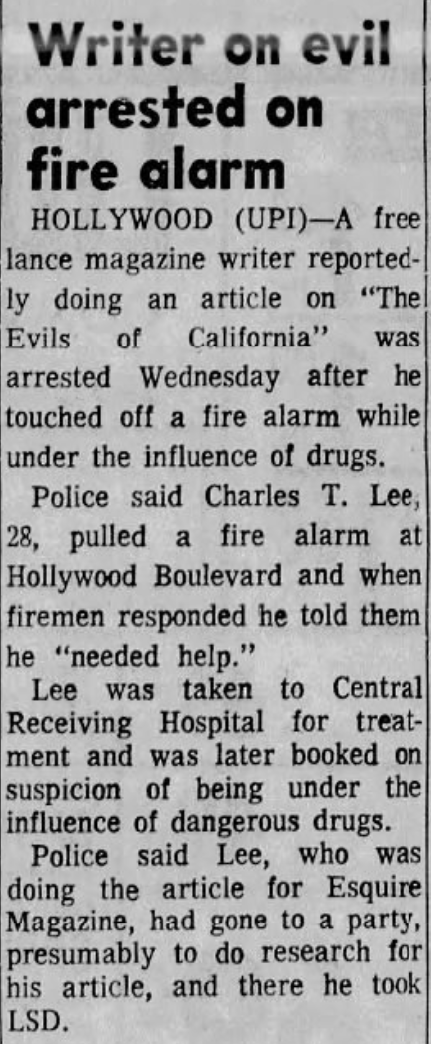
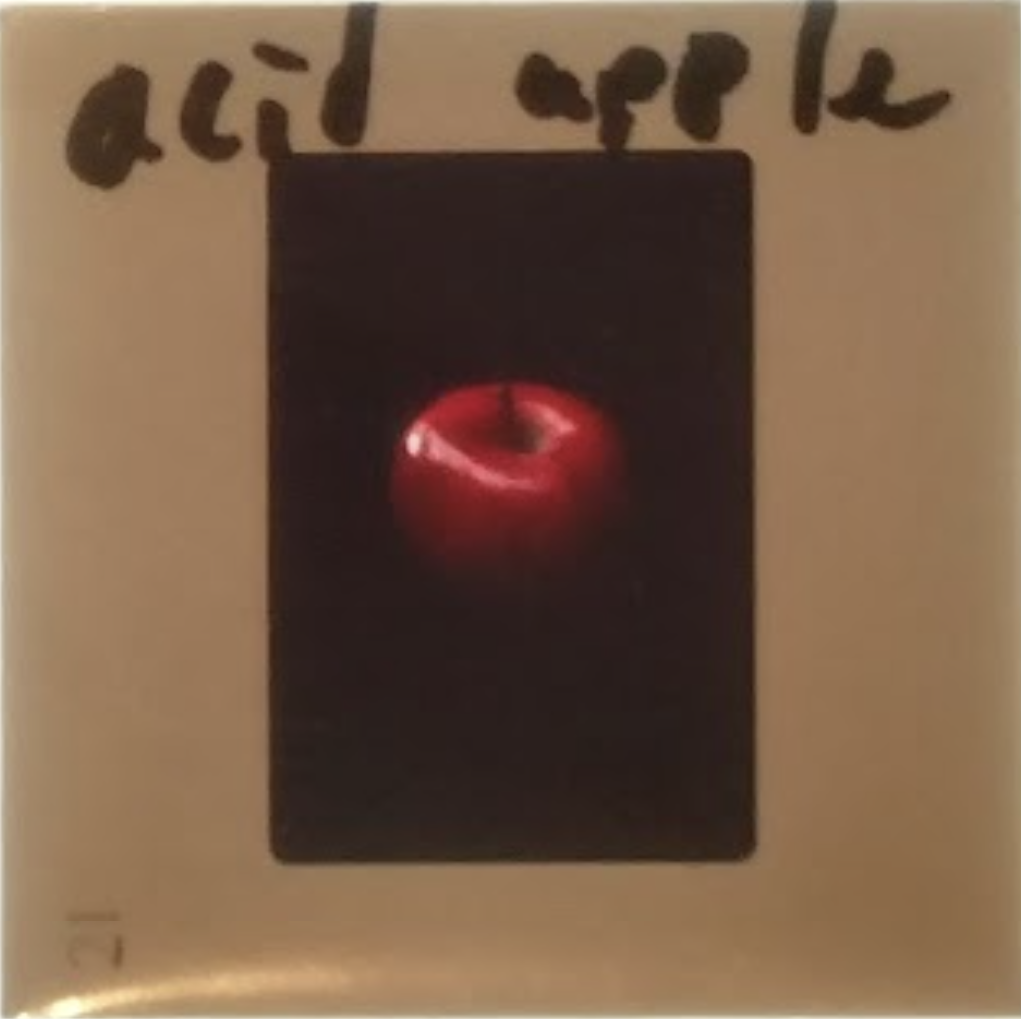
At the temple, Bud Lee ingested an acid-laced apple. When his trip kicked in, he freaked out. Down in the flats of Hollywood, he tried to wave down motorists for help but thought that he saw blood coming out of their hands. He pulled a fire alarm at Cahuenga and Hollywood and told the dispatchers that he needed help. He thought that the responding fire fighters were devils. He was taken to the “psycho ward” of the Central Receiving Hospital for observation. According to his own account, he later sought care and was prescribed Chlorpromazine and Trifluoperazine. The effects of the LSD lingered with him for some time. Later, sent to Snake River for a tourist piece for Holiday magazine, the stained glass windows of the hotel in which he stayed seemed to turn into flaming skulls.
DOWN TO THE SOURCE
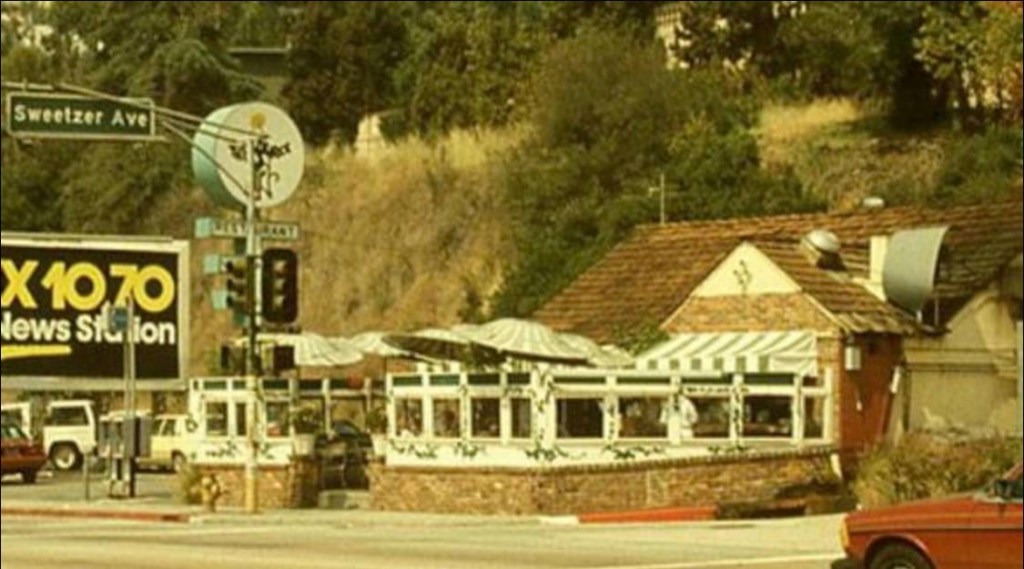
Back in the flats below, at The Source, Burke later chats with an unnamed “singer of some note” who asks not to be identified. The Source was a famed vegetarian restaurant that was founded in 1969 by Father Yod (né James Edward Baker). Father Yod had his own cult, the Source Family, and led a psychedelic band, Ya Ho Wha 13, the ranks of which would later include Sky Saxon of The Seeds. Yod had fourteen wives. One, the restaurant’s chef, went by the name “Venus Aquarian.” In 1974, the Source Family relocated to Hawaii, where, one year later, Father Yod plunged to his death attempting to hang glide.
The restaurant appeared in a scene of 1970’s Alex in Wonderland. In 1977’s Annie Hall, Woody Allen’s character places an order, there, for alfalfa sprouts and mashed yeast.
The singer tells Burke, over a vegetarian meal, “Swan or no swan, these people, man, are dangerous.” and adds “I know the scene at the temple. I don’t go there anymore, at least not alone.” She then tells Burke that if he must “meet a magus,” she knows “somebody who knows Samson de Brier.”
SAMSON DE BRIER – LA PERVERSA
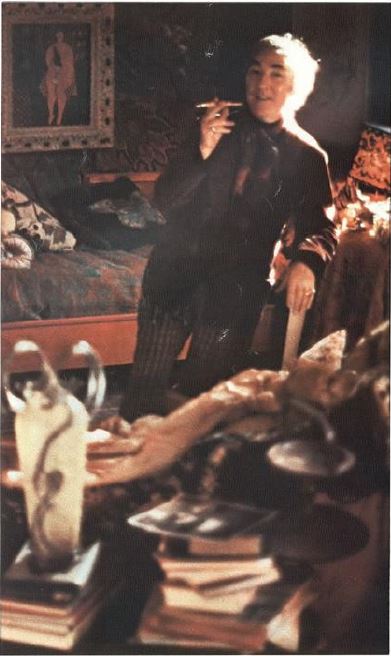
The trio next head to the home of Samson De Brier. Known to his friends as “La Perversa,” De Brier was a self-described warlock who, by his account, had been born in China in 1909. He was most likely born, however, in St. Paul… ten years earlier. He appeared in about two-dozen silent films – most notably, Nazimova’s Salomé.
Beginning in the 1950s, he began regularly hosting a salon at his place on Barton Avenue, where reputed guests included Anaïs Nin, Anton LaVey, Cameron, Curtis Harrington, Dennis Hopper, Jack Nicholson, Jack Parsons, James Dean, Kenneth Anger, Marlon Brando, Richard Burton, Sally Kellerman, Steve McQueen, Vampira, and others. In 1954, he starred in Anger’s Inauguration of the Pleasure Dome, a film inspired by a Halloween party called “Come as your Madness” that had been hosted by artist and Thelema practitioner, Renate Druks.
De Brier seems to want to show off his memorabilia and connections to André Gide and James Dean. Bud Lee photographed him. Burke broaches the subject of Princess Leda, stating, “You’re acquainted with the Princess Leda Amun…”
He’s interrupted by De Brier, who exclaims, “Oh, Lord! You’re seeing her? Well, I mean, I wouldn’t want to be quoted as saying anything against her. I admire her… daring. But, you see, you’ve got to understand the difference between true witches, and people who take drugs.”
❦❦❦
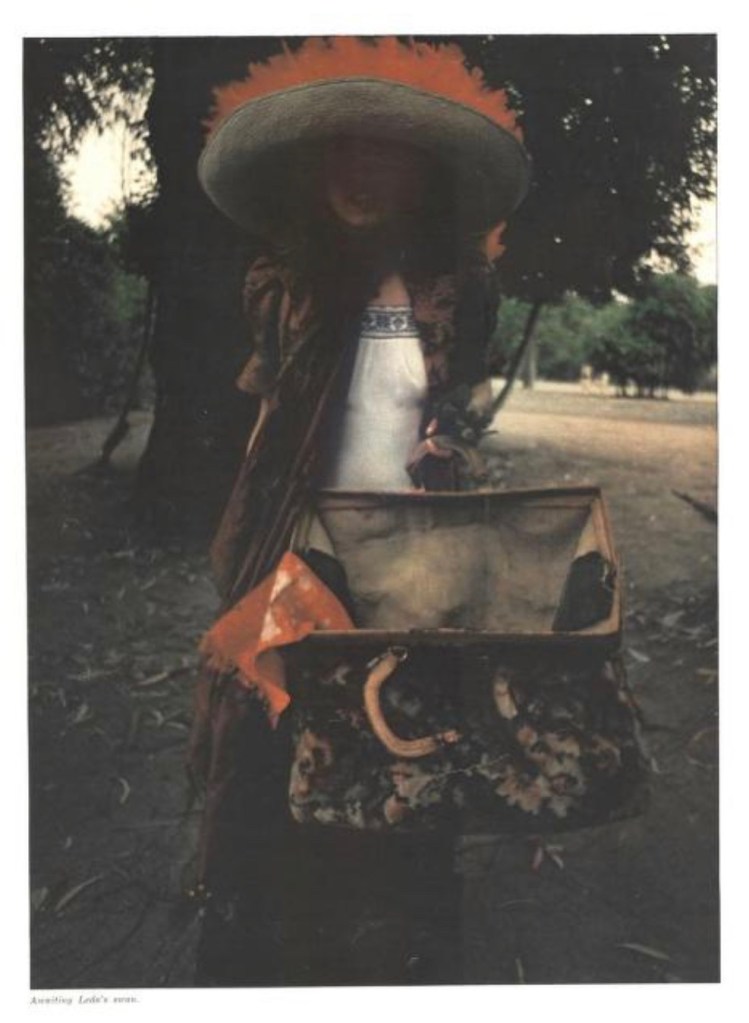
The trio return to the castle/temple and find that Leda’s black swan has died. Princess Leda tells them that it was not sacrificed – but that she must soon sacrifice a black swan – and that she has already sacrificed a peacock, the feathers and blood of which are sacred to her.
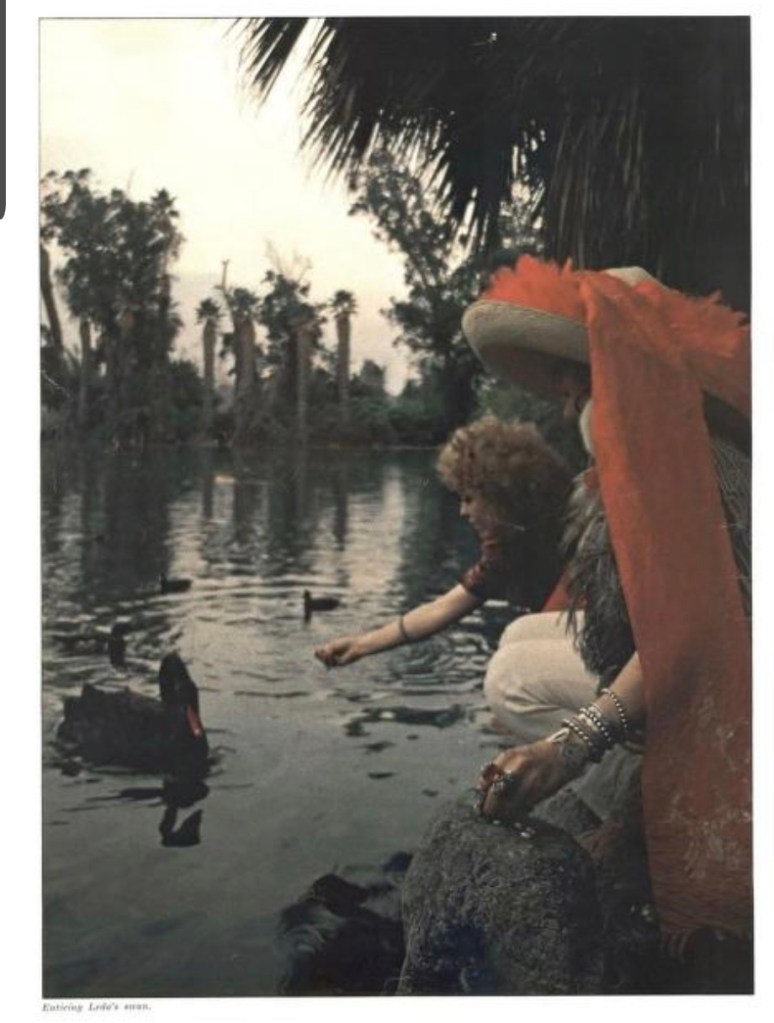
Princess Leda then enlists Burke and Lee – who are joined by the milk-pod afro girl – in a trip to the Los Angeles County Arboretum and Botanic Garden. There, Leda abducts a black swan and takes more acid as the group make their getaway.
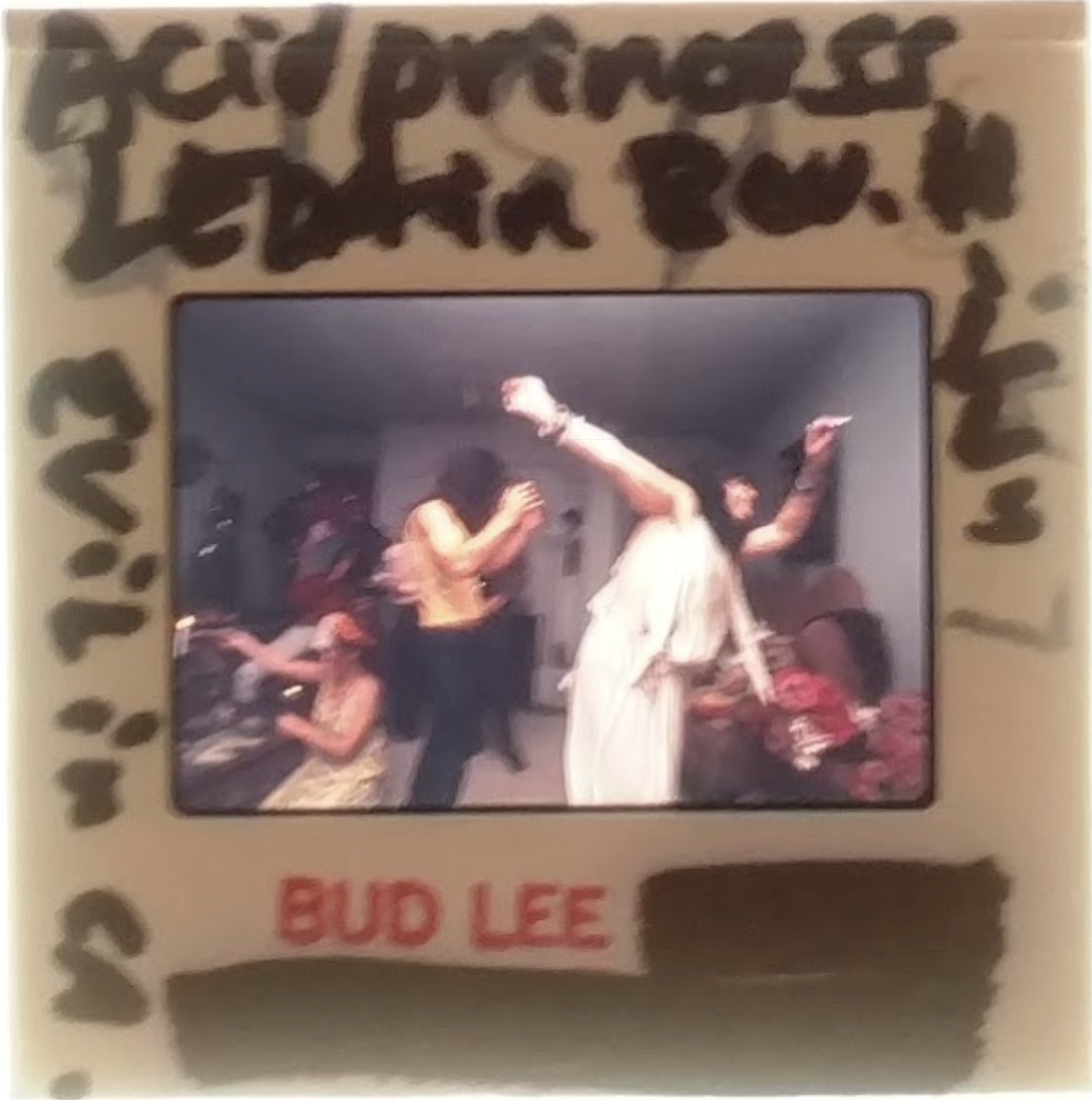
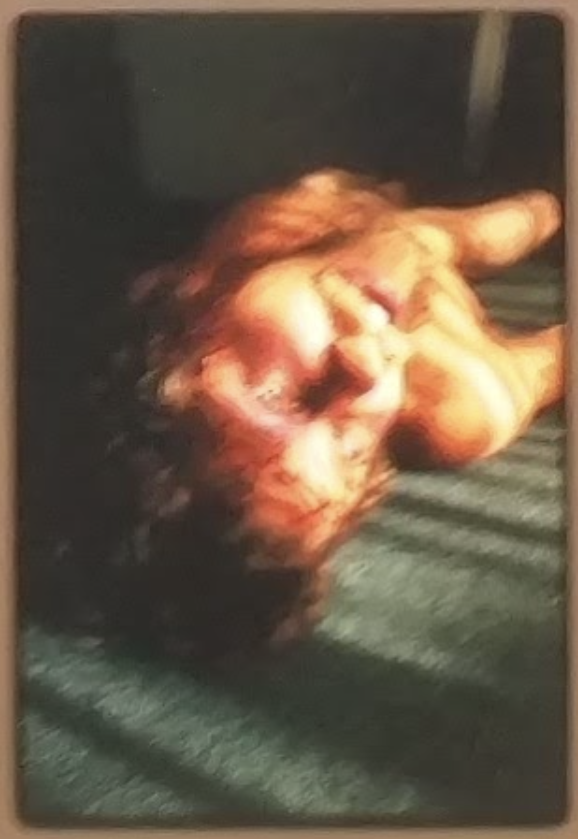
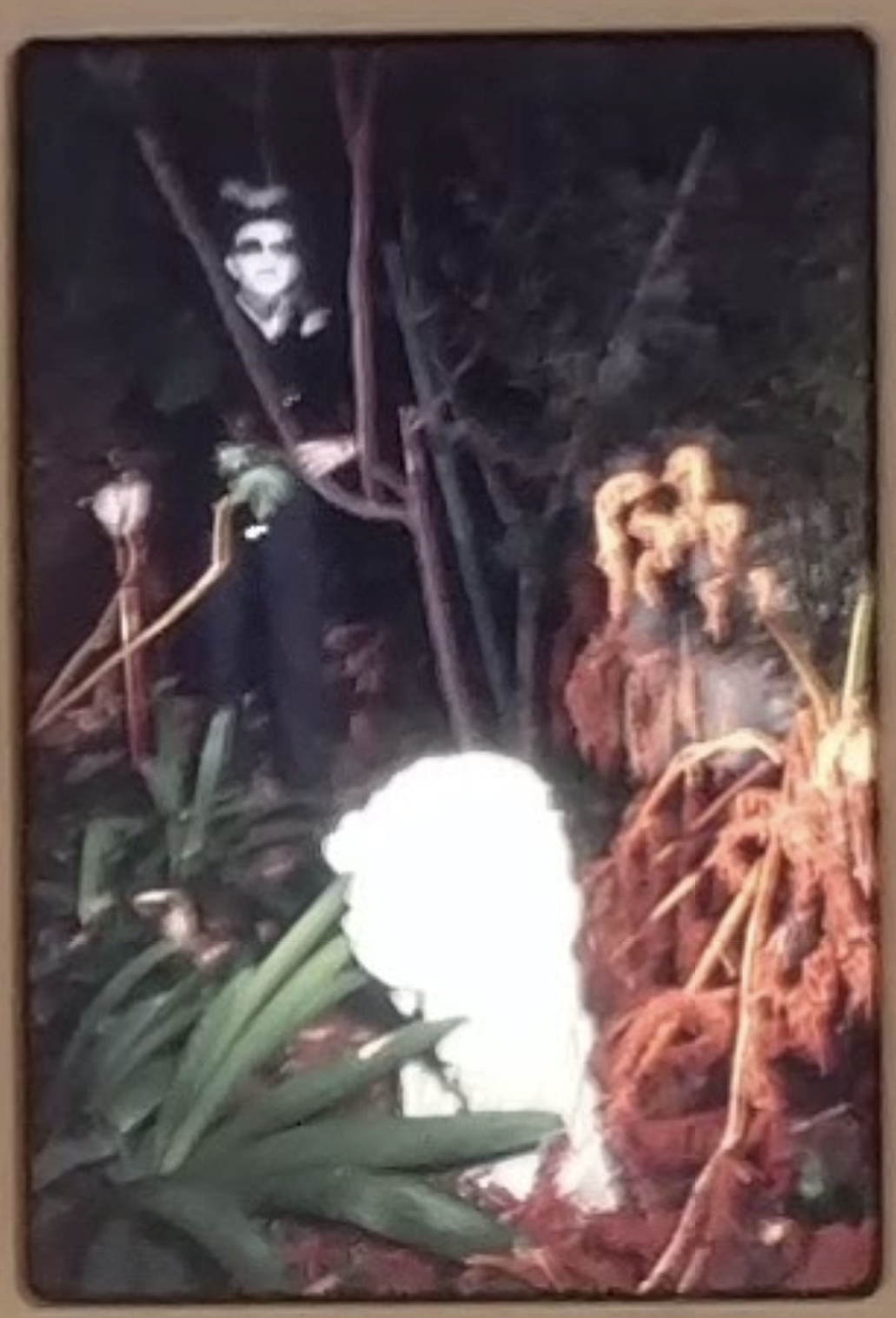
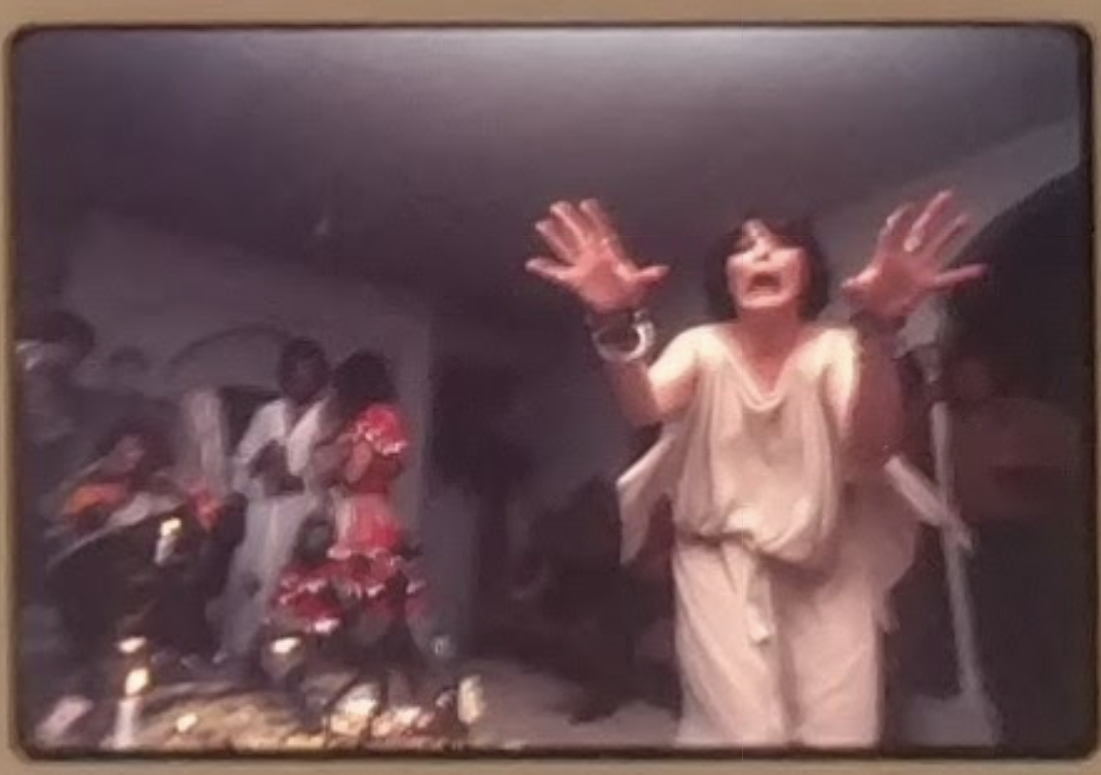
Sildes from Leda’s Castle, Bud Lee (Courtesy of Thomas Lee)
When Esquire’s associated editor reviews Lee’s slides, it turns out that many are totally dark or out of focus. He and Burke, therefore, returned to the castle. It must’ve been on or close to 24 October, because Burke notes that it was the night before the full moon, which, a blood moon and the Hunter’s Moon, arose that year on the 25th. At the castle, they spy Leda’s new swan swimming in the pool.
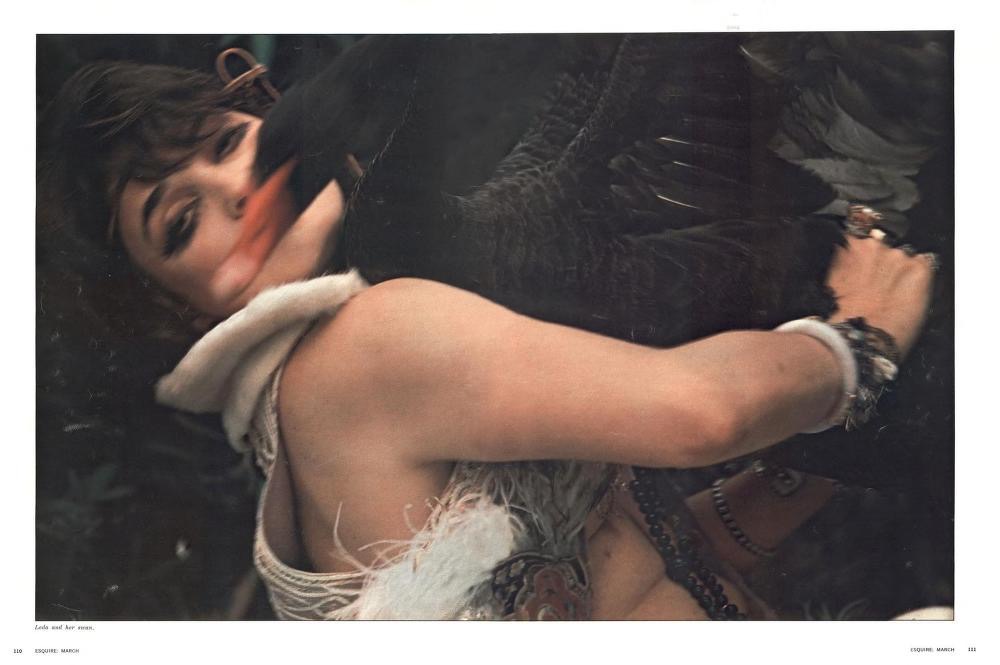
Princess Leda recounts to Burke tthat Sharon Tate had previously visited the temple, just once, and had been brought there by “the worst degenerate homicidal homosexual in the county.” Princess Leda recounts, though, that Tate was sweet and had told her over and over that she’d come back to the temple in another life. The day she was killed, Princess Leda claimed to have woken early in serious pain. She says that she will later attempt to communicate with Tate through her mirror.
At the temple, Burke and Lee this time encounter a new figure – a “boy of perhaps 20 with, with Christlike hair, beard and eyes, naked except for a loincloth and a crown of braided rose thorns” tied to a stone bench. There are more revelers. The evening ends after Princess Leda “drops the knife to her feet, slams the garden door, and runs back through the temple and up the stairs, giggling and sobbing.”
OCCULT GOES MAINSTREAM
The occult has, obviously, a long history and Los Angeles has had a reputation for openness to such things for almost as long as it’s been a city. The Los Angeles Daily News began publishing horoscopes at least as early as the 1860s. The early 20th century witnessed the dawn of the Semi-Tropic Spiritualists (and others), who were popular but ruffled more than a few featuers.. By the 1960s, though, the occult it seems to have really gone mainstream. It was the 1960s, after all, that were frequently referred to as the Age of Aquarius.
In Rosemary’s Baby, actress Mia Farrow portrays a pregnant woman groomed by a Satanic cult, was a mainstream hit – grossing ten times its budget. On 21 July 1968, Los Angeles County Supervisor Ernest E. Debs named Mount Washington resident, Louise Huebner, Los Angeles’s Official Witch. By 1969, Hollywood tourists from Middle America could check out places like the Magical Mystery Museum, where Arch-Druid Morloch, Bishop Family of the Ancient Mind (né Euguene J. Gold), hosted Black Masses in which congregants were naked. They could buy love charms and Satanic merchandise from the Timeless Occult Shop right on the Sunset Strip. By 1970, they might reasonably expect to see Church of Satan founder Anton LaVey as a guest on a mainstream television chat show.
WEIRD WORLD OF THE WEIRD
The prospect of a made-for-television program about the occult in Los Angeles, therefore, probably didn’t seem as weird as its title, The Weird World of the Weird, suggested. In it, Huebner, LaVey, and Princess Leda are all featured – alongside mainstream Hollywood actresses Anne Francis, Linda Kaye Henning, Pamela Mason, Terry Moore, and character actor, Tige Andrews – in a made-for-television special on Los Angeles’s groovy occult scene.
The special was hosted and narrated by none other than Los Angeles icon, Ralph Story – writer and host of Ralph Story’s Los Angeles. Story’s droll narration, for the special, was written by Ted Bermnann, who went on to develop Three’s Company. The mood is light and campy. The Amazing Criswell offers his usual dead-wrong predictions. Story visits the Magic Castle. The go-go soul score, performed by Body and Soul, sounds like a game show theme – Ralph Story had formerly hosted the $64,000 Challenge.
There were just two cameramen – Bill Weaver and Jack C. May. One or both of them filmed Leda’s brief segments. Her skin is whitened and you can make out her black swan feathers. Story introduces her, stating, “This is Princess Leda who goes one step further. She believes that she can make things happen just by mentioning her name.” Leda hams it up, winking to the camera, during the credits.
The special aired in various markets on 27 August and on various nights in September, October, and into early November. You can watch it, today, thanks to the Internet Archive. At the same time, people began to sour on Los Angeles’s colorful occult community. The Tate-LaBianca murder trial had opened on 24 July 1970 and, although there was nothing really related to the occult about Charles Manson, Leslie Van Houten, Patricia Krenwinkel, and Susan Atkins; they were members of a cult, the Family, and the lines, perhaps, began to appear a bit blurry.
By the time Esquire dispatched its team to Los Angeles to seek out witches and warlocks, the members of the Family were already in jail – albeit on unrelated charges. Charles Manson had been arrested a week and a half earlier, on 12 October 1969, and charged with grand theft auto. Other Family members had been arrested on charges of arson. That thNovember, however, Susan Atkins had revealed to an inmate that she’d been involved in the Tate murder. Only then, on 8 December 1969, had Charles Manson and five other members of the Family been indicted.
Goldstein had, in preparation for publication, amassed fourteen theories about who might’ve been responsible for the murders. None of them had anything to do with failed musician, Charles Manson, or his grubby followers on Spahn Ranch, out in unincorporated West Chatsworth. Just as California Evil was ready to go to press, Goldstein’s work was scrapped. Writer Gay Talese was dispatched to Spahn Ranch to crank out a piece in less than a week. There, he interviewed George Spahn, the blind ranch owner and Manson Family’s landlord, of sorts.
Esquire’s 1 March 1970 edition, California Evil, was published in February. When investigators responded to Jeffrey MacDonald’s 9-1-1 call, they found a copy of it underneath the overturned coffee table in his living room. Prosecutors would later allege that, “PIG,” written in his own blood from a self-inflicted stabbing, was inspired by Esquire’s coverage of the Manson Family… and that his description, of a black male hippie, white male hippie, and blonde female, and another female was inspired by Tom Burke’s “Princess Leda and Her Castle in the Air.” MacDonald may have thought, in the wake of the Manson murders and the account of Princess Leda and her followers, that America was about to be overrun by dark countercultural forces but, for the most part, “hippie horror” would be confined to the screens of drive-in cinemas that screened films like 1971’s I Drink Your Blood.. Hippie horror would come to television in April 1976, when CBS aired the miniseries, Helter Skelter, based on Vincent Bugliosi‘s 1974 book of the same name.
On 13 October 1970, Colonel Warren Rock issued a report recommending that charges be dismissed against MacDonald as insufficient evidence existed to prove his guilt. They turned their attention to seventeen-year-old hippie and police informant, Helena Werle Stoeckley. MacDonald left the army and moved to Long Beach in 1971. But when no more murders followed and no one was arrested, attention turned back to MacDonald. He went on The Dick Cavett Show to complain, not about the unsolved murder of his family, but about his unfair treatment. Legal proceedings began in 1974.
On 19 August 1979, during the trial, the prosecutors introduced “Princess Leda’s Castle in the Air” as evidence after a morning recess. After a while, defense attorney Wade Smith objected but the judge wonders why he didn’t object earlier. Prosecutor Brian Murtagh then argues that “the imagery, the ‘acid,’ ‘ring,’ groovy,’ ‘hippies,’ ‘doing a number, a ‘black,’ a ‘blonde,’ and ‘two males’ speaks for itself.” In hindsight, the chant “Kill the pigs! Acid is groovy!” does sound less like something actual hippies say than something a Green Beret who claimed to have “made the mistake” of watching Easy Rider might imagine they would. Plus why and how would they carry a lit candle around a military base on a rainy night?
Although many have expressed doubts about his guilt and have clung to the version in which a murderous hippie cult killed his family, MacDonald was found guilty of one count of first-degree murder and two counts of second-degree murder in August 1979.
❦❦❦
With more than 50 years of hindsight, it’s surprising how short-lived the bloom of Flower Power apparently lasted – and just how quickly, really, things began to foul. The ‘60s, as packaged in Time-Life compilations hosted by Peter Fonda, really seem to have been confined to about two or three years. “Flower Power” was coined in 1966. The Summer of Love kicked off with the the three-day Monterey Pop Festival right before the summer solstice in 1967. 1968 was the years Martin Luther King Jr. and Robert F. Kennedy were assassinated — and Richard Nixon was elected president. 1969 was Altamont and Manson.
The dream seems to have started dying in 1968. Love broke up in summer following the Summer of Love. Alice’s Restaurant and Zabriskie Point, both filmed in late 1968, reflected a rising cynicism. The Tate-LaBianca Murders and the Altamont Free Concert, both of which took place in 1969, are often presented as the final chapter in the book in which hopeful flower children gave way to hopeless freaks.
In “Princess Leda’s Castle in the Air,” Burke wrote about a counterculture characterized by a “frightening, fancy malevolence.”
The Happyshop and Kuick-Karwash managers had begun noting, perhaps two full years ago, a new and even more sobering offspring of the drug culture; they had become grudgingly accustomed to the bearded, barefoot, boy-girl and the wistful, ironed-hair girl boy, when in came a more worrisome sort of hippie, in handmade seventeenth century breeches, or in gold-painted eyes and rare white peacock features; persons with assured, mocking, laughter and lightly commanding airs…”
Perhaps tellingly, 1968 is the earliest year I have found mention of the now legendary “acid casualty.” I have known psychedelic drug users who have exhibited signs of mental unwellness… but assuming that use of psychedelic causes mental unwellness because it preceded it seems to me to be a causal phallacy. Then again, I’m not a psychiatrist. Whatever led to their mental deterioration, there were several prominent LSD users who exhibited troubling behavior within months of one another.
In early 1968, less than a year after their performance at the Monterey Pop Festival, Skip Spence attacked his Moby Grape bandmates with an ax, supposedly whilst tripping on acid provided for him by a “black witch.” He spent the next five months in a psych ward. In April, Syd Barrett was kicked out of Pink Floyd. When they later played him a song about him, “Wish You Were Here,” he remarked “sounds a bit old” – which sounds like the reaction of a sane man to me. Everyone that knew him, though, was convinced that he’d lost his mind. Around the same time, 13th Floor Elevators leader, Roky Erickson, was sent to a psychiatric hospital in Houston. Was Charles Manson an acid casualty? Was Princess Leda?
❦❦❦
JOHN PHILLIPS AND MR. T CROSS PATHS WITH THE PRINCESS
UPDATE: A reader recently provided me with another account of Princess Leda – contained in John Phillips’s 1986 autobiography, Papa John: An Autobiography (of the Mamas and the Papas): A Music Legend’s Shattering Journey Through Sex, Drugs, and Rock ‘n’ Roll. As the lengthy subtitle says, Phillips was a member of the Mamas and the Papas – whose Mama Cass, you’ll recall, was an investor in the Climax — where Princess Leda danced. He was also one of the organizers of 1967’s Monterey Pop Festival as well as a friend of Dennis Hopper’s. And, most importantly, he had a run-in with our acid witch.
John Phillips married Michelle Phillips in 1962. He met actress Genevieve Waite in 1969 and started a relationship with her. His and Michelle’s divorce was finalized on 10 August 1970 and she married Dennis Hopper that Halloween, during the filming of The Last Movie. They divorced eight days later. Shortly after John Phillips’s 30 August birthday and before the 18 September death of Jimi Hendrix, Phillips returned to the Bel Air house he shared with Waite and his dog, Trelawny, after promoting his solo debut in New York City. He was visited by a “middle-aged acid queen who was known in drug-rock circles as Princess Leyda” [sic].
She just walked out of the woods one day and came through my door. She flitted around in white robes and metallic belts and sandals and looked like she was ready for the Olympics–the original games in ancient Greece. I had only heard of her but she knew a lot about me.
She had “Satellites”–younger, but no less eccentric girls with names like Venus and Neptune–and they were rumored to engage in bizarre sexual practices. One story had them using live swans in autoerotic rituals back at their Hollywood mothership. She and her girls would hypnotize the swans and use their downy soft necks as sex aids.
Princess Leyda was good enough to tell me that she had become fixated on my dog, a golden retriever named Trelawny, named for the friend of Byron and Shelly. How did she know about Mr. T, I started to ask, getting a little paranoid. She then informed me that the dog collar around her neck was Mr. T’s. He had been abducted while I was out.
“That’s impossible,” I said.
“I am your dog now,” she said.
“Don’t take this wrong, Princess, but I’d rather have Mr. T.” I was furious–and losing patience with this hippie acid case. Was this the legacy of the sixties–the great artists dying young and the aging survivors using swans as vibrators and abducting dogs? Leyda got upset and disappeared into the Bel Air bushes around our house.
One hour later, she came back lugging a huge pillowcase. Peter Lawford was at the house now. I asked her in so he would believe what I had just told him. She dropped the pillowcase on the floor. The dog collar was attached to it and inside I could tell a live animal was trying to escape. There was a crude hand-drawn map on the pillowcase that indicated the path to Leyda’s palace up in the hills.
I assumed it was my beloved Mr. T in the sack, but it was a live swan. When I let it out, the swan broke into a brisk waddle through the house, looking for either a body of water or the body of a female. Leyda made a now-predictable mysterious departure.
My limo driver, Little Joe, came in and got the swan back in the pillowcase. “Who the hell has swans in this city?” I asked Peter. We both came up with the same answer.
I called the Bel Air Hotel. “Is one of your swans missing from the pond outside?” I asked.
“Funny you should ask,” the front desk told me. “We happen to be one swan short at the moment.”
I told him of the swan-napping and suggested they put the Bel Air Patrol on the case. They came and picked up the swan. Then Peter and I went to the Hollywood precinct house of the LAPD and we said we wanted protection when we went up there to liberate Trelawny. They refused, then sent two cops to shadow us.
We lurked in the bushes up at Princes Leyda’s and I called out Trelawny’s name as the cops crouched down, ready for a firefight. Manson, was, after all, still on the collective L.A. mind. Suddenly Mr. T made his break–through a screen door window–and jumped into my arms, unhurt.
A month later, I played at the Troubadour on Santa Monica Boulevard and the whole balcony was taken over by Leyda and the Satellites. [They could have cut a record with that name. They lit candles and chanted weird black magic doo-wop vocals during the set. I didn’t mind. I always hated singing by myself anyhow.
I was entering the East Gate of Bel Air only days after the show when my boyhood friend and ex-Smoothie, Bill Cleary, noticed from the passenger window the Satellite Venus walking Trelawny on a leash. This was too much. I got out of the car and slugged her. She dropped for the ten-count and I took back my dog.
It wasn’t over yet. I received in the mail a square cardboard box that was ticking upon arrival. I was seized with terror. I called the bomb squad and they sent over a trip of experts in high-tech jumpsuits and a lead-reinforced container for the delicate defusing operation. They managed to pry the box open and view its contents without leveling Bel Air. Inside was an oversized Mickey Mouse alarm clock and a senseless note from Princess Leyda: I THOUGHT YOU WANTED TO PLAY.
I suspect Phillips’s account is based on fact. The fact that he consistently misspells “Leda” as “Leyda” throughout suggests that he’s not referencing a copy of California Evil. And, for a guy that was as messed up as Phillips was – by his own account – the details and timelines of what I’ve read of his autobiography are surprisingly clear and consistent. In 1981, when he was busted for trafficking cocaine and quaaludes, he referred to Mr. T (Trelawny) was his “trusty, ten-year-old golden retriever,” meaning he could’ve been a puppy in 1970. While I wouldn’t be surprised if there was more than one Los Angeles hippie named “Venus,” I wonder if Leda’s Venus was also Father Yod’s.
Phillips also mentioned Leda and her group attending a performance at the Troubadour “a month later.” The incident involving his dog took place in or around the first half of September. Phillips then played two shows at the Troubadour ” month later,” on 15 and 18 October. A review of the show on the 15th mentions the crowd was sparse but enthusiastic.
❦❦❦
DENNIS HOPPER AND THE PRINCESS
Easy Rider, co-starring, co-written, and directed by Dennis Hopper, had been released in July 1969. It, too, feels like a relic of late ‘60s putrefaction. The protagonists are not smuggling LSD or cannabis but, rather, cocaine. They visit a brothel – “paid love” rather than “free love.” The film ends with the protagonists not finding the meaning of life – but blown away by homicidal rednecks. Vincent Canby wrote that it was a “pious statement about our society which is sick.” It was a huge hit, making back 150 times its budget.
Three months after its release, Universal, eager to squeeze blockbuster profits from another movie that cost nothing to make, announced that Hopper would make his follow-up for them. Hopper spent much of 1970 in Peru with Kris Kristofferson and director Samuel Fuller shooting a film with the working title of Chinchero.
After shooting hours and hours of footage, Hopper then retreated to his home editing studio in Taos to finish the film. Lawrence Schiller and Lewis Minor Carson followed him, making, in the process, a meta-cinema verité–cinema direct called The American Dreamer in which Hoppper seems to play himself as an acid casualty/Manson-like leader of a sex cult. Toward that end, Hopper spends much of the film shooting guns in the desert, philosophizing, and fantasizing about group sex.
Filming of American Dreamer must’ve began no earlier than November 1970. Hopper twice mentions his relationship with Michelle Phillips — both times in the past tense. Her divorce with John Phillips had been finalized on 10 August 1970. That Halloween, she married Dennis Hopper. They divorced eight days later.
Toward the beginning of American Dreamer, Hopper tells the filmmakers that his dream is to take “three chicks” to the hot springs at Taos. Around the 50 minute mark, the filmmakers decide to make Dennis Hopper’s fantasy of taking a large group of “chicks” to the hot springs come true. Who should exit one of the cars but Princess Leda and the milkweed-pod haired girl. Naturally, there’s no sign of Garrison. Hopper’s theories about himself being a lesbian and feminist are only meant for the ears of women – and those who saw the little-screened film.
Leda appears, shot in a close-up that still manages – along with her makeup and hair – to somewhat obscure her features. In the next scene, she sings one of her own compositions, listed in the credits as “The Looking Song.” Far from radiating evil, she resembles more closely a Sunday school teacher, as she strums an acoustic guitar and sings, in her fine contralto, lyrics that are sometimes hard to decipher. Some of the women clap and dance. Many smoke cannabis. Leda’s afroed friend stonily chews bubble gum and blows bubbles.
Oh, don’t cover me in rabbit
Don’t cover me in mink
Just cover me in promises, baby
Cos I like sable in the bed covers hey
Oh now you’re looking for a woman
You’re looking for a star
Well, baby look around – where the hell do you think you are?
Oh, you’re looking for the sun you say
You’re looking for the moon
Well, baby look around because they could be in this room
[indecipherable lines]
You think you’re on a rocket ship
And you’re way out in space
Oh baby!
I get off!
You weren’t going any place!
Oh, baby will you love me
[indecipherable]
Oh baby, baby, come to me baby
As Leda sings, Hopper appears on camera with a furrowed brow. He kisses one of the women but seems annoyed at having to suddenly share the spotlight. As Leda, offscreen, begans to strum chords to another song, Hopper shows the cameraman a photo and attempts to regain attention. The scene then ends.
There’s an outtake, though, in which Hopper apparently decides that Leda has enjoyed the spotlight for longer than he’d like.
There are outtakes, of course, in any film, and what seems to have followed was published as “The New Hollywood Myth Figure.” The transcription features a long section detailing a tense exchange between Hopper and Princess Leda. I’m not sure where it was originally published but the image shared on a Charles Manson subreddit is hard to read (and inaccurately transcribed), so I’ve transcribed it here.
Q. All the main women in your movies are whores aren’t they?
[Hopper:] Right, I think women have an inside track to begin with – they’re more honest than men. And I think those holy whore-virgins are more honest than other women. I know they taught me a lot. I used to go down to Tijuana a lot in my early Hollywood years. I had a bunch of friends there who were whores. And I pimped for them occasionally. And I liked them. They put out unnecessary bullshit, and I learned a lot about men from them. Too much perhaps.
(Editor’s note: At the print in the interview, some 20 girls moved through the room on their way to set up for another scene in the movie. One of the girls, Princess Leda Amun, stopped and interrupted our question-and-answer session with some questions of her own.)
Leda: You paying for this?
Hopper: No didn’t you listen the other night –
Leda: Grand Kings would never pay for their own parties.
Hopper: Didn’t you listen last night? How I said by the film what I’d really like would be to go to The Hot Springs with about 20 chicks?
Leda: If you had a choice between 19 chicks, as you say, and the goddess – what would you do?
Hopper: I’d take the 19 chicks. I’ve tried goddesses, you know? I’ve tried to be god and tried goddesses and neither has been successful so far.
(Princess Lotus starts to play her guitar loudly)
Hopper: Oh you’ve got a routine? One of the strangest girls I’ve ever met.
Leda: Not strange –
Hopper: I think – no – I’m not trying to call names, it’s interesting, I dig it. But it’s breaking up this scene because it’s a performance and everyone’s got to turn around and watch you. No, I’m sorry; that sounds very heavy; but you’re interfering when we’re trying to share what happens tonight. Whatever happened tonight should happen in common. All of us should be in communion so that no one is above the other.
Leda: I know who I am, and I know who you are.
Hopper: Right. Now let’s get on with the movie.
Leda: Would you like me to play the guitar?
Hopper: No.
Leda: Don’t you like the guitar?
Hopper: Look, I’m not putting you down.
Leda: I thought you invited us here to do our thing.
Hopper.: I invited us here to get together on some things, anything,
Leda: Well, now you just asked me not to do my thing.
Hopper: No, I’m just saying don’t go through a performance. It’s going to take the group away from being together. I’m not trying to – hey, I liked it, but –
Leda: I’ve had guitars taken out of my hand before, but don’t ever do it again, Dennis.
Hopper: It’s too bad you can’t see beyond the personal thing –
Leda: I just create; whatever happens, happens. I just let it happen – unlike you, who forces things – that’s the difference.
Hopper: It is.
Lotus: Yes.
Hopper: You got a very valid point there. But I’m not going to be in a fight with you, OK? But, I’m not going to be in any hassle tonight, not going to be hassled by anyone.
Leda: Tonight in only the beginning –
Hopper: Hey, look, forget this.
Leda: Tonight, forget it? The last man that took a guitar out of my hands was in jail in five minutes.
Hopper: What happened to the last man that put one over your head?
Leda: Never happened. There is not a man that big.
Hopper: OK, I want this guitar out of here. No ugly scene, – just –
Leda: There hasn’t been a man that big ever! Good night, Mr. Hopper. You’ve already gone where you wanted to go. If you can’t share it with someone, I feel sorry for you. I thought you were a star. But it turns out you’re just another coward; you’re afraid of the Unknown. I thought you were the new Hollywood Jesus.
Hopper: I’m sorry. You took something personal, baby, that has nothing to do with you or me –
Leda: When I dance or take a guitar in my hand, I am praying! And anyone who interrupts my praying is evil. If you’re interrupting the creator; you’re the devil!
Hoppers: I would leave.
Leda: I told you, love. This is your trip.
Hopper: Look, all I think is that you should go out into the other room and cool off. If you want to come back in after thinking a minute, I’d like to have you back. I know you think you’re a witch or something, but I will not be threatened. I’m not trying to get this together to be threatened. This is not my dream.
Leda: You started this; but I’ll finish it. Are you ready for crucifixion?
Hopper: This is – look, you’re not going to finish anything and don’t threaten me, baby. I’m not threatening you so, don’t threaten me. Don’t threaten. Bye. So go. I’d leave quick. Better get out of here, Kit. Right now. If you want to come back and cool it, great.
Leda: I only go where I’m invited.
Hopper: You’re Invited back when you cool it.
Leda: You don’t have that much money or energy.
Hopper: That’s right; I don’t have that much money and I don’t have that much energy. Kit, go after her and stay with her. The last time somebody left this house like that, in five minutes she came back with the police. That’s all that scares me. I can hear her breaking mirrors out there, putting a Friday night curse on the house – but that’s all bullshit. Just tell Kit to stay with her, no cops.
(Editor’s note: Kit and some cowboys Phil, Dave and Bradley stayed with the princess all night, got her calmed down on tequila, played the juke box [sic], and ended up in a bubble bath, all together. The Unknown turned out to be a good old girl from South Carolina. And nobody got busted.
When Leda and her milkweed-afroed friend return, Leda is wearing a different dress and is more taciturn. A different woman in the entourage complains about an enormous headache when they turn on the lights. Someone asks the milkweed girl for for her opinion about the end of “the film today.”
“It’s alright,” she replies.
A voice that sounds like Hopper’s asks, “should he live or die at the end?”
“I don’t know, I never thought about it, really,” she replies.
Later, Hopper sits next to her and Leda smokes from an elaborate pipe which she passes, wordlessly, to Hopper. It’s the last we see of her, but the afroed blonde continues to appear, inevitably off to the side, whilst a sweaty Hopper lectures the women about the importance of listening and invites them to pat his clammy ass.
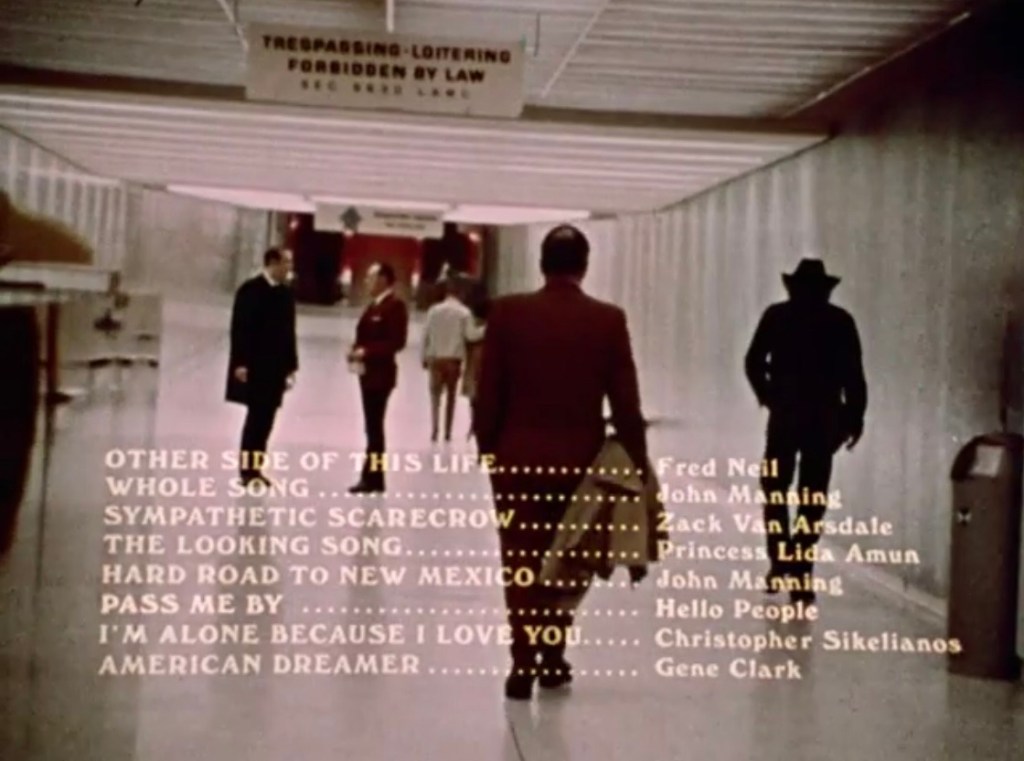
The film’s opening credits state that the film’s soundtrack will be released on Mediarts, an independent label founded in 1970 by Alan Livingston and Nick Venet. When the soundtrack was released, however, Princess Leda’s song (credited in the film to “Lida Amun”) was left off. To be fair, so were Zack Van Arsdale‘s “Sympathetic Scarecrow,” and Christopher Sikelianos‘s “I Just Want to be a Cowboy,” and “I’m Alone Because I Love You.”
❦❦❦
NAT FREEDLAND’S THE OCCULT EXPLOSION
After that, Leda seems to have disappeared almost entirely – at least from public view – and with her, her lysergic coven. She’s mentioned in a few books, published in the 1970s, on witchcraft – but all but one seem to have been based entirely on information gleaned from California Evil rather than from original research or new, primary resources. For what it’s worth, there’s The Satanists (Peter Haining, 1970), Beyond the Senses: a Report on Psychical Research in the Sixties (Paul Tabori and Phyllis Raphael, 1971), “Here, Mr. Splitfoot”: An Informal Exploration Into Modern Occultism by (Robert Somerlott, 1971), “Script for the Cataclysm” (Robert Abrams, 1971; included in Twenty-minute Fandangos and Forever Changes: A Rock Bazaar (ed. by Jonathan Eise, 1971)), The Anatomy of Witchcraft (Peter Haining, 1972), and A Comparison-Contrast of Witchcraft and Sorcery in Selected English and American Plays from 1604-1624 and from 1945-1970 (Gerilyn G. Tandberg, 1974).
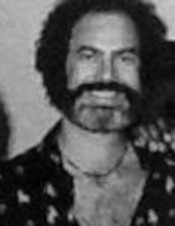
The one notable exception, brought to my attention by Thomas Lee, is Nat Freedland’s The Occult Explosion: From Magic to ESP — the People Who Made the New Occultism (1972). It includes an interview with Garrison, the King, and must have been written sometime around 1971 because it refers to the Climax as a “namby-pamby teenybopper rock club” that is “now defunct.”
Freedland, who wrote a column at the Los Angeles Free Press before moving to The Los Angeles Times (where he wrote as Nathaniel Freedland) also refers to the Esquire issue, then about a year old, as “classic” but notes it is part of Esquire’s ongoing “horrid fascination reflex to all things Californian.” He would know, he was based in Hollywood but a native of New York. Up until 1966, he’d been a writer for The New York Herald Tribune. In his book on the occult, Freedland wrote that:
Naturally their New York research team turned up all the easy people — Morlock, Samson De Brier, Ben Harris. Their real coup was discovering beautiful Princess Leda Amun Ra who, they said, attempts to have sex with swans which she steals from public parks under the very noses of the guards. Even for Esquire on California, this was a bit much. I immediately assumed Leda was just another Sunset Strip doper who had picked up a dab of occult jargon to hallucinate on.
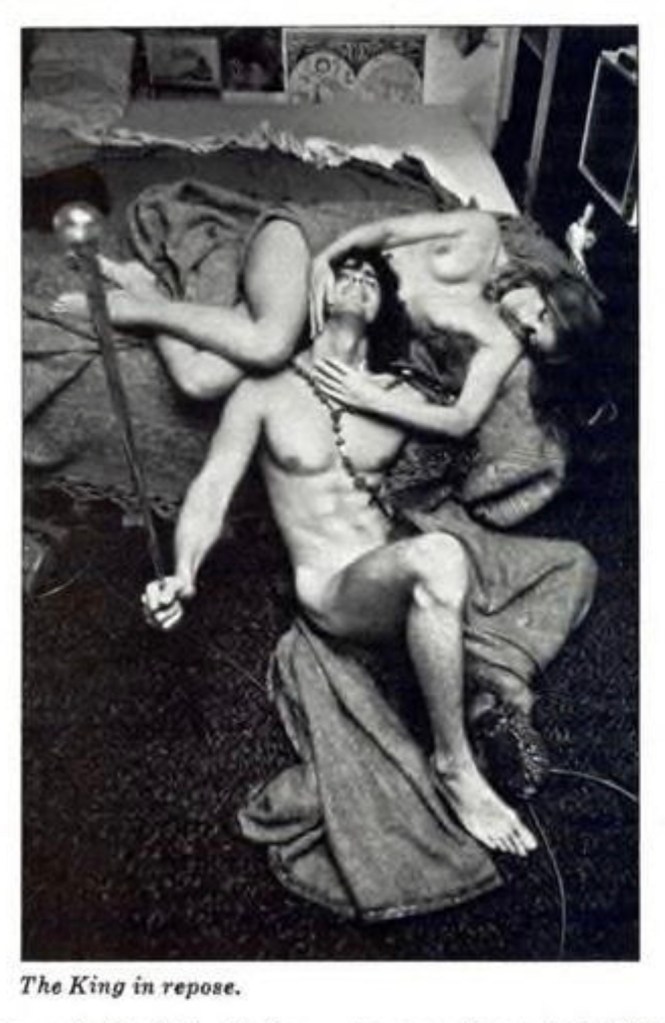
He writes that Garrison the King was then:
…twenty-eight and as an actor has appeared in about sixty movies and TV shows. He is physically and remarkably a beautiful male, relaxed and likable with a refreshing air of sanity now matter how bizarre the experiences he’s describing. Esquire said he drives a gold Jaguar with a TV set on the dashboard and is an astrologer who gets $1,000 a horoscope. The actual Garrison has a three-year-old Thunderbird convertible and lives in a teeny but charming basement apartment with one of those superb Hollywood Hills views. He’s got a cat, a horse at the beach in Malibu, and a young son from a marriage before he got turned on by LSD.
“Sure, Leda’s for real,” he surprised me by saying. “She’s in touch with an invisible world that has both good and evil angles. She does have zombies around her, mostly homosexuals fucked up on acid and magnetized by Leda’s strength and power. She did steal the swan from the park like Esquire said. Leda is always getting away with things that are so outrageous nobody believes she’s actually doing it, and so they don’t try to stop her till it’s too late. She lives in the hills just across from the freeway, and if you drop in on her any afternoon, she’ll talk to you… but she won’t really tell you anything unless you share the holy sacrament with her at one of her all-night sessions.”
Leda’s holy sacrament is, of course, LSD , and the problem with dropping one of her caps is that she makes up her own formula, spiking the dealers’ acid with ingredients like speed or strychnine. According to Esquire, their photographer on the Leda story ‘innocently bit into an LSD-spiked apple at the castle and came closer to evil than any of us had planned.’ According to Garrison, the photographer knew perfectly well what he was sampling and wound up with a three-day stay in the psycho ward of Sawtelle Veterans Hospital after he was found wandering down Sunset Boulevard pulling fire alarms.
“Leda got into the magic thing around 1967 when she divorced her husband and split the suburban scene,” says Garrison. “Her four-year-old son lives with her at the temple but I doubt he’s aware of what’s going on yet.” Leda doesn’t go clubbing as much as she used to. When she does pop into her 1937 MG and head down to the hills, often as not, it’s to the cavernous Citadel of Haiti, an obscure discothèque in the unfashionable Vine Street area of Sunset.“
[Citadel d’Haiti was a nightclub/art gallery in Central Hollywood. owned by Bernie Hamilton, who played Starsky & Hutch police captain Dobey – in 1969 and ‘70. Incidentally, it was there that Fela Kuti invented Afrobeat.]
“My experiences with Leda have shown me that black magic, physical and mental vampirism and cannibalism really exist. If I had wanted to stay with her any longer I would have had to make a pact to sell my soul for the left-hand path. I always had my own place and my outside life, but we were together a lot for two years until I took off about five months ago. I loved a lot of the things I had there and it was very tempting. But I was not ready to turn in my soul for material life down here. Like it says in the Dylan song, ‘Frankie and Judas Priest’… ‘don’t mistake the house across the road for heaven’ because it’s a whorehouse and Frnakie screwed himself to death in sixteen days and sixteen nights. I feel that I know a lot about the occult by now.’ I read some of the books at Leda’s but most of my knowledge came from talking with people who are into it. Acid was my open door to a new kind of thinking, and I’ve had enough of the left-hand path. I didn’t know what I was getting into when I started’ now I want to be in a more positive metaphysics.”
“Leda’s live-in crowd currently includes a permanent guard named Michael, who never sleeps. When there’s enough LSD on hand, the temple hosts an all-night bash every Saturday and Leda can be observed, according to Garrison, ‘appearing in all her reigning glory with thunder and lightning and fire’.”
He had one final contact with the dark world of Princess Leda. ‘I ran into some of Leda’s people a couple of Saturdays ago and decided to drop in on her ceremony for old times sake. Leda never threatened me or anything like that when I took off. She seemed to feel that if I was enough of a fool to give it up she wouldn’t lower herself by trying to stop me. I say if you’re a strong person, you have nothing to fear from Leda’ she won’t force you to do anything against your will. But when I came over that night she started improvising a ritual that became a Satanic wedding of the two of us. It was the hairiest experience I’ve ever had, the longest night of my life, and it took all my strength to get through it. I wasn’t sure I was permitted to leave’ I was never so happy when dawn came.”
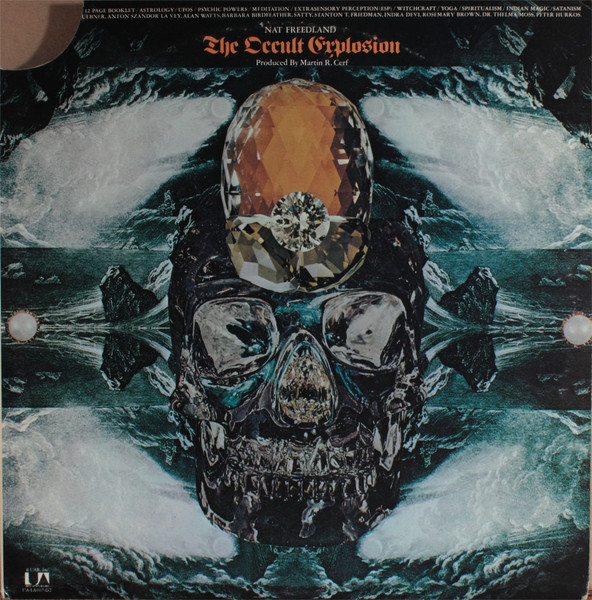
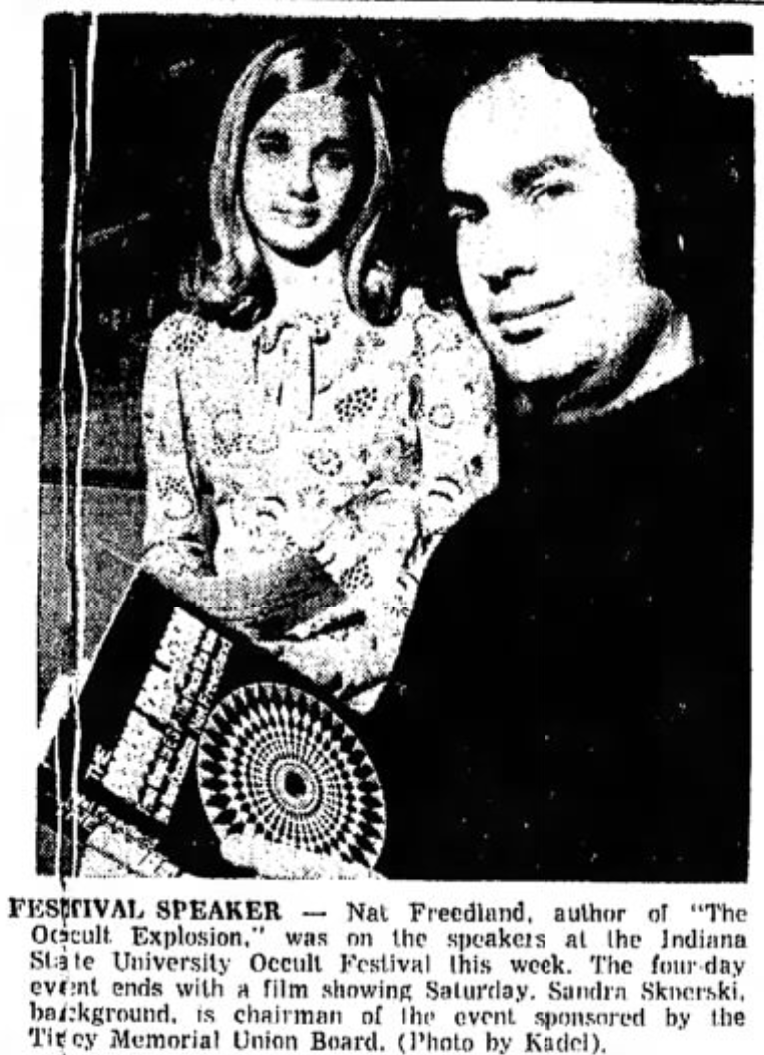
Around 1972, Freedland became a staff reporter and critic at Billboard. In January 1973, he gave a presentation about the book’s subject matter to an estimated 550 students at Indiana State University‘s Occult Festival. Buoyed by the interest generated by his book, he set about creating a double-LP of the same name which was released by United Artists Records in March 1973.. It feature spoken word segments about astrology, ESP, Indian magic, meditation, psychics, Satanism, Spiritualism, UFOs, witchcraft, and yoga from the likes of Nat Freedland himself, Louise Huebner, Stanton T. Friedman, Barbara Birdfeather, Alan Watts, Dr. Thelma Moss, Indra Devi, Peter Hurkos, Craig Carpenter, Anton LaVey, and Rosemary Brown — plus a couple of rock songs by Satanic British band, Black Widow. No sign of Leda or Garrison, though.
By 1977, Freeland was Billboard‘s talent editor. Later that year, he launched Event, a free monthly guide to entertainment in the San Francisco Bay Area that was published and distributed by BASS. It lasted about a year, after which Freedland got a job as a publicity director for Fantasy Records, at the height of its disco era. That was 1979. After that, most mentions of Freedland are in the 1980s, from concerned parents who’ve lost their minds during that decade’s Satanic Panic when libraries came under fire from deluded parents for carrying books with occult subject matter — and when I, as a curious child, started seeking them out.
❦❦❦
BABETTA LANZILLI — WHO PRINCESS LEDA WASN’T
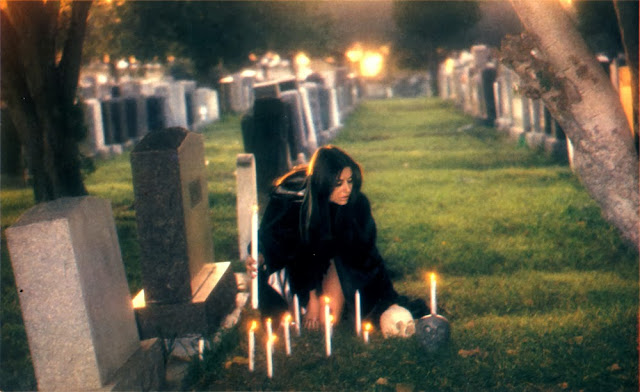
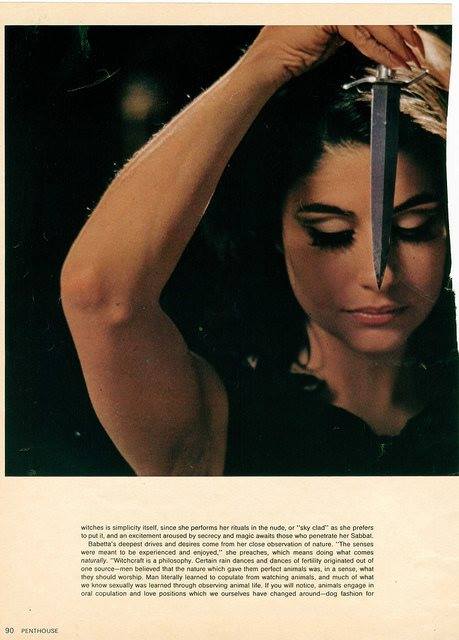
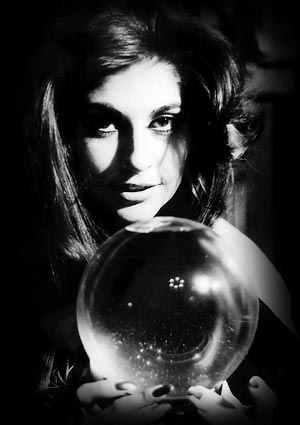
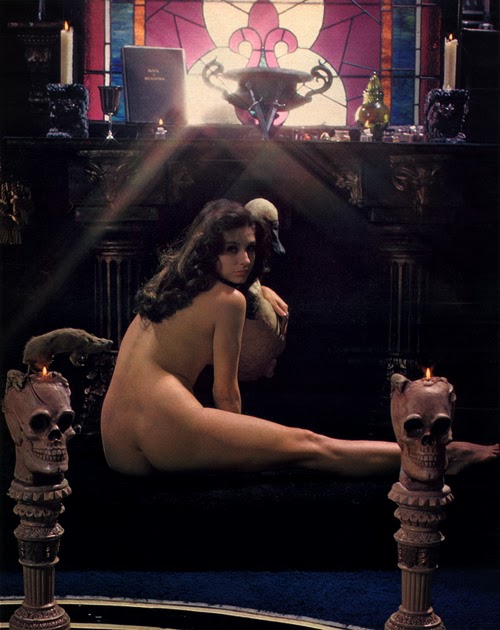
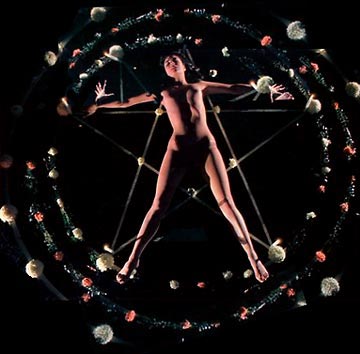
UPDATE: At least one person has mistaken Princess Leda Amun-Ra with another witch of the era, Babetta Lanzilli. I don’t know whether or not the two knew one another — although it seems highly plausible, as both were high-profile Los Angeles witches. Babetta (usually referred to mononymously) was born in Los Angeles in 1945. When she was eighteen, she moved to New York where she modeled for three years. Around 1970, she opened The Sorcerer’s Shop of Witchcraft and Magic in West Hollywood. It remained in business until about 1998. Babetta made spells for love, luck, and wealth – and her good looks made her a favorite of Hollywood. She did psychic readings on KIEV AM, worked as a consultant on television series like Starsky & Hutch and Hunter; and reportedly appeared as a guest on shows hosted by Johnny Carson, Merv Griffin, and Regis Philbin.
In 1974, she appeared in Penthouse with a swan, which no doubt is another source of confusion. That year, she also released the spoken word album, The Art of Witchcraft, on Selby Towers. She is credited with introducing Wicca to Japan, where she appeared on television and opened another shop. She was immortalized, in wax, in the late ‘70s at the Hollywood Wax Museum. Today she lives in Valley Glen and is still practicing magic and performing psychic readings.
WHO WAS LEDA, THEN?
So, who was Leda Amun-Ra? It seems strange that someone who apparently enjoyed the spotlight as much as the spotlight did her could just disappear with a flash of burning sulfur. And what of her friends – the girl with the blonde afro, her “slave,” her guard, Michael, and King Garrison (who, if he’s alive, would be about 81 years old today)? Or his or Leda’s kids — then three and four — so today around 57? And what of all of those who visited the temple? Sure, the late ’60s was an era full of colorful characters in a city with no shortage of people clamoring for attention – but compared to the most of the most colorful strivers, this crew were still vivid Technicolor.
What was their source of income? Did they have day jobs? Fancy duds and mansions in the Hollywood Hills cost money. In his article, Burke wrote that “One first supposes that she has been hired by the management to lend some credibility to the place; amid so much papier-mache debauchery, she is overwhelmingly authentic.” Seems hard to imagine, though, that even a paid dancer could afford a castle in the air.
There are a few tantalizing, if not especially helpful, clues about Princess Leda’s background. In “Princess Leda’s Castle in the Air,” she claims to have been “reborn” in the temple, “two years ago” and adds, “Would you believe, darling, that three years ago the Princess Leda was a homemaker? A Clairol-blonded housefrau? A blonde who wasn’t having any fun?” When Burke asks where she lived as a housefrau, Princess Leda only laughs, but Burke describes her inflection, in what seems to be mere speculation, as “solid, educated Middle America, that of a thoughtful, protected girl, the daughter of an Indiana scholar.”
Bud Lee’s personal entry on “Princess Lida Amun” states “4240 9th Ave NE, Seattle, Washington.” There used to be a five-room bungalow at that address but, since 1994, the site has been home to a University of Washington healthcare center. The editor of “the New Hollywood Myth Figure,” of course, referred to her as a “good old girl from South Carolina.”
Samson de Brier died in 1995. John Phillips died in 2001. Dennis Hopper died in 2010. L.M. Kit Carson died in 2014. Bud Lee died in 2015.
Thomas Lee has spoken with some acquaintances of Leda’s who couldn’t add anything. He contacted Lawrence Schiller’s people and they said he remembers nothing. He contacted several of the authors of the 1970s books who mentioned her and they had nothing. Tom Burke, author of “Princess Leda’s Castle in the Air,” moved to Minneapolis in 1975 and founded The Gaily Planet. He was interviewed at least as recently as 2009 about the Twin Cities’ Gay Pride parade. I’m not sure if he’s still alive.
Thomas Lee also contacted Mike Marinacci, who works with Legs McNeil, and McNeil who wrote an essay about Charles Manson for the book, American Monsters, in which he claimed to have found a 1,000 page document written by Sandra “Blue” Good that details Manson’s “fairly close” relationship to Princess Leda – and that she apparently tried to convert him to Satanism. I, personally, asked Los Angeles witch, Lisa Derrick, to see if any of her witch-friends knew anything.
Lisa thought that I should pop into the Philosophical Research Society’s vast library. I was thinking the same thing. If you believe in coincidences, yesterday my friend Jae sent a link to their upcoming Halloween party. And, as I finished this piece, my friend, Mike, just texted me to ask whether or not I’d like to go there tomorrow for a screening of Das Cabinet des Dr. Caligari. I was Cesare, the somnambulist for Halloween back in 1997. UPDATE — another coincidence, Jae and I returned to PRS for a screening of Inauguration of the Pleasure Dome — the day after Retro Pop Planet informed me about Princess Leda making an appearance in the John Phillips autobiography — which I have added a new section about.
❦❦❦
So share your leads, theories, or recollections in the comments, soon. It’s the Season of the Witch, after all. The Hunter’s Moon is returning on the 17th. Samhain will follow when the sun sets on the 31s. Time is running out. Happy Halloween!
Support Eric Brightwell on Patreon

Eric Brightwell is an adventurer, essayist, rambler, explorer, cartographer, and guerrilla gardener who is always seeking paid writing, speaking, traveling, and art opportunities. He is not interested in generating advertorials, cranking out clickbait, or laboring away in a listicle mill “for exposure.”
Brightwell has written for Angels Walk LA, Amoeblog, Boom: A Journal of California, diaCRITICS, Hey Freelancer!, Hidden Los Angeles, and KCET Departures. His art has been featured by the American Institute of Architects, the Architecture & Design Museum, the Craft Contemporary, Form Follows Function, the Los Angeles County Store, Sidewalking: Coming to Terms With Los Angeles, Skid Row Housing Trust, the 1650 Gallery, and Abundant Housing LA.
Brightwell has been featured as subject and/or guest in The Los Angeles Times, VICE, Huffington Post, Los Angeles Magazine, LAist, CurbedLA, Office Hours Live, L.A. Untangled, Spectrum News, Eastsider LA, Boing Boing, Los Angeles, I’m Yours, Notebook on Cities and Culture, the Silver Lake History Collective, KCRW‘s Which Way, LA?, All Valley Everything, Hear in LA, KPCC‘s How to LA, at Emerson College, and at the University of Southern California. He is the co-host of the podcast, Nobody Drives in LA.
Brightwell has written a haiku-inspired guidebook, Los Angeles Neighborhoods — From Academy Hill to Zamperini Field and All Points Between, that he hopes to have published. If you’re a literary agent or publisher, please contact him.
You can follow him on Bluesky, Duolingo, Facebook, Goodreads, iNaturalist, Instagram, Letterboxd, Medium, Mubi, Threads, and TikTok.


 Eric Brightwell
Mike Marinacci here. I’m the author of Psychedelic Cults and Outlaw Churches (Park Street Press, 2023), which featured a section about the Princess Leda acid cult. In the piece I mused that the whole thing may have been a “put-on” (a prankish media-jamming performance) staged to gratify Esquire magazine’s appetite for California cult-freakishness, and I still maintain that as a possible explanation for all the over-the-top goings-on Bud Lee and the article writer witnesses and experienced.
I noticed that you mentioned me in the text of this fascinating piece. Thomas Lee and I have both tried to track down the Princess’ true identity, with little luck, so far.
Kudos for tracking down the photos that didn’t make it into that article. I have one by another lensman that I suspect may be of Leda, but I’ve never been able to confirm it.
Drop me a line if you’d like to discuss this in more detail: mikal9000 {at} Googlesemaildomain.
LikeLiked by 1 person
Interesting article. I’m currently reading the autobiography of John Phillips called Papa John. The book was released in 1986. On page 243 he starts to talk about a witch in Hollywood called Princess Leyda. The topic comes so far out of left field that I took to the internet to figure out what he’s writing about, and it led me to your post. I noticed that you didn’t cite that book so figured I’d add another to your source list.
LikeLiked by 1 person
That’s a good one. Thanks! Is the autobiography good, too?
LikeLike