
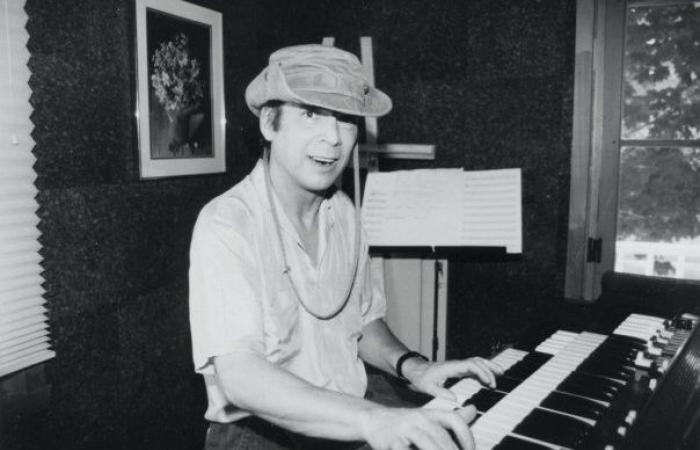
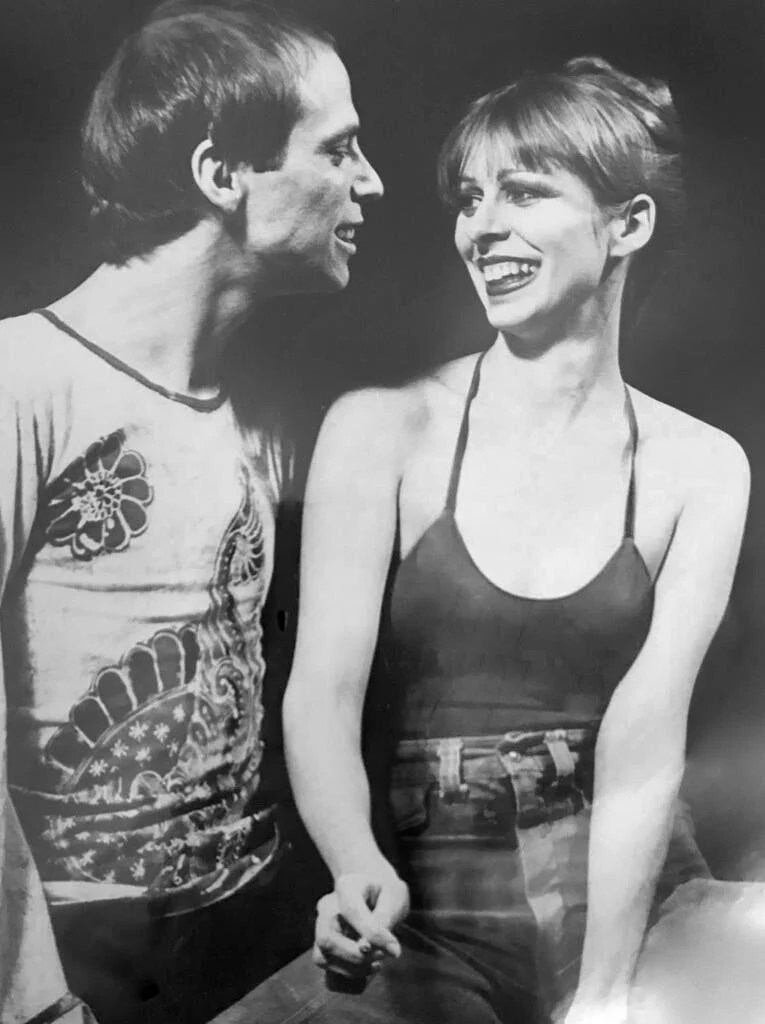
Musician Nini Nobless died on 21 August 2023 from cancer at Hôpital du Sacré-Cœur de Montréal. She was 74 years old. Her death was confirmed to the CBC through her manager, Yvon Lafrance. Nobless was best known as one-half of the Canadian musical duo, Lime, in which she performed as Denis Le Page with her then-wife, Denyse Le Page. I had begun writing an essay about Lime in July but the more I dug into Nobless/Le Page’s life, the more overwhelmed I was by the sheer volume of music in which she’d had a hand… and by the difficulty in arranging it into something cohesive. I found Nini Nobless’s Facebook page and considered reaching out to her. I’m an introvert, though, and it’s easier for me to sift through fragments of information written, more often than not, in French, than it is for me to reach out to a stranger online. Never meet your heroes, and all that. Now that Nobless has passed, though I’m left with no option and so here is my attempt to honor her under-recognized genius. Requiescant in pace to a true chameleon.
MY LIME STORY
I first heard Lime when I worked at Amoeba (sometime between 2001 and 2009). I immediately enjoyed it but at first thought that it was some sort of joke. I’ve made the same mistake several times over the years — wrongly assuming that songs by 50 Cent, Justin Timberlake, Kanye West, and Korn were intentonally comical. I descended from the movie mezzanine to the information counter to see who was responsible for what we were hearing. On display was a Lime CD. I didn’t recognize the name — but it was up my alley. I favor the extremes of disco. Organic, soulful and funky… or icy and robotic. It struck me as comedic because the female voice sounded like Kate Bush at the top of her register and a unconvincingly macho male voice who gruffly declared things like “we’re gonna love tonight!” And it was pretty clearly ESL. Not to punch down; when’s the last time an Anglo songwriter attempted to write lyrics in a language other than English? There’s a charm to the best ESL lyrics, no matter how nonsensical, that’s a million times more appealing than the offensively nonsensical lyrics of Noel Gallagher. Lime were the purest pop even if they didn’t know it. Simultaneously enjoyable both in earnest and ironically. Unhindered by pretense and yet as accidentally avant-garde as William Burroughs’s cut-ups. Supremely melodic and engaging.
I’d recently been ordered CDs by the likes of Den Harrow, Fancy, Gazebo, Koto, Laserdance, Modern Talking, and Sandra — mostly stuff I knew of because of Viet New Wavers. Did Viet New Wavers like Lime? Did they dig Canadian disco? They certainly liked, on the whole, Canadian post-disco synthpoppers like Trans-X. After I’d purchased them for myself, they’d been re-ordered and all had sold again. It felt good knowing that there were Angelenos out there with a taste for ‘80s electro-disco that none of the music snobs at Amoeba knew anything about (except DJ Lance Rock, who was familiar with Modern Talking). But someone at the store like Lime enough to play them — or at least they’d looked at the airbrushed cover and been curious enough to give it a spin. I have been a fan ever since.
At some point, years later and post-Amoeba, Lime came in a discussion with a co-worker, Irrum. That she was a fan was less of a surprise since she’s from Canada. She was the one that told me that Lime were going to perform at Steven’s Steakhouse in Commerce. It seemed impossible that Lime were still around. Promoters are known to make empty claims and I’m known to fall for them. I once drove to Orange County because a Rock en Español club there had claimed that Los Prisioneros were playing. Needless to say, they were not. I doubted that Lime were even around. As I sometimes do with musical groups that have been around for a long time, I looked for recent footage online to see what to expect. I found some footage from a performance in Pomona a few years earlier — only the performers were not Denis and Denyse Le Page but a couple of models. I had, by this time, seen Lime videos and knew that they sometimes starred models but the idea of people going to a performance by models from the 1980s singing, essentially, karaoke — it seemed too bizarre.
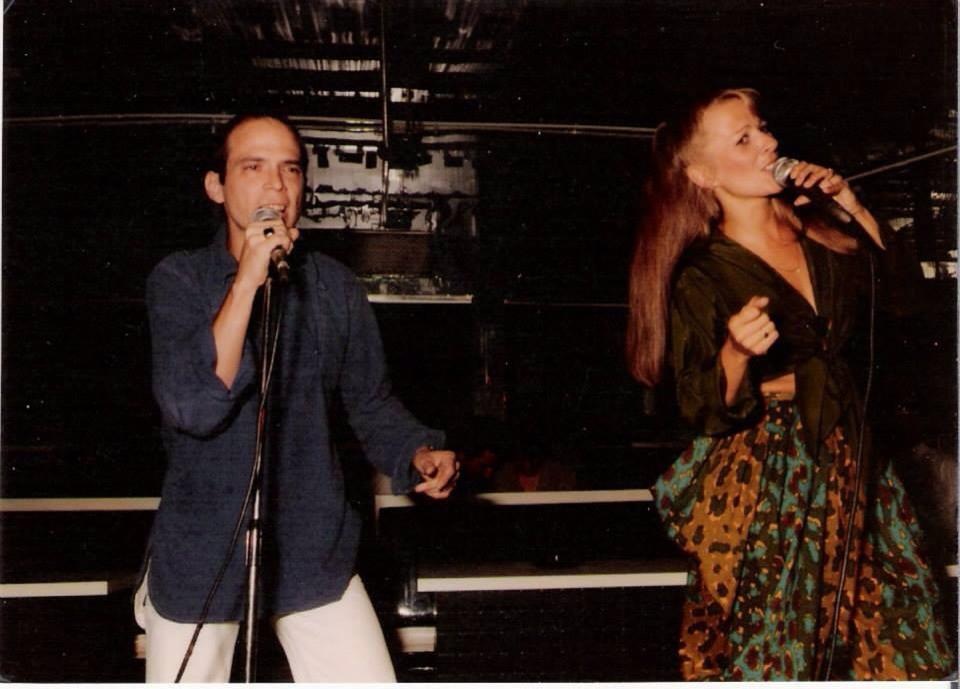
I told Irrum what I’d seen. I was even more surprised when she expressed that she still wanted to go — and so did her brother-in-law and a friend. So we headed to Steven’s Steakhouse in July knowing full well that we would be seeing no Canadian Le Pages but, rather, Americans Joy Dorris and Rob Hubertz. We figured, correctly, that even if not really lime, it would be an experience. And we were right. Opening was Jessica Williams, who with Arpeggio, had a hit in 1979 with “Love and Desire.” In another room was a band called the Black-Outs, who covered KROQ classics by the likes of The Cramps, The Cult, The Cure, Echo & the Bunnymen, Joy Division, Morrissey, et al. And Circus Disco DJ Martin Rodriguez was spinning. The mostly Latino and Southeast Asian crowd also included a boldly-dressed cohort of Romani who, Irrum’s brother-in-law said were styled like Jim Carrey in The Mask.
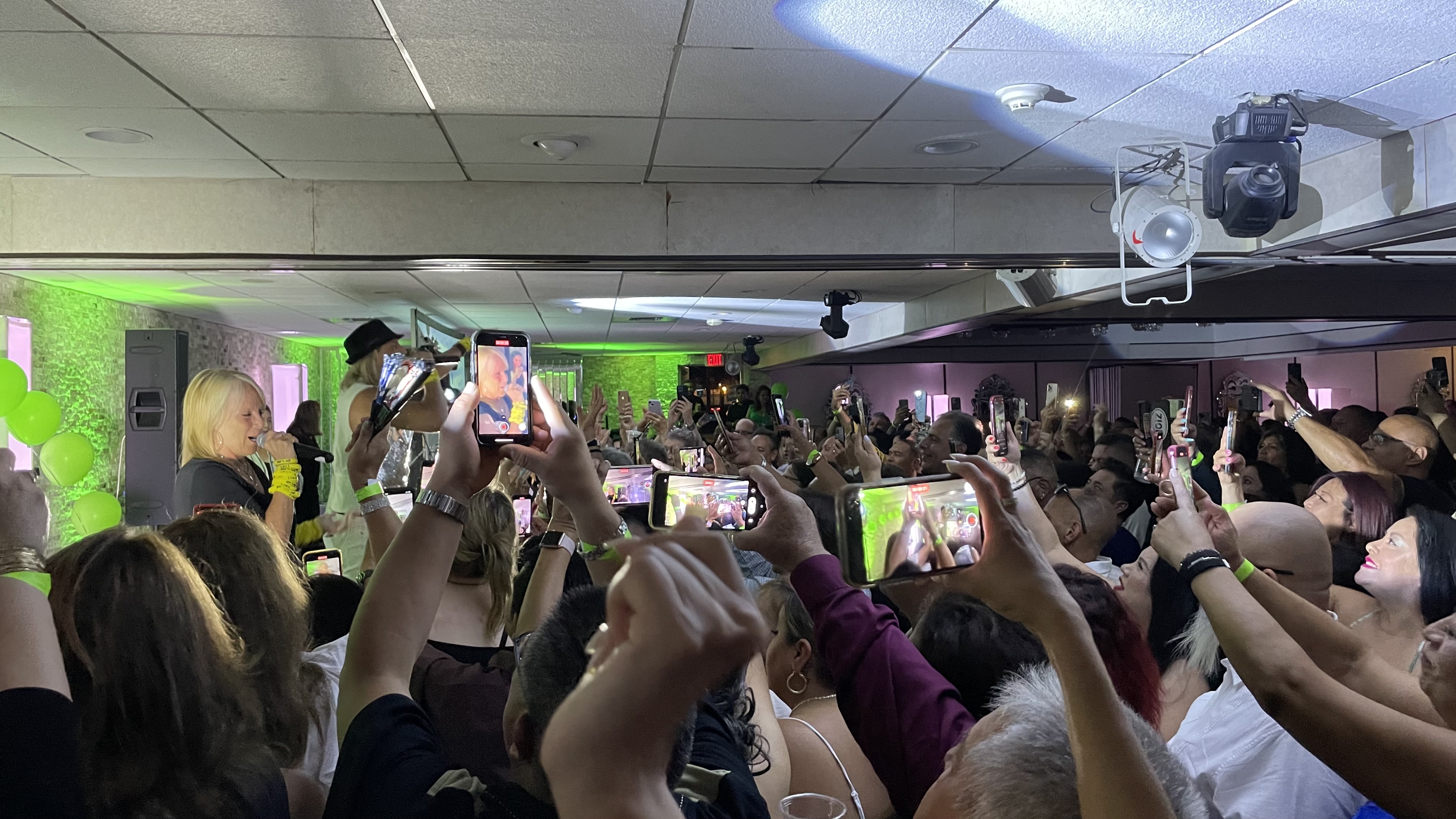
After the event, I wanted to write about the experience but I wasn’t sure what my angle would be. I hadn’t really “seen” Lime, after all. I’d seen a sort of sanctioned karaoke act with some green lights. I don’t know who has the rights to Lime’s name — but the performers seemed perhaps a bit understandably self conscious about their roles in the group. Hubertz had tossed me a bracelet during the performance. It said “Joy and Rob are Lime” or something like that. I can’t check because I took it off when I got home and the last time I saw it, my cat Azuki was carrying it somewhere in her mouth. As I learned more about Denis Le Page/Nini Nobless’s life and musical career, though, I thought it warranted a deep dive but I didn’t want to offend her by dead-naming her or getting sensitive details wrong. From her Facebook posts, they seemed like the sort of handful with whom I usually avoid interactions. What if they were mean? What if they denounced what I’d written as “all wrong”? Then, on 29 August, Irrum asked, “Did you hear? Denis Le Page died!”
___
DENIS LE PAGE’S EARLY LIFE
Denis Joseph Le Page was born on 17 March 1949 in Montréal. Le Page attended St. Pius X and later enrolled at the Conservatoire de musique du Québec à Montréal and Concordia University. They originally studied trumpet.
LES STRINGERS
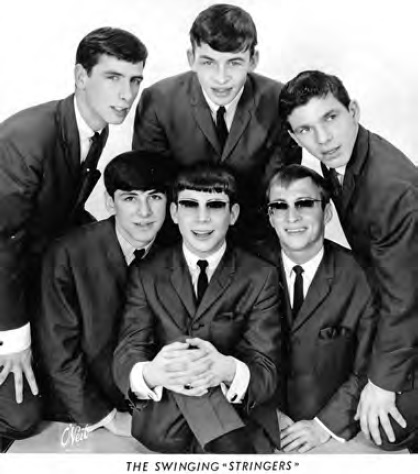
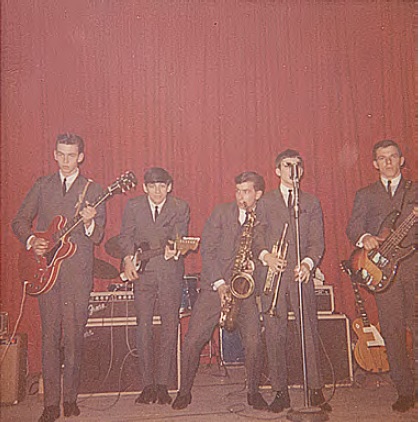
Le Page formed a band, Les Stringers, with their brother, Michel Le Page. Les Stringers also included Guy Rocheleau (bass), Paul-Émile Gallant (guitar), Pierre Guay (saxophone), and Serge Proulx (guitar). Their covers ranged from Mel Tormé to James Brown. in 1964, they released an album on Caprice, Swing Rock Swing avec Les Stringers. Mostly comprised of covers, it nevertheless included two of Denis’s originals: “Marmelade” and “Soak’N Wet”
THE PERSUADERS/LES NOBLES
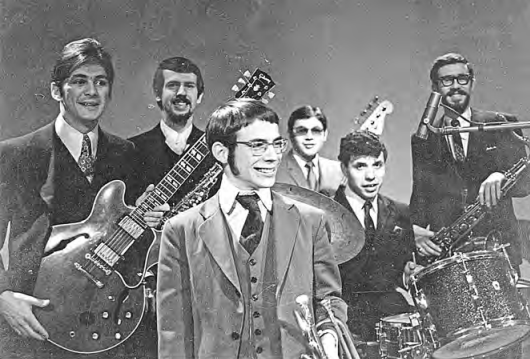
After Les Stringers, Le Page formed The Persuaders with Le Page again on vocals and trumpet. The rest of the band included André Demontigny (alto saxophone), Andy Shorter (drums), Joey Steiner (saxophone), Robert Alarie (bass), Serge Proulx (guitar). They were sometimes joined by Kenny Hamilton on vocals. When they accompanied André Rheault, they changed their name to Les Nobles. The Persuaders perfumed on several CBC programs, including It’s Happening, Let’s Go, and Teen ’67. They shared a stage with The Isley Brothers and Stevie Wonder. They backed Marthe Fleurant on a cover of “Rock Around The Clock.” A Wilson Pickett cover, “I Found a Love” b/w “Don’t Fight It” was released as single by Jet.A subsequent single, “Burn” b/w “Groovin’ On The Milky Way” — both Le Page originals — was released by Spectrum. Years later, in 2007, their cover of Eddie Floyd’s “Taking Inventory” was included on the compilation, Les Introuvables Volume14.
THE PROFESSOR
In 1968, Le Page made a recording of “With These Hands” and “Out of Left Field.” I believe he was backed on it by members of The Persuaders. They were recorded for a split EP with Lotsa Poppa. Lotsa Poppa (born Julius High, Jr.) was a singer from Atlanta who’d begun his career as Little Julius and later emigrated toCanada, where he was a regular performer at L’Esquire Show in Montreal. For the release, he cut two songs, “Tennessee Waltz” and “She Ain’t Gonna Do Right.” It was to have been released on Canadian label, Lotta Soul, and distributed by London Records. After a disagreement, however, Lotta Soul’s owner, Don Wayne Patterson, issued an injunction to prevent the single’s release.
OUBA/REELS PSYCHEDELIQUES
In 1968, Le Page formed Ouba with Shorter, Michel Pagliaro (guitar), and Tony Roman (who’d founded the record company, Canusa, in 1967). This, presumably, marked Le Page’s move from trumpet to keyboards (there are no credits on any of these albums). Ouba released an album, Ouba, on A1. It was built around one, long, apparently improvised psychedelic jam divided into side 1’s “Premiere Partie” and side 2’s “Deuxieme Partie.” It was possibly intended as stock library music. In 1969, as Reels Psychedeliques, the otherwise uncredited musicians released Volume 1 and Volume 2. Both were labeled “‘Freak Out’ Total” and may have similarly been intended as library music. It’s a bit more ambitious and worth a listen if you’re into total freak outs.
MARRIAGE
In 1971, Denis Le Page married Denise Savaria. They gave birth to a daughter, Claudine.
HUM
Le Page and Shorter backed vocalist Ovila B. Blais of Danni Et Nous as Hum. With Le Page producing, they released a single, “Suis Moi” b/w “Attends” in July 1972 on DSP. The A-Side was included on Les Introuvables Volume 18 (2007). The B-Side was included on Les Introuvables Volume 5.
LE POULS
Le Pouls, apparently, marked the beginning of the married Le Pages’ professional relationship, with Denyse on percussion and vocals. Rounding out the bands was Shorter, Richard Beaudet (flute, saxophone, and vocals), Richard Patry (drums), Robert Alary (bass), Robert Goulet (guitar), and Tony Golia (percussion). Denis performed clarinet, electric piano, flugelhorn, organ, piano, trumpet, vocals, and production. The Le Page’s were credited with writing most of the material — all made up of band originals. They recorded their only album, the fusion-rock Le Pouls, in January and February of 1976. It was released later that year on Pacha. In 1980, Rota Enterprises, LTD rereleased the Le Pouls album as Denis & Denyse LePage.
KAT MANDU & ARRANGING
In 1978, Denis Le Page worked as the arranger on Missouri-born soul-disco singer Geraldine Hunt’s full-length debut, Sweet Honesty. In 1981, Le Page would perform the same role on Hunt’s son, Freddie James’s, album, Music Takes Me Higher. Denis Le Page also arranged the horns and strings on France Joli’s self-titled debut in 1979.
It was also in 1979, Denis had their first hit solo single, “The Break.” Le Page wrote, arranged, and released the cowbell-propelled 12” single, which peaked at No. 3 on Billboard’s disco chart. Rather than release it under their own name, however, Le Page released it under the name, Kat Mandu, a silly play on the Nepalese capital city, Kathmandu. It was later included on the album, Kat Mandu, released by Unidisc and which was fleshed out with the involvement of other musicians, including vocalists Cissy Houston, Jimmy Ray, Jocelyn Shaw, Lorraine Moore, and others. Kat Mandu would continue on as a studio project without Le Page, going on to release two more albums, Get Crackin’ (1980) and The Kat is Back (1982).
DIVA, MOTHER F, AND VOGGUE
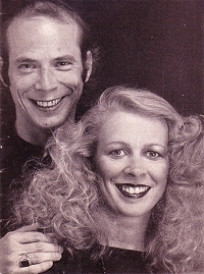
1981 saw the Le Pages recording a lot of music under different names, with different collaborators, and for different labels. Diva was Sandy Wilbur with Denis Le Page working as arranger and Joe La Greca as producer. They released “Double Trouble” on Matra. Wilbur, La Greca and La Page re-teamed for Peter Batah’s “Nobody’s Stopping You.” La Greca and Le Page again reteamed for Carol Jiani’s “Hit’n Run Lover.” That year, Matra also released Mother F’s “Hot Wax,” written and arranged by Le Page. Mother F was another La Greca production and continued with different collaborators after Le Page moved on to their next project.
Voggue was the Le Page’s and an uncredited and anonymous “singer friend.” They had two hits with “Dancin’ the Night Away” and “Love Buzz,” both released in 1981. However, after the Le Page’s found success shortly after, with Lime, their label hired two models to be the faces of Voggue — Angela Songui and Chantal Condor (née Chantal Charmandy). The Le Pages apparently only learned of this decision when they witnessed Voggue performing — without them — on television. Voggue would release Vougge on Celcius in 1981 and the Le Page-less Take 2 on Matra in 1983 before disbanding.
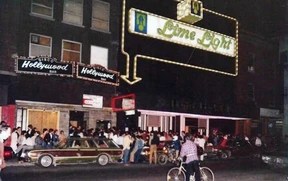
When American’s think back to the Days of Disco, they may think of the Bistro, Circus Disco, the Gallery, Jewel’s Catch One, the Paradise Garage, the Saint, Studio 54, and the Warehouse but Canada — especially Montreal — had a vibrant disco scene as well. In fact, Montreal was known as “Disco’s Second City.” Canada was the stage for disco acts like the aforementioned France Joli, Geraldine Hunt, Freddie James, and Voggue, as well as Claudja Barry, Cheri, the Erotic Drum Band, Gino Soccio, Miquel Brown, Pluton & the Humanoids, and Tapps — among others. Montreal was also famous for at least two discos, Michael Bookalam and Saul Zuckerman’s the 1234 (which opened its doors in 1978) and Claude Chalifoux’s Lime Light (which opened its doors in 1973). It was to the latter that the Le Page’s brought their next single, titled “Your Love” to the in-house DJ, Michel Simard. Simard spun the record. The crown loved it. The Le Pages didn’t have a name for the project but, in a lightbulb moment, borrowed the nickname of the disco to christen their project, Lime.
YOUR LOVE
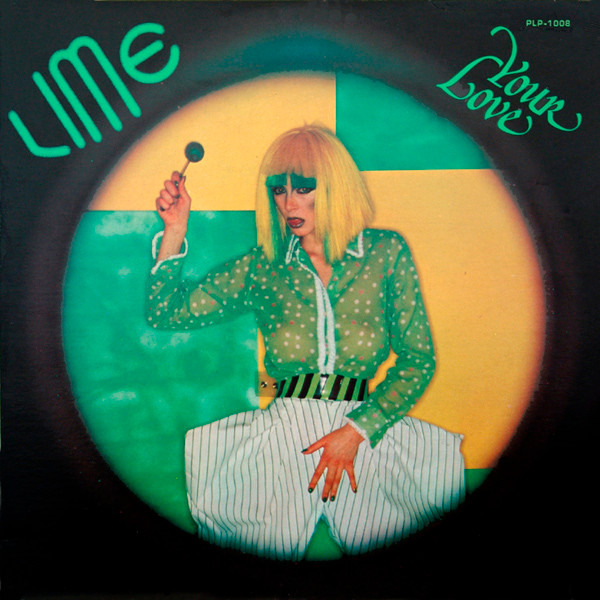
“Your Love” rose to the top spot on Billboard’s disco chart and was also a hit in Belgium and the Netherlands. It went gold. It was later featured in the 1982 film, Summer Lovers. They released the debut Lime album, Your Love, that same year. From the beginning, a strong aesthetic permeated Lime’s output. The album cover, by Michael Gray, was of a woman in a diaphanous top with green make-up who, you wouldn’t be alone in wondering, might’ve been an influence on the style of Pris in Blade Runner, released the following year. Album credits include fashion, hair, and make-up. The follow-up single, “Your My Magician,” was more popular overseas. “Baby, I’ll Be Yours” didn’t chart.
LIME II
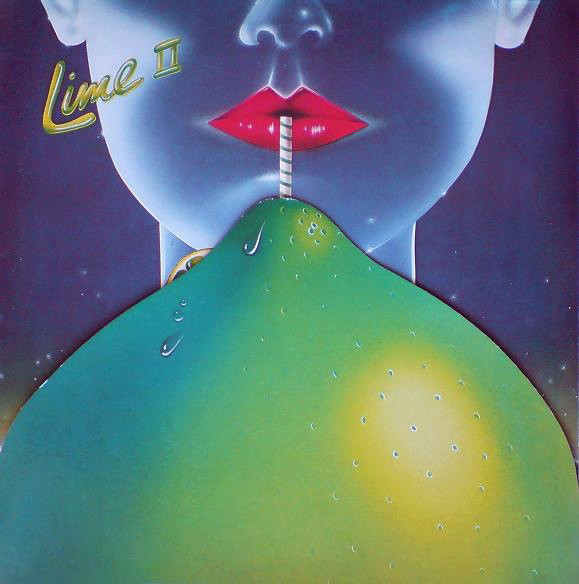
The Le Pages followed with Lime II, in 1982. The airbrushed art, of a blue-tinted transparent woman apparently sucking lime juice through a straw from a massive fruit, was created by Studio Graffiti. The fold-up gatefold style sleeve, once unfolded, revealed that the straw was actually inserted into a glass full of a curiously frothy lime beverage.
It was supported by the release of the single, “Babe, We’re Gonna Love Tonight,” which reached #6 on Billboard’s dance charts. It was again a hit in the Netherlands. A promotional music video was filmed. The couple look like they’re having fun but neither matched the aesthetic sensibility of their album art. One might expect Armani-draped models in a Memphis Milano-furnished loft. Instead, we get Denis pairs bluejeans and a shiny (and clashing blue top). Denis looks older than his 33 years, their thinning hair pulled back in a short ponytail. Denyse claps and sways in a white, kimono-like get-up. It’s charming but low-budget to a degree that few videos were a year after the launch of MTV.
The follow-ups, “Wake Dream” and “A Man and a Woman” didn’t chart. “Come and Get Your Love” reached #18 in the Billboard’s US dance chart. A music video was shot for the latter — this time with an apparently larger budget. There are smokey alleys, gauzy filters, classic cars, sexy chauffeurs, white suits. It’s a disco idea of sophistication — albeit more mid-70s Gatsby revival than ‘80s Nagel. Denyse appears in it prominently. Denis finally appears late in the video, wearing a round cap. He rejects the advances of a couple of women and drives a car to Denyse who winks at the camera.
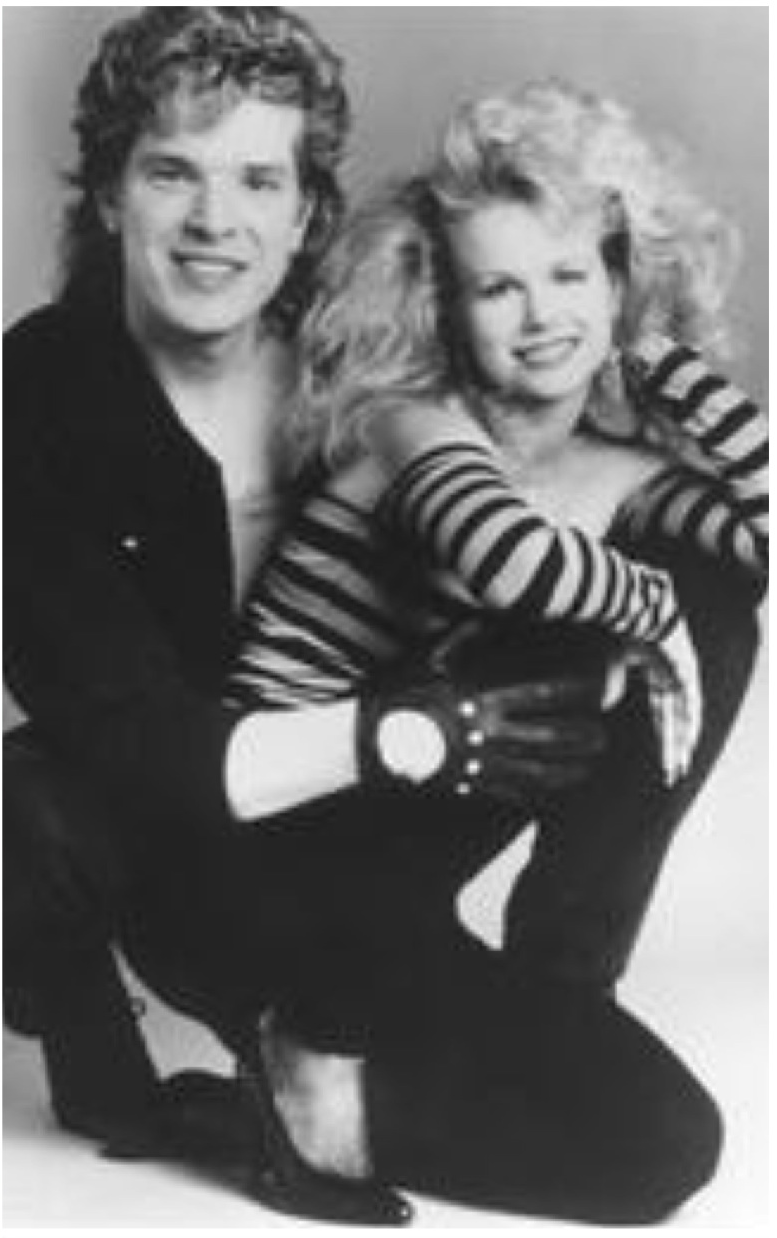
It was around this time that Lime decided to go on tour — or to not go on tour, as it were. Instead, they would send a couple of models — Joy Dorris and the bushy-maned Chris Marsh — to appear on stage in the summer of 1983. The made their American debut at the Saint in December of that year.
While this may seem really strange twenty years after MTV stopped showing music videos and almost 20 years after YouTube, hiring attractive models as the faces of bands was much more common in the 1970s, ‘80s, and ‘90s; when models were hired as the stand-ins for Boney M, C + C Music Factory, Debbie Deb, Den Harrow, Milli Vanilli, Technotronic, and others. Even Magnetic Fields featured Ilsa Jule on album covers, in videos, and lip-syncing in the one for “Born on a Train.” Besides, the Le Pages had learned that they weren’t in Voggue by seeing models lip-syncing on television. Pop music, in my opinion, is about creating a world — not necessarily about conveying authenticity. That said, I’d have personally enjoyed seeing the Le Pages perform live.
LIME 3
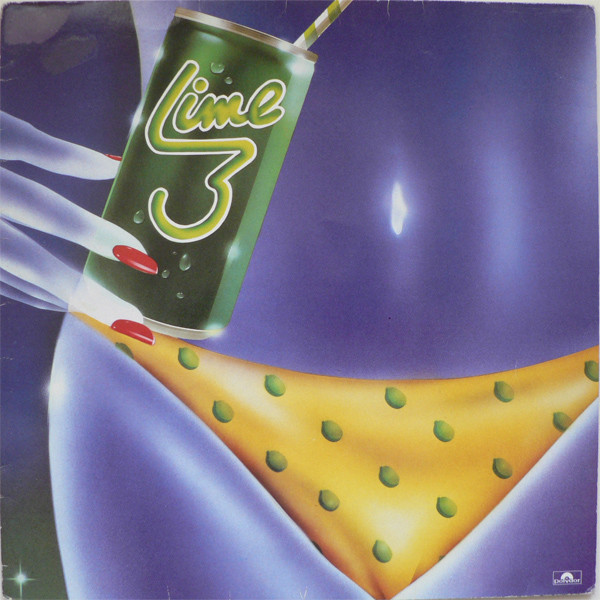
Lime 3 was released in 1983. The album art was again handed by Studio Graffiti and again depicted a blue-tinted transparent woman with a can of a lime beverage — and a bikini bottom with a lime pattern. “Angel Eyes” reached #12. “Guilty” reached #22. “On the Grid” and “Give Me Your Body” failed to chart.
A video for “Guilty” was filmed — this time with a slightly higher budget and featuring all of the latest wipe transitions (except for star wipes) and a dizzying amount and application of zooms. There are lime sodas and green tints — all of the things that you might want from a Lime video. Neither Denis nor Denyse appear in the shots, apparently all filmed in Montreal. There is an attractive couple, however, but no suggestion is made that they are lime — merely the Lime ideal of two lovers guilty of love and — in this case, a bank heist.
SENSUAL SENSATION
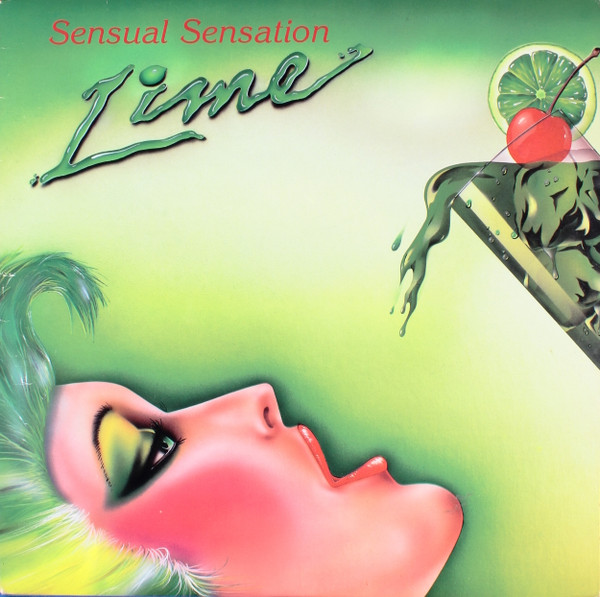
Lime’s 1984 album, Sensual Sensation, broke with the naming convention established by Lime II and Lime 3. It was also the first without any hits.The album art, again by Studio Graffiti, once again depicted a woman about to drink a lime beverage. The singles were still very strong if perhaps slightly less fizzy than their predecessors. “I Don’t Wanna Lose You,” “Take It Up,” and “My Love,” all failed to chart.
There seems to have been a perception, at least, that Lime were getting a bit flat. By 1984, Electrofunk and Freestyle had introduced sampling and syncopation. In. the US, early house and techno were already pointing the way toward the post-disco future of dance music. A few years would pass before either would cross the Atlantic and, for the time being, Eurodisco and electro-disco continued to reign in Europe.
UNEXPECTED LOVERS
Unexpected Lovers, after the commercial disappointment of Sensual Sensation, was an unexpected hit. The title track rose to #6 on the US Dance charts, #34 in the Netherlands, and #78 in the UK. The song, with its ridiculous seriousness, staccato Hi-NRG beat, dinky synth trumpet, and relentless cowbell was an irresistible combination.
It was supported by Lime’s biggest video — featuring boats, luxury cars, a helicopters — all shot cinematically on film in widescreen instead of :Lvideo — was a ridiculous and perfect counterpart to the spirit of 1984. It was later covered by LaBouche. It was followed by a single, “Alive and Well,” that failed to chart.
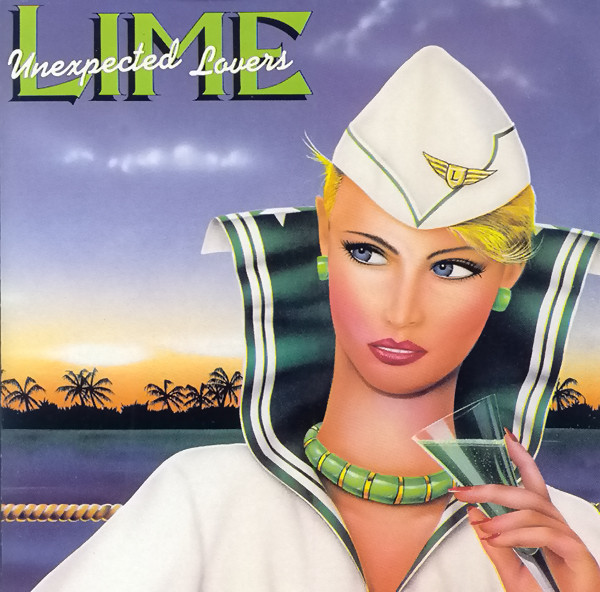
And, of course, the album art was designed by Studio Graffiti and depicted a woman drinking a lime beverage. Judging by her outfit, she seems to work for for a Lime cruise line and is somewhere far south of Montreal, where palms grow wild. Come to think of it, a disco-themed cruise might be a good idea, if no one has explored that, yet.
TAKE THE LOVE
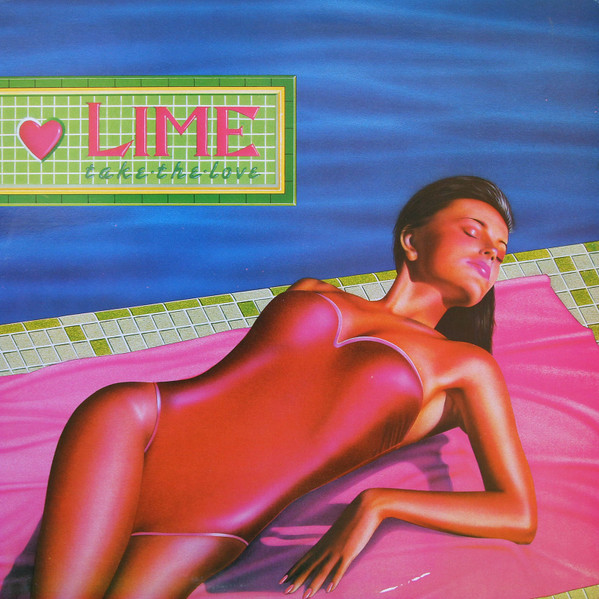
Take the Love, was released in 1986. Studio Graffiti’s album art depicted a woman sunbathing on lime-colored tiles next to a body of blue water. What’s missing? A lime beverage? What’s the significance? I don’t know!
The slow but driving title track was released as a single but failed to chart.
CHERRY LIME AND PRODUCTION
After the release of Take the Love, the Le Pages and Joe La Greca formed Cherry Lime, which released “Reconciliate” b/w “Do You Like It,” which sounded pretty much as you’d expect Lime to sound in 1987.
A BRAND NEW DAY
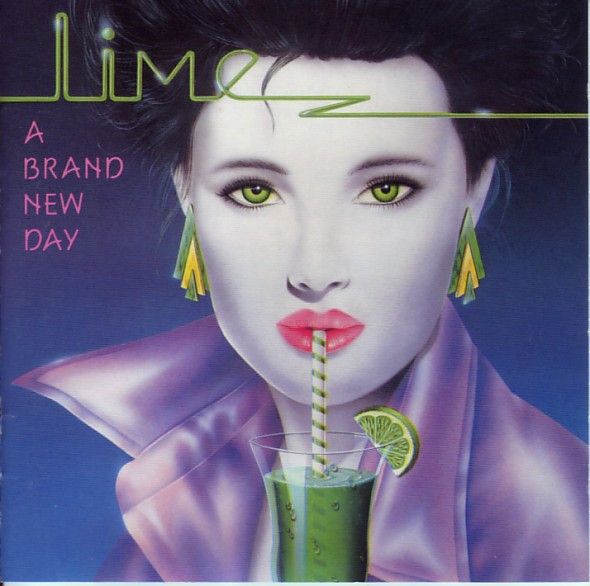
Lime released A Brand New Day, released in 1988. Despite the promise of the title, it didn’t break new ground. The artwork depicted a lime-eyed woman drinking a lime beverage. “Please Say You Will (Be My Baby)” b/w “Brand New Day” failed to chart. So did “Sentimentally Yours,” released the following year, which was the last single form the band (not counting rereleases, remixes, &c).
Despite the promise of the title — and despite the fact that there would be future releases attributed to Lime — this was what most would surely regard as the last “real” lime album. And although the Le Pages would occasionally collaborate as musical partners, their marriage ended in divorce in 1988.
LE PAGE
In 1989, as Le Page, Denis released a single, “My Baby Don’t Know What You Do To Me.”
CAROLINE
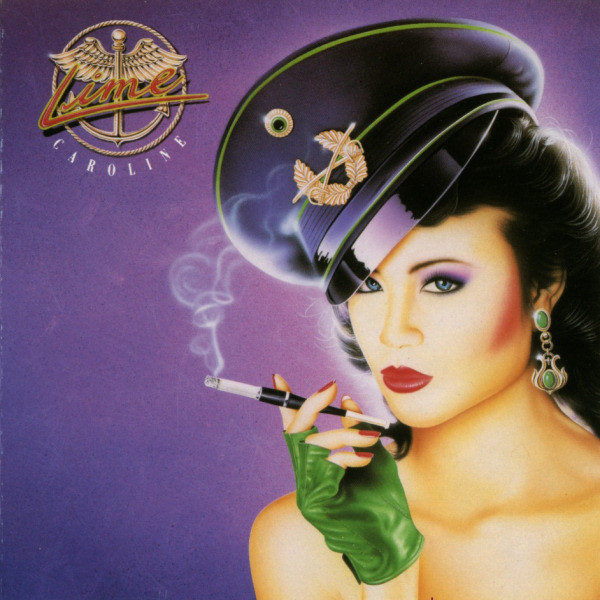
Denis Le Page released an album, in 1991, as Lime, titled Caroline. It featured a hip-house sound on the title track, which failed to chart. The vinyl version included just six tracks. The CD version added two more, and a trio of remixes.
BLUSH, DIRECT INPUT, VIRGINIA WOLFE, THE BRAT BROTHERS, AMITHIA, and THE HILLBILLIES
The next few years saw Denis dabble with a variety of names and various collaborators. In 1991, as Blush, he released “I Want to Love.” In 1993, Le Page and La Greca released the house single, “Stealing the Night,” as Direct Input, followed by “Big Lips Babe” in 1994. The two teamed with George Antiglio as Virginia Wolfe and released “Superstar Do You Know Who You Are?” Le Page and La Greca, as the Brat Brothers, released “Tickle, Tickle (Don’t Stop).” Le Page and La Greca teamed with Geraldine Cordeau as Amithia to release “Music Lover” in 1994. Finally, Le Page and La Greca released “Cousin Willie” credited to the Hillbillies in 1996.
STEP BY STEP
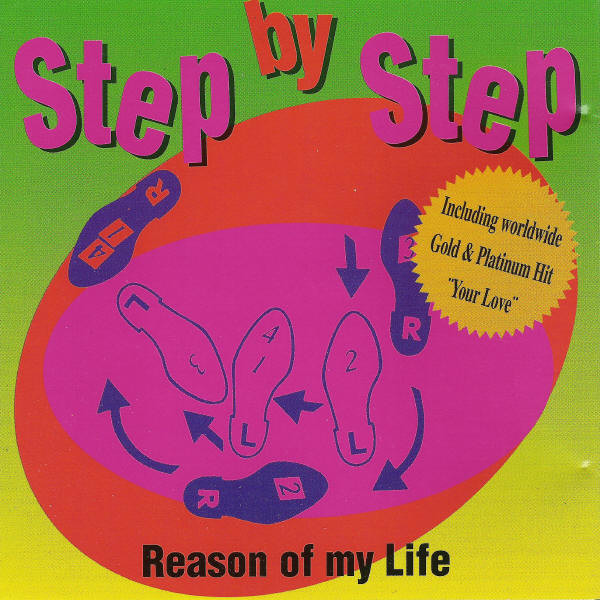
In 1994, the Le Pages and La Greca teamed up as Step By Step and released the full-length Reason of My Life. Some fans characterize it as the “lost Lime album” although it’s more Eurodance than anything Lime ever did. The Le Pages musical voice, though, is evident. Naturally, perhaps, some tracks from it, along with some of LePlage and La Greco’s early ‘90s work and a couple of Lime remixes would be repackaged as a Lime album, titled Stillness of the Night, and released in 1998.
In 1998, Denis ended his musical partnership with Denyse. Denyse, afterward, turned her attention to composing for other artists and to raising their daughter, Claudine. In 2019, she recorded a single with producer, Chris Cowley, called “Agent 808.” She holds the rights the the Lime name and is with Left of Center Productions.
LOVE FURY
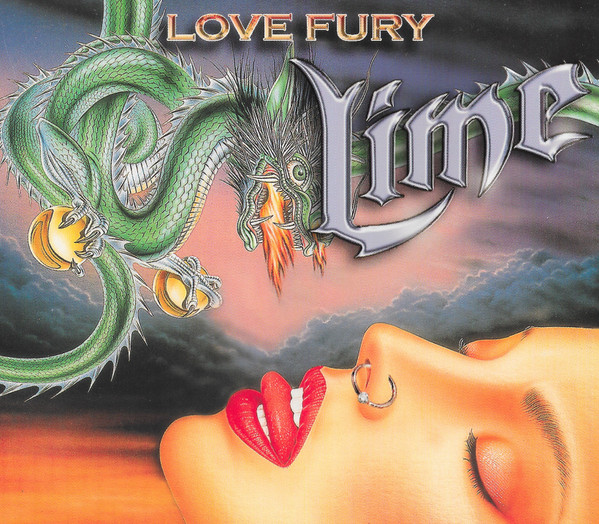
One last album was released as Lime in 2002, Love Fury. The artwork, by Canadian illustrator Sam Montesano, depicted a fire breathing wyvern clutching golden orbs. There’s a woman, of course, but her nose is pierced and behind her, a storm seams to brew. “Lime” is written in a decidedly metallic font. One would be forgiven for assuming that it was the work of an ‘80s German power metal band. It was, in fact, Le Page though — this time joined by a roster of guests, including Amber Star Chaboyer, Benedicto Ouiment, Chubby Tavares, Julie Courchesne, Marie-Pierre Vaillancourt, and Maria Lassard. The end result is recognizably the work of Le Page but the updated sound must’ve seemed rather dated, even by then
THE MODELS ON TOUR
In 2002, Joy married Boston DJ, John Patrick Luongo, DJ at Rhinocerous and publisher of Nightfall magazine. Around 2010, Rob Hubertz became the new male face of the touring Lime. Hubertz and Dorris first met in the security line flying to perform their first show together in Miami. Hubertz is the Staten Island-born president of Entertainment Central LLC and an actor who appeared in the 2007 film, Liar’s Pendelum.
NO BLESS AND NINI NO BLESS
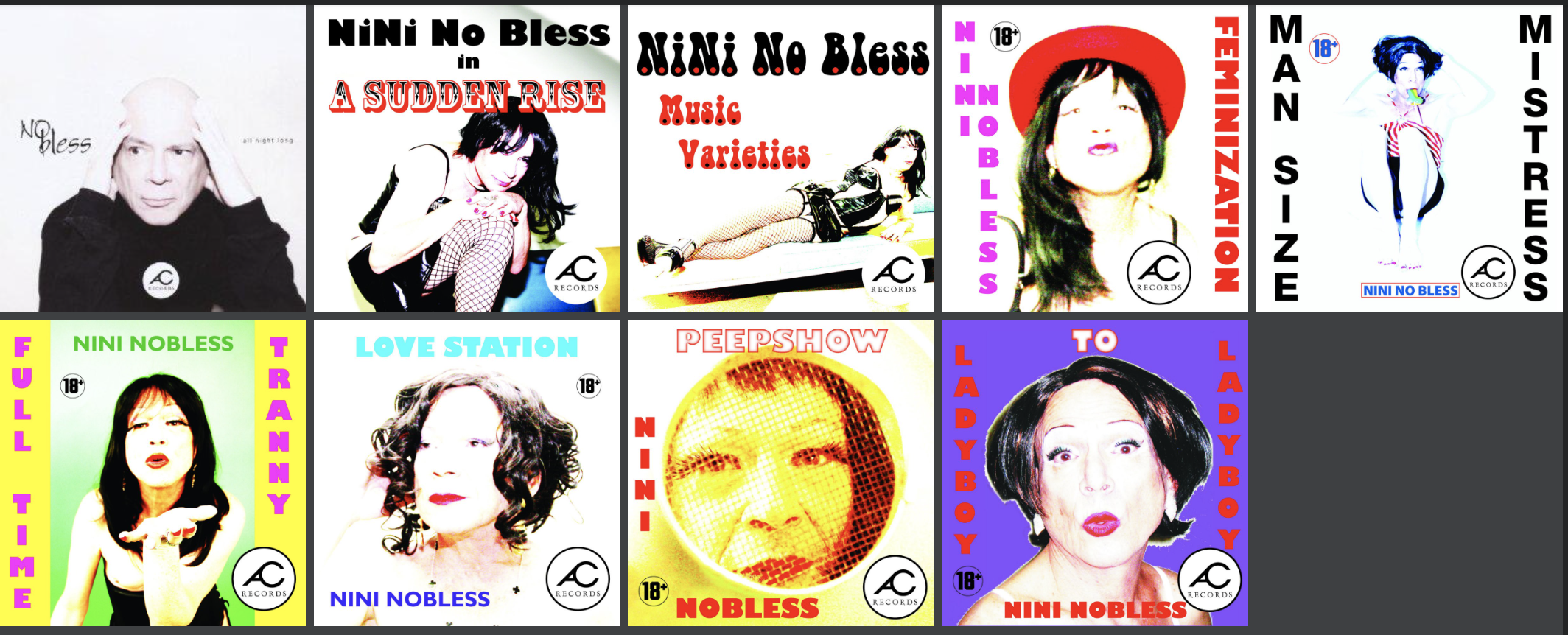
Around 2008, Denis began to record and perform new material as No Bless — a play, seemingly, on “noblesse” and — according to some — “knob-less,” a reference to her gender affirmation surgery. They were apparently rather fond of blunt humor and unconcerned with using consistent names, pronouns, terminology, or, for that matter, spelling and punctuation. That year, they released All Night Long, attributed to No Bless. By the time Man Size Mistress was released, she was using the pronoun, “she,” but still crediting herself as “ex Denis J Le Page.” Music Varieties was credited to Nini Nobless and the liner notes wait that she was a hermaphodite [sic] undergoing the process of “feminizing.” She futurer billed herself as a “one tranny band” and released the album, Full Time Tranny.
She seems to have found happiness, or something like it, in her later years. On her Facebook page, she often posted about making and enjoying music — along with pictures of herself in fetishwear and various stages of undress. Her last post stated, “i m a shemale and a better girl because of it !!!!”
CODA
After learning more about Lime and Denis Le Page/Nini Nobless’s colorful life, I asked myself “where is mediocre biopic or decent documentary?” According to Francis Cucuzzella, who manages artist relations at Unidisc, a documentary about Lime is in production. Denyse, I believe, lives in Palm Springs today and has, since 2019, performed with Jean Claude Belliveau as Lime. Claudine reconciled with her deceased parent before their death. Their funeral visitation is scheduled for 4 September at at Magnus Poirier Funeral Complex, 10300 Pie IX Blvd. In lieu of flowers, they’re suggesting donations to the Canadian Cancer Society.
FURTHER READING
Vente de Garage, Le Blogue (by Félix B. Desfossés)
Support Eric Brightwell on Patreon

Eric Brightwell is an adventurer, essayist, rambler, explorer, cartographer, and guerrilla gardener who is always seeking paid writing, speaking, traveling, and art opportunities. He is not interested in generating advertorials, cranking out clickbait, or laboring away in a listicle mill “for exposure.”
Brightwell has written for Angels Walk LA, Amoeblog, Boom: A Journal of California, diaCRITICS, Hey Freelancer!, Hidden Los Angeles, and KCET Departures. His art has been featured by the American Institute of Architects, the Architecture & Design Museum, the Craft Contemporary, Form Follows Function, the Los Angeles County Store, Sidewalking: Coming to Terms With Los Angeles, Skid Row Housing Trust, and the 1650 Gallery.
Brightwell has been featured as subject and/or guest in The Los Angeles Times, VICE, Huffington Post, Los Angeles Magazine, LAist, CurbedLA, Office Hours Live, L.A. Untangled, Spectrum News, Eastsider LA, Boing Boing, Los Angeles, I’m Yours, Notebook on Cities and Culture, the Silver Lake History Collective, KCRW‘s Which Way, LA?, at Emerson College, and the University of Southern California.
Brightwell is currently writing a book about Los Angeles.
You can follow him on Ameba, Duolingo, Facebook, Goodreads, iNaturalist, Instagram, Mastodon, Medium, Mubi, the StoryGraph, TikTok, and Twitter.


 Eric Brightwell
Thank you, it was wonderful
LikeLiked by 1 person
Thank you for this comprehensive biography. Denis was a musician who deserved much more recognition. There still isn’t even a Wikipedia entry about him.
LikeLiked by 1 person