In the 2000s, Amoeba Music enlisted an army of writers and data entry people to work on an ambitious website that was meant to be a sort of combination of Allmusic, Apple Music, Discogs, Wikipedia, and more. Despite investing a tremendous amount of time, labor and money, the site, as envisioned, never got off the ground. In 2020 — without so much as a head’s up — the plug was pulled. Not only did all of the work of those who toiled in “the Dungeon” quietly die; the musician biographies we wrote were mothballed, Movies We Like vanished, and the celebrated Amoeblog was killed. Luckily, the Wayback Machine has preserved most of it, allowing me to retrieve my work and post it here, with minimal editing, because I think so some of what we did there was worth more than just a wage.

Babasónicos – a conflation of “Sai Baba” and “Los Supersónicos” (as the Jetsons are known in Spanish) – were (along with bands like Martes Menta and Juana la Loca) originally considered one of the leading lights of the “Sonic Rock” scene of the 1990s. Although at their inception they peddled a brown acid brand of experimental psychedelia that incorporated hard rock and numerous references to the ‘60s and ’70s, over time they’ve streamlined their sound to create accessible pop music losing, in the process, some of their older fans but gaining them a new legion of followers and critical acclaim.
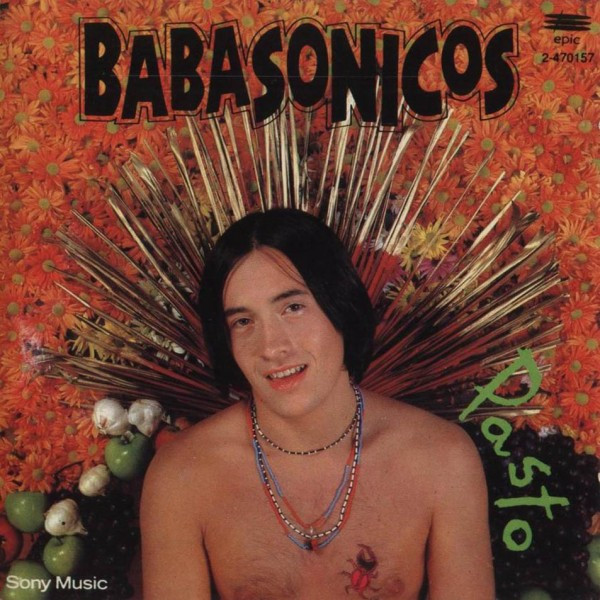
Babasónicos formed in 1991 in Lanús, Argentina. After scoring a minor hit with their single, “Margaritas” b/w “D-Generación” they recorded and released their stoney, eclectic debut, Pasto (1992-Sony) which featured guest appearances by Gustavo Cerati of Argentine superstars Soda Stereo (for whom they opened that year at the Estadio Obras Sanitarias) and Daniel Melero. The loose, druggy mix of punk and metal, and Rodríguez’s nasal vocals often recalled both Jane’s Addiction and Happy Mondays with their loose mix of funky drumming, use of sampling and squalling wah-wah guitars.

Two years later the Babasónicos added their DJ, DJ Peggyn, as a full member. That same year they opened for several rock superstars including INXS, Soul Asylum, and Depeche Mode; raising their profile in Argentina considerably. Their second album, Trance Zomba (1994-Sony) had originally been titled Trance Zomba… al lugar metalizado but the title was rejected by Sony as too long. The album was both less eclectic and less favorably reviewed than the debut, with many tracks bogged down with a fairly tuneless miasma of dated, sludge-metal heaviness and less focused melodies.
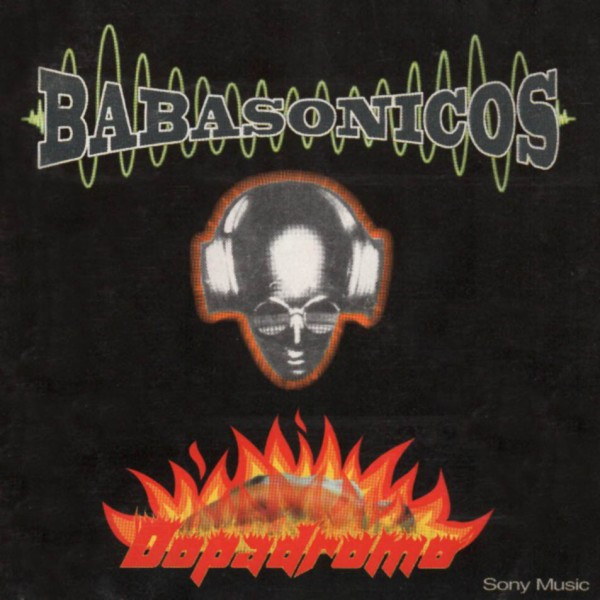
After touring their homeland, in August of 1995, Babasónicos participated in an Argentinean festival called Nuevo Rock, where they played alongside Peligrosos Gorriones and Los Brujos, helping to establish the emerging Nuevo Rock Argentino scene. Their next album, Dopádromo (1996-Drug-O-Rama) was a major leap forward, offering a balance of pop, rock and sampling that came to characterize their most creative work. With references to Tura Satana and samples from Shaw Brothers and Mario Bava films, the eclectic styles are all suffused with a retro, decadent vibe throughout the pulls together the set in a way that distinguishes it from its predecessors. They next embarked on their first large tour which saw them performing throughout Latin America and to the US.
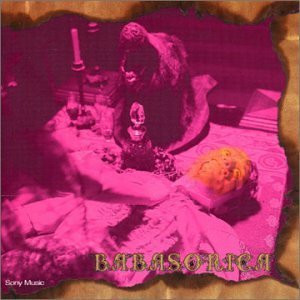
Babasónica (1997-Sony) was quickly recorded in New York City. The result was an all-out, guitar-heavy, hard-rocking homage to classic heavy metal. Ironically, one of the only soft, pretty moments of respite is “Sharon Tate,” a composition both written and sung by their guitarist, Mariano Roger. It largely failed to resonate with either their audience or critics and it sold considerably worse than its predecessor.
Though Vórtice Marxista (1998-Tocka Discos) is a collection of B-sides left over from the Pasto and Trance Zomba albums, its variety is in keeping with the eclecticism of most of their albums and includes some winning moments. That year, at the request of The Stone Roses’ Ian Brown, they contributed the music for a track bearing their name to his then-forthcoming masterpiece, Golden Greats. A new single, “Desfachatados” was a tour de force which was included on a benefit for Kosovo refugees. Opening for U2 on their Argentine stop of the Pop tour, Babasónicos played to their largest audience yet, of 50,000 spectators.

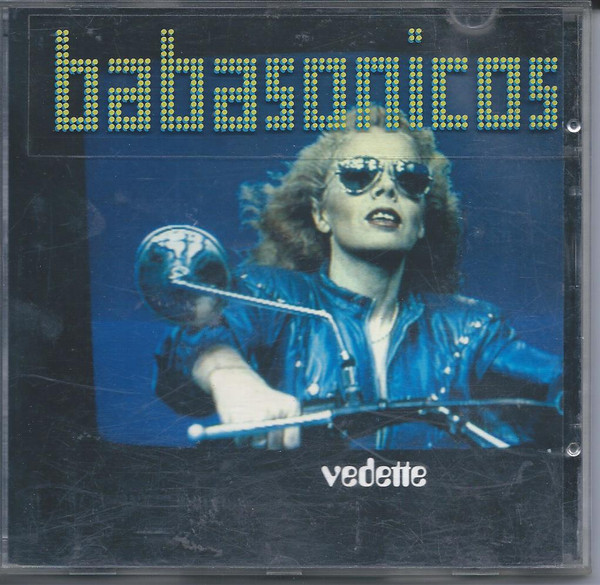
1999’s Miami (Sony) is one of the greatest albums of the decade. A sprawling yet consistent collection of songs showcasing their thrilling command of a variety of styles with touches of Ennio Morricone’s spaghetti western scores, exotica, and tropicalia. After the release of the album, Cosme, their manager, left the band. It also marked the last appearance on record of DJ Peggyn, who departed in 2000 for a solo career, renaming himself Jimmy Dolor. Having completed their contract with Sony, the band followed Miami with a flurry of releases older and remixed material. Babasónica Electrónica (2000-Bultaco Records) is made up of remixes from their 1997 album, Babasónica. In June, the band released Vedette (Bultaco Records), made up of B-sides and outtakes from the Dopádromo and Babasónica sessions. A month later they followed with Groncho (Bultaco Records), made up of songs left off Miami.


With Jessico (2001-Suave) Babasónicos embarked in a new direction. The album is slicker, more streamlined and more accessible than anything they’d recorded at that point but as consistent and winning as their best work. The poppier sound made them superstars at home and brought them much more recognition outside. “El Loco” topped the charts for thirteen weeks. Some older fans felt it was at the expense of their experimentalism and established identity but many critics described it as their best. A second remix album followed in 2002, the Jessico Megamix (Pop Art Music). That year they played their first European show, in Madrid before embarking on an extensive tour of Mexico and the US.
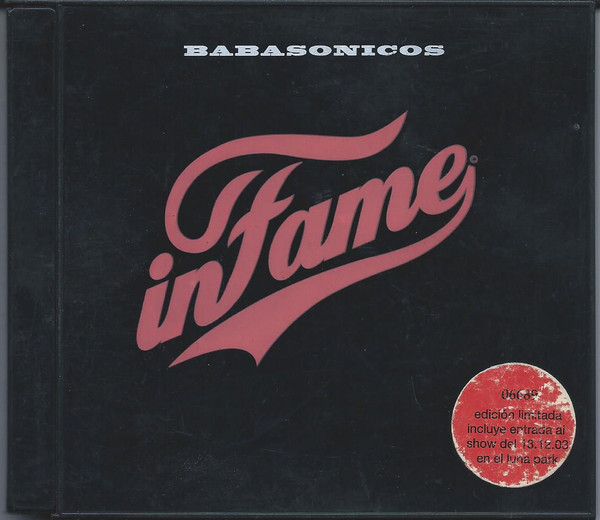
The band’s next album was the mostly instrumental score for Vera Fogwill‘s movie Las Mantenidas Sin Sueños. Composed back in 2003, it wasn’t released until April 2007, when the movie finally opened. In November, they released Infame (PopArt Music) – even more direct and straightforward than Jessico, it found them stripping away some of that album’s warm electronic textures in favor of three and a half minute guitar pop. Despite its immediacy, however, it grows more enjoyable with repeated listenings thanks in part to its refined song-craft that, though subtly, displays more variety than immediately evident. The following March, the band cleaned up at the Gardels, winning six categories before undertaking another tour of South America.
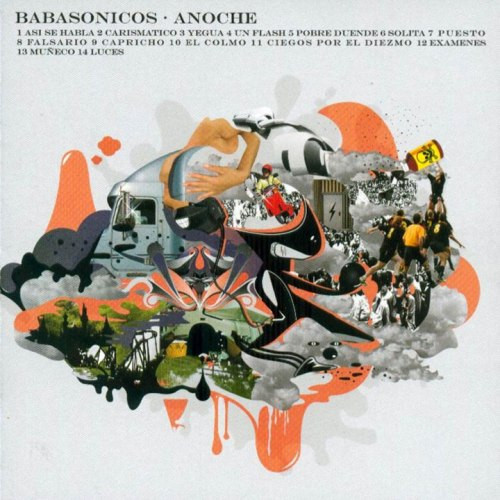
Anoche (2005-Universal) seemed like a conscious effort to please new fans and retain old one although sometimes it sounds suspiciously sounding like Jessico part II. It’s respectable if offering few surprises, similar to the familiar, controlled adventurousness of Beck or Café Tacuba. In addition, at barely half an hour and with most of the songs barely exceeding two minutes it feels a little tossed-off. Another remix album followed shortly thereafter, Mezclas Infame, a double disc collection with remixes from their likeminded peers Kinky and Plastilina Mosh, amongst others. In March 2006, the band toured Spain then Mexico where they play to over 100,000 fans at the Aztec Stadium before embarking on a larger tour of the Hispanosphere.
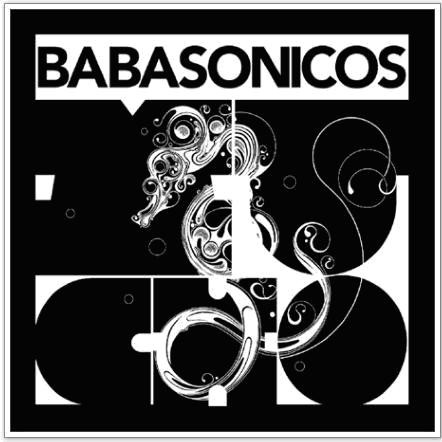
On 2 January 2008, the band’s bassist and founding member, Gabriel Manelli, passed away from Hodgkin’s disease, from which he’d suffered for several years. His last work was included on Mucho (Universal). Both singles, “Pijamas” and “Microdancing” reached the number one spot in the Argentine charts. Whilst continuing in the poppy direction they’ve now pursued for a decade, the record nonetheless shows the band quietly branching out in new directions without tampering with the formula too extensively. They toured Latin America (including California) in support.
UPDATE: Since this piece was written, Babasonicos have released four more studio albums and a B-sides collection. A propósito (Universal 2011), Romantisísmico (Universal 2013), Inflame (Leader 2016) [the B-sides compilation], Discutible (Sony 2018), and Trinchera (Sony 2022).
Support Eric Brightwell on Patreon

Eric Brightwell is an adventurer, essayist, rambler, explorer, cartographer, and guerrilla gardener who is always seeking paid writing, speaking, traveling, and art opportunities. He is not interested in generating advertorials, cranking out clickbait, or laboring away in a listicle mill “for exposure.”
Brightwell has written for Angels Walk LA, Amoeblog, Boom: A Journal of California, diaCRITICS, Hey Freelancer!, Hidden Los Angeles, and KCET Departures. His art has been featured by the American Institute of Architects, the Architecture & Design Museum, the Craft Contemporary, Form Follows Function, the Los Angeles County Store, Sidewalking: Coming to Terms With Los Angeles, Skid Row Housing Trust, the 1650 Gallery, and Abundant Housing LA.
Brightwell has been featured as subject and/or guest in The Los Angeles Times, VICE, Huffington Post, Los Angeles Magazine, LAist, CurbedLA, LA Times 404, Marketplace, Office Hours Live, L.A. Untangled, Spectrum News, Eastsider LA, Boing Boing, Los Angeles, I’m Yours, Notebook on Cities and Culture, the Silver Lake History Collective, KCRW‘s Which Way, LA?, All Valley Everything, Hear in LA, KPCC‘s How to LA, at Emerson College, and at the University of Southern California. He is the co-host of the podcast, Nobody Drives in LA.
Brightwell has written a haiku-inspired guidebook, Los Angeles Neighborhoods — From Academy Hill to Zamperini Field and All Points Between; and a self-guided walking tour of Silver Lake covering architecture, history, and culture, titled Silver Lake Walks. If you’re an interested literary agent or publisher, please out. You can also follow him on Bluesky, Duolingo, Facebook, Goodreads, iNaturalist, Instagram, Letterboxd, Medium, Mubi, Substack, Threads, and TikTok.


 Eric Brightwell