
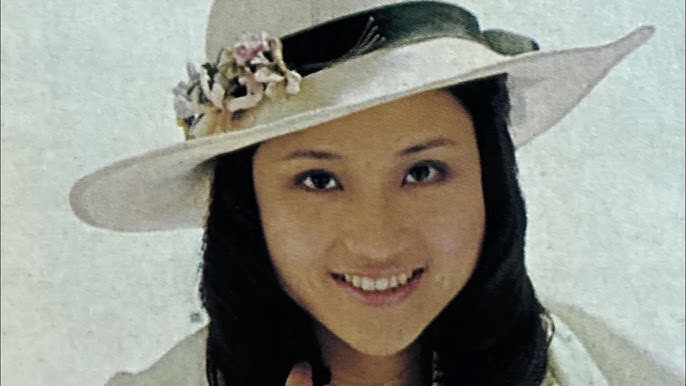
尤雅 (Yu Yar) is a pioneering figure of the Mandopop and Hokkien music scenes. Rendering her name variously as Yu Ya, Yu Yar, Yūya, or Yuyar; international audiences recognize her as a foundational ‘idol’ singer. Her 1970 mega-hit, 往事只能回味, (“The Past Can Only Be Remembered”) defined an era and paved the way for the image-conscious Mandopop scene of the 1970s and ‘80s.
The singer was born 林麗鴻 (Lin Li-hung) on 18 December 1953 in the industrial town of Sanchong (now a district in New Taipei City). Her father was originally from Nanchang, Jiangxi and came to Taiwan in 1949. Her mother was a native of Taiwan. Such Waishengren-Benshengren couplings produced what were often referred to as “Provincial Mixed” families – and in Li-hung’s case, it has sometimes been credited with shaping her into an ideal cross-cultural idol. Li-hung was the youngest of eight children in family that was devoutly Christian. Her initial exposure to singing came from performing in the church’s choir. At the age of twelve, she began recording Hokkien songs for 五虎唱片 (Wuhu Records), including 錢啥路用 (“What Use is Money?”) and 難忘的愛人 (“Unforgettable Lover”).
As a teenager, Li-hung attended 景美女中 (the Ching-Mei Girls’ High School) where she was, apparently, not an especially good student – apparently more interested in singing than studying and, by then performing at the Mandarin Hotel (now Taipei Fullerton) — then the epicenter of high-society entertainment in Taipei — to support her family. She also recorded several singles for 五虎唱片公司 (Five Tigers Records), including 心愛叼位去 (“Where Did My Beloved Go?”) in 1965, when she was eleven years old and 錢啥路用 (“What’s the Use of Money?”) in 1967. Many of these early recordings were compiled on compilations in 1967 and ’68.

In late 1969, when she was still just fifteen years old, Li-hung was taken under the wing of 劉家昌 (Liu Jia-chang), who approached her after a performance. Liu was a Harbin-born composer who, with his mother, initially fled the Chinese Civil War to Korea, only to flee to Taiwan when that country descended into civil war. There he graduated from 國立新竹高級中學 (National Hsinchu Senior High School) before attending 國立政治大學 (National Chengchi University) as a political science major from 1962 to 1964. Liu dropped out, though, to perform western pop songs in Taipei nightclubs.

In 1966, Liu married famous actress and choreographer 江青 (Chiang Ching). Together, they had a son, 劉繼成 (Liu Ji-peng), later that year. Liu had his first major success in 1968 with 月滿西樓 (“Full Moon on the West Tower”) which also established him as a composer of the sort of sentimental, melodic ballads that would define the Mandopop that followed in the 1970s and, especially, the Haishan Sound.

.When Liu approached Li-hung after her performance, he hastily drew up a contract on a napkin under the guidance of her mother. Liu gave her her stage name, Yu Yar, because it sounds like the Mandarin word for “elegant.” She joined 海山唱片 (Haishan Records), the most successful Taiwanese label of the 1960s and ‘70s, then home to 謝雷 (Hsieh Lei), 蔣光超 (Jiang Guang-chao), 鳳飛飛 (The Phoenix Sisters), 青山 (Qing Shan), 姚蘇蓉 (Yao Su-jung), and 于旋 (Yu Xuan).

On 3 November 1969, Yu Yar made her television debut on the CTV (Chinese Television) program, 每日一星 (Daily Star), and performed songs by The Carpenters and Petula Clark that underscored her youthful and wholesome image. She continued to regularly appear on the series until 1972. Yu Yar’s commercial breakthrough came in October 1970 with 往事只能回味 (“The Past Can Only Be Remembered”), composed by Liu Jia-chang, and released just a few months after his highly-publicized, sordid, and scandalous divorce. The nostalgic song became a massive cultural phenomenon across the Sinosphere and remains one of the most recognized songs in Mandopop.

Over the next couple of years, Yu Yar scored several hits under Liu Jia-chang’s direction: 有我就有你 (“If There’s Me, There’s You”), 春天在你身邊 (“Spring is by Your Side”), 霧中花 (“Flower in the Mist”), and 母親 (“Mother”). In 1972, Liu Jia-chang moved to 麗風唱片 (Life Records), a larger label based in Kuala Lumpur and an international powerhouse thanks, in part, to the presence of massively popular artists like Hong Kong’s 葉麗儀 (Frances Yip) and Taiwan’s 鄧麗君 (Teresa Teng). Liu’s protégé, Yu Yar, followed him. At Life, Liu shifted much of his work to music production and film scores. Liu and Yu Yar collaborated on the score for 彩雲飛 (Flying Over the Rosy Clouds) and 心有千千結 (Heart with a Million Knots) – both based on novels by 瓊瑤 (Chiung Yao).

Teresa Teng and Yu Yar were both marketed with a similar, wholesome, “girl next door” image and were paired as 二路心肝 (“The Twin Sweethearts”) by the label’s composer and master (and one of Liu’s professional rivals), 左宏元 (Zuo Hongyuan). The Two Sweethearts were also staples of Life’s “Life Stars” compilations, which also the “King of Extempore Song, 張帝 (Chang Ti). Both were staples, too, of the glamorous cabarets of Singapore and the Genting Highlands of Malaysia.
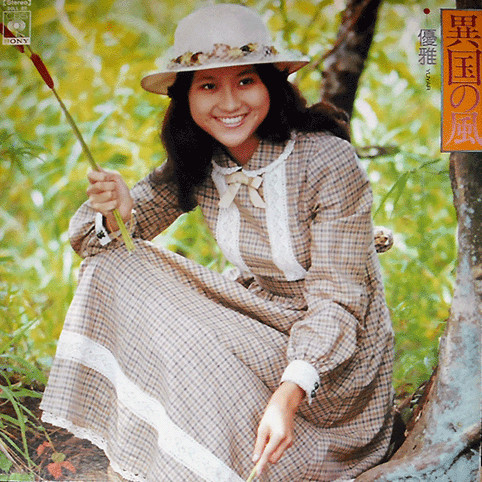
In the 1970s, several Chinese-language singers attempted, with varying levels of success, to penetrate the world’s second-largest record-buying market, Japan. First was Taiwan’s soulful singer, 翁倩玉 (Judy Ongg), who made her Japanese debut in 1971. She was followed Hong Kong’s girlish idol, 陳美齡 (Agnes Chan). Yu Yar entered the Japanese market next, signing with Sony Digital Records, a subsidiary of CBS/Sony, and billed as “ユヤー.” In preparation, she moved to Japan and spent months studying Japanese and training with vocal coaches to eliminate her accent, because Japanese labels at the time demanded near-native pronunciation for their ballads. Even though she was only nineteen, Sony attempted to market Yu Yar as a more sophisticated, mature idol. Her songs tended to be within the sentimental kayōkyoku style. Yu Yar released her first Japanese single 傷あと (“Scar”) that July. It performed modestly. It was followed by 秋の女 (“Autumn Woman”). Used to her superstar status in the Chinese-speaking world, Yu Yar found the grueling nature of promotional tours involving small venues and record stores grueling.


Yu Yar was followed by the other Sweetheart, Teresa Teng, who was marketed there as “テレサ・テン.” Her Japanese material was typically owed more to the traditional enka genre and (after an underwhelming debut) achieved much more enduring fame in Japan. Her Japanese single, 空港 (“Airport”), earned her the Japan Record Award for Best Newcomer at 16th Annual Japan Record Awards and she became a superstar in her new home. The last of the Five Great Asian Divas, 翁倩玉 (Judy Ongg), had lived in Japan since childhood but scored her first massive success in 1979 with 魅せられて~エーゲ海のテーマ~ (“Fascinated (Theme of the Aegean Sea)”), which won a Japan Record Award and was a major hit. By then, though, Yu Yar had long since moved on.
Yu Yar left Japan in 1975 and moved to Hong Kong. Hong Kong was Life Records’ primary recording hub and the booming Hong Kong film industry provided a massive platform for Yu Yar’s voice. Her style evolved into that of a glamorous, mature “diva” persona. During this era, she averaged three or four albums per year, including 1976’s 午夜香吻 (“Midnight Kiss”).
Yu Yar’s successful career came to an abrupt end when she married a Taiwanese fashion designer, 曹聖易 (Cao Sheng-yi) in 1978 after dating for just three months. Retired at the age of 24, Yu Yar and her new husband moved to San Francisco to live in relative anonymity. Yu Yar repeatedly found the “freedom of the streets” a welcome respite from the intense paparazzi of Taiwan and said that she enjoyed walking along Market Street unrecognized. In San Francisco, Yu Yar largely disappeared from the public eye. She gave birth to her first child, 曹品浩 (Cao Pin-hao) in 1979, and worked as a homemaker. She and Cao divorced in 1981. She raised her son as a single mother and grew more deeply involved with the church.
Meanwhile, Liu married his second wife, 甄珍 (Chen Chen), in 1978 — the same year Yu Yar married and moved to the US. There had been speculation in the Taiwanese tabloids that Liu was the actual father of Yu Yar’s son since the 1970s — rumors that Yu Yar has consistently denied. In 2015, Chen revealed that she’d secretly divorced Liu in 1987, after the birth of their son, 劉子千 (Liu “Jeremy” Tzu-chien) in 1986. In 2019, he changed his name to 章立衡 (Chang Li-heng), taking his mother’s family name (her real name is 章家珍).
Support Eric Brightwell on Patreon

Eric Brightwell is an adventurer, essayist, rambler, explorer, cartographer, and guerrilla gardener who is always seeking paid writing, speaking, traveling, and art opportunities. He is not interested in generating advertorials, cranking out clickbait, or laboring away in a listicle mill “for exposure.”
Brightwell has written for Angels Walk LA, Amoeblog, Boom: A Journal of California, diaCRITICS, Hey Freelancer!, Hidden Los Angeles, and KCET Departures. His art has been featured by the American Institute of Architects, the Architecture & Design Museum, the Craft Contemporary, Form Follows Function, the Los Angeles County Store, Sidewalking: Coming to Terms With Los Angeles, Skid Row Housing Trust, the 1650 Gallery, and Abundant Housing LA.
Brightwell has been featured as subject and/or guest in The Los Angeles Times, VICE, Huffington Post, Los Angeles Magazine, LAist, CurbedLA, LA Times 404, Marketplace, Office Hours Live, L.A. Untangled, Spectrum News, Eastsider LA, Boing Boing, Los Angeles, I’m Yours, Notebook on Cities and Culture, the Silver Lake History Collective, KCRW‘s Which Way, LA?, All Valley Everything, Hear in LA, KPCC‘s How to LA, at Emerson College, and at the University of Southern California. He is the co-host of the podcast, Nobody Drives in LA.
Brightwell has written a haiku-inspired guidebook, Los Angeles Neighborhoods — From Academy Hill to Zamperini Field and All Points Between; and a self-guided walking tour of Silver Lake covering architecture, history, and culture, titled Silver Lake Walks. If you’re an interested literary agent or publisher, please out. You can also follow him on Bluesky, Duolingo, Facebook, Goodreads, iNaturalist, Instagram, Letterboxd, Medium, Mubi, Substack, Threads, and TikTok.

In the early 1990s, Yu Yar — whilst still based in San Francisco — returned to performing, sometimes intense three-to-six-month “stints” in the Malaysia, Singapore, and Taiwan that increasingly introduced gospel and religious themes into her performances as she became more involved with the conservative 佳音教會 (Good News Church), founded by 田雅各 (Timothy Tian) in the Da’an District of Taipei in 1986. As her son aged, Yu Yar began to spend most of her time in Taipei. Since the 2000s, her performances have been almost exclusively associated with Christian music and celebrity gospel performances like the annual 愛在四月天 (“Love in April”).
Liu Chia-chang died of cancer on 2 December 2024.


 Eric Brightwell
Wow. You have written about singers You Ya and Yao Su Rong, who sang songs very popular among the Chinese-speaking community during my childhood in Indonesia. Specifically, Wang Shi Zhi Neng Hui Wei (Can only reminisce about the past) and Ming Tian Bu Hui Jia (Not coming home tomorrow). It’s incredible that an LA-based white guy would write about them in such detail. Thank you for bringing back the past with a blast.
LikeLiked by 1 person