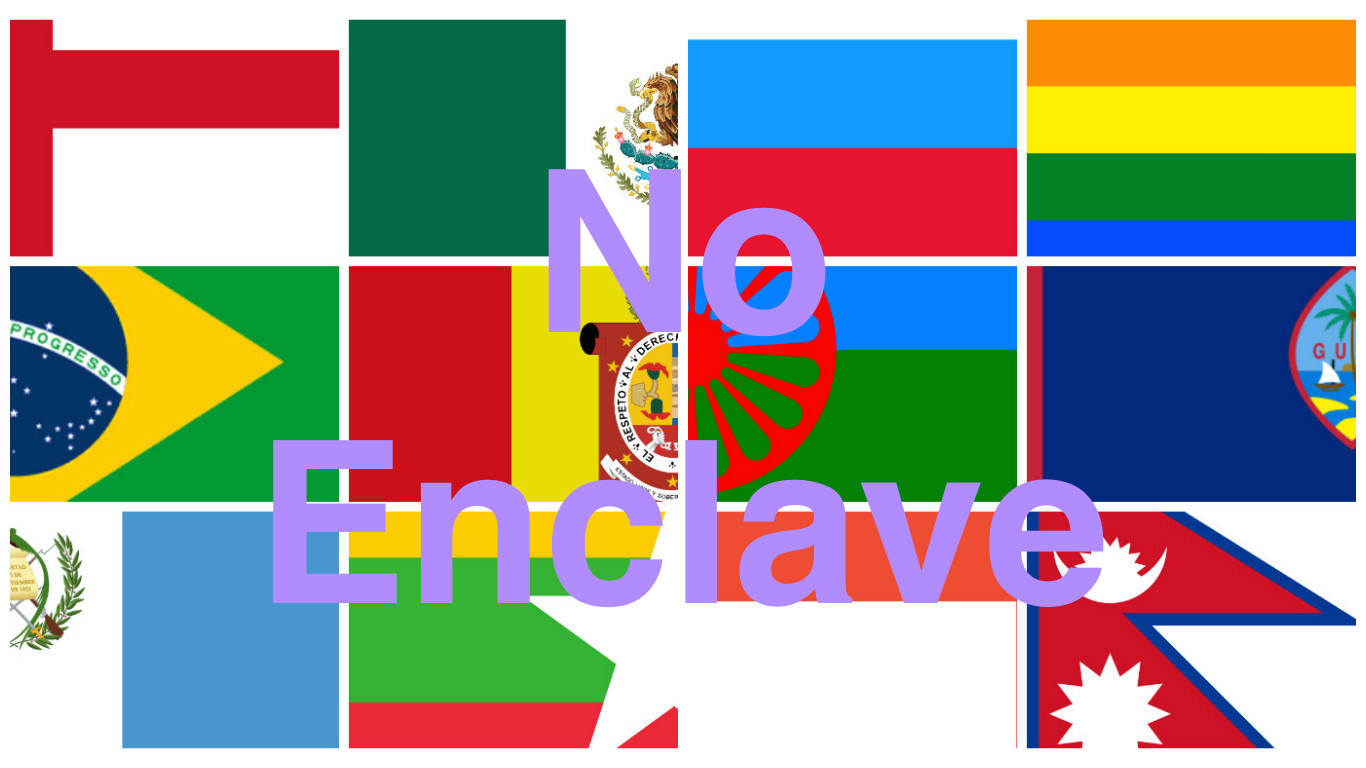
Today is International Day of Solidarity with the Palestinian People – the occasion for this edition of No Enclave, about Palestinian Los Angeles. Although Chicagoland has the largest concentration of Palestinian Americans, California has, by far, the largest statewide population of Palestinians of any state. Most are concentrated in the San Francisco Bay Area, Metro Los Angeles, the vicinity of North Orange County’s Little Arabia, and San Diego County’s city of El Cajon. Today, the Palestinian population in the Metro Los Angeles area is estimated to be approximately 15,000.
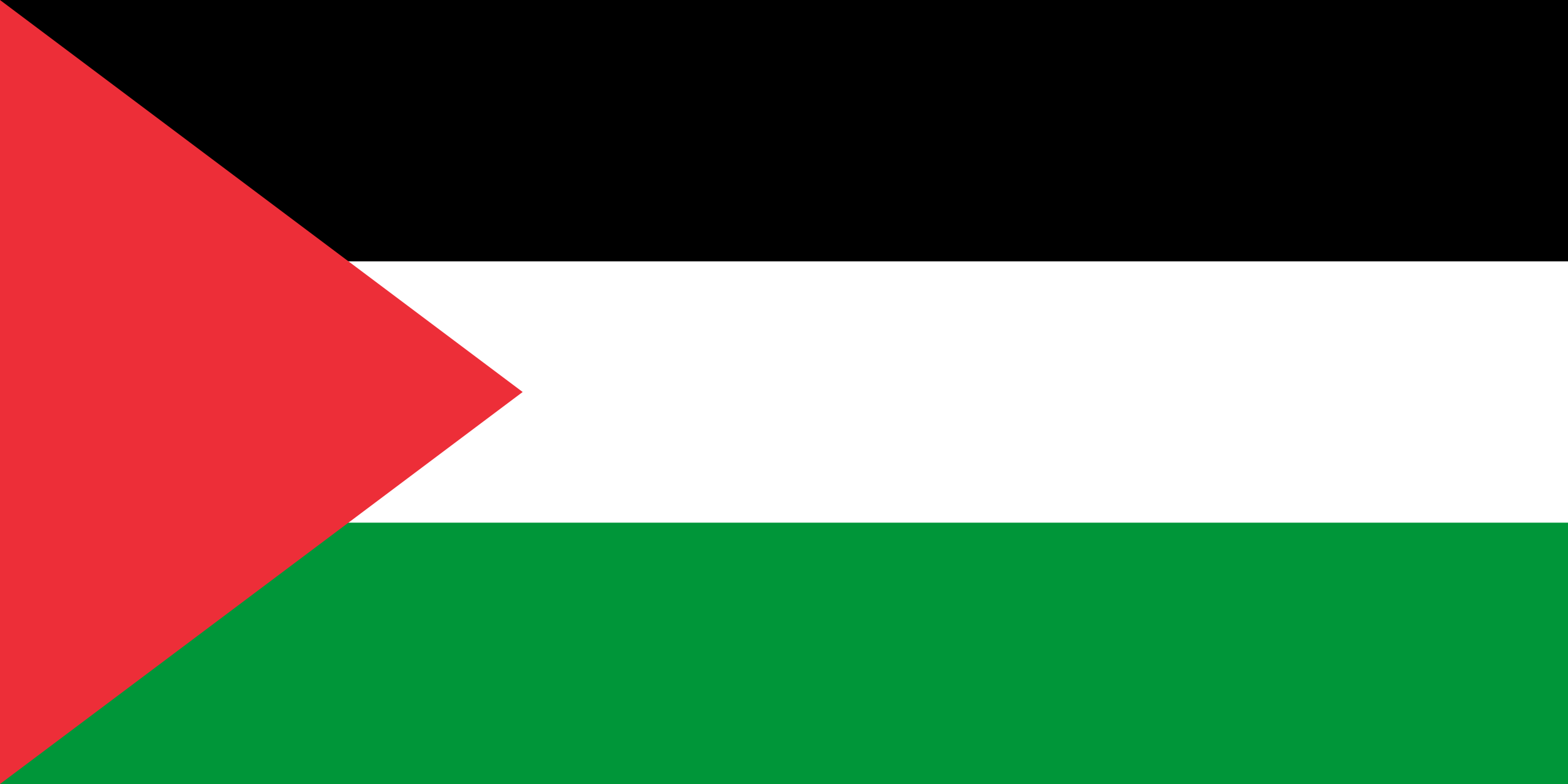
Statewide, California is home to an estimated 57,000 Palestinians. The 2020 US Census only counted about 27,000. At that time, Palestinians were instructed to check “white” on the census – which was then defined as “a person having origins in any of the original peoples of Europe, the Middle East, or North Africa.” The roughly 27,000 counts only those who checked “some other race” and wrote in “Palestinian.” In 2024, the category of “Middle Eastern or North African” was added.
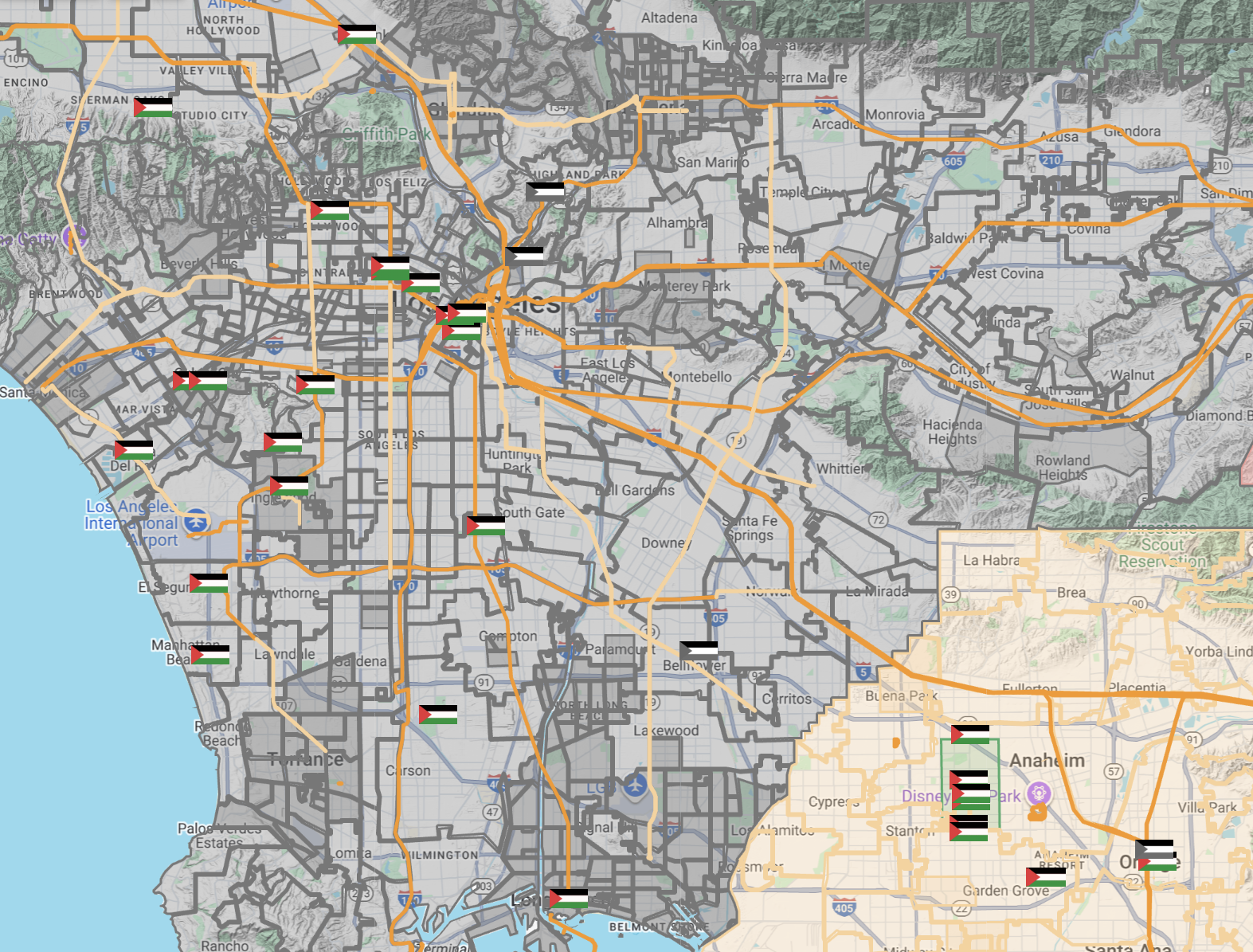
Palestine, officially the State of Palestine, is a country in West Asia that, today, encompasses the Israeli-occupied West Bank and theGaza Strip. Palestine’s population exceeds five million. Approximately 1 million registered Palestinian refugees live in recognized camps in the neighboring countries of Jordan, Lebanon, and Syria which were created following the displacement of a majority of the region’s population in 1948. Prior to the 2024 evacuations, Gaza was Palestine’s most populous city. Palestine’s proclaimed capital is Jerusalem, Ramallah serves as Palestine’s de facto administrative center.
A BRIEF HISTORY OF PALESTINE AND PALESTINIANS
Palestinians are a Semitic people with ancient roots in the Levant. Around the 12th century BCE, one of the ancient“Sea People” – likely with roots in the Aegean or Crete, settled on the southern coast of Canaan. In Hebrew, they were called Pelishtim. They referred to the area they controlled as Peleshet. The Greek toponym “Palaistínē” (Παλαιστίνη), first appears in the writings of the 5th century BCE Greek historianHerodotus, where it refers to the coastal lands between Egypt andPhoenicia. The province of Syria Palaestina, was established by the Roman Emperor Hadrian around 135 CE. Around 390 CE, under Byzantine rule, Syria Palaestina was organized into three smaller units: Palaestina Prima, Palaestina Secunda, and Palaestina Salutaris (or Tertia). After the region was briefly conquered by the Sasanian Empire in 614, it was conquered by the Arab Rashidun Caliphate in 636, during the rule of which the Arabic language and Islam were introduced. Control of Palestine passed to the Umayyad Caliphate (with their capital in Damascus), to the Abbasid Caliphate (with their capital in Baghdad), to the Tulunids and Ikhshidids (based in Egypt), to the Fatimid Caliphate (based in Cairo), and to the non-Arabic Seljuk Turks, who conquered the region around 1073.
The First Crusade, in 1099, resulted in the establishment of the Christian Kingdom of Jerusalem and other Crusader states, which controlled much of the coast and the city of Jerusalem for nearly a century. TheKuridish Ayyubid Sultanate reconquered most of Palestine in 1187, which was followed by the Egyptian Mamluks, who defeated the Mongols and remaining Crusaders, and who controlled Palestine until the Ottoman conquest of 1517. For the next four centuries, Palestine was controlled by the Ottomans. The Turks administered Palestine as part of the Province of Syria (Wilayat of Syria or Bilad al-Sham) but still referred to it, geographically and informally, as Filastin – the term also used by the resident population. European maps, historical accounts and travelogues, meanwhile, referred to it as Palestine.
Modern Palestine radically re-shaped by the philosophy of Zionism, which promoted mass immigration, mass displacement, as well as territorial and administrative changes. The First Aliyah (wave of immigration) of Jewish Europeans (mostly from Romania and Russia) to Palestine began in 1882, before Zionism was formalized. In 1890, Austrian writer (and then staunch atheist) Nathan Birnbaum coined the term “Zionism,” which advocated for the creation of a secular Jewish ethno-state. Where that entho-state would be was the subject of debate. Zionist Theodor Herzl suggested creating it in British East Africa (modern-day Kenya) or Cyprus. British Colonial Secretary Joseph Chamberlain offered Uganda as an alternative. In 1905, at the Seventh Zionist Congress, members rejected the plan and decided on Palestine. The Jewish Territorial Organisation split over this decision, suggesting Argentina or Iraq would be better options.
During the First World War I, the British conquered Ottomon-ruled Palestine and established military rule of the Occupied Enemy Territory Administration (OETA) South. In 1915 and ‘16, seeking support against the Ottomans, the British strongly implied to Arabs that they would support the establishment of an independent Palestinian state. The Balfour Declaration, made on on 2 November 1917, meanwhile, explicitly announced British support for the establishment of a “national home for the Jewish people” in Palestine. Balfour was, himself, a virulent antisemite and no friend of either Jews or Palestinians — but there was nothing contradictory about an antisemite supporting the aims of Zionism. He detested Jews as a people that Western civilization was both “unable to expel or to absorb” and, as Prime Minister, was the driving force behind England’s first immigration law, the Aliens Act of 1905. Its primary purpose was to restrict entry of Jewish refugees fleeing pogroms in Eastern Europe. In other words, he wanted England’s (and Europe’s) Jews to go somewhere else.
After the war, the British were granted the League of Nations‘ Mandate for Palestine to administer the territory. The Mandate for Palestine was formally established on 24 July 1922. By then, the population of Palestine was still religiously diverse, with 78% of the population practicing Sunni Islam, 11% Judaism, and 10% Christianity. There were also smaller groups of Druze, Baháʼís, Samaritans, and Sikhs. Following the 1936-1939 Arab Revolt, the British Peel Commission recommended partitioning Palestine into two separate states, an Arab state united withTrans-Jordan and a smaller, independent Jewish state. The Palestinian Arabs rejected the partition. In 1939, a proposed independent Palestine with a shared government of Arabs and Jews was rejected by both parties.
Although the Zionist project was well underway, the Holocaust played a huge role in creating international support for the creation of the state of Israel. Germany’s Nazi regime, their allies, and collaborators orchestrated the systematic, murder of approximately six million European Jews over the course of four years, from 1941 to 1945. After the war, hundreds of thousands of Jewish survivors were left displaced across Europe. In July 1947, the ship, Exodus 1947, carried 4,500 Jewish Holocaust survivors from France toward Palestine, where they were intercepted and attacked by British naval forces outside Palestinian territorial waters. Afterward, the ship was towed back to France, were the passengers refused to disembark. The British, therefore, deported them to Germany. In the wake of the ensuing scandal, the newly-formed United Nations voted in favor of partitioning Palestine in November 1947.
The creation of Israel in Palestine displaced an estimated 700,000 to 800,000 Palestinians, who were expelled or fled from their homes in Palestine between December 1947 and July 1949. Expulsions and massacres of Palestinians were carried out by Zionist paramilitaries (Haganah, Irgun, and Lehi – which later formed the core of the Israel Defense Forces). Over 500 Palestinian villages and towns were destroyed or depopulated. Palestinian homes were looted. Arabic place names were erased and replaced with Hebrew ones. The event came to be known as the Nakba, or “catastrophe.” When the dust settled, Zionist forces had captured 78% of historic Palestine, expanding well beyond the territory allocated for a Jewish state in the UN Partition Plan. The State of Israel was formally established and proclaimed on 14 May 1948. In 1950, Israel passed the Law of Return, which, ironically, cemented the prohibition of Palestinians who fled during the Nakba to return to their homes.
In 1950, Jordan annexed the West Bank and East Jerusalem. Egypt didn’t officially annex the Gaza Strip, but it was controlled by an Egyptian military administration (and, briefly, the Egyptian client state of the military governor. The experience of displacement and life in refugee camps, coupled with the lack of a state and the suppression of a separate identity by host nations, fostered a stronger sense of Palestinian nationalism. The secular nationalist Fatah organization was founded in 1959 by Yasser Arafat and other members of the Palestinian diaspora. Fatah advocated for the liberation of Palestine through armed struggle carried out by Palestinians themselves. The Palestine Liberation Organization (PLO) was formally established in 1964 at an Arab League summit in Cairo to provide a unified voice for Palestinians. Palestinian resistance groups (known as fedayeen), began conducting guerrilla attacks and cross-border raids against Israel in the mid-1960s, in order to draw attention to their cause and attempt to reclaim their homeland.
In 1967, after Egypt blockaded the Straits of Tiran and amassed troops on Israel’s border, Israel responded with an aerial assault on the air forces of its neighbors: Egypt, Jordan, and Syria. Israel then conquered the Sinai Peninsula and the Gaza Strip from Egypt, the West Bank and East Jerusalem from Jordan, and the Golan Heights from Syria before a UN-brokered ceasefire ended the war. Approximately 413,000 Palestinians “became” refugees, as a result. Of this number, an estimated 145,000 were already refugees, having already fled their homes during the 1948 Arab-Israeli War.
Most of the displaced Palestinians fled to Jordan, where the United Nations Relief and Works Agency established refugee camps. That December, George Habash, a Palestinian from a Christian family, founded the secular, anti-imperialist, Marxist-Leninist, Popular Front for the Liberation of Palestine (PFLP), which quickly became the second most prominent Palestinian faction within the PLO after Fatah and would remain so until the rise of right wing religious extremist organizations like Palestinian Islamic Jihad and Hamas – both of which would arise the 1980s to fill the void left by the battered Palestinian Left.
MUSTAFA DAOUD SIAM & SIHAM KHALIL ISAHAMAD
One of the first prominent Palestinian Angelenos was Jerusalem-born Mustafa Daoud Siam. Siam immigrated to the US from Palestine in 1956 with his wife, Siham Khalil Isahamad, and their infant son, Mazin. After a brief stay in Ohio, they came to Lakewood, with a second son, in 1958.
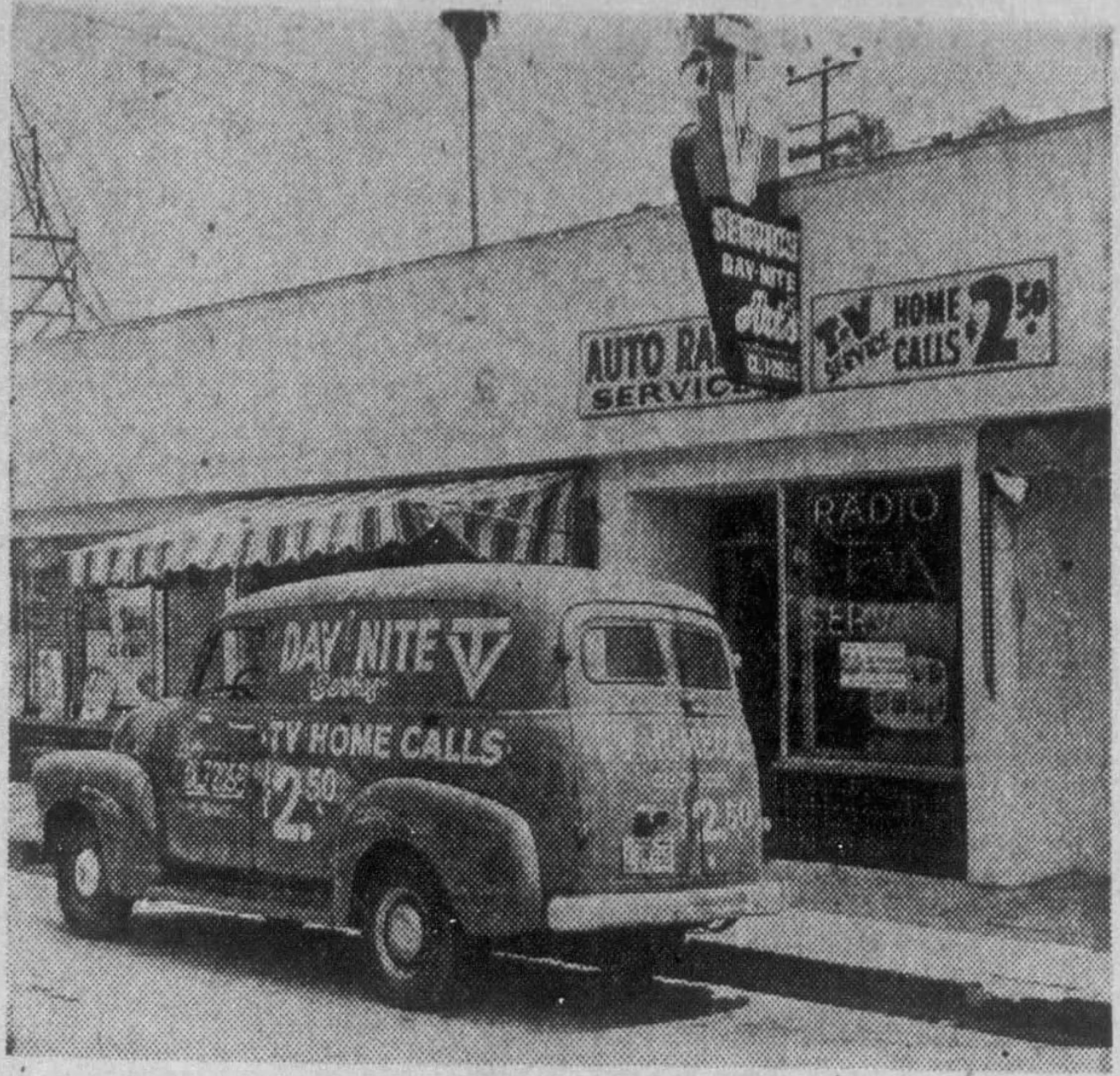
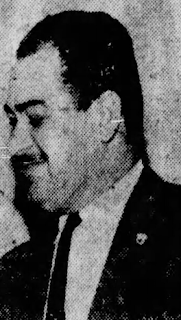
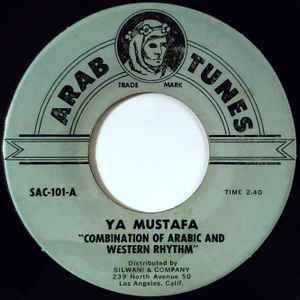
Mustafa Siam co-founded Art & Sam’s Day & Nite TV Service in Highland Park and an import business, Silwani and Company, in Lincoln Heights. The latter evolved into a record label, Arab Tunes, that distributed music by Egyptian greats like Mohamed Abdel Wahab and Umm Kulthum. Siam became a prominent figure in the local Arab and Muslim American communities and became the president of the Los Angeles Moslem Association of America. In the 1970s, he founded the newspaper, The Palestinian Voice, which he used to advocate for Palestinian sovereignty. For that, the right-wing Jewish Defense League (JDL) targeted him and his family with a bomb in 1975, although it failed to detonate. Siham Khalil Isahamad, aka “Um Mazin” was also an activist. She co-founded the Palestinian American Women’s Association (PAWA) in 1985. Siam died in 1999. ‘Um Mazin,” died in 2021.
SIRHAN SIRHAN
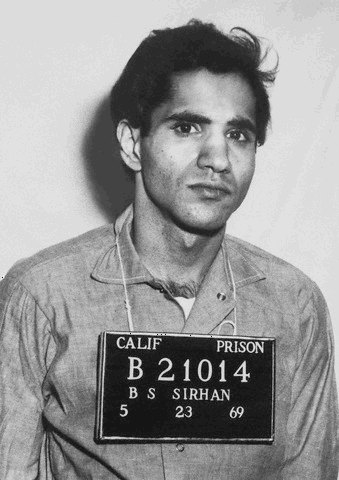
The most notorious Palestinian Angeleno, without a doubt, is Sirhan Bishara Sirhan (سرحان بشارة سرحان), who came to national prominence during this era when he assassinated United State Senator Robert F. Kennedy at the Ambassador Hotel in what’s now Koreatown. Sirhan was born in Jerusalem in 1944 and attended a Lutheran school. Sirhan’s older brother died during the violence of the 1948 Arab-Israeli War and the family moved to the US in 1956. Sirhan settled in Altadena, where he lived on 5 June 1968, the date he carried out his assassination. In an interview with David Frost, he explained that his actions were motivated by Kennedy’s advocacy for the sale of US-built Phantom fighter-bombers to Israel. It marked for most historians the first major incident of political violence having arisen from the Arab-Israeli conflict.
PALESTINIAN TERRITORIES UNDER ISRAELI MILITARY OCCUPATION
On 23 July 1968, three PFLP members hijacked El Al Flight 426 en route from Rome to Tel Aviv, hoping to negotiate the release of Palestinian prisoners in exchange for the passengers and crew. This event inaugurated the modern era of international, politically motivated aircraft hijackings. Meanwhile, the PLO was based as a government-in-exile, in Jordan until they were expelled after the violence of Black September, when a war broke out between Jordan and the PLO. The Black September Organization was founded in 1971 to avenge the Palestinian losses during the conflict and went on to carry out numerous attacks, most notoriously the 1972 Munich Olympics massacre of eleven members of the Israeli Olympic team.
The PLO, meanwhile, relocated to Lebanon, where it was granted “observer status” within the UN, in 1974. In response, the offices of the United Nations Association in Los Angeles were bombed that November by members of the JDL. An anonymous caller informed The Los Angeles Times that it was in response to Palestine’s new status.
IMMIGRATION ACT & FIRST MAJOR WAVE OF IMMIGRATION
Greater immigration of Palestinians was only possible after theImmigration and Nationality Act of 1965 became effective in 1968. It was in the 1970s that greater numbers began to arrive. Not only were they denied by Israel the “right of return”; they faced the prospect of poor living conditions and lack of rights within the Arab host countries to which they’d been displaced. With nowhere else to go, significant numbers of Palestinians began to emigrate to Europe, South America, and North America. In the latter, they established communities in the Latin American countries of Honduras, Guatemala, Mexico, and El Salvador. Anglo-Americans, who tend to conceive and speak of Latinos as basically homogenous, will probably be surprised to learn that right wing Central American politicians (and Trump endorsees) Nasry “Tito” Asfura Zablah of the Honduras and Nayib Bukele of El Salvador are both descended from Palestinians. In Anglo America, Palestinians mostly settled in Canada and the US, where they established communities in the metropolitan areas of Chicago, New York City, Houston, Philadelphia,Los Angeles, Cleveland, Columbus, and Detroit. According to the 2023 American Community Survey, there are today roughly 160,000 Palestinian Americans.
Palestinians newly arrived in the 1970s entered a country where crime was skyrocketing and there were more acts of domestic terrorism than in any other decade. In an eighteen-month period in 1971 and ’72, the FBI recorded 2,500 bombings on American soil. The perpetrators were motivated by a range of ideologies and included, within Los Angeles, organizations like the Weather Underground, the Chicano Liberation Front, and the JDL.
The JDL’s targets included all perceived enemies of the Israeli state, including Soviet affiliates, suspected Nazi war criminals, moderate Jews, and Arabs of any background. The earliest notable incident involving the JDL and explosives in Metro Los Angeles area occurred in January 1972, when they threw small explosives at the El Monte headquarters of the neo-nazi National Socialist White People’s Party. On 2 June of that year, they bombed the Lebanese consulate on Hollywood Boulevard. That September, JDL bombed the home of Palestinian accountant Mohammed Shaath after he appeared in a television debate with JDL West Coast coordinator, Irv Rubin. His family, including his wife and two infant children were unharmed, by a JDL member afterward phoned The Los Angeles Times and stated “I just bombed an Arab’s house in Hollywood. No Arab is ever going to be safe in this country. Never again. Never again. Never again.” Rubin ultimately commit suicide in jail whilst awaiting trial on charges of conspiracy to bomb private and government property.
THE LOS ANGELES EIGHT
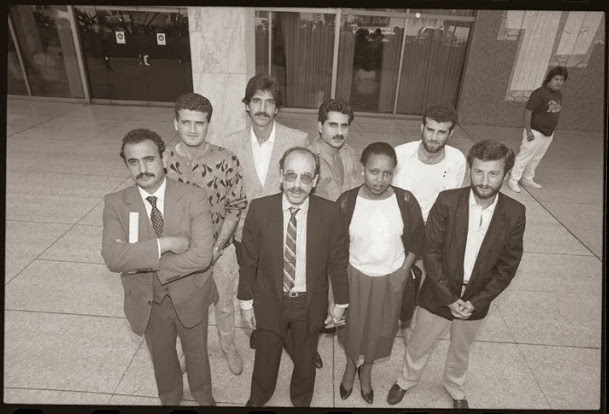
On 27 January 1987; Palestinian Angelenos Amjad Mustafa Obeid, Ayman Mustafa Obeid, Bashar Amer, Iyad Barakat, , Michel Shehadeh, Naim Sharif, Khader Hamide — and Hamide’s Kenyan wife, Julie Mungai — were arrested in a series of early morning raids carried out by Immigration and Naturalization Service (INS) and the FBI. Their crime was distributing the PFLP-affiliated magazine Al Hadaf, which would’ve been protected by the First Amendment had the arrested been citizens rather than non-citizen residents. The press labeled them the Los Angeles Eight. They were subjected to 23 days of solitary confinement on Terminal Island. Deportation proceedings, however, dragged on for twenty years until they were finally resolved or dropped in 2007. Shehadeh continued his activism during the proceedings. He notably served as theWestern Regional director of the American-Arab Anti-Discrimination Committee (ADC) from 1996 to 2003. Currently, he’s the executive director of the Arab Film Festival.
FILM AND PALESTINE
Cinema’s history in Palestine began in late 1896 or ‘97, when the Lumiere brothers began publicly exhibiting films in the region. In April 1897, an employee of the Lumière brothers, Alexandre Promio, filmed short scenes in Jaffa and Jerusalem. The first permanent cinema in Palestine, The Oracle, opened in Jerusalem in 1908.
The first Palestinian-made film was a twenty-minute documentary about King Ibn Saud‘s visit to Palestine in 1935, directed by Ibrahiim Hassan Sirhan. Realized Dreams, co-produced by Sirhan and Jamal al-Asfar, was released around 1935 or ‘36 and is widely regarded as the first narrative Palestinian film. In 1945, Sirhan established the Arab Film Company with Ahmad Hilmi al-Kilani in Jaffa. Night Dreams, directed by Salah al-Din Badr Khan, was released in 1946 and one of the first narrative feature film. All of these films, however, were lost during the Nakba which, though violently disruptive to the embryonic Palestinian film industry, had the effect of spawning the diaspora-based, revolutionary Palestinian cinema.
In Hollywood, meanwhile, depiction of Palestinians were usually absent or derogatory — in a narrative familiar to audiences raised on simply “cowboys and Indians” retellings of America’s own conquest. The first Hollywood film that specifically focused on the establishment of Israel and its early conflicts was Sword in the Desert, released in 1949. In its case, though, Palestinians are mostly absent from the film, and the antagonists are the British Mandatory authorities. The Juggler was the first major Hollywood film shot inside the newly-established Israeli state and released in 1953. It starred Kirk Douglas as a Holocaust survivor. What few Palestinians are present exist solely on the margins.
The most famous and influential Hollywood production of the era, though, was the 1960 film, Exodus, in which Palestinians were present but depicted as dirty, backward, irrational, and inherently murderous savages.
Exodus established the pattern that Hollywood would perpetuate in the decades that followed. In Black Sunday (1977), Palestinians threaten to detonate a bomb at the Super Bowl.
Sorcerer (1977) is the rare exception to the typical, negative depictions of Palestinians in Hollywood films of that era. It features a sympathetic character named Kassem who is a Palestinian resistance fighter (portrayed by French-Moroccan actor, Hamidou Benmessao).
Although not a Hollywood production (Cannon was founded by Israeli cousins Menahem Golan and Yoram Globus), The Delta Force (1986) featured Hollywood actors Chuck Norris and Lee Marvin, who have to defeat Palestinian terrorists, and the film opened in 1,720 American cinemas. Within the milieu of racist anti-Palestinianism, James Cameron’s True Lies (1996) manages to stand out for its sheer commitment to anti-Palestinian bigotry.
Around the same time, non-American Westerners began to make documentaries that evinced some sympathy to the Palestinian plight. A British documentary directed by Roy Battersby and narrated by Vanessa Redgrave, The Palestinian (1977), was screened in June 1978 at the Doheny Plaza Theatre in Beverly Hills (today known as the Writers Guild Theater). Members of JDL bombed the cinema lobby in the wee hours of the morning. The film was screened, nevertheless. When Vanessa Redgrave was awarded an Oscar for her role, JDL members burned effigies of her outside the awards ceremony.
Further from Hollywood, feature films like Paradise Now (2005), Lemon Tree (2008), Amreeka (2009), Omar (2013), and a growing number of documentaries have received critical acclaim and challenged Hollywood’s anti-Palestinian narratives. The first film made by a Palestinian in Palestine, since the Nakba, was Wedding in Galilee (1987). It was awarded prizes at Cannes, San Sebastián, Gent, and Carthage. It was screened in New York City, Washington DC , and the Jewish Film Festivals in Berkeley and San Francisco but remains largely unseen in the US. More recently, though, Promises (2001), Born in Gaza (2014), 5 Broken Cameras (2011), and No Other Land (2024) were all screened somewhat more widely. Three were nominated for Oscars and the most recent of them, No Other Land, won the Academy Award for Best Documentary Feature — suggesting that even the conservative Academy is beginning to welcome new voices.
On 7 October, Hamas launched “Operation Al-Aqsa Flood,” in which 379 Israeli security forces and 796 Israeli and foreign civilians were killed. The attacks and the ensuing war would seem to have represented a major turning point that has profoundly impacted dynamics not just in the Levant but around the world. In the more than two years since, Israel has launched attacks in Iran, Iraq, Lebanon, Qatar, Syria, Yemen, and the Palestinian territories, where at least 71,0000 Palestinians have been killed, 170,000 have been injured, and 1.9 million have been displaced. The actual death toll is higher — with uncounted numbers of Palestinians buried beneath rubble; independent international journalists, UN personnel, and humanitarian organizations denied access; and despite a nominal ceasefire, the UN has counted 393 Israeli violations in 44 days, thus far.
The upsurge in violence led to the dramatic intensification of the Israel-Palestine conflict on US college campuses and culture at large. In Los Angeles, universities like the University of California, Los Angeles and University of Southern California (USC) became focal points for demonstrations while smaller schools including California State University, Los Angeles; California State University, Northridge; East Los Angeles College, and Occidental College were also sites of unrest. Groups including Students for Justice in Palestine, UC Divest Coalition, Jewish Voice for Peace, Faculty for Justice in Palestine, Palestinian Youth Movement, Young Democratic Socialists of America, Harriet Tubman Center for Social Justice, Muslim Student Association, and Dissenters organized rallies and, in some cases, established encampments to demand their institutions divest from Israel and sever academic ties with Israeli institutions. Counter-protests in support of Israel’s actions were organized by Israeli American Council, StandWithUs, United Jewish Coalition, Hillel at UCLA, and Bruins for Israel. A violent attack at UCLA was organized by “right-wing provocateurs” and “reactionary extremists” who had no formal affiliation with UCLA.
A growing political divide emerged, too, within Hollywood. Los Angeles entertainers Angelina Jolie, Ava DuVernay, Billie Eilish, Jenna Ortega, Joaquin Phoenix, Pedro Pascal, and others publicly spoke-out against Israel’s military actions in Palestine. Brett Gelman, Gal Gadot, Noah Schnapp, and others spoke out in support of Israel. Meanwhile– although none are as high profile as their non-Palestinian counterparts — a growing number Palestinian Angelenos are working behind and in front of the camera in both Hollywood and independent American cinema.

Daoud Heidami was born in Texas to a Palestinian father from Beit Sahour and a Palestinian mother from Bethlehem. He attended the University of California, San Diego for his Master’s degree and subsequently moved to Los Angeles to pursue acting. Mohamed Hadid is primarily known as a real estate developer — but he’s also known for his appearances on reality television. He has acted, too, on at least two occasions – in the little-seen Ripple Effect (2007) and John Travolta vehicle, Trading Paint (2019). He was born in Nazareth in 1948 and his family fled to Syria during the Nakba before relocating to the US. Mousa Hussein Kraish was born and raised in New York (with family roots in Beit Ummar) who moved to Los Angeles to pursue an acting career. Reem Jubran is a filmmaker whose UCLA thesis film, Don’t Be Long, Little Bird, was rooted in her Palestinian identity. Vic Tablian was born in the British Mandate of Palestine in 1945 and is known for acting roles in films like Raiders of the Lost Ark. Waleed Zuaiter is an actor and producer who was born in California to Palestinian parents (his father is from Nablus).
There are several film festivals which sometimes have a strong focus on Palestine but all of which are open to Palestinian films, including the San Diego Arab Film Festival (SDAFF), Arab Film Festival (AFF), and Hollywood Arab Film Festival (HAFF). There have also been special one-off film events. The inaugural RESISTERE Film Series was organized by the Arab Film and Media Institute and held in West Hollywood in July 2024. There was also Films of Resistance, a night on which Palestinian shorts were screened in Highland Park in September 2024.
PALESTINIAN INDEPENDENCE
International Day of Solidarity with the Palestinian People was created in the UN in 1977 and first observed in 1978, in commemoration of the adoption of the UN General Assembly’s 1947 Partition Plan. After Israel invaded Lebanon in 1982, the PLO moved to Tunisia. The First Intifada (Arabic for “shaking off”) began in 1987. In 1988, Jordan ceded its claim to the West Bank. The PLO declared Palestine’s independence on 15 November 1988 – albeit as a government-in-exile in Algiers. The declaration was read by PLO chairman Arafat.
Today, 157 out of 193 (more than 81%) UN member states (plus the non-state member Holy See/Vatican City) recognize Palestine’s independence – with notable hold-outs including Israel, Eritrea, Italy, Japan, Myanmar, South Korea, and the United States, which has consistently blocked Palestine’s full UN membership. In 2018, the Trump regime even closed the Washington, DC office of the Palestinian diplomatic mission. Since then, the Palestinian mission to the UN in New York City has served as Palestine’s de facto embassy in this country.
Since the Palestinian Declaration of Independence, three issues have dominated the international discourse surrounding Palestine and its people: the continuous expansion of Israeli settlements into Palestine (there over 670,000 Israeli settlers in the West Bank — living there in violation of the Fourth Geneva Convention‘s prohibition on transferring a civilian population to occupied territory); allegations of apartheid leveled by an increasing number of individuals and organizations including Amnesty International, B’Tselem, Desmond Tutu, Human Rights Watch, the International Court of Justice, President Jimmy Carter, the UN’s Economic and Social Commission for Western Asia (ESCWA); and, allegations of Israeli-perpetrated genocide made by Amnesty International, B’Tselem, Human Rights Watch, the International Association of Genocide Scholars (IAGS), the UN Commissions of Inquiry, the government of South Africa, and others.
THE RISE OF LITTLE ARABIA
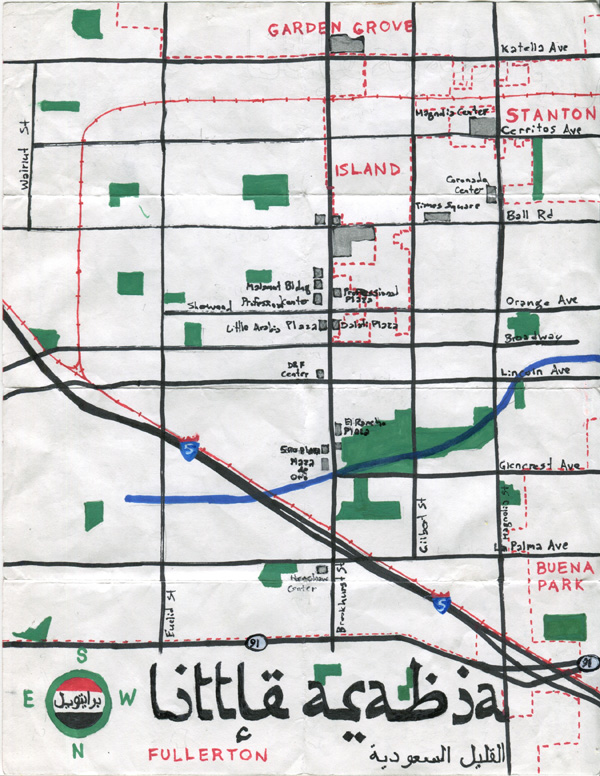
Meanwhile, in Southern California, the pan-Arabic enclave of Little Arabia was granted formal recognition on 23 August 2022. It arose in West Anaheim and unincorporated Anaheim Island known to the Anaheim City Planning Commission as “Garza Island” after Garza Avenue — leading to its being nicknamed, by some, “the Garza Strip.” In the 1980s, a diverse group of Arab homebuyers and business people began moving into the area — then known for its strip clubs and no-tell motels — drawn there by the cheap rent.

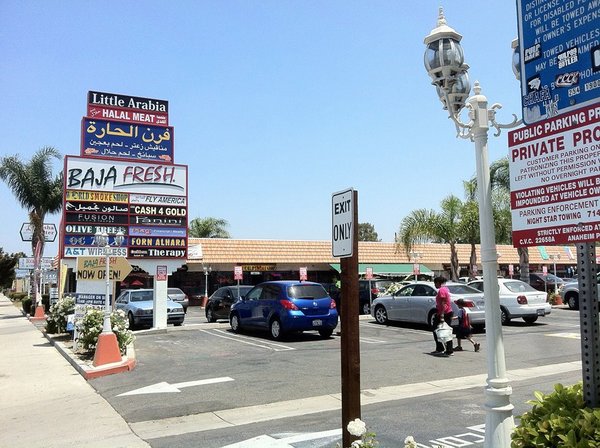

In the 1990s, Lebanese Ahmad Alam and Syrian Belal “Bill” Dalati actively used their power as entrepreneurs to transform the seedy area into an Arabic business district. The Arab American Council and Arab World Newspaper were both launched in 1996.
PALESTINIAN ANGELENO (AND ORANGE COUNTIAN) RESTAURANTS
By then, there was at least one Palestinian restaurant in Metro Los Angeles — Golden Dome Falafel — which was favorably reviewed in 1993 by the late Jonathan Gold, who also included it in his seminal book, Counter Intelligence: Where to Eat in the Real Los Angeles. There, Gold described a restaurant that also offered not just superior falafel (and greasy shwarma) but also VHS conversion, souvenirs, and advertisements for immigration assistance. It was in Bellflower, where it stood “starkly against the east-Bellflower landscape of Taco Bell signs and mortuary facades” until at least 1999.
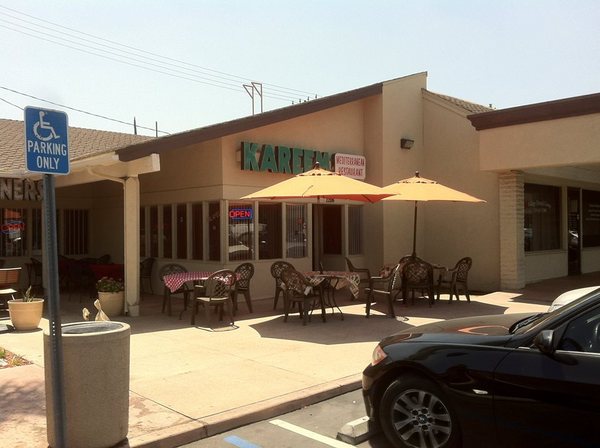
The oldest-extant Palestinian restaurant in Metro Los Angeles — and the oldest-extant Arabic restaurant in Little Arabia — is Kareem Mediterranean Restaurant, was also opened in 1996 — by a Palestinian couple from Nazareth, Mike and Nesrine Hawari, Mike died in 2012 but Kareem continues to thrive and other Palestinian restaurateurs have followed.
Palestinian cuisine, like most cuisines, is the result of the mingling of indigenous cooking traditions, imported ingredients, and influences from neighboring regions. Staple ingredients include olive oil, legumes (chickpeas, lentils, and other beans), herbs (mint and parsley), and fruits/vegetables (eggplant and tomatoes). Widely consumed animals include sheep, chickens, and various species of fish. Popular dishes include falafel, hummus, kibbeh, maqluba, and msakhan.
Knafeh Cafe was opened in Little Arabia around 2013 by Palestinian, Asem Abusir. It’s known for its knafeh.
Ammatoli was founded by half-Syrian/half-Palestinian chef-owner Dima Habibeh and is known for its msakhan. It opened in Downtown Long Beach in 2018.
Shawarma House was also opened in 2018, in Garden Grove.
Al Sultan Restaurant was opened by Abdo Rahmoon in Little Arabia around 2020. It’s known for its daily specials and treats like warak enab.
Anwar’s Kitchen was opened in the Fashion District by Palestinian mother-and-son, Amal and Anwar Jibawi, around 2020.
Sababa Falafel Shop was opened in Garden Grove, just outside of Little Arabia, by Ramallah native Salah Othman around 2020.
Al Baraka Restaurant was opened by Syrian and Palestinian husband-and-wife, Aref and Majeda Shatarah in Little Arabia in 2023. It’s known for its shawarma and hummus plates, as well as main courses like kousa, mansaf, and mshakan.
Filo Dessert, in Orange, opened in 2024, and specialized in traditional Palestinian desserts and pastries.
Mid East Eats is a home kitchen that offers halal and vegan options. It was opened in early 2025 by husband-and-wife Andrew andSumer Durkee, who live in Watts. Sumer is a native of the West Bank and a portion of the restaurant’s proceeds are donated to support families in Gaza.
Jerusalem Chicken was opened in Windsor Hills by Palestinian owner, Sami Othman in 2021. It’s known for its rice-stuffed chicken, falafel, and hummus. Othman founded the New Orleans/New York fusion deli chain, Orleans & York, around the corner in 2013.
Orleans & York is not the region’s only Palestinian-owned deli. In the mid-20th century, many Palestinian immigrants opened small markets (bodegas in New York or tienditas in Los Angeles) that often contained delis within. The food, generally, catered to local tastes – although Palestinian influences would often creep in over time – and these delis often served as informal community spaces for the Palestinians. One, Jackson Market and Deli, in Culver City’s Carlson Park neighborhood, has been managed by Tony and Nick Istwani since 2000. There’s also the chain, Ike’s Love and Sandwiches, with over ninety locations. It was founded by Ike Shehadeh as Ike’s Place in San Francisco’s Castro neighborhood in 2007.
PALESTINIAN ANGELENO MUSIC
Palestinian music encompasses a rich spectrum from traditional folk tunes to modern styles that incorporate global genres. Traditional Palestinian music features instruments like the oud, qanun, and nay to perform monophonic melodies within the maqam and wazn systems, often incorporating improvised poetry (zajal) and accompanying the dabke folk dance at social events. Modern Palestinian music, in contrast, sometimes blends traditional elements with Western genres such as hip-hop, jazz, rock, pop, and dance music. There are several notable Palestinian Angeleno musicians working within various genres.
The first prominent Palestinian Angeleno in music was probably Fredrick “Fredwreck” Nassar. His family’s roots were in Ramle, which they were displaced from in 1948. His mother was born in Bir Zeit and his father in Jerusalem. They emigrated to Michigan in 1967 following the June War. He began making mixtapes in high school after his mother bought him a keyboard and later performed as a DJ, keyboardist, and guitarist for artists such as Cypress Hill and Snoop Dogg. From 1995 to 1997, he worked as an A&R executive at MCA/Universal Records, where he oversaw recording sessions for artists like Aaliyah and Mary J. Blige.
More Palestinian Angelenos have emerged in the years since.
Belly is a Palestinian Canadian rapper and producer (né Ahmad Balsh) who was raised in Ottawa and moved to Los Angeles to advance his career. He has collaborated with artists including Beyoncé, Dr. Dre, and the Weeknd. Clarissa Bitar is an oud musician and composer based in Glendora.
DJs Simi & Haze are identical twin sisters, Sama and Haya Abu Khadra, are part of a family from Jaffa who were born in Riyadh. They moved to Los Angeles to attend USC, where they both studied Film Production and Fine Arts. They founded the beauty brand SimiHaze Beauty in 2021.
Elyanna is a Chilean Palestinian singer who was the first artist to perform an entire set in Arabic at Coachella. She was born in Nazareth and moved, with her family, to San Diego when she was fifteen. She has since moved to Los Angeles.
The Mawtini Choir is a children’s choir that teaches and performs traditional Arabic and Palestinian songs and which often appears at larger cultural events.
HOLIDAYS AND OBSERVANCES
Traditional Palestinian holidays and observances are a blend of Islamic and Christian religious feasts. There are also significant national and cultural commemoration days that reflect Palestinians’ shared history and identity.
Important Islamic holidays include Ramadan, Eid al-Fitr, Eid al-Adh, Muharram (Islamic New Year), Mawlid un-Nabi (the Prophet’s Birthday), and Lailat al Miraj (Night of Ascension). Important Christian Holidays include Easter and Christmas, which honor Jesus of Nazareth, a man born in the West Bank city of Bethlehem. Important national and commemorative holidays include Land Day (30 March), Labor Day (1 May), Nakba Day (15 May), Independence Day (15 November), and International Day of Solidarity with the Palestinian People (29 November). Local events include the annual Palestinian Culture Day (formerly Palestine Day), a cultural celebration featuring traditional Palestinian music, performers, dabke folk dancing, food, and a community market.
COMMUNITY ORGANIZATIONS
There are several local organizations representing Palestinians in Southern California. The American Federation of Ramallah, Palestine (AFRP) was founded in 1959. The local chapter is the Ramallah Club of LA/OC. American Muslims for Palestine (AMP) was founded in 2006 by Hatem Bazian, a faculty member at the University of California, Berkeley and co-founder ofStudents for Justice in Palestine. The local chapter is known as American Muslims for Palestine | Southern California. The Palestine Foundation hosts benefit concerts and cultural events featuring Palestinian artists.
Support Eric Brightwell on Patreon

Eric Brightwell is an adventurer, essayist, rambler, explorer, cartographer, and guerrilla gardener who is always seeking paid writing, speaking, traveling, and art opportunities. He is not interested in generating advertorials, cranking out clickbait, or laboring away in a listicle mill “for exposure.”
Brightwell has written for Angels Walk LA, Amoeblog, Boom: A Journal of California, diaCRITICS, Hey Freelancer!, Hidden Los Angeles, and KCET Departures. His art has been featured by the American Institute of Architects, the Architecture & Design Museum, the Craft Contemporary, Form Follows Function, the Los Angeles County Store, Sidewalking: Coming to Terms With Los Angeles, Skid Row Housing Trust, the 1650 Gallery, and Abundant Housing LA.
Brightwell has been featured as subject and/or guest in The Los Angeles Times, VICE, Huffington Post, Los Angeles Magazine, LAist, CurbedLA, LA Times 404, Marketplace, Office Hours Live, L.A. Untangled, Spectrum News, Eastsider LA, Boing Boing, Los Angeles, I’m Yours, Notebook on Cities and Culture, the Silver Lake History Collective, KCRW‘s Which Way, LA?, All Valley Everything, Hear in LA, KPCC‘s How to LA, at Emerson College, and at the University of Southern California. He is the co-host of the podcast, Nobody Drives in LA.
Brightwell has written a haiku-inspired guidebook, Los Angeles Neighborhoods — From Academy Hill to Zamperini Field and All Points Between, that he hopes to have published. If you’re a literary agent or publisher, please contact him.
You can follow him on:
Bluesky, Duolingo, Facebook, Goodreads, iNaturalist, Instagram, Letterboxd, Medium, Mubi, Threads, and TikTok.


 Eric Brightwell
I really enjoyed this read! As a second generation Arab American whose family emigrated to Southern California in the mid-80’s, it was encouraging to see the early communities back in the 1950’s as well as the many accomplishments in business, arts, and culinary in the decades since. Thank you for highlighting these important contributions that have impacted not only those in Southern California but around the world!
LikeLiked by 1 person