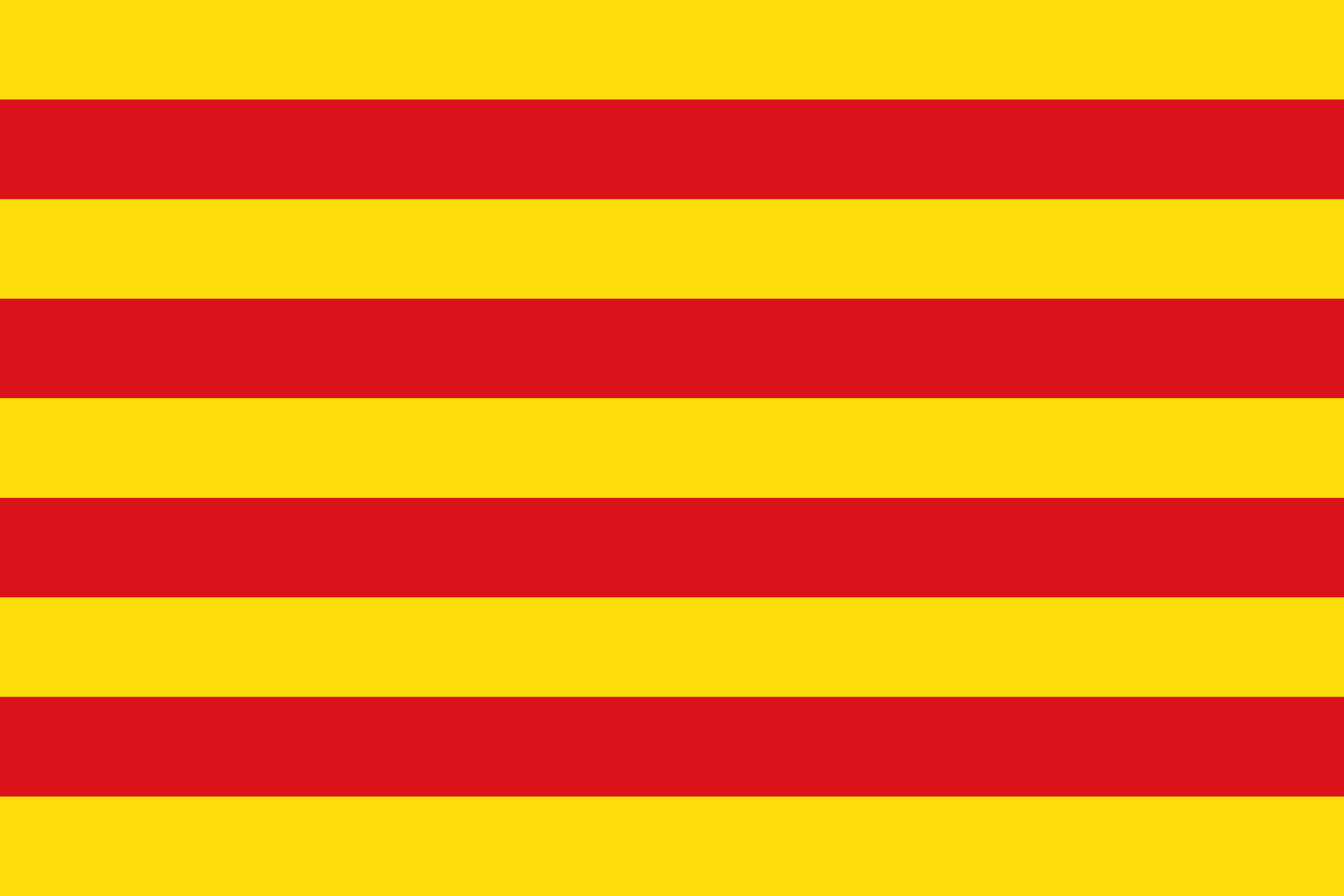
11 September is the national day of Catalonia, or “La Diada.” Catalonia (Catalan: Catalunya) is a stateless Mediterranean nation split between Spain, where it is an autonomous community, and France, where the borders of its Roussillon region correspond roughly with those of the department of Pyrénées-Orientales. Its capital and most populous city, Barcelona, is the core of – by most measures – either the fifth or seventh most populous metropolitan area in Europe.
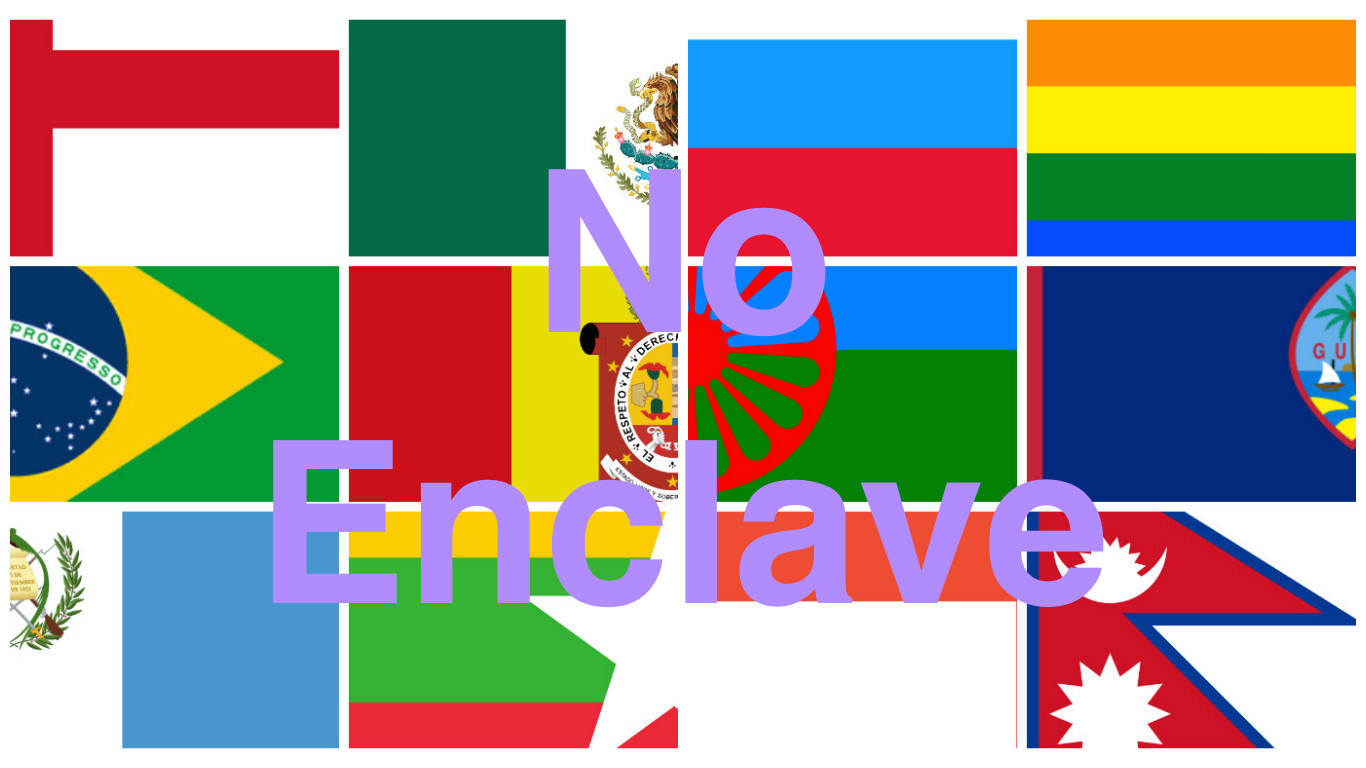
It’s difficult to say how many Catalans or people or partial Catalan ancestry there are in Los Angeles. The US Census is not terribly nuanced. In the most recent one, 46.9% of Angelenos checked the option “Hispanic or Latino (of any race).” “Hispanic” includes anyone with origins in Spain, a mostly white European country. “Latino” is short for “Latinoamericano” and thus refers to anyone with roots in Latin America – including not just 20 different countries where Spanish is an official language – but also French creole-speaking blacks from Haiti (in North America), Portuguese-speaking Japanese from Brazil (in South America), a Xinca-speaking Indigenous Guatemalan (in Central America), &c.
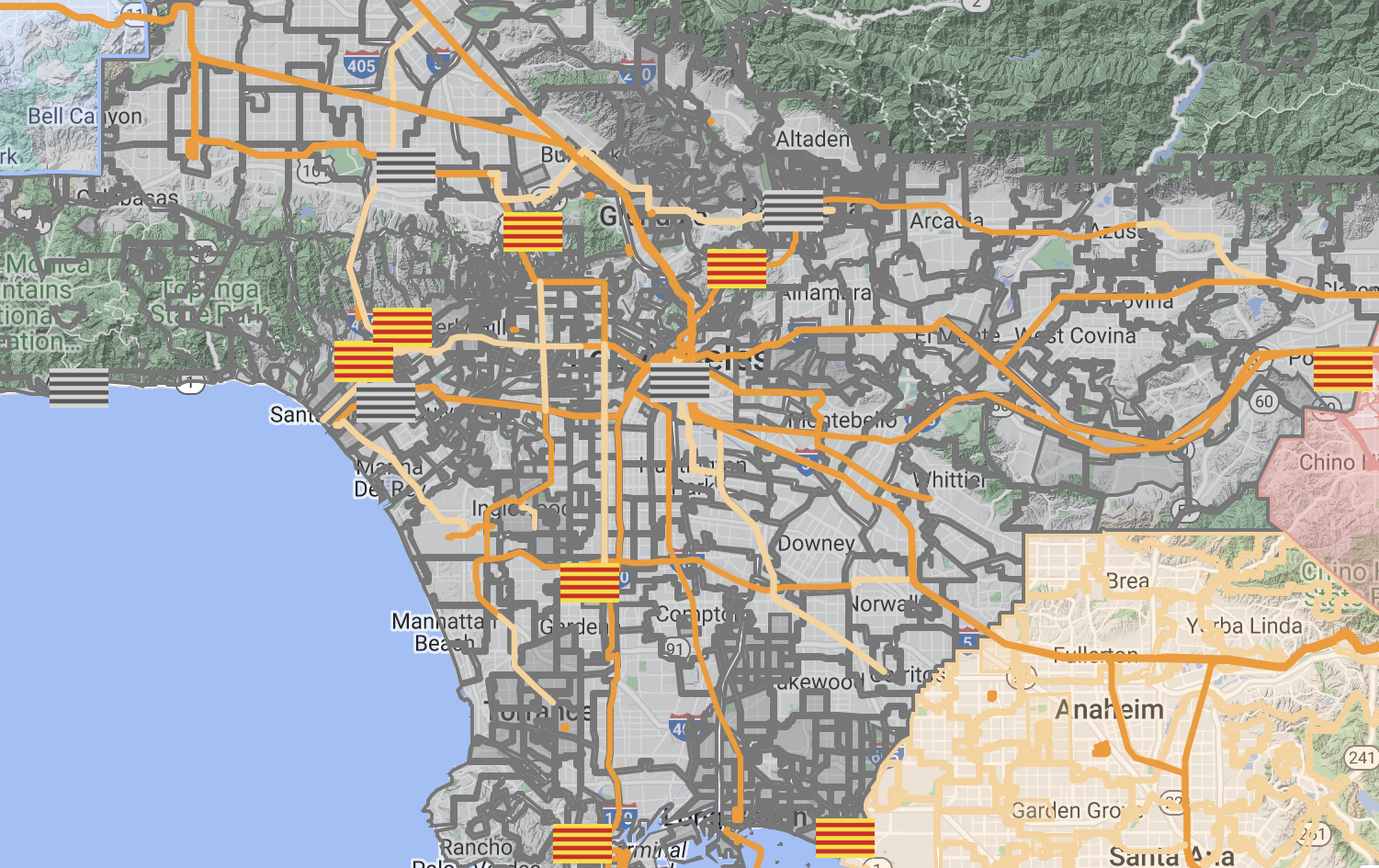
What we do know, however, is that many Angelenos and Californians can trace a significant part of their ancestry back to Spain – and that a significant portion of those to Catalonia. We also know that Catalans have been present in California and Los Angeles since at least the 18th Century and probably earlier. We additionally know in the Spanish and Early American eras, several Catalans occupied prominent positions within Los Angeles. Finally, there are a fair number of recent Catalan immigrants to Los Angeles who contribute to the city’s culture.
BACKGROUND OF CATALONIA
The human history of what’s now Catalonia stretches far back into the stone age. The Laitani people settled Barkeno (now Barcelona) around the 3rd century BCE. The earliest known reference to Catalonia appeared in 1117 CE. By the 12tch Century, Catalonia was ruled by the crown of Aragon. In 1492, the Kingdom of Aragon – including the Catalan Counties – unified with the Kingdom of Castile. The Kingdom of Spain, as we know it today, essentially came into being.
CATALAN CALIFORNIANS IN THE SPANISH ERA
The first Spaniards in what’s now California were those of the expedition of Juan Rodríguez Cabrillo, who sailed along the coast in 1542. I haven’t been able to find an online copy of Cabrillo’s log, from 1542-1543, but it seems fairly safe to me to assume that the ranks of his expedition – which included roughly 200 officers, soldiers, priests, merchants, and slaves – probably included some Catalans but without better evidence, I can’t be sure. Cabrillo died after a conflict with the residents of Pimungna (now Santa Catalina Island) in 1543.
The next Spanish expedition up the California coast began on 10 November 1602, led by Sebastián Vizcaíno. Again, I don’t have precise information about Vizcaíno’s crew, which included six navigators, three priests, a cartographer, his thirteen-year-old son, plus numerous soldiers and sailor – but neither Cabrillo’s nor Vizcaíno’s did anything to establish a Spanish presence in California. More than a century and a half would pass before that would change.
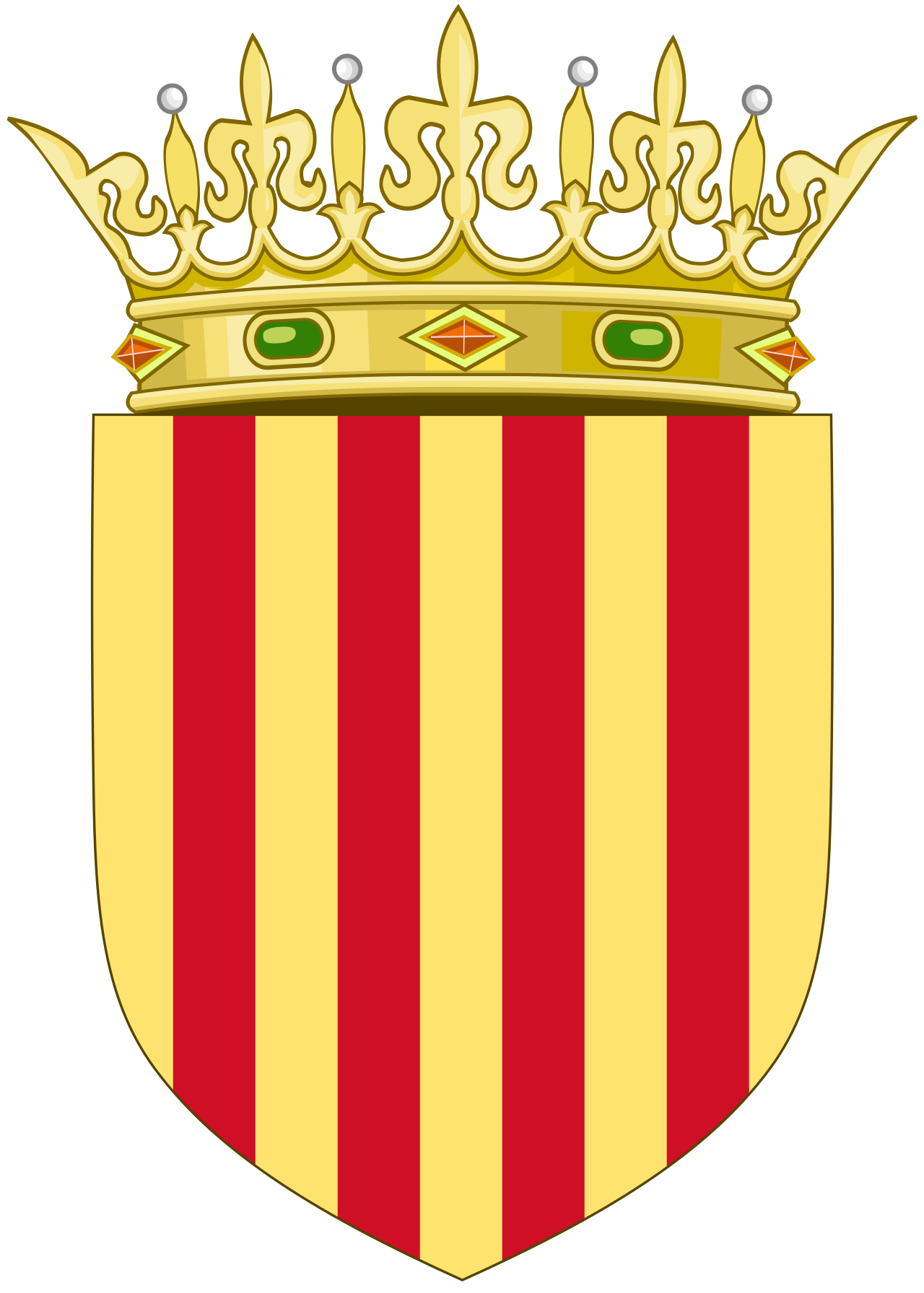
The Catalan Republic was founded in 1640, during the Franco-Spanish War.. In 1641, Louis XIII of France was declared the Count of Catalonia. The republic was short-lived, though, and Catalonia was reincorporated into Spain in 1652. In 1659, Catalonia was divided between France and Spain. France took the Catalonian province of Roussillon. Spain took the provinces of Barcelona, Girona, Lleida, and Tarragona.
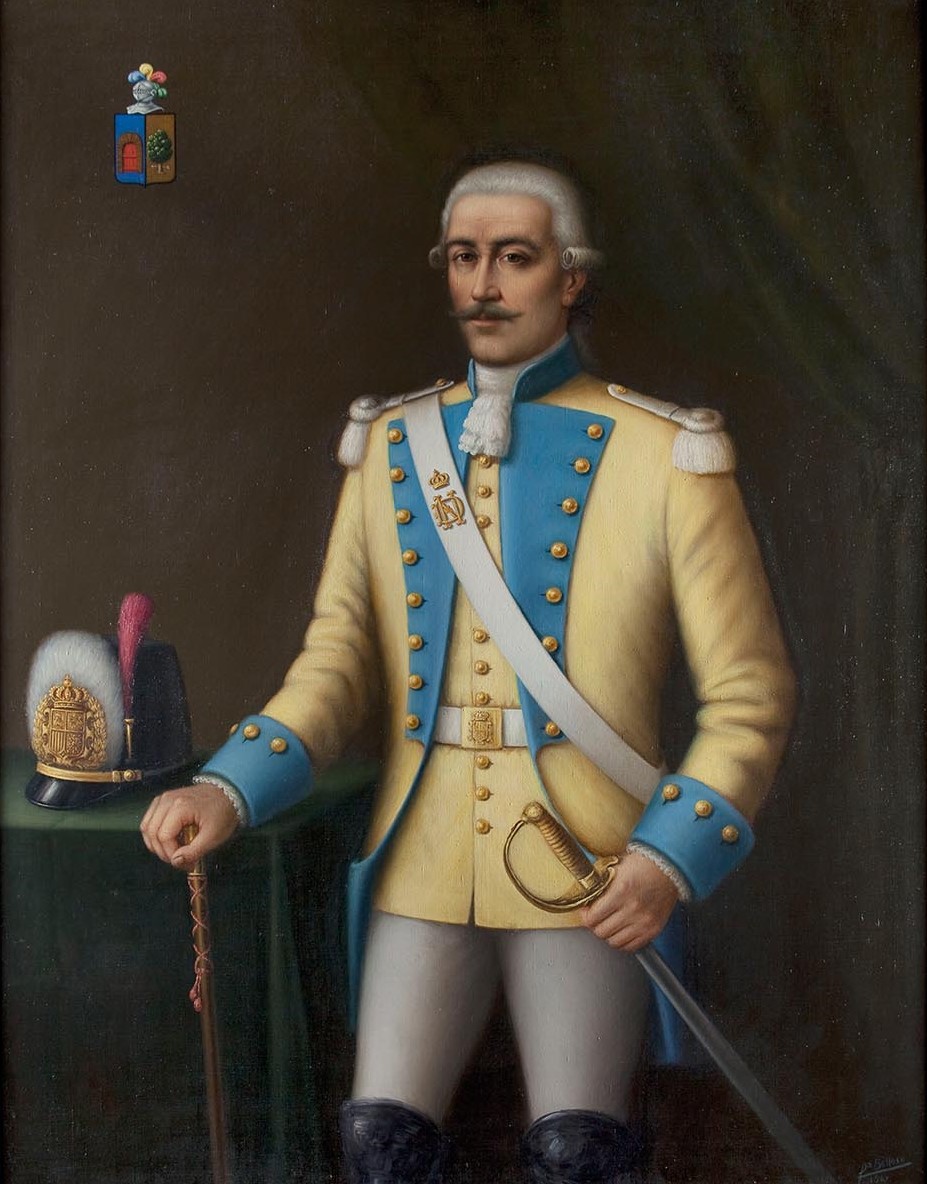
Faced with the threat of Russian and English colonization, King Carlos III decided in 1768 that Spain needed to strengthen its claims on California. Members of the Free Company of Volunteers of Catalonia, an organization founded in Barcelona in 1767, were sought out for the project of colonizing Alta California.
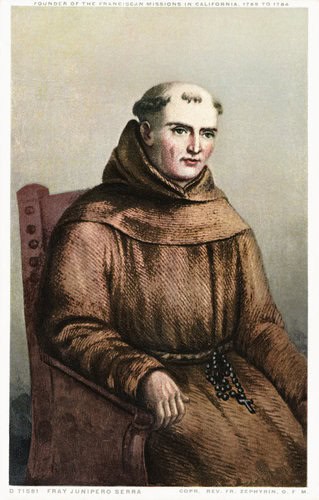
In September, under the leadership of Guissona-born lieutenant Pere Fages i Beleta, 25 Catalans were commanded to join the first governor of Las Californias (and another Catalan) Gaspar de Portolà i Rovira, in concurrent land and sea expeditions across Alta California. Twelve of the Catalan company died of scurvy before the expedition of ships and mule trains even embarked. The remainder set out from San Diego for Monterey, where they were to establish a settlement before moving on to the San Francisco Bay. They were joined on their journey by Mallorca-born Catalonian missionaries Junípero Serra (born in Petra), Joan Crespí (born in Ciutat de Mallorca), and numerous other Franciscan priests.
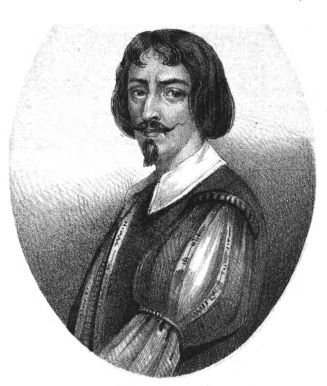
The Portolà Expedition arrived at the banks of the Santa Ana River on 28 July, where they experienced a strong earthquake. On 2 August, they passed through the San Gabriel Valley before making camp in what’s now Elysian Park. The Portolá Trail Campsite No. 1 was designated California Historic Landmark No.655 on 26 September 1958 and is marked at the park’s entrance by a plaque. The next night, they camped in what’s now Beverly Hills’s La Cienega Park. The day after that, they passed through the San Fernando Valley before heading on to Ventura.
Gaspar de Portolà’s term as governor ended in 1770 and he was succeeded by Felipe de Barri. Neither De Barri’s year of birth nor birthplace are remembered today. Although he was officially the governor of Las Californias, his base of power, in actuality, was Baja California. Fages, meanwhile, maintained control in Alta California as the military governor, until Fernando Rivera y Moncada was appointed governor in 1774. Rivera was succeeded by an Andalusian, Felipe de Neve. Fages returned to the governorship in 17892 and remained in that position until 1791.
The 7th governor of Las Californias, Diego de Borica, was a member of the Royal Basque Society – but he argued that Catalans, specifically, were required to develop California’s economy. He was ignored by the Spanish Crown and stepped down. He was nevertheless succeeded by a Catalan interim governor, Pere d’Alberní I Teixidor.
D’Alberní was born in Tortosa, Catalonia, in 1747. Following his service in the Seven Years’ War, he joined the Free Company of Volunteers of Catalonia. After Captain Agustin Callis died in 1782, D’Alberni was named Captain of the First Company of the Volunteers. After a few years serving in British Columbia, he returned to Mexico, where he was appointed interim governor. He was followed by José Joaquín de Arrillaga in 1800, who was the last governor of Las Californias, and the first of Alta California, when the two were formally divided in 1804.
De Portolà died in Lleida in 1786. Fages died in Mexico City in 1794. D’ Alberní died of edema in Monterey in 1802. California’s Spanish Era ended when Mexico declared independence in 1810.
CATALAN CALFORNIANS IN THE AMERICAN ERA
Weakened by eleven years of revolution, the US seized the opportunity to invade Mexico in 1846. By the conclusion of the Mexican-American War, the US had seized 55% of that country’s territory. On 9 September 1850, California was admitted as the 31st state to the US. Five months earlier, on 4 April 1850, Los Angeles had been incorporated as a city.
In the Early American Era, Spaniards and Catholics came to be increasingly marginalized from government as the Anglo Protestant population grew. They remained, not surprisingly, prominent in the Catholic Church and several of Los Angeles’s early prominent clergy were Catalan.
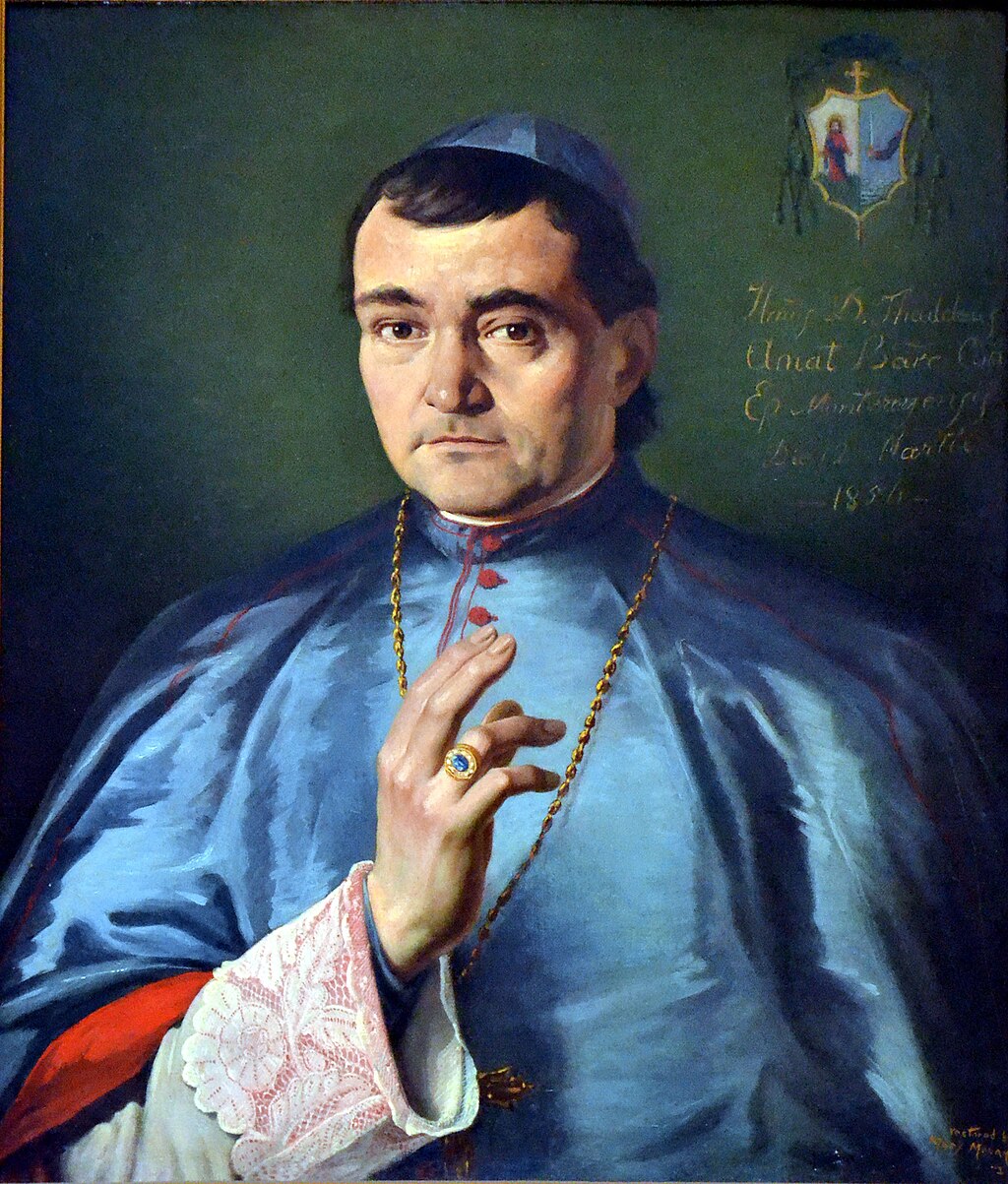
Tadeu Amat i Brusi was born in Barcelona in 1811, at a time when Catalonia was occupied by France. France briefly annexed Catalonia during the Napoleonic Wars. He was ordained a priest in Paris in 1837. He arrived in the US when he journeyed to Louisiana as a missionary. In 1853, he was appointed the Bishop of the Dioecesis Montereyensis in California, where he succeeded another Catalan, Josep Sadoc Alemany i Conill.
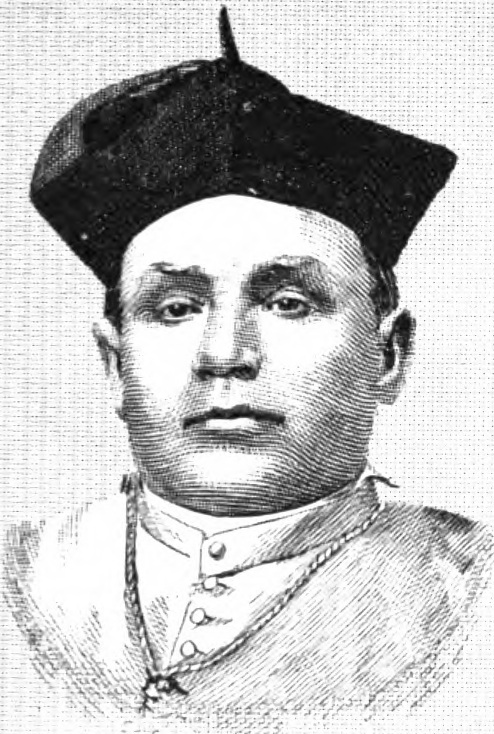
Recognizing the rise of Los Angeles, Amat petitioned the Holy See to allow him to transfer there in order to become the Bishop of Los Angeles. He arrived in Los Angeles in 1855. The diocese was renamed the Diocese of Monterey-Los Angeles in 1859. The Cathedral of Saint Vibiana (now an event space and home to the restaurant, Redbird), was founded and consecrated during Amat’s episcopacy, in 1876. Amat died in 1878 and was succeeded by another Catalan, Francesc Mora i Borrell.
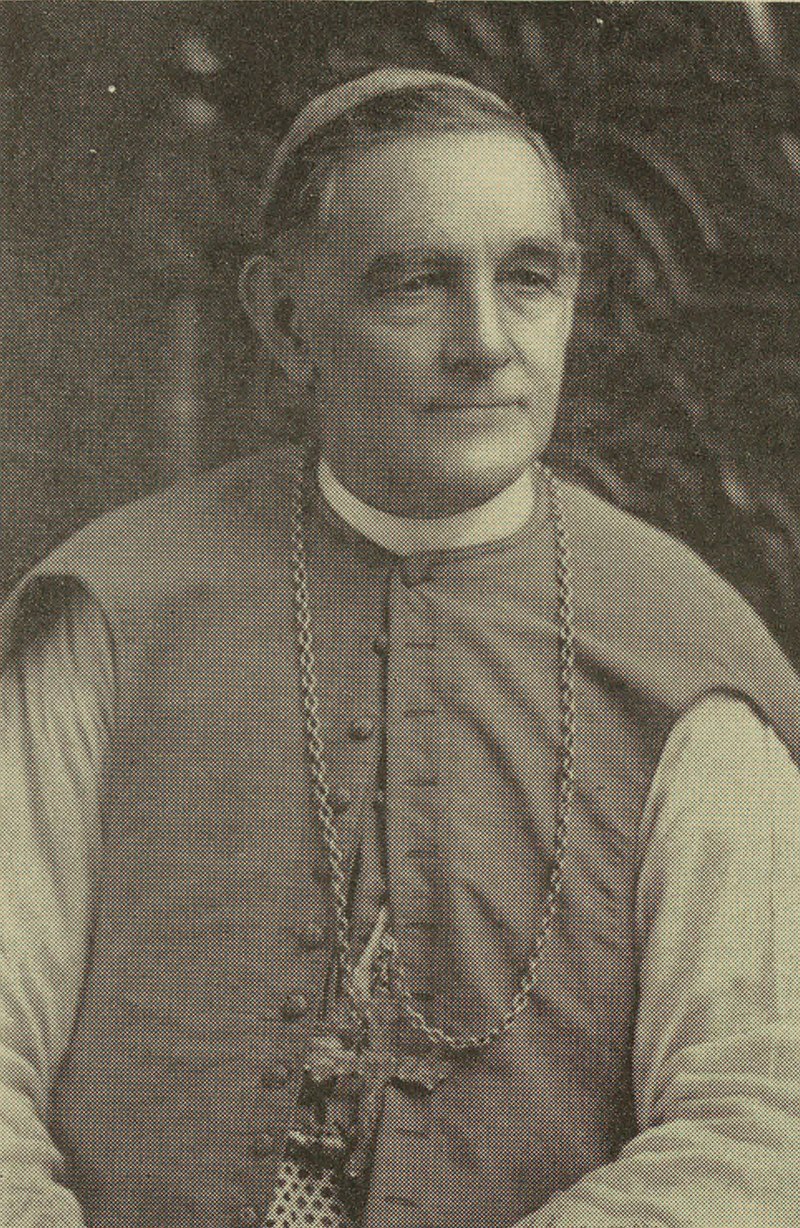
Mora was born in Gurb, Catalonia in 1827. He came to the US in 1855 and completed his studies at St. Mary’s Seminary in Perryville, Missouri. He was ordained a priest in Santa Barbara in 1856. He was assigned to several missions before being transferred to Los Angeles’s Church of Our Lady of the Angels in 1863. In 1895, he founded The Catholic Tidings. He resigned his office in 1896 and retired to Barcelona, where he died in 1905.
Pere Verdaguer i Prat was born in Sant Pere de Torelló, Catalonia. He came to the US to complete his studies at St. Vincent’s Seminary in Cape Girardeau, Missouri. He was ordained to the priesthood in 1862. He served as a missionary and pastor of San Bernardino and in Los Angeles before moving to Texas, where he served as Vicar Apostolic of Brownsville from 1890 until his death in 1911.
CATALAN ANGELENO RESTAURANTS
Anyone who has looked into the history of Spanish cuisine in Los Angeles will have noticed, no doubt, that Mexican cuisine was referred to often – perhaps even nearly always – as “Spanish” for many decades. The oldest Mexican restaurant in Los Angeles, in fact, is El Cholo… or, as it is advertised by its beautiful neon sign, El Cholo Spanish Cafe. For that reason – and because Catalan cuisine was rarely differentiated from other Spanish regional cuisines – it’s hard to research and document the history of Catalan cuisine in Los Angeles. It is probably not a long history, however, and even today there are fairly few Spanish restaurants of any type in Los Angeles and, in a business known for its struggles, seem to struggle more than most.
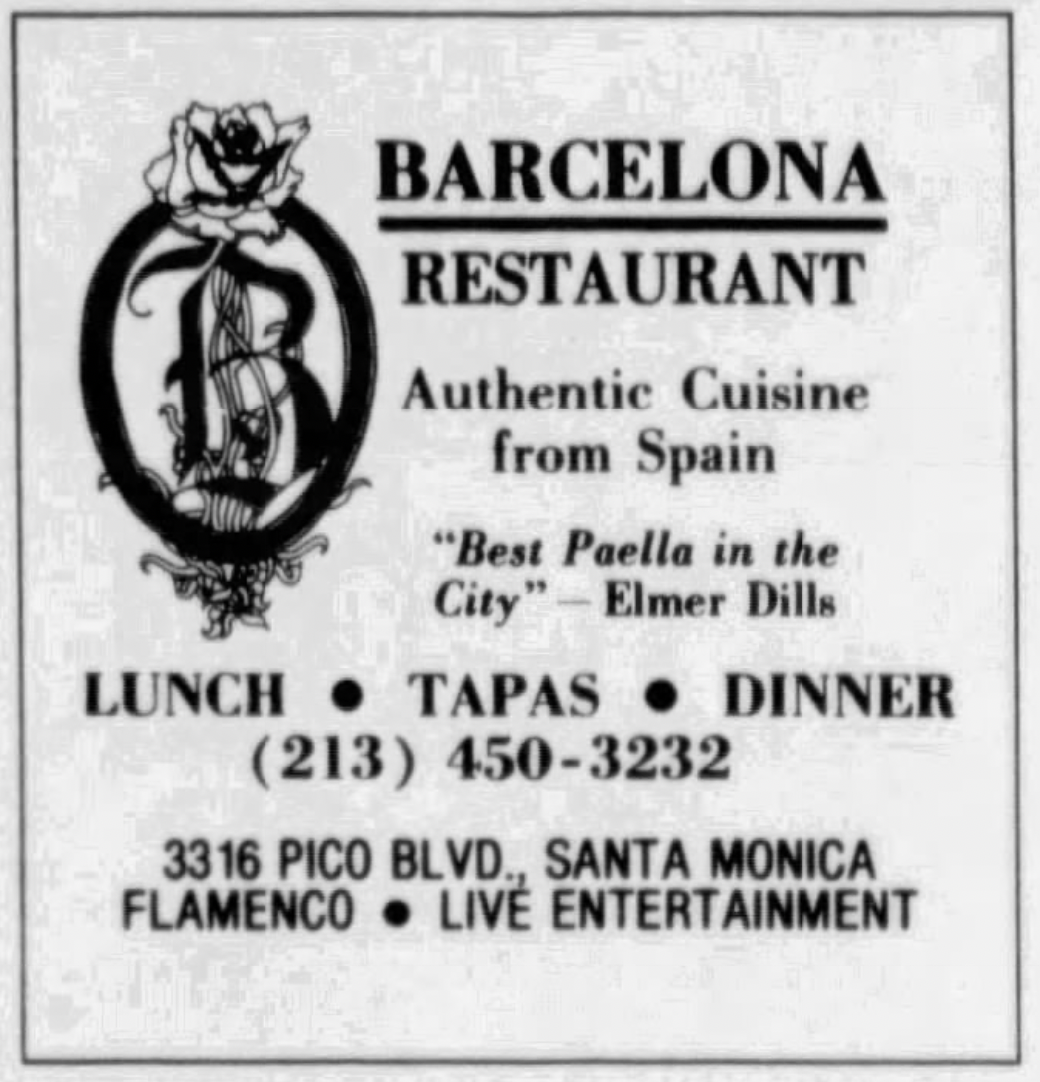
The first overtly Catalan restaurant in Los Angeles may’ve been Barcelona, which was open in Santa Monica’s Sunset Park neighborhood at least as early as 1984 and remained there until at least 1989. It may have moved… or it may’ve just been another Catalan restaurant with the same name, but around 1991 a restaurant called Barcelona, co-owned by Max Lopez and Jose Maria Company, opened in what was then southern Van Nuys (but is now characterized as northern Sherman Oaks because that is how they do things in the Valley). After it closed, its space was occupied by another Catalan-leaning restaurant, Hola España.
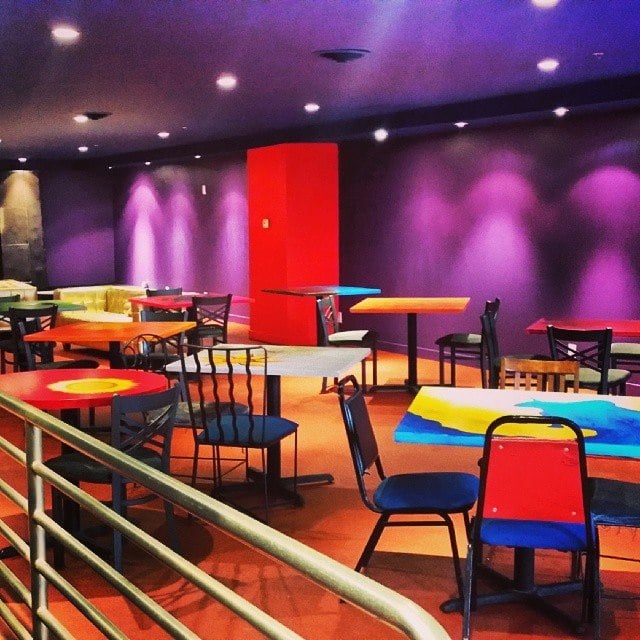
Around 1993, in Malibu, there was briefly a Catalan place called Moncho’s de Barcelona. By 1997, Downtown Pasadena was home to La Luna Negra, which seems to have closed around 2018.
The oldest extant nominally Catalan place in Los Angeles, today, might be Bar Celona, which seems to have opened in Old Town Pasadena around 2004. At some point, it seems to have merged with the Italian Sorriso Ristorante and then, after a fire broke out in 2021, both merged with yet a BBQ place called Hawg Heaven – that opened in the space formerly home to Ixtapa Cantina – a space that used to co-host club nights with Bar Celona. If you can make sense of that, kudos to you! I’m not sure what kind of food is on the menu anymore.
Further afield, in Rancho Mirage, there’s another nominally Catalan restaurant, called Catalan Mediterranean Restaurant. They seem to be hedging their bets, too, with their website claiming that they bring “forth tastes from Italy, Spain, France, and Greece.” They’ve been in operation since 2013.
New Mexico-born chef, Teresa Montaño, traveled to Spain to study different paella traditions. She opened Otoño ( which drew not just from Basque and Catalan cuisine but also cuisines of China, Japan, Mexico, and Peru) in Garvanza, in 2018. Sadly, it closed in June 2024.
Siblings Maria and Xavi Padrosa opened Telefèric Barcelona in Sant Cugat in 1992. They opened their first stateside locations in the San Francisco Bay Area. The first Los Angeles location, in Brentwood, opened in 2023. A location in Long Beach’s SEADIP followed. I believe – and I may be wrong – that, despite the restaurant’s geographic roots, the menu is more Basque than Catalan.
Chef and Barcelona native Mònica Angelats opened Flor y Solera in the Arts District in 2023. Its menu drew from all of Spain’s regions. Flor y Solera seems to have closed, however, in early 2024. There’s still an active website and Yelp claims that the closure is temporary but, in early 2024, the space became home to Brera Ristorante, which has also since closed. Maybe the space is for pop-ups, although I’m not aware of either restaurant being promoted as such. Time will tell, I suppose.
CATALAN ANGELENO ATHLETES
Now, normally I would list actors and musicians above athletes because I’d rather play sports than sit and watch others play them – so professional athletes aren’t of interest to me. Because of that, I have only a cursory awareness of famous athletes… which is why spectator sports are one of my main trivia weaknesses, along with award programs, prestige television, and Top 40 music of the last 25 years. So when I recognize an athlete’s name, I know that they must be famous. I’ve heard of all of these Catalan Angeleno athletes: José Alberto Pujols Alcántara (the Angels and Dodgers), Ilie Sánchez Farrés (Los Angeles Football Club), Marc Gasol (the Los Angeles Lakers), and Pau Gasol (the Los Angeles Lakers).
CATALAN ANGELENO MUSICIANS
There are a few Catalan Angeleno musicians of note.
Xavier Cugat (né Francisco de Asís Javier Cugat Mingall de Bru y Deulofeu) was a violinist and bandleader who famously often conducted music with a chihuahua on his arm. He was born in Girona in 1900. He spent his formative years in Havana and his family arrived in the US in 1915. In the 1920s, he led the band at the Ambassador Hotel’s Cocoanut Grove. He also worked as a cartoonist at The Los Angeles Times. In 1931, his band relocated to the Waldorf–Astoria in New York City. Back in West Hollywood, meanwhile, he opened a restaurant called Casa Cugat that served Mexican food and remained in business until 1986. He retired to Barcelona, where he died in 1990.
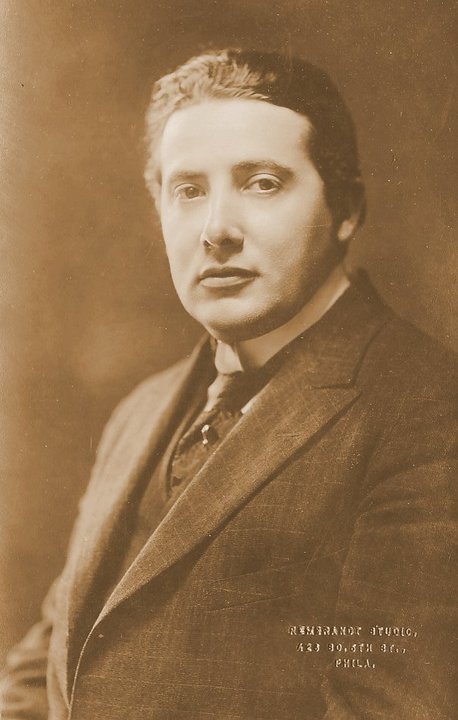
Antoni Torelló i Ros was a double bass player who was born in Sant Sadurní d’Anoia in 1884. He moved to the US in 1909. He was the first bass professor at Philadelphia’s Curtis Institute of Music in 1926. He was Principal Bass of the Philadelphia Orchestra from 1914 until 1948. After that, he moved to Los Angeles where he played in the orchestra of Paramount Pictures. He died in 1960
Other Catalan Angeleno musicians include Artur Ponsà, Ferran Rico Andrés, Frank Ferrer (Love Spit Love), and Julian Casablancas (The Strokes), who apparently moved to Los Angeles around 2020. .
FILM AND TELEVISION
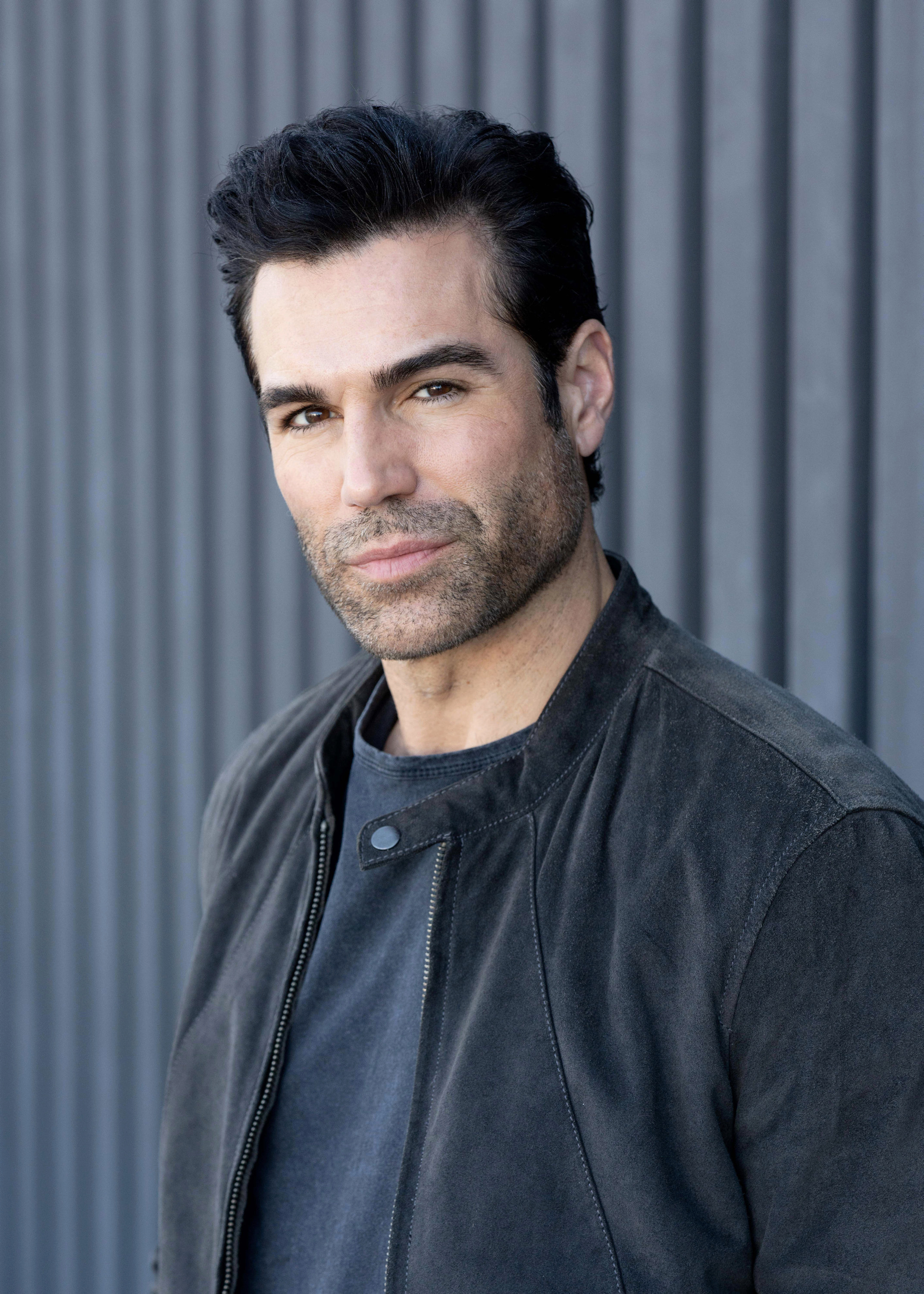
There are, predictably, numerous Catalan Angelenos in the film and television industry. They include
actors Jordi Vilasuso (Guiding Light), Luis Alberni, Martin Garralaga, Melchor Gastón Ferrer, Monica Ramon, and Rosa Pérez; cinematographers Jordi Ruiz Masó and Julia Maixer; director Jaume Collet-Serra; producer Mireia Vilanova; and screenwriters Anna Pujolras and Victor Osorio.
OTHER CATALAN ANGELENOS
Other Angelenos with Catalan roots or ancestry include (or have included) activist Cassandra MacDonald; anthropologist Helene Hagan; photographers Alba Morera and Elsa Melero; surf pool designer Miquel Lazaro Cordero; shoemaker Temís Galindo; and writer Anaïs Nin.
CATALONIAN INDEPENDENCE
Reasonably informed Angelenos, both Catalan and otherwise, will be at cursorily aware of efforts to restore Catalonia’s independence. The first organized Catalan independence party, Estat Català, was founded in 1922. In 1931, the Esquerra Republicana de Catalunya proclaimed the Catalan Republic. Independence didn’t follow but a degree of autonomy returned to Catalonia. In 1938, during the Spanish Civil War, right wing dictator General Francisco Franco abolished Catalan Autonomy and actively repressed Catalan culture. There were, of course, Catalan Francoists who supported the Fascists. The most familiar, surely, was painter Salvador Dalí – who was expelled from the Surrealists in 1936 for his right-wing orientation. Most Catalans, however, both reviled and were reviled by the Francoists. Lluís Companys, the second president of the Generalitat de Catalunya, was executed by the Francoists in 1940. Franco remained dictator until his death in 1975.
Spain adopted its constitution three years after Franco’s death, in 1978. 1979’s Statute of Autonomy of Catalonia defined Catalonia as an autonomous region within Spain. It was supplanted by the Statute of Autonomy of Catalonia of 2006. Between 2009 and ‘11, Catalan municipalities held symbolic referendums on independence. The Catalan declaration of independence was passed in 2017. Voter turnout was 43%, in part, because it was widely boycotted by those who wished for Catalonia to remain in Spain. A poll taken in 2024 counted 40% in favor of independence, down from the 2017 peak of 49%. For now, however, historic Catalonia reminds divided between France and Spain.
CATALAN CULTURE AND RESOURCES
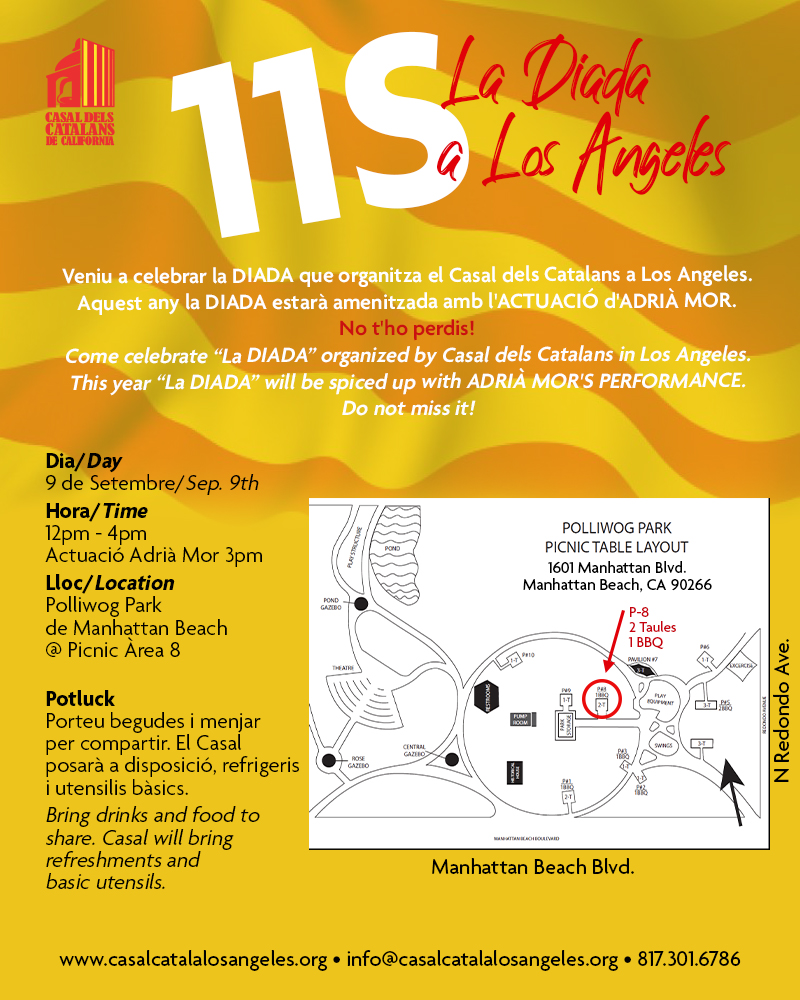
There are several organizations operating locally with a focus on Catalan culture. The Instituto Cervantes of Los Angeles offers Catalan language classes. The University of California, Los Angeles (UCLA) has a Catalan Language and Culture department. The University of California, Santa Barbara (UCSB) is home to the Center for Catalan Studies. Works of Catalan artist Joan Miró are in the permanent collections at the Broad, Getty, and Los Angeles County Museum of Art (LACMA). And, while Catalan architect Antoni Gaudí i Cornet never worked in Los Angeles, his influence can be felt at Silver Lake’s Burrows Residence, Beverly Hills’s O’Neill House, and the iconic Watts Towers. Los Angeles is also home to the organization, Casal dels Catalans de California, Los Angeles, which organizes events related to La Diada, Revetlla de Sant Joan, Diada de Sant Jordi, and other holidays and observances important to Catalans.
FURTHER READING
Gaspar de Portolá y otros catalanes de la historia de España en Estados Unidos by Borja Cardelús (2020)
Support Eric Brightwell on Patreon

Eric Brightwell is an adventurer, essayist, rambler, explorer, cartographer, and guerrilla gardener who is always seeking paid writing, speaking, traveling, and art opportunities. He is not interested in generating advertorials, cranking out clickbait, or laboring away in a listicle mill “for exposure.”
Brightwell has written for Angels Walk LA, Amoeblog, Boom: A Journal of California, diaCRITICS, Hey Freelancer!, Hidden Los Angeles, and KCET Departures. His art has been featured by the American Institute of Architects, the Architecture & Design Museum, the Craft Contemporary, Form Follows Function, the Los Angeles County Store, Sidewalking: Coming to Terms With Los Angeles, Skid Row Housing Trust, the 1650 Gallery, and Abundant Housing LA.
Brightwell has been featured as subject and/or guest in The Los Angeles Times, VICE, Huffington Post, Los Angeles Magazine, LAist, CurbedLA, Office Hours Live, L.A. Untangled, Spectrum News, Eastsider LA, Boing Boing, Los Angeles, I’m Yours, Notebook on Cities and Culture, the Silver Lake History Collective, KCRW‘s Which Way, LA?, All Valley Everything, Hear in LA, KPCC‘s How to LA, at Emerson College, and at the University of Southern California. He is the co-host of the podcast, Nobody Drives in LA.
Brightwell has written a haiku-inspired guidebook, Los Angeles Neighborhoods — From Academy Hill to Zamperini Field and All Points Between, that he hopes to have published. If you’re a literary agent or publisher, please contact him.
If you wish, you can follow him on Ameba, Duolingo, Facebook, Goodreads, iNaturalist, Instagram, Letterboxd, Mastodon, Medium, Mubi, the StoryGraph, Threads, TikTok, and Twitter.


 Eric Brightwell
One thought on “No Enclave – Catalan Los Angeles”