In the 2000s, Amoeba Music enlisted an army of writers and data entry people to work on an ambitious website that was meant to be a sort of combination of Allmusic, Apple Music, Discogs, Wikipedia, and more. Despite investing a tremendous amount of time, labor and money, the site, as envisioned, never got off the ground. In 2020 — without so much as a head’s up — the plug was pulled. Not only did all of the work of those who toiled in “the Dungeon” quietly die; the musician biographies we wrote were mothballed, Movies We Like vanished, and the celebrated Amoeblog was wiped from the website. Luckily, the Wayback Machine has preserved most of it, allowing me to retrieve my work and post it here, with minimal editing, because I think so some of what we did there was worth more than just a wage.
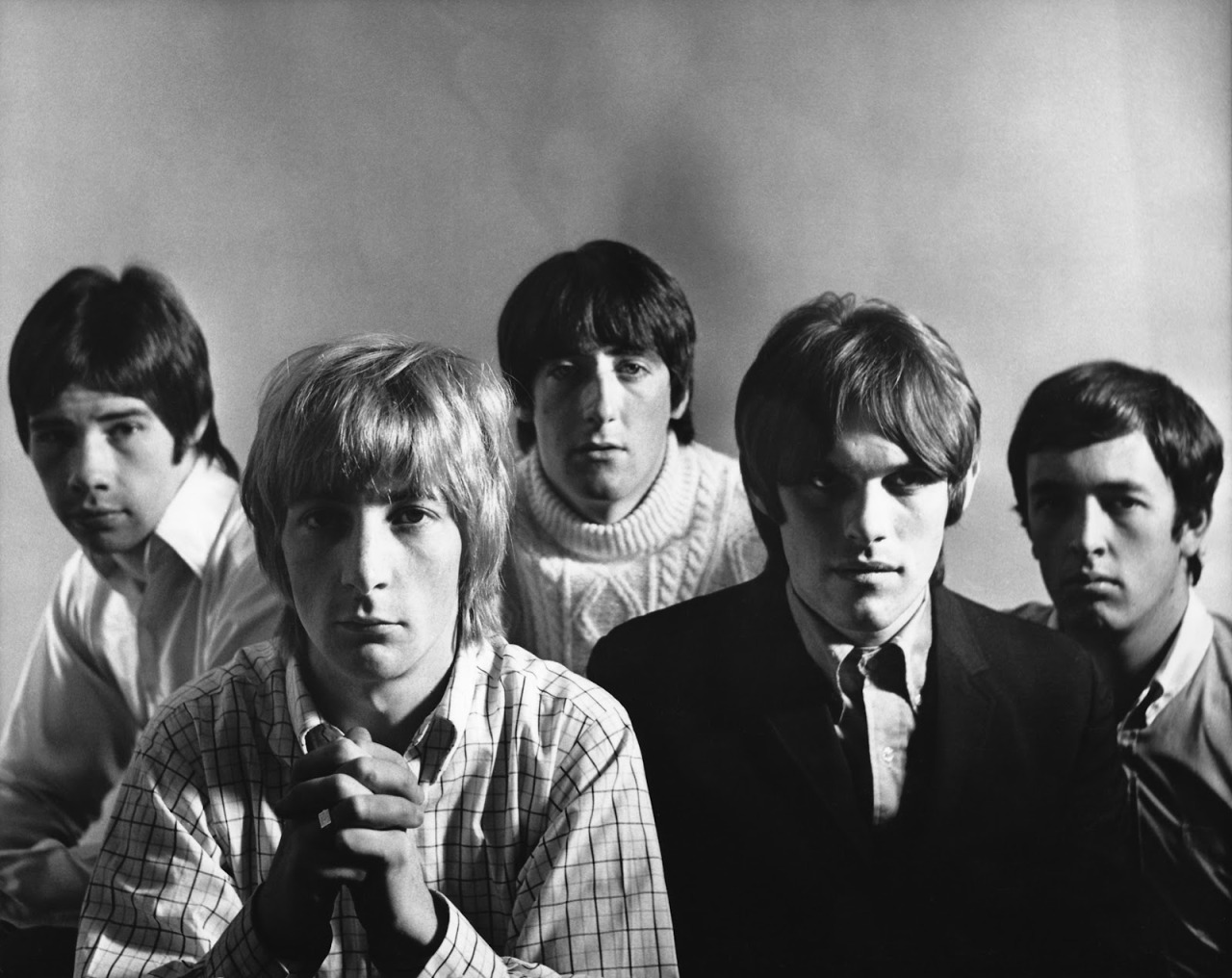
The Action were a North London group that, despite being a live favorite in the mid-1960s Mod scene, barely made a dent commercially. However, their reputation has grown in the decades since their demise, with high praise coming from likes of soul fans like Paul Weller, Steve Marriott, and Phil Collins.
In 1962, a group of young musicians — guitarist Alan King, drummer Roger Powell, bassist Mike Evans, and Eddie Stewart — began performing in Kentish Town as Eddie Stewart and The Movers. After Stewart quit, vocalist Reg King took his place. Evans double-timed in a band with a very young Keith Moon but, after returning from gigging in France (with a different drummer), Evans rejoined his other bandmates who, in August 1963, decided to call themselves The Boys.
Early the next year, The Boys backed Sandra Barry and released the chipper “Really Gonna Shake” b/w “When We Get Married” on Decca, credited to Sandra Barry and the Boys. At the time, their get-up involved tuxedos and lame choreography. Like all aspiring beat combos, the young band made the obligatory trip to Germany. They returned to the UK in September with no money to show for their trouble.
In 1964, they added guitarist Pete Watson. After briefly being managed by Mervyn Conn, they hooked up with Kenny Lynch. Through Pye, they released their sole single, “It Ain’t Fair” b/w “I Want You” before they were dropped. After changing their name to The Action and playing the Marquee in support of The Who, they began to pursue a more Mod-influenced sound and signed with the Bob Druce Agency. They following year, George Martin was persuaded by Denise Hall to catch them at Balham’s Bedford Hotel. Impressed, he bought their management contract for £42 and signed them to his newly-created AIR Productions. Although Martin tried to convince Brian Epstein to take them on, he was too busy and were instead paired with Ricky Farr.
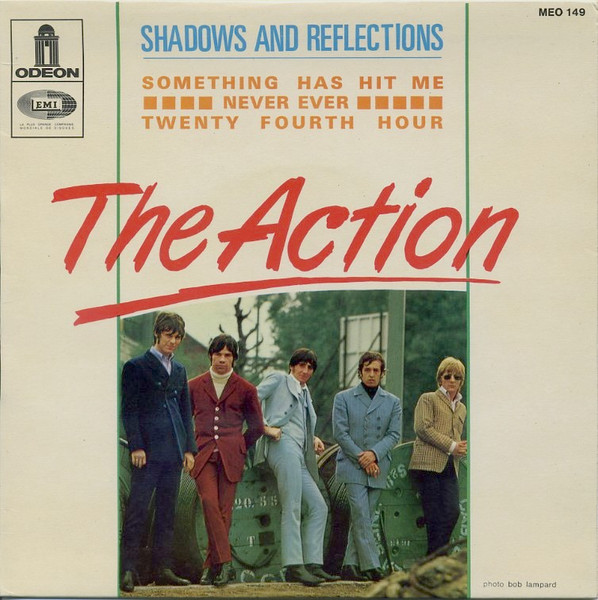
Their first single was a cover of “Land of a 1000 Dances” b/w “In My Lonely Room,” which failed to make the charts. Their second single, a cover of “I’ll Keep on Holding On” b/w “Hey Sah-Lo-Ney” reached No. 47. They continued to excite crowds at clubs but subsequent singles failed to chart. After Watson quit the band, they struggled as a four piece before recruiting Martin Stone (ex-The Savoy Brown Blues Band) in 1967. Their sound began to evolve into a progressive folk and psychedelia and late in the year, they added keyboardist Ian Whiteman. The new line-up hooked up with Giorgio Gomelsky and they cut a number of demos for an album meant, tentatively, to be titled Brain. EMI wasn’t impressed. Their intended sixth single, “Little Girl” and the album were shelved and the band were dropped.
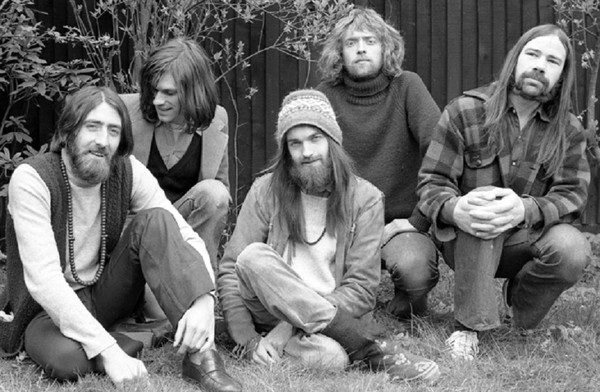
Having clearly stalled as a band, Reg King left to pursue a solo career. Alan King moved to lead vocals and they rechristened themselves Azoth. In 1969 they signed with John Curd’s Dead Records and he rechristened the act, Mighty Baby. Mighty Baby went on to release three albums: Egyptian Tomb, Mighty Baby, and A Jug of Love before breaking up in 1971.
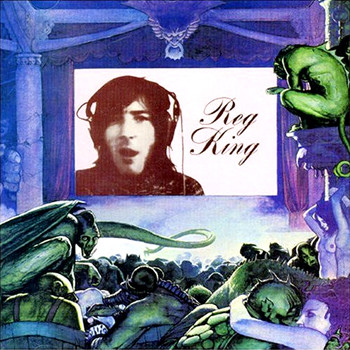
Evans, Powell and Whiteman, after traveling to Morocco joined the The Habibiyya and released the Sufi-influenced If Man But Knew. Evans and Whiteman later went on to play with Richard and Linda Thompson. Alan King went on to form the pub rock band, Ace, with Paul Carrack in 1972. After their break-up he moved to New Zealand. Powell released a mostly electronic solo album, Cosmic Furnace, in 1973 before going on to play in Utopia. Stone resurfaced in The Pink Faeries and later, The 101ers. Reg King released an eponymous solo album in 1971.
Over the years, the members lost touch with each other until 1998, when the original line-up reformed to play a series of Mod revival rallies. One such performance, at The Dome in Tufnell Park, was filmed and included in the documentary, Lap of the Mods. In 2000, they reformed to play the 100 Club with Phil Collins sitting in on drums. Two years later, most of their material was released on CD as Rolled Gold (2002 Reaction).
UPDATE: Reg King died on 8 October 2010. Mike Evans died on 15 January 2010.
Support Eric Brightwell on Patreon

Eric Brightwell is an adventurer, essayist, rambler, explorer, cartographer, and guerrilla gardener who is always open to paid writing, speaking, traveling, and art opportunities. He is not interested in generating advertorials, cranking out clickbait, or laboring away in a listicle mill “for exposure.”
Brightwell has written for Angels Walk LA, Amoeblog, Boom: A Journal of California, diaCRITICS, Hey Freelancer!, Hidden Los Angeles, and KCET Departures. His art has been featured by the American Institute of Architects, the Architecture & Design Museum, the Craft Contemporary, Form Follows Function, the Los Angeles County Store, Sidewalking: Coming to Terms With Los Angeles, Skid Row Housing Trust, the 1650 Gallery, and Abundant Housing LA.
Brightwell has been featured as subject and/or guest in The Los Angeles Times, VICE, Huffington Post, Los Angeles Magazine, LAist, CurbedLA, LA Times 404, Marketplace, Office Hours Live, L.A. Untangled, Spectrum News, Eastsider LA, Boing Boing, Los Angeles, I’m Yours, Notebook on Cities and Culture, the Silver Lake History Collective, KCRW‘s Which Way, LA?, All Valley Everything, Hear in LA, KPCC‘s How to LA, at Emerson College, and at the University of Southern California. He is the co-host of the podcast, Nobody Drives in LA.
Brightwell has written a haiku-inspired guidebook, Los Angeles Neighborhoods — From Academy Hill to Zamperini Field and All Points Between; and a self-guided walking tour of Silver Lake covering architecture, history, and culture, titled Silver Lake Walks. If you’re an interested literary agent or publisher, please out. You may also follow on Bluesky, Duolingo, Facebook, Goodreads, iNaturalist, Instagram, Letterboxd, Medium, Mubi, Substack, Threads, and TikTok.


 Eric Brightwell